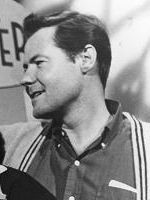
Yma Súmac

enlargementChicken Talk * Yma Súmac * Mambo!

After a while, all the stories people tell about the music world start to sound the same.  This white guy started working at this studio and the artists they found were great.  This guy started writing songs with his friends and they became famous.  It’s all so formulaic that it starts to get a little boring, and you start to mix all those white guys into one amorphous nerd who is hunched over some guitar or studio for way too long.  So even the existence of Yma Súmac, the Peruvian Princess descended from the last sovereign ruler of the Incan Empire, Atahualpa, is a joy to discover in a world of white sameness.  

Born in 1922, when she was 20, Zoila Augusta Emperatriz Chávarri del Castillo took the name Yma Súmac, and began performing with her incredible five octave range to stunned audiences.  Recording a grip of songs in Argentina at a radio station in 1942, she parlayed these recordings into a deal with a local label, which garnered her popularity locally, making her the most in-demand act around.  But Yma had bigger plans: America.  

She married a composer, and together they set out for NYC in 1946, performing around town in local clubs as a trio, with her cousin rounding out the group.  Four years of gigging started to build their reputation, and the reputation of her incredible range was enough to make Yma an important act to be seen in the early ’50’s for anyone hip.  Capitol Records finally came calling and signed her, thinking that she would make a good pair with this other kook they had, Les Baxter.  And, in a rare turn of events, someone at a Record Label was right.  Together they made her first album, Voice of the Xtabay, which not only introduced America to a new form of music, referred to as Exotica, but introduced the World to her incredible talents.  

yma-460_1106885aHer fame was instantaneous.  She performed at incredible venues: The Hollywood Bowl, Carnegie Hall, The Royal Albert Hall, The Roxy Theater, Las Vegas nightclubs, The Mikado Theater in Japan.  She landed roles in film and on broadway.  She toured South America, Europe and Africa, performed for The Queen of England, and did shows with Frank Sinatra, Danny Kaye and Marlene Dietrich, where they opened for her.  

She was, after all, an Incan Princess, a fact that was supported by the Peruvian government in press releases, no less!  Her record contract was immediately lengthened, and she continued to belt out records that spoke to the Tiki zeitgeist that was moving through the country at the time, during the golden age of velvet paintings and mixology.  She was the perfect combination of sex and chanteuse, a beautiful and delicate bird that would sing songs that were so fantastic that it would send chills down your spine, and make you couldn’t help but dance.  

While her husband was always there for her, initially Capital didn’t want him composing the work Yma released, which was a pity because when he was finally given that chance in 1954, it was clear that the resulting record – Mambo! – was one of the high water marks of her career.  It was the perfect balance of traditional music with a US perspective, and embraced the current fads of mambo and exotica in a way other, whiter artists were unable to grasp.  “Chicken Talk,” while not being particularly about chickens, is like much of the music on that album: Yma sings using her incredible range, with incredibly hip and danceable music backing her along the way.  

This lifestyle worked perfectly for Yma, and straight through to 1961 she toured extensively, and released seven fantastic records.  The years were not great to her career in the end.  As the sixties began to be dominated by rock music, exotica lost sway among music fans, and she spent much of the rest of her life in and out of vogue, depending on the trend of the moment.  She would perform here and there, and even put out a couple of albums when nostalgia began to grip the culture, but it was clear that The Princess was ready to retire, letting new divas take the stage and the throne, for better or for worse.  

In a way, she had conquered the world for a brief period of time, had traveled through most of it and had surveyed her people and their customs, and having ruled it as well as she could, it was time for her to retire to her mansion in LA, always a princess, and to this day, the woman with the biggest range in history.  

When’s THAT movie coming out? 

It’s Our Holiday Bundle, From WTBC Radio!

The Gift Everyone Wants: More Music

wtbc.bandcamp.com.  Our entire discography, for only $13!

We know what you’re thinking.  You have that person on your list who is hard to shop for.  They like music, but you don’t know what they’re looking for these days, and the thought of going into a record store to find something for them is probably the most intimidating idea you have ever had.  If there was just a way that you could get a wide variety of tunes for a fairly low price that was guaranteed to make a wide range of people happy…

Well, you are in luck.  For the holiday season, you can get all eight WTBC Radio releases for one low price, and save 35% when you do, too.  This is the perfect gift, as we have a wide range of punk, experimental, rock, country, glitch, metal, noise, pop, and avant garde, giving listeners a chance to infuse their collection with a ton of new music to be enjoyed at their leisure.  This price includes unlimited streaming via the Bandcamp App, and high-quality downloads of everything we’ve got!

This includes: Journey Into Space (an Austin Rich / Ricardo Wang Collaboration, originally performed live on What’s This Called? as a tribute to the late Don Joyce), The Ways of Ghosts by Ambrose Bierce (a Halloween spoken word album by Austin Rich), The Shindig Shakedown (a compilation featuring over 80 artists, including music, video, zines, photography, and a host of other goodies), Live At Habesha Lounge 13 April 2013 (with music by Overdose The Katatonic, The Holy Filament, Death Pact Jazz Ensemble, Abusive Consumer & The Dead Air Fresheners w/ Austin Rich), In Loving Memory of Harold (Expanded Edition) (by the long-lost Eugene avant-punk act, Cathead), Lost In The Supermarket (our first compilation, featuring 20 of our friends and companions from over the years), and No Contact (a live Performance by Moth Hunter, of music broadcast on our podcast in 2012).

Too often the holidays are complicated.  This is not.  You can pick up our Bandcamp Holiday Bundle, and help support us, while you get some great music. (For yourself, or other!  Or Both!)  You can even pay more, if you’re feeling the Christmas Spirit.

It’s music.  And it’s cheap.  And we’ve worked hard to bring it to you.

Happy Holidays, From Our House, to Yours!

Chicken Grabber

scan0002Chicken Grabber * Nite Hawks * Lost Treasures! Rarities From the Vaults of Del-Fi Records.

Upon first listen, it is easy to say that this song is only known for its appearance in the 1997 cut of Pink Flamingos, and leave it at that, but the nature of the “rarities” on this collection is that these were songs that fell between the cracks of popular music in the late ’50’s and early ’60’s.  Each of the singles featured hear are prized among collectors for their weirdness, the performances, and the incredibly precise recording techniques, something that few studios in LA were able to achieve as bands became more sophisticated.  The glue that holds this compilation together is the exotica and surf undertones, and Bob Keane knew that when he assembled the disc.  

Getting “Chicken Grabber” in the new cut of a John Waters flic sent that message from the get-go, and while the disc does not contain a single song by any of the artists on Del-Fi that did have hits, that is the genius of the collection.  Most of the hits Del-Fi had were over-comped even contemporaneously.  But these tunes are rarely heard, not only because the discs retail for $150 on the open market, but because the bands were never popular enough to demand their inclusion on previous compilations.  Like Del-Fi records itself, this compilation was trying to bring other bands to the masses, and not just the Ritchie Valens‘ of the world.  

A-481455-1264705750.jpegDel-Fi Records got its start in 1958, but the man behind Del-Fi – Bob Keane – was an entertainment business figure going back to the late ’30’s, when he put together a big band that he led via the clarinet at the age of 16.  In yet another example of radio playing a major roll, when KFWB in Los Angeles broadcast one of his band’s performances, he got an offer from MCA, the first of many deals that would never seem to last for very long.  MCA promoted him as “The World’s Youngest Bandleader” for exactly three years, when the dropped him out of fear that he would get drafted for the war.  

Bob took this in stride, and decided to beat fate to the punch, and offered his services to the Army Air Force.  I like to imagine that, in some obscure way, Bob and Vyacheslav somehow crossed paths, and where completely unaware.   Bob was eventually let go from the Air Force due to a lung infection, so he returned to LA to heal.  When he was well enough, he returned to music, and worked as a clarinet for hire until 1955.  Occasionally he got work in radio, but they asked him to change his last name – Kuhn – out of fear that audiences would think that Bob was black when he was introduced as Bob Coon.  From 1950 on, he used the name Bob Keane.  


There are several versions of how Bob Keane & John Siamas met, but one thing is absolutely clear: in 1955 they discussed the idea of getting all the talent that they run into on the club circuit, and putting out their records.  They would each tell the other that they see people who are 100 times better than the records you could buy in stores.  If only the people they played with had a record label where they could come and cut a session, they would be in business.  Sometime after these conversations, they shook hands, pooled their resources with Siamas’ brother, Alex, and decided that they would release a record by an artist that mattered.  They immediately turned to an artist that Bob had been raving about, in spite of the Siamas brothers having never heard of him: Sam Cooke

R-2409978-1282484799.jpegThe first release on Keen Records was “Summertime” b/w “You Send Me” in 1957, part of Sam’s three-year contract with Keen.  It got decent enough airplay, but when DJs discovered the b-side, the single began to really move in stores, and on 25 November 1957, the record hit #1 on The Billboard.  Keen Records was raking in the dough.  

Like any smart businessman, Bob when to John and asked how he wanted to structure the business of Keen Records.  John pretended he had no idea what Bob was talking about.  John offered a session musician’s paycheck for finding Sam, and countered with another offer to let Bob buy into Keen Records with a $5K investment, which Bob could not afford.  The label was named after him, but Bob walked away, and before John was done laughing with his brother, founded had Del-Fi Records later  that same month.  

While Bob was litigating the Siamas’ over their assholedness, he turned to the next artist he hand gotten to know on the club circuit, Henri Rose, and rushed a recording of “Caravan” b/w “September Song” on 45 under the Del-Fi label in early 1958.  Bob had intentionally picked Henri because they were friends, and gave Henri the most flexible contract he could devise, on purpose.  He knew that someone would come calling in an effort to buy-out Henri Rose once anyone with half-a-brain heard what Henri could do, and Bob only had to wait for the call to come in.  

By Spring, Warner Brother’s Records waved an $8000 check in front of Bob for Henri, just as a settlement check was already deposited into his account.  Bob considered that revenge enough and moved on to his next trick: Making Del-Fi the epicenter of LA cool.  

200px-Del_Fi_4110There are two distinct periods in Del-Fi’s catalog: the early rock ‘n’ roll period, and the later surf period, but in the roughly 10 years Del-Fi existed, they alway managed to have a very agreeable policy when it came to checking out new bands.  Bob knew from experience that the guys that were best on the club circuit worked hard every day, no matter how little money was on the line, and often those were the best artists.  But it would often take a little while to find this out about these incredible artists, and it was better to let everyone have a chance rather than hold out for a guarantee.  

With that philosophy at his disposal, Bob Keane did the unthinkable and assembled an incredible line-up of artists that he discovered in that 10 years: Ritchie Valens, Chan Romero, Little Ceasar and the Romans, Ron Holden, Johnny Crawford, Brenda Holloway, Frank Zappa (in his Doo Wop phase), The Bobby Fuller Four, The Surfarias, The Lively Ones, The Centurions and, Barry White.  (Barry was actually made the A&R / Producer for a subsidiary of Del-Fi, and Barry handled all the artists on the Bronco label, under Bob’s Guidance.  In fact, Bob was one of the few people who instantly got both surf music and R&B, and would listen to virtually any band that came through his office.  

Around 1967 things began to fall apart for the music industry.  It was clear that 45s were now “singles” off of LPs, which was the real product, and with psychedelic starting to really take over, Bob’s “dinosaur” perspective on the music industry didn’t seem to gel with modern bands.  When The Bobby Fuller Four broke up, Bob knew that Del-Fi was over.  He banked what he could, and decided to merely manage his own songs as The Keane Brothers, while selling burglar alarms to the people of LA.  

257400_oriThe story would probably end there, but curiously enough the time between 1967 and 1987 did wonders for Bob’s status as a legend.  Since he couldn’t afford to release any new records, the collectability of Del-Fi releases went through the roof, and artists in his roster began to get relegated to the “classic oldies” status.  While this had no way of affecting Bob’s income, when the La Bamba film came out in 1987, it was clear that interest in what Bob had done was back in the public consciousness.  

Bob began to assemble collections and compilations of Del-Fi classics, repackaged for public consumption.  This was only helped by the success of Pulp Fiction, which not only came at a time when surf was coming back as a genre, but when interest in the original bands of Keane’s era was in high demand.  Keane released collections of his records (with a few new bits here and there) for several more years, but in 2003 he realized that he could not sustain the work on his own.  Again, Warner Brothers came to his aid, and in a very cool turn of events, they relegated the work of managing Del-Fi’s catalog to Rhino Records, who has the rights to “Lost Treasures,” along with everything else Bob Keane did in his career.  

The Night Hawks were also a group that Bob met on the touring circuit, and their story is also fascinating.  The group was let by Nesbert Hooper Jr., also known as “Stix” Hooper, and The Night Hawks evolved quite a bit, into the Jazz Crusaders, and the just The Crusaders, taking the exotica / R&B sound of this tune and becoming a very accomplished Jazz group that lasted until 2003.  They did not last long as The Night Hawks, but there is something very cool and Del-Fi about this recording.  

tiki-11-1024x768The thing that Bob Keane was, perhaps, best at was finding artists that complimented the Tiki culture of the late ’50’s, and Del-Fi is, in many ways, a document of that early music scene in LA.  in addition to all of that, Bob Keane best represents the kind of producer that they do not make anymore.  His openness to artists, desire to be honest in all his business dealings, and his focus on fostering an environment where the music came first was rare in the music industry, and almost everyone he worked with spoke highly of him as a person.  As the digital age creates new kinds of hassles that artists and businesses are constantly negotiating, reading about Bob Keane reminds us of an earlier time, where people made records because they, too, loved listening to them.  

Side 2: The Microphone & The Radio Tube

MTE5NTU2MzE2MzkzNDczNTQ310.) Paradise * Bing Crosby
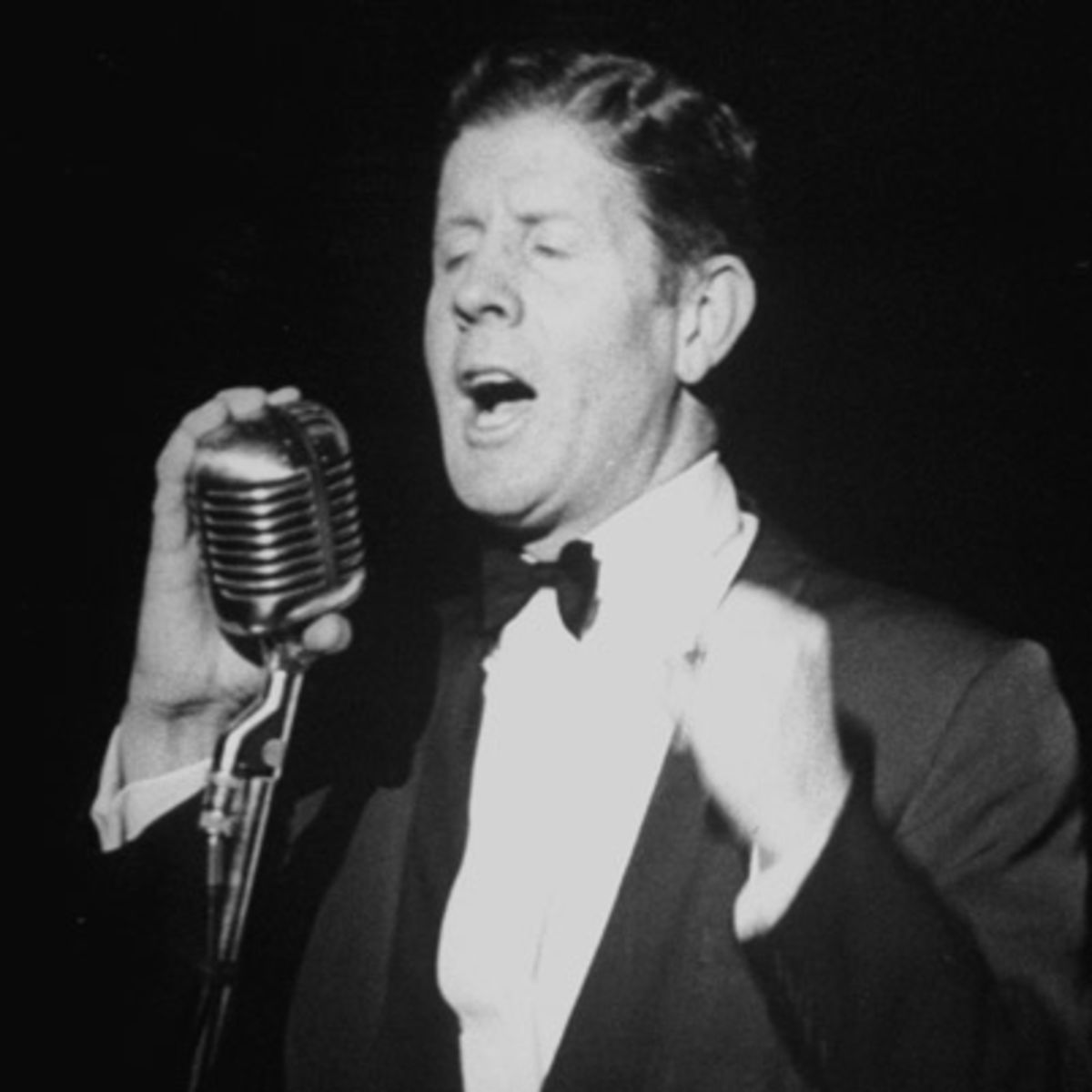
11.) You Outta Be In Pictures * Rudy Vallee (1934)

Two major forces were also at work in this early era of American history.  Film and, later, radio, were on the rise in the US, and as this fledgling music industry worked to develop it’s structure and form, the relationship film and radio had with one another was immediately parasitic.  As sound pictures began to develop, they were immediately married with songs, and radio could not only play records on the air, but promote film stars as well with drama and comedy.  These three media forms grew to become dependent on each other, and while film will undoubtedly get left out of this story (to be saved for some future series), the story of music and art in the 20th Century cannot be told without covering the subject of wireless telegraphy.

231574212.) When The Radio’s On * Jimmy Vigtone * Teenline Vol. 5

As the program moves into it’s back end, I decided to pull out a handful of songs that were not only about radio, but embrace the real center of this argument: the story of music is also the story of radio.  The Spirit of Radio could, in fact, be music.  There is something spellbinding about good radio, something I’ve been obsessed with for my entire adult life.  As soon as radio was self aware enough to do so, it started playing music for audiences, and I love exploring the subject of radio in a radio format.  It just seems fitting.

I’m not really that familiar with Jimmy Vigtone, and it’s possible that there was only the one 45 ever released.  However, I do know the Hyped To Death Compilations, which are all full of incredible gems of punk, post-punk, power pop, and other oddball records released all over the place.  I went through a phase around 2005 where I became obsessed with these collections, and every now and then I can find a song that is just perfect.  This one in particular gets stuck in my head all the time, and it really feel on the nose to me.

v99INab13.) Shikaku Maru Ten (Radio Waves) * CAN * Cannibalism 2

This track also works very well as something that runs behind vocal samples, obviously, but comes from a CD I found in a Goodwill here in Salem, and was singular in the kind of band it was, and for the kind of women that worked in the place.  I was very happy to pick it up for 50 cents, and it has entertained me well ever since.  At times listening to CAN feels like radio waves, rolling in.

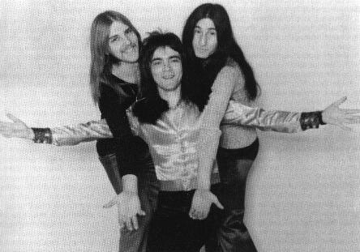
Original_1968_Rush_Lineup14.) Spirit Of The Radio * Rush * Permanent Waves

To be fair, I am not the Rush fan I probably should have been.  I am the right age, and they were absolutely popular (and even played in my home by my parents).  You couldn’t avoid them.  But I never really was interested in them the way I liked Pink Floyd and The Doors.  But in time I would feel the power of what they were getting at, and while I can appreciate certain aspects of them, I’m not bound by any nostalgia or early childhood memory to enjoy them in spite of their other musical crimes.

However, this song (and a handful of others) are just incredible, and The Spirit of The Radio is really where all of this was leading.  Perhaps in an exploration of the form I will find new meaning in it all?  It is possible.  There are plenty of subjects I have not been able to cover in a radio form, and I feel as if Audio Essays are only beginning to be understood as a way of telling a story, but at a slower pace.  Like Rush, maybe I’m entering territory that no one else has.  But to me, making radio like this makes me happier than I ever have been happy before, and as I work on this series, I hope that some of that excitement can rub off on the show, on the listener, and the world around us.

Elvis-Costello_bw15.) Radio, Radio * Elvis Costello * This Year’s Model

After all, its a Sound Salvation.

Happy Holidays From WTBC Radio

WTBCHolidayHappy Holidays From WTBC Radio

Free in iTunes: bit.ly/WTBCHolidayiTunes

Or Another Podcatching Device Using: bit.ly/WTBCHolidayMemories

With December in full swing, and with the holidays on everyone’s mind, it’s always a challenge to find something to listen to that isn’t the usual holiday fare, but is still on point.  In the tradition of TVLand re-running all their Christmas Episodes of classic shows between Thanksgiving and New Year’s Day, Our “Holiday Memories” podcast feed features all of our Holiday Programming, going back to 1998.

In this feed you’ll find every Holiday-Themed show I’ve done, and great shows by Ricardo Wang, DJ Victrola, and Miss Rikki.  We promise that you will not get your usual Holiday fare when you tune in to these vintage retrocasts that are the perfect cure for too much Burl Ives.

So, fire up a few Yule Log videos and enjoy hours and hours of holiday programming that rocks a little more than your average “X-Mas Show.”

WTBC Radio, In Beautiful Anywhere, Anywhen.

Now Open For The Holidays.


Negativland

MI0000194744Chicken Diction * Negativland * Happy Heroes

The mid-’90’s was an interesting time for Negativland.  With the U2 debacle leaving them financially drained but in the eye of the public, they were now revered underground heroes, and poised to pull a media prank worthy of their previous efforts.  The tour they undertook after Free in 1993 was probably their biggest one yet for a band that had largely avoided them in the past.  (Some of the members are agoraphobic.)  

They had just done a documentary with Craig Baldwin that introduced the public to the creative philosophy of the group, along with other’s who are using music for both activism and artistic expression.  Having built their career on manipulating media – and manipulating the way media is used to talk about art – they had already taken a number of pot shots at their favorite targets, from Guns to drunk drivers, suburban sprawl, religion, government, and they were making some noise outside of the art world, too.  

A-24120-001.jpgTheir collective – a group of suburban weirdos with a passion for home-brewed electronic music meets post-modern folk – had accomplished some pretty crazy stuff since they started fooling around with recorded work in 1979.  Really, after closing their last album with a deconstruction of the National Anthem, with samples that explain which drinking song the tune was stolen from, where do you go next?  

Pepsi?  

Previous albums had remained somewhat brief with regard to subject matter, and unless it was an EP, they rarely let a project take over an entire record.  But Don had found all of this incredible audio about Pepsi, and the concept was not just to do an album, but make a pop album.  With all the attention they were generating because of U2, it seemed reasonable that they could try and make a release what was their twisted version of a pop record, which was sure to get radio play around the time of its release. 

MI0000149204Dispepsi, the album in question, was proceeded by a 7″, which contained a track from the record and two new cuts by Negativland.  Initially concerned that they couldn’t be so bold with the title of the forthcoming album, they developed a promotional campaign where the CDs were not released with the letters in any particular order, resulting in a “call this number, hear this message” strategy to hearing a sample of the album, and The Weatherman telling us the real name of the record.  

The album spun off a single – “Happy Hero” – which was included on a follow-up EP, with even more new Don Joyce edits (some from his radio show), and “The Remedia Megamix” of the single.  As if that weren’t enough, they used this creative juice to release a re-mix record with Chumbawamba shortly thereafter, where they re-interpreted their huge hit “Tubthumper” in a typically Negativland-esque manner.  

This was all done to put attention back on the band and the world that they do, and to draw attention away from the SST release, Live on Tour, a disc that completed Negativland’s contract with their former label, in spite of the fact that the band members did not get any say in the way the release was packaged (or what was included on the disc).  Negativland was hoping that, if there was enough new material on the market that they had actually created, the SST Release would be conveniently forgotten, and rightfully so (The SST Release sounds terrible, from an audio perspective).  Fan’s at the time made stickers that explained the travesty, and would go into stores selling the SST Release and put the stickers on the discs.  It pretty quickly languished in the cut-out bin, where fans picked it up for a much more reasonable price a few months much later.  

Negativland’s Seeland Records, on the contrary, faired pretty well for themselves during this period.  The new album charted at college stations, and Pepsi make it public that they had no intention of any legal action against the band, which allowed the band to reveal the album name publicly, and garnered even more press.  (Even “Entertainment Weekly” plugged the record, and the head of Pepsi commented, “It’s no Odelay [by Beck], but it’s a good listen.”)  

Negativland was hoping they could “cancel a tour” and spend the time documenting a new lawsuit with Pepsi, but instead, they played a few shows here and there as they were able to, and used this creative spurt to push on into several new projects thoughout the next 20 years, including released by their heroes Plunderphonics, as well and championing a new generation of oddballs who all grew up on Negativland records, like Wobbly and People Like Us.  

NegativlandFor many bands, the kind of punishment they took over the creative use of sampling would destroy any future they might have had.  But Negativland’s deft navigation of their financial devastation has not only led to their status as elder statesmen of the experimental music scene, but as the fathers of DIY collage art in the modern age.  Many artists owe their careers to their pioneering records, and they are worth exploration if for no other reason than to experience audio art that is unlike “music” that you might be familiar with elsewhere.    

In many ways a cornerstone of their career will always be the U2 lawsuit, born largely over the use of some Casey Casam blooper tapes in a deconstructed “cover” of “I Still Haven’t Found What I’m Looking For”.  While the band themselves were very clearly influenced by (and fans of) blooper tapes, their own fans got into the habit of sending the band any number of rare and influential tapes that were making the rounds among collectors and aficionados, born out of this fiasco.  

young-donDon Joyce was particularly interested in material like this, as his interest in audio splicing and editing had enormous potential with some of their more famous creations.  As Dispepsi was largely about the soft drink, this Happy Heroes EP could be the perfect place to include a track dedicated to a similar institution, Kentucky Friend Chicken.  The blooper tape of “The Colonel” not being able to nail his own line had been floating around for years, and even Mr. Bungle had used it on their self-titled debut.  But using the same Dispepsi approach to integrating jingles into a sort of musical refrain, “Chicken Diction” illustrated the kind of hypnotic editing that Don was particularly great at.  

While it is clear that Negativland will continue without Don, his contribution to the band with tracks like this were completely unique and excellent additions to their aesthetic, and it will absolutely be missed.   

Man’s Invisible Messenger

History Lesson Part IIstock-footage-an-old-fashioned-graphic-of-an-antenna-transmitting-a-signal-around-the-world-with-audio

(Or, Maxwell, Morse, Hertz, Branly, Popov, Poulsen, Edison, Stubblefield, Fessenden, Monkeyface, Marconi and how!)

by Austin Rich

The story of the 20th Century is, in many ways, the story of the nerd. In the early 1900s, the train was technological revolution, and steam-powered printing presses saw a proliferation of newspapers and magazines in a way that allowed for quick and direct communication, at a time when prices dropped so low enough for anyone who could read to have access to the very ideas of the entire modern world. As communities slowly formed around these new technologies and forms of communication, the first attempts to connect the planet with phone lines was also underway.  Electricity was in the air, and the stage was set for the real nerds to plan the next revolution that would radicalize the country and change culture forever: music & radio.

Nerds played a muted role in the world around us in those days. Inventors have been at the core of the world’s evolution, one piece at a time, as Mr. Cash would later say. Academics cloister themselves much like monks, emerging with a new form of math or a new insight in geology, or a different take on roots rock. Explorers forge new paths and return with artifacts, or new albums that will blow our minds. The nerds changed the way our lives were lived, day to day. Once electricity was the plaything of inventors, it was a race to find the things that this new discovery could bring to the world around us. To this end, people gathered in their sheds, their kitchens, their bedrooms, and at their desks, reading about this and experimenting with that.

Isolated, alone, immersed in new research & cutting edge technology, the late 19th Century gave rise to the modern nerd in the form of inventors. Before long, these nerds would develop a new form of communication that makes The Magazine seem quaint and old-fashioned: Radio.

Electricity, and what could be done with it, was starting to become old news, and even hobbyists were more interested in bigger things. With all the benefit this wired gear was getting us, the ideas of wireless – the properties of electricity in a form that was not contained in wires – still seemed absolutely fantastic.  Wireless was an old notion, and had been floated well before light bulbs and telephones, but where it had been fantasy up until the late 1800s, now it was a Sci-Fi concept that absorbed the imaginations of many young inventors as they toiled in their workshops. The stage was set.

This is the story of Radio. Of enthusiasts who wanted to shape the future and had visions that many Americans were not yet able to imagine. As we continue our journey through these stories, what stands out to me is the solitude of these pioneers. Much like their modern counterparts, there were those who felt cut off and isolated from the world at large. Having few peers who understood their dreams and passions, these inventors spent endless hours at their desks, imagining the world and future as interpreted through books and magazines. The story of radio is as much technological breakthrough as it is mythology, hype, and marketing, performed by amateurs, hoping to make it big. In this way Radio and Internet have so much in common, and the way they each describe themselves is eerily familiar.

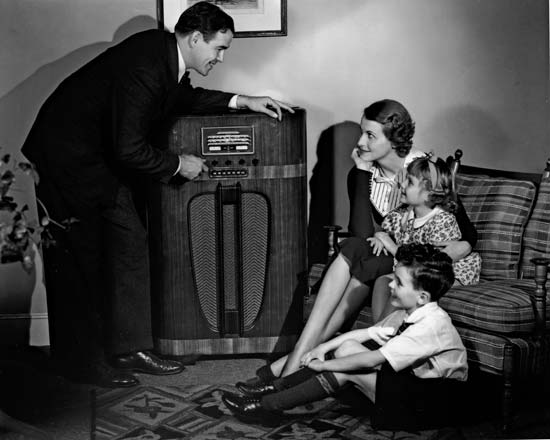
Presently, Radio is a quaint innovation, something that seems obvious and old fashioned, a relic of an era that must be buried in some physical book from the ancient past. But the impact Radio had on the world cannot be understated. In the first 20 years of the 20th Century, Wireless Telegraphy went from the stuff of pulp novels to a service that offered incredible communication over great distances. By 1930, Crystal Radio Sets were available to hobbyists in stories across the country. By 1940, regular broadcasts could be heard everywhere, all day, every day. Within the lifetime of my grandmother, she moved from a world devoid of instantaneous communication, to a world completely transformed by fireside chats and baseball games beamed straight into her home, all via a new piece of furniture that looked smart, too.

I can only equate it to being exposed to the blinking cursor on the TRS-80 I received for Christmas in 1987. Try to put in mind a paradigm shift of that proportion, and imagine how absolutely radical it must have been for those who understood the implications. I cried when I encountered that cursor, as I hacked out my first piece of BASIC code, trying to let sink in what this new reality afforded me. If Electricity was the rock and roll of our conception of the world, radio was punk rock, spreading ideas far and wide in a dangerous way that electricity could never dream.

As important as the story of electricity is, along side it is the story of radio, and both are so entwined with each other that they are essential to each other’s stories.

In addition to more excepts from Ken BurnsEmpire of The Air” documentary, I also turned to 90 minute recording by Ben Brooks, “The First 50 Years of Radio,” something I found on one of my rabbit hole dives through a link slog.  Ben was a radio & TV columnist for the New York Daily News, and Brooks helped assemble this recording to celebrate the November 1970 anniversary of the first broadcast of KDKA, one of the oldest radio stations in the United States. You’ll be hearing more from this documentary as this series progresses.

Now, let us get into this week’s history lesson.


Dead Media Office

urlIn the 1990s I would have killed for a CD burner.  I remember hearing a story about a guy who made a Cure Mix CD for a girl he was trying to impress, and part of me just died the moment I heard that.  “How can my mix tape possibly compete with a Mix CD?”  While I had spent all of my time in the years since I first got blank tapes around age 10 or 11 perfecting and honing the art of capturing sound with a cassette – and maximizing the way you can use that time each tape offered – that it seemed like the ability to make a CD would only increase the means through which I could better manipulate the sound you could hear during playback.  And, everybody listened to CDs.

Initially, when CD burners became fairly ubiquitous, they were amazing.  I didn’t build a computer with a CD burner until 2002.  But prior to that I always did my best to integrate sound in my computing experience, limping around with shitty desktop that I had cobbled together with stuff I salvaged from a gift-computer I’d received in 1993.  Prior to that it had been my TRS-80, and a few stray machines here and there that had been on the loan.  In the years since I had figured out how to make sound with a computer, and capture it from a turntable and cassette deck.  When the early Internet became stable around 2000, I would periodically send sound files to friends and ask them to burn discs for me.  It all started very, very primitively.

However, it wasn’t long before it was very easy for everyone to make CDs, and almost daily.  By 2004, it has already become passé, I had bought my first Mac and iPod, I was podcasting my show at KPSU, and the technology landscape had changed dramatically.  CDs were already an in-between technology, but I clung to this old-media idea of discs and making them, born largely out of those desires in the ’90’s.  I remember making tapes of my band’s recordings, thinking that if ONLY we could make CDs, we could compete on a different level.  We had a DAT, we had cassettes, but CDs were what people were buying, and listening to in cars.  CDs would be the future.  CDs meant some sort of permanence.  A physical disc!  How could having those around be bad?

Throughout all the of the 2000s I spent a lot of time sorting, organizing, and labeling my discs.  Part of this was for easy searching and finding later, as it was very easy to quickly burn a CD and not label it.  I invested in plastic folders, bought sharpies in large quantities, and developed systems for storing in this folder vs. that folder.  In the early days I had scads and scads of Audiogalaxy finds that needed organizing, and as my hard drive filled up I burned off discs to free up the space.  I couldn’t fathom the idea of terabyte drives in those days, and the 50,000 album archives being the standard seemed of another universe, a time that we could never possibly reach.  Meanwhile, these folders consumed money, discs, space, and time, and I never questioned it.

Around the year 2010 I stopped making discs of new stuff that I got from friends or the radio station, but it took me a few years more before I realized I wasn’t even looking at these old plastic folders anymore.  I had made the music more or less inaccessible.  All of my new toys and devices ran .mp3s, and my massive record collection was finally all in one house.  There was no shortage of stuff to listen to, and it was easy enough to let these CDs languish, as the idea of making discs now seemed quaint and outmoded.  I had a wealth of music in those burned discs, but they were entirely out of the realm of my listening experience.  For quite a while, I didn’t even own a CD player outside of my computer, and when I bought one, it was so small and so cheap that I felt sad for the me in the ’90’s that longed for this technology, that was so insanely expensive way back then, and was now so pathetic.

pirated-cds2202-540x334Over the last few moves I’ve carted these folders of burned CDs around, looking at them longingly and wondering what I will do with them.  But the same impulse that causes me to hoard everything has led to me defending the need to carry around this dead weight, as if they would someday have secret hidden value of which only I was aware.  As the discs rotted in my basement, they went, unlistened, unused, and unheard.

It was around last summer that I started seeing these discs as garbage.  Not the content; I still wanted the music on them.  But to continue to pamper and idolize them was insane.  What I needed to do was rip them to my computer again – completing their life cycle – and I could finally be rid of them once and for all.

In the last couple decades I have taken my .mp3s on a sort of hero’s journey, setting them adrift from the rest of my digital life on these island’s that were discs, only to reunite them with my larger digital library – almost 10 years later in some cases.  I immediately set to work establishing a playlist that played new additions to the library first, but did not repeat anything after it had been played once, and set about enjoying all of this stuff that I hadn’t heard it years and years.

There were a handful of discs that didn’t survive.  A few of them have degraded over time, and in other cases my taste has evolved.  But I was astounded at how much of it was actually still interesting to me.  In the end, however, I did keep one folder of discs.  I had to up the criteria quite a bit to ensure I didn’t just keep everything, so I was reduced to keeping only discs by my friends bands (that were, otherwise, never released anywhere), and the few discs I’d gotten over the years that really set themselves apart from the others because of cover art, or the work they put into the disc.  I kept maybe 20 discs or so.

1It took a lot of work, ripping them and labeling meta-data.  I have become a stickler for well-documented files, and the ability to search and find things quickly has become the primary definition of “good data” for me.  So, after a lot of finessing, labeling, and tweaking the genre filters, I managed to get it all sorted out, and I’m listening to an incredible selection of stuff from my past that is evoking all sorts of nostalgic listening binges.  The mix discs from my friends are the most interesting, but there are a few hundred albums that I just haven’t heard in all that time, the music locked away on these discs.

The experience has made me rethink a lot of things in the last few days.  Obviously, there are plenty of things we keep in our lives that could serve us better in the trash, and there are even more ideas that we have locked up in some container, without giving the notion a chance to breath and be a part of the ecosystem.  And, some of us are packrats.

As I churn through a wealth of new-old music, I can’t help but try and find the deeper lesson that were trapped in digital amber for so long.  What technologies are we rabid over now that will be in the trash before long?  The urge to go minimal is starting to overtake me, and while there are some things I am not ready to part with, there are so many that serve me no real function.  There was a time when material items were the things I surrounded myself with because I couldn’t surround myself with the friends and people I wanted in my life every day.  But that me – the mean that felt so alone – seems quite a distance from the me that is cleaning up all this crap now.

It is freeing to be rid of so many discs, but there is more work to be done.  My version of cleaning used to be to just pile everything in a box, and put the box away, and there are quite a few boxes left to be sorted.  But even these little battles against my own bad habits must be fought one at a time, and never all at once.

Happy Thanksgiving!

Happy 5741_50102_844_thanksgiving_cards_funHolidays from your friends here on the Inter-Web-A-Tron.  We hope that your holiday is off to a great start, and that you enjoy spending time with and / or avoiding your family.  We know that you made the right choice – whichever one you made – and we hope that you get to spend the rest of the day in a food coma, hopefully drunk.

If it is entertainment you’re looking for, you should check out our previous Thanksgiving Leftovers programs, which usually feature stuff that we just didn’t get a chance to play the rest of the year.  (Plus: we throw in some other thematic bits and bobs.

You can also enjoy my #NaNoWriMo2015 Novel, You Spin Me Right Round.

And, when you’re done with all of that, I recommend you check out archive.org’s amazing collection, “100 OTR Thanksgiving Holiday Shows,” which features an amazing collection of old radio programs of every variety, from the late ’30’s to the mid ’70’s.  It is not only worth your time, but is a great resource to have on the web.

And that’s it for the day.  I mean, it’s a holiday, for fuck’s sake.  What else do you want me to do?


You Spin Me Right Round (9): Lady Luck.

(A Detective imgresDexter Roland Adventure)

9: Lady Luck

Fish glared at Fred, and without a word Fred grabbed me and walked me into Miles’ office, pushed me down into the nearest chair, and said, “I would stay here if I were you.”  Fred shut the door behind me and I looked around to see if anything had changed since the last time I was here.  Aside from a few files and stacks of records having been moved, there was little different in the office.  But, as Miles was missing, it was also likely that he was the one who was on the gurney.

I didn’t get a chance to really see anything on the way in, but I saw Robert, the outline of a woman I couldn’t recognize, and another gentleman in a suit who was pacing around in the store.  It appeared that an officer was in Johnny’s old office, but I couldn’t make out much else that seemed odd to me.

I stood up and listened at the wall that was shared with the bathroom, but couldn’t make out anything.  Listening at the door did me no good either, but it was apparent that no one was in any hurry to talk to me.  I relaxed and wandered around Miles’ office leafing through his desk, to pass the time.  An envelope labeled “Marcus Little” caught my eye, partially sticking out of a lower drawer, and in it was $200 cash and four more joints, all of which I pocketed.  But aside from Miles’ office stash, there was little else of real interest to be found.  My phone buzzed but I ignored it, and began to glance at the photos on the wall.  I recognized Angie from a Dig Your Grave flier, and there were a few other musicians and artists mixed in.  I remembered the “Photograph” index card suddenly, and scanned the wall that was at eye-level when I was in the room before, and found a shot that read, “You Spin Me Right Round Staff Party.”  There was one woman with her arm around Miles, and she was the same person I saw talking to “T A” the morning previous.

I paced the room a smidge, and glanced at my phone.  It was a message from Carla saying, “Uhm, why did you give me a Weeknd CD last night?”  I glanced at the message a few times, but wasn’t sure what she could mean by it.

“Don’t you mean ‘Mission of Burma’?”

She responded with a photo of the CD.  “No, this is what you gave me last night.”

Something didn’t add up.  I had given her the Mission of Burma tape for safe keeping, as I assumed she would never get rid of it, and most likely it was a clue.  But now this?

I hammered out, “What are you up to later?”

“Working and avoiding you.”

“Can you bring the CD?  I want to look at it.”

“Bring cash.”

I paced some more, then fruitlessly sent a message to Sam, asking when I could see her next.  But I suspected that she would be contacting me the next time we would get together.  A slight twitch in my goin reminded me of some of the things we did last night, but if I had my way, we wouldn’t be so drunk and horny this time.  Still, the thoughts were fleeting and pleasant, but by no means caused her to write back.

After a few minutes of working off the remaining nervous energy, it became clear that Detective Fish was going to be a while before he was going to talk to me, so I started futzing with a phone and rolled a J out of some clippings in Miles’ stash.  I assumed that I would be in no more trouble than I already was, and Miles’ office always smelled like weed anyway.  (And, if my guess was right, he wouldn’t be missing it at this point.)  I started to feel a little sad about him getting knocked off.  Miles was a nice enough gent, ran a good store, and seemed like the kind of guy I could be friends with in another lifetime, or under other circumstances.  Up until now I assumed that he had a small case on his hands, internal fraud or an insubordinate employee.  But now it was clear there was more going on than I suspected, and now that the stakes have been raised, I was wondering if I would be able to sort this out before I risked my own life.

Screen-Shot-2015-02-06-at-10.05.15-PMHaving worked up a pretty good buzz, I lit a cigarette and turned on the radio.  Frankie was already in the middle of his morning block, where White Lion and Whitesnake were doing a back-to-back set that made my stomach crawl.  As the songs ended, Frankie’s voice came on:

“That’s right, KLOW rockin’ it a loud as me can with our Metal In The Morning, as I paint myself into a White Corner of The ‘80’s.  The hair may be receding and the spray has washed out, but the hair bands of your childhood roam the airwaves every morning on K L O W, with your fantastic DJ-tastic air-spastic host, Frankie Diamond!”  I was almost ready to retch.  “Now, we’ve got some terrible news, and this next track goes out to the friends and family of You Spin Me Right Round Records, who have suffered enough this month.  It is with a heavy heart that we bid farewell to Miles Dangerfield, the owner of said palace of platter, who has been added to the great cut-out bin in the sky.  You’ll never know how much you were missed here in this world, but let’s hope where you are are the turntables never stop.  Now, here’s ‘Landslide’ in honor of this incredible force in the local scene.  Some of us built our entire record collections around you, and we are afraid of loosing you and changing our lives completely.  Here’s to the crew at You Spin Me Right Round, here on K L O W.”

At first I let Frankie’s bullshit wash over me, but as I started to piece together what it was all about, Detective Fish threw open the door.  “Put that out, and turn off that crap.  What are you, a teenager?”

I looked Fish up and down and said, “Well, at least I still look good enough to pass.”

Fish began to pace and said, “Well, have you got your alibi, or should we just take you back to the station with us?”

“Does drinking count as an alibi?”

“Where?”

“Oh, here and there.  I don’t spend a lot of time in The City.”

Fish rounded on me, and leaned in.  “I’m sort of glad you think this is a game.  It’ll make pinning all of this on you all the more sweet.”

“What exactly are the rules to this game?  I’m a little slow.”

Roadblock3_zps4dd22fcfFish’s arm twitched, like he was going to slap me, but he relaxed and went back to pacing.  “It’s funny, you show up at two of my crime scenes, and both times you’re looking for the person I was called in about.”

I shrugged.  “Guess I’m a comedian.  Is he alright?”

Fish turned around.  “What do you think?”

I sighed.  “He was a nice guy, he didn’t deserve this.”

“Tell me about it.”

“And he was found in Johnny’s office?”

“Excuse me?”

I pointed to the office next door.  “Where the boys in blue are working.”

Fish shook his head.  “You seem to know a lot about what happened here.”

“And I saw a lot on the way in, too.  So you think I did it?”

Fish cleared his throat.  “You’re a suspect, for sure.  Where’s Sam?”

“Is she a suspect too?”

“Cut the crap.  Where is she?”

“How should I know?”

“Weren’t you wish her last night?”

“Who told you that?”

Fish’s eyes narrowed, and then turned away.  “Nevermind, we’ll find her soon enough.”

“What about Angie?”

“What about her?”

“Seems as if she’s connected to KLOW and this store, too.”  I pointed to the photo on the wall, to which Fish turned.  While he looked away, I cast a spell and hammered something out on my phone.

Fish looked at the photo, then his pocket buzzed.  He pulled out his phone and glanced at it briefly.  “Shit.”  He typed away on his phone, then turned to me.

“Where’s Sam?”

“The Sham?  Probably in the used LPs.  Here, let’s take a look.”

Fish came over and grabbed my by the bow-tie.  “Look, dipshit.  I’ve seen you two more times that I would have liked to see you today, and you are lucky that you actually are a detective, or your ass would be downtown quicker than you can say, ‘Black Mask.’  So, while we’re on the subject, maybe you just give up this case right now before we get to three strikes, at which point I’ll no longer be responsible for what happens to you.”

I said, “But Miles was my client.”

Fish growled.  “Of course he was.  Well, he paid you in advance, didn’t he?”

I nodded.

“And if I know you, some of his stash has been ‘lifted.’”

“I don’t know what you’re talking about.”

“Right.”  Fish mulled this over.  “I’m probably making a huge mistake, but just so we’re clear: if your phone rings, and its me, you answer, or so help me, it will be worse than going downtown when I catch you.”

“You have my word.  I’ll be waiting for your call, all night long if I have to.”

Fish grunted and walked out, leaving the door open.  I snapped a close-up of the woman on Miles’ arm, then re-read the message I’d sent Fish (forged from a “neighbor” as per the spell): “I looks like your car was stolen.  Cops just showed up.”

I gathered up my stuff and leisurely followed him out.  I glanced over at Johnny’s office, but saw that the uniforms were largely done.  I looked in.  Evidence markers were in one part of the room, and a small splatter and hole in video monitor (and the wall behind it) was clear on the far side of the room.  The other monitors were on, and from there you could largely see most of the various sections of the store, save for the front counter.  I glanced around some more, but aside from a spent condom (presumably from Angie’s rendezvous’) and a box of LPs that looked like crap mostly, there appeared to be little else of interest in the room.

I made my way to the store proper, and walked behind the front counter.  I knew I didn’t have much time, as the guy in the suit made me and was heading over.  I found the camera that was pointed on this spot, and then looked around the frame of what would have been visible to see what would have been in the monitor’s screen previously.  Obviously, the register would have been visible, but mostly likely there wouldn’t have been any money there at night.  There wasn’t anything behind the counter either, or at least nothing missing.  But someone went back there after the screen had been shot out to make sure they weren’t captured on the surveillance camera.  For what, exactly, seemed unclear.

I glanced around briefly, then noticed that beneath the counter there were stacks of items on hold for customers.  Once shelf was empty, and sitting on it was a QR code.  I ducked down and saw that it was similar to the other two I’d found.  It seemed as if there had been other items there, but where now missing.  I palmed the QR code just in time for the man in the suit to appear behind the counter.

“Who the hell do you think you are?” he asked.

“Marcus.  Marcus Little.  I’m a friend of Sam, but I see she’s not here.”

“Yeah, she doesn’t work today.  Why are you behind the counter?”

“Who are you?”

“Look, I can just go and get the police and see if they can get you to answer.”

“I’m sorry, let me move to the floor.  I guess I knew I shouldn’t have, but I was looking for another copy of this tape I was supposed to buy.  Sam had set it aside for me.  A Mission of Burma live tape?  I paid over the phone… my name’s Marcus?”

The guy in the suit looked me up and down.  “She’s not here, and given the current situation, you’ll have to come back another day.  We’re closing.  Maybe for a few days.  I hope you underst-.”

hqdefault“It’s just that I already paid over the phone, and she promised me the tape.”

The guy in the suit rubbed his temples.  “Then let me give you a full refund.”

“I’d much rather have the tape.”

“And I’d much rather that you leave.  Someone has died here, or is your perpetually dazed and confused mind so addled that you can’t see that?”

“That’s awful, for sure.  And I’m not trying to be insensitive, believe me.  But it was a Live video that I was really looking forward to.  Can you tell me when she’ll be back?”

There was a buzz, and the guy in the suit reached for his phone.  “Shit,” and he answered it, “Angie, I’m in the middle of something, I’ll call you back!” in a sort of whisper.  Suddenly, I recognized his voice.

The guy in the suit pulled out his wallet and took out a $20, then put it on the counter.  “How much was the tape again?”

“The cost isn’t -” but he took out another $20.  “Sir!”  I insisted, but when he put down a third I scooped up the money and left before he could change his mind.

All in all, it was a pretty good day.  Usually I show up at a record store stinking of weed, and drop $260 on vinyl.  But I had never score drugs and a $260 payday, merely by getting accused of murder.

You Spin Me Right Round (8): Indiscretions.

686266736_68fcc59d29_o(A Detective Dexter Roland Adventure)

8: Indiscretions.

By now we’ve all worked out what happens next, so I’ll do my best to neither denigrate the actions within nor to boast too bro-fully about how the evening transpired from here on out.  While I do not want to be accused of leaving out “the good bits,” I can only agree that they were, in fact, quite good bits, but only in the most relaxed definitions of the words could I claim this was even remotely “work-related,” and more pointedly, it seemed so cliche as to almost be too foregone – and thus, irrelevant – to mention.  It is with that in mind that I will be editing my own narrative here to my own taste, if for no other reason than to maintain the sanctity of these highly enjoyable acts.

Sam & I eventually got our food from the Tunnel, ate, drank, and flirted, and stayed one drink past when we should have, which was perfect.  I negotiated our tab, and met her outside where she was smoking a menthol and bobbing back and forth.  I explained that I was too drunk to drive, and she explained that she didn’t live that far away.  I rolled a cigarette and we walked down the sidewalk, occasionally bumping into each other like two spinning tops, that occasionally bounced into each other.

We went upstairs to her place, which largely consisted of a huge living room, a smaller bedroom & bath, and a kitchen that led off to one side.  She immediately went to her stereo and put on Funhouse, and as I fumbled around for a hatrack and bench to store my things, she produced a bottle from a modest liquor cabinet, from which she poured us each another drink.

The evening gets fairly hazy from that point on, but soon enough we were sitting next to each other, and from here I’ll let your imagination continue for me.  While we were busy imitating teenagers we flipped over a few records, drained another beverage, discussed watching the tape again, but instead found our way into her room, for a little more [censored] and [scene deleted].

Sooner than either of us would like to admit we found ourselves exhausted, the alcohol having as much effect on us than our unchecked libidos.  I was of the opinion that I could wait her out, and disappear once I was positive she was asleep, and took in the spare room that contained only a few dressers, two end tables, and the bed.  Just as I was sure she was dozing, I found myself too tired to actually go through with it, and found myself too tired to do anything about it.  Against my better judgement, I let myself fall asleep, and blissful oblivion overtook me as the various drinks, smokes & food of the day washed over me and did their work.

_DSC2665My dreams were obscene and repetitive, but not unwanted.

When I awoke, two things were immediately apparent: it was light out, and she was gone.  I let this sink in as I retraced where I was, and what most likely had happened.  It was clear I had been drinking.  That was most evident, and soon enough I pieced together the sex and the staying at her place, too.  Before long I had caught myself up to the story thus far, and was putting on my pants feeling fairly confident that I hadn’t made any more mistakes that I was used to making anyway.

I texted Suzanne at The Office to tell her I was on the case and making progress, but that I might have to spend a few more days working on a new suspect.  It was largely an excuse to get a glimpse of the time, and see if there were any other messages.

Suzanne pinged back, “How tall is she?”

I put my phone away and finished getting dressed.  I poked my head out into Sam’s apartment, but she was nowhere to be seen, and there were no sounds for any adjoining showers or kitchen to indicate she was home at all.  I combed back through the night, but couldn’t find any reference to her leaving or having an early appointment.  I noticed that she had moved my stuff to the couch, and on the stereo she had placed a note, standing up using a cute sort of origami that propped up the back end.

“Feel free to browse.  I should be back with breakfast.  Work up an appetite Little-man.  I’ll certainly be ready for more.”

I took the invitation to nose around the place a bit, but as I expected, there was no way she would leave me here with anything other than the record collection.  Aside from wardrobe and various accoutrements, typical kitchenware, and everything you’d find in a usual bathroom, there was little that was unexpected to be found in her apartment.  Not that I was the kind of person that regularly found things in women’s apartments that let to me suspecting them of something, but given enough time I can find a few interesting things in just about any place, but this apartment seemed entirely focused on the living room, the record player and the collection.

“Feel free to browse.”  Was she giving me a clue?  Or was that all there was to find here?  There were a few thousand LPs in the collection, and all of them were in meticulous order.  Almost, unused.  The place gave off the vibe of a prop, or a set, and her nonchalant attitude to the record collection’s safety seemed a little off-brand for her.  Any dedicated collector would never leave a stranger – even a fuckable stranger – alone if there was anything of real value here.

I rooted around in the collection a bit, impressed by not awed, and found a cabinet that I opened that contained some CDs, tapes, a few odds and ends, and strangely, an exact copy of the Mission of Burma tape I just bought from You Spin Me Right Round.  I opened the case to find a QR code that fell out too.  I compared the code to the one in my wallet from my copy, and saw that they were both very different.  I put the code and the tape back in the cabinet and paced around a bit.  I scanned the QR code with my phone, but instead of the digital data transfer, a flash of magic crossed my screen, and after a few moments, it took me to a page located at fifthelephant.com, and simply said, “Thank you!  Your package was delivered successfully.”

I paced around again.  I couldn’t trace the spell, but I can only assume that Marcus Little recieved something.

I checked the fridge, but it was no wonder that Sam had left to get food, so I put on Nation of Ulysses The Embassy Tapes, grabbed my bag, retrieved one of the joints Miles gave me, and my mind twitched.  Something didn’t seem right.  Of course, long ago I realized that I can’t trust my own mind, especially given the abuse I’d been putting in through recently.  I texted Sam, “There’s a rumbly in my tumbly.  What’s the 411?”  I sat in thought, and puffed.

“I got held up.  I might have to cancel breakfast.”

“But I’m horny now.”

“Haha.  Maybe after lunch?  My morning got complicated.  Sorry.”  And that was followed by an emoticon that completely failed to communicate to me anything useful.

I took a few more puffs on the J, then stubbed it out and applied some air-freshener to the area before closing the window.  I let the album finish, then made my own piece of origami for Sam that read, “Just let me know when I can get a rain check.”  I did another search of the place that revealed nothing useful, then I split.  It was at that moment that my phone started ringing, over and over again from a number I didn’t recognize, and was not leaving a message.  It persisted for quite a while, and I debated blocking it, but after five attempts it quit.  I made it a policy to never answer a phone number I didn’t recognize, and in particular to never do it while high.  I can only assume this practice has saved my ass innumerable times.

The truck was just where I had left it, with the addition of a parking ticket.  I climbed in and got myself settled, and plotted my next move.  It seemed worth it to get in touch with Miles again.  KLOW and Angie seemed to be connected in some way, and it might be worth it to get a little background on Dig Your Grave and see if there’s anywhere to move in that direction.  Plus, it would be nice to get some more cash and grass for my troubles.  I wasn’t quite sure what to make of Sam yet, but so far I was committed to finding out as much as possible.

It seemed odd that there was a magic imbued QR code in my Mission Of Burma tape, and I couldn’t quite make sense of what that was supposed to mean in the way all of this played out.  Sam didn’t strike me as the type who would fuck around with magic, and it was certainly not a part of the way that tape was originally packaged.  With magic involved as a part of the case, it sort of upped the ante.  This could be bigger than philanderous employees and a few broken sales dates.  What kind of spell would someone buying video tapes at a record store want to purchase?  If someone was using the store as a front, it seems like a very limited customer base.  There’s not enough traffic to indicate drugs, or worse.

Then, what?

I stopped in at one of the hundreds of breakfast food carts and consumed two waffle and sausage items that soaked up the remaining alcohol quite nicely, and made me feel human enough to want a cigarette.  I thought my eyes were playing tricks on me, as a CRX came up in my blind spot when I tried to merge back into traffic, but when I tried to make the vehicle again I couldn’t find it.  Darren couldn’t be that good of a tail, so it must have been another car.  However, a few blocks later it surfaced again, and this time I was absolutely sure.  I must be really around the bend this morning, because I didn’t even notice him.  My phone rang again.

I played a hunch and pretended I didn’t see him, and he seemed to get comfortable, so much so that he wasn’t even letting a car between us.  I shook my head internally, but my hunch paid off, as he suddenly peeled off my tail when it became apparent where I was headed.  My guess was that he didn’t have an endgame ready for when I stopped my car, and whatever connection he had to all of this was in danger of unraveling if he tried to keep an eye on me at The Record Store.

police_cars_at_night_resized_crop380wI was feeling very confident for the next couple of blocks, but when I started noticing police as I got closer, a sinking feeling collected in my being that got worse when I got closer, and found an ambulance outside the store, too.  Part of me wanted to just keep driving, but as this thought crossed my mind Detective Fish made eye contact with me, and his jaw dropped.  I parked the truck, got out, and strolled over with a cup of to-go coffee and said, “Well, what’s all this, then?”

Fish turned to Fred and said, “Cuff ‘im.”

“Excuse me?” I asked.  Fred came over and whispered in my ear, “Don’t push it.”

Fish glared at me.  “Turning up at two different crime scenes – randomly.  Most people would get the hint the first time.”

“I’m not most people.”

“You certainly don’t answer your phone like most people.”

“You should try leaving a message.  I’m pretty quick on the response.”

“Well,” Fish said, and smiled angrily at me, “then you should be able to answer this very quickly: where were you last night.”

“With a friend,” and my heart sank.  A gurney began to move through the doors of the record store, and I knew instantly who was on it.

“And they can provide a pretty solid alibi for you between Midnight and 6 AM?”

I looked around, and stuck out my hands.  “Well, if you’re going to cuff me, get it over with.  I’m not gonna get any less guilty in the next few minutes.”

You Spin Me Right Round (7): Rolling Stoned (Part 2)

shanghai-tunnel(A Detective Dexter Roland Adventure)

7: Rolling Stoned. (Part 2)

I glanced around the bar, and thumbed through my index cards.  Why couldn’t I just run off with her?  She would call at all hours, with hare-brained plans and adventures that wore me out but were some of the best times I’d ever had.  It was the vacation that ended everything.  After a date that ended at a party and turned into a three-day adventure with her, Carla got a call with the offer to go to Machu Pichu, essentially at a 75% discount, provided she could leave the following afternoon.  High on the lack of sleep, I couldn’t conceive of dropping everything and running off suddenly, no matter how unbelievably fun being with Carla was.  She was everything I wasn’t, and was most confident and comfortable when she had no idea what was happening next. I spent too much time in my head, laying out my next move too carefully, and always working toward a smooth and well-planned conclusion.  I had a job, and clients, and to just drop everything… what would happen when I returned?  Would we return?  These were questions I couldn’t answer then, and I can’t answer now.

I looked at Carla, and finished my drink.  “Someday, I will come here, and take you on a motorcycle trip through the jungles of Viet Nam.”  She raised an eyebrow.

“Don’t get my hopes up.”

I left another $20 for her, and began to wend my way down to the bowels of The Tunnel.

It wasn’t even that late on a random weeknight, but already The Tunnel seemed alive with more action than most places got on a Friday Night during Fleet Week.  Delinquents and kids of every denomination hung around at every table and in every corner of the place, sucking down drinks and smokes faster than the three people working the bar here could handle.  While there was never any threat of implied violence, or even danger of any kind, there were certainly interesting conversations happening here and there, and all manner of business was being arranged around me.  The bar pulsed with TSOL, and I meandered through underage and crusty sailor alike as I kept my eyes out for Sam.

I was a tad late – as I had planned – and I didn’t imagine that she would leave, and finally I caught sight of her playing pool with a pair of duds who looked bewildered.  She was clearly running the table and hadn’t spotted me yet, so I negotiated getting a beverage and rolling a smoke, an endeavor that put her well into running the table.  She didn’t look too different from her outfit in the Record Store, but her tight jeans and Stooges t-shirt certainly accentuated with more definition what I had already spent all day imagining.  Lightly made up, and with slightly more primped and pampered hair and ears, she looked amazing, and I watched as she commanded the pool table the way she dominates customers in the store.

When she had cleaned up the table, she handed the cue back to Dud 1, and picked up the money that has been sitting on the edge of the table.  She glanced at her phone, then picked up an errant hoodie.  Dud 2 looked at her and said, “C’mon, one more game.”

“Sorry, I’m tired of playing with limp-dicks like you.”  She spotted me, so I nodded and motioned with my head a table I was about to clear for us.  She glared at me, and made a b-line for the bar.  I eyed a pair of dudes in messenger gear in a heated discussion, and leaned over the table.

“You two don’t ride fixed gears, do you?”

The stopped talking and looked at me.  “Huh?”

“I just walked in, but I saw two dipshits fucking with a pair of bikes, like they were gonna run off with them.  I’ve been trying to find someone to tell.”

The pair looked at each other, and in a fluid movement drained their drinks, grabbed their stuff, and bolted up the stairs.  I eyed a bear couple on a date a few tables over, and negotiated a swap with them by using another $20 and an excuse about the lighting, then made myself comfortable at their secluded table.  My timing was incredible.  Sam emerged from the bar with her drink, only to be bumped by two careless messengers searching for someone in a hat, causing her to spill her shot and beer.  After a flurry of heated arguments and gestures toward the bears – who now felt themselves to be targets of hipster closed-mindedness – it wasn’t long before the messengers were ejected too.  Sam was given another drink for her trouble, and by the time she joined me I was completely unprepared for the slap she gave me.

“Usually I have to try and kiss someone before I get that kind of treatment.”

“That’s for being late, asshole.”

I took a drag of my cigarette, and said, “You seemed to be having a good time.  How can I make it up to you?”

“You already started; I put my drink on your tab.”

“Oh.  Is there anything else I’m not aware of getting you, or shall I just be surprised by my bill when I pay for it?”

“I depends on how long we’re here.  I haven’t finished convincing you to buy me dinner yet.”

“I suspect that will take a lot of convincing?”

258s“At least a few drinks, that’s for sure.”

I sipped mine.  “Am I catching up, or are you?”

Sam laughed.  “I imagine we’re about even, now.”

“Well that’s good.  I would hate for one of us to have the advantage over the other.”

“Believe me, that will never happen.”

I sipped my drink reflectively and looked her in the eye.  “Well that sure fills me with a heap of confidence.”

She smiled.  “Like, I feel really sorry for you.”

I rolled a cigarette.  “You’re waiting for me to say something first.  To make a mistake so you can use that as leverage against me as we keep talking.  It’s a good tactic to use when you’re trying to stay in control.” I looked at her as I put the cigarette in my mouth.  “I’ve used it before.”

“I can just walk out of here the moment you start getting creepy and analytical, too, what’s your point?”

“My point is that we’re both smarter than we’re each used to dealing with, and the verbal sparring that we’re both used to is probably only going to make us feel a little awkward, for a while, anyway.  You seem to have been pretty forward from the beginning, so let’s drop the bullshit and talk shop.”

Sam cocked one eye and reached for her drink.  “It’s true, I don’t meet many like you.”

“I don’t agree with your take on The Gizmos.”

She almost crossed her eyes.  “You’re off to a great start.  So you’ve been listening.”

I looked up to do the math.  “Skimming and scrubbing, so to speak.”

“Well, that’s more than most.  I fuckin’ swear, you’d think people listen to two of these at the same time.  I can never get anyone to actually talk about the shows.”

“I just think you’re missing a bigger point, a larger clue.”

“You wanna mansplain proto-punk to me, now?  Out of anything else in the world we could be talking about?  Wow.”

“It’s not like that,” I offered.  “I just want to talk about records.”  I puffed on my cigarette.  I continued, “Look, it’s clear we are birds of a very-different feather.  I’m gonna defend The Who and Harry Nilsson, and you’re gonna convince me that Miss Machine is one of the most important albums on the oughts.  I’m Oscar, you’re Felix.”

“Ouch.”

“But, my point is, we both showed up to this.”  I held up my drink, and grudgingly she held it up to give me the barest of toasts.  “Why am I letting you do some old-boy bullshit here?”

I looked her in the eyes.  “Because you like it.”

She bristled.  “Strike two.  You never get to tell me what I like.”

“Fair enough.  Lesson learned.”

She drained her glass.  “So, tell me how I’m wrong about everything, Mr. Little.”

“How about I get you another drink, and we have a discussion about music instead?”

“Music is everything, you short sighted prick.”

I raised my air and got the attention of a waitress, who went into the throng to fetch us some drinks.  “Have you seen my record collection?”

“You are treading on thin ice, mister.  I’ve been around enough piece of shit indie rockers to know that they just can’t imagine a woman knowing as much about records as they do, gosh darn it!  You wanna see a group of people with old-timey values and who use coded interactions to devalue the story we have to tell… fuck you!”  She flipped me off.

“Perhaps I got off on the wrong foot.  I’m not puffing out my chest, or trying to reinforce some bullshit that, I agree, should never have become the way women get treated in the scene.  I’m on your side with all of that.  But I’m a Gizmos fan, and I just read them a little differently than you.  I thought it would be fun to dig in, so I jumped to the offensive.  I thought you were giving off a ‘let’s gnash teeth for a bit’ kind of vibe.  I didn’t mean to jump the gun.”

As I wrapped up, the waitress arrived with another set of drinks.  “Thanks,” I offered, and handed her a $10 for a tip.

Sam sipped her cocktail, a whiskey sour.  “So you have a problem with the story of proto-punk as told by Samantha Drake.  This I gotta hear.”

“Not a problem, just an observation.  I thought your story on Debris was fascinating, and the MX-80 bit was amazing.  For someone who couldn’t have seen Suicide in their original incarnation, you have a  pretty exhaustive understanding of those early days.  I really got the sense that I was at a Rocket From The Toombs practice session, and that was pretty amazing.  And your take on The Residents is incredible.”

She smiles.  “Mr. Little, I had no idea you were so good at foreplay.”

“You should see me around a turntable.”  I puffed on my cigarette.  “My point is, I think you do all of them a huge disservice by trying to place them in some sort of archeological context when it comes to the overall narrative arc of… wait for it… Rock and Roll, with capital Rs.”

Sam looked at me quizzically.  “Look, I’m flattered that you actually read the blog.  If anyone even gives my stuff the time of day, it’s often just the podcast, and then to argue with me about how I’m wrong, or that they think I sound hot from my voice, or whatever creepy thing they’re onto that day.  But I can actually say that no one has ever actually wanted to talk to me about the stuff I write in the blog.”

8596331323_d654453351_b“Wow… now I feel like the weirdo.”

“No, you shouldn’t.  It’s just… you just went up slightly in my esteem.”

“Well, I have a lot of ground to cover.”

“So what’s wrong with Rock and Roll?”

“Not what’s wrong with it, but the story that’s told.”

“I’m not sure I follow.”

“We The People.”

“Okay, I know you’re not talking about the line from the Constitution.  Yes, the Florida band?”

I nodded.  “Where would you place them in the grand narrative arc of music.”

“They’re a Nuggets group.”

“Because Rhino lumped them into the boxed set with a million other bands.”

“They have a garage sound.”

“Initially.  But the end of their run, they were starting to get a little heavy, and a little fast.  Not enough to make a difference in their time, but with hindsight, it seems as if they are doing something that is more like Blue Cheer than Bill Haley, dig?”

Sam sighed.  “I hate guys who say ‘dig.’”

“But the problem with history after the fact is that is misses the whole point of the Rock & Roll virus.  Once the idea is airborn, a linear path of transmission is no longer possible.  There isn’t a throughline that goes from Little Richard to Taylor Swift that accounts for all the random permutations and juxtapositions that tweakers in a garage in Bloomington in the ‘70’s.”

Sam took a drink and chewed her lip for a moment.  “I don’t think that there’s a throughline, but the thing that unites everyone who picks up a guitar is that they are aware of the fact that Elvis was a very real artist that made music.  It’s like that John Flansburgh quote: ‘Once people hear this it’s going to be hard to deny that we are Beatles fans.’  Your influences are unconscious, perhaps, but you can’t just create music in a bubble.  The instrument itself carrying a symbol and meaning that you can’t strip from it.”

I nodded.  “Yes, everything is intertextual, for sure.  Let me put it another way.  What do you call Link Wray’s Music?”

“I love Link Wray!  I call it Link Wray’s music.”

“But what genre is it?”

She gave me a raspberry, and said, “We both know genre is bullshit.”

I tapped the table.  “Exactly!  So when five guys get together in a garage and plug their instruments in, you know that the auteur theory of rock and roll is that together they chart a path through the topographical oceans, or whatever bullshit they create for each other.  But they don’t sit there and say, ‘let’s invent noise rock, or garage-soul, or whatever.’  They have all been infected by the idea of Rock and Roll, this powerful notion that says, ‘synthesize everything around you and filter it through this simple, three-chord format that allows you to churn out hip-shaking sounds when played just the right way.’”

Sam shook her head, “No, that pre-supposes that rock and rollers are all aware enough to filter their interests into music.  You think KISS was self-aware enough to know what they were doing?  They wanted girls and coke and handjobs, period.  It’s the intertextual nature of the guitar in a rock milieu that created KISS, because glam was the next iteration of this story cycle.”

I shook my head.  “I just don’t agree.  I don’t see the guys in MX-80 sitting around, intentionally trying to ‘be’ protopunk.  I see them all sitting around in a room, getting high, and churning out what they thought were amazing riffs, trying to piece it all together until they felt the song was ready.  The weirdness of those songs speaks to a vision not bound by their place in a narrative, but by the whims of some random guys who just so happened to be friends.”

Sam chewed her lip.  “So everything is random, chance?  There is no meaning or bigger picture, but just pointless acts that exist in a vacuum, isolated from each other?”

“No exactly.”  I puffed on my cigarette.  “Here’s a long shot: The Flaming Lips.”

Sam did not take her eyes off of my, but took a sip of her drink.

Q-Bar“These guys clearly had the influence of middle American squarely on the tips of their tongues.  They are the epitome of DIY.  And their mutation of punk was just their cultural melange, the stew they were soaking in.  Yes, they are influenced by the sweep of history.  A decade earlier or later and they would have been a different band, for sure.  But it is their interpretation of the virus that makes them interesting, not their place in the story.  They are their own thing.  To try and place them in a larger swing or story that involves someone else leading to them, and then to someone else entirely, diminishes the importance of a story like theirs.  Without room for them to have grown and created their own mythology, then their place in something bigger becomes meaningless, a footnote.”

I took a sip from my bourbon, and looked back at her.  “What do you want for dinner?”

She smiled.  “You.”

“I’m a meat-eater.  I taste terrible.  What about thai?”

“I’m sure we’ll get to thigh soon enough.”

I picked up a menu and said, “I have a feeling they might even have something here we could agree on.”

She nodded and took a drink.  “That’s for sure.  I have an old VHS player back at my house.”

“And what about a full kitchen where neither of us have to cook?”

“We can order in.”

I sipped my bourbon, and pointed to it with my other hand.  “But I just got started.”

She frowned.  “I don’t like waiting.”

I handed her a menu across the table.  “Look, why don’t we get a bite, have a few more, and then I can feel like I earned going home with you.”

Sam gave me her bedroom eyes again, then glanced down at the menu.  “Alright.  But I get very unhappy if I don’t get my way.”

“And I have no intention of disappointing you.  But not on an empty stomach.”

“Okay,” she said, a little more playfully.  I motioned to the waitress and we reviewed the menu together.

“Yes,” she asked?

Sam said, “Gimme another drink, and a BAMF with salad and tots.”

“And you?”

“A Luna, salad and tots on the side, and a double-shot of bourbon.”

“Got it.”

I let the silence hang there for a bit as I rolled another cigarette.

“It would be nice to watch that tape with you later,” she finally said.

And that told me everything I needed to know about who had the upper hand now.

You Spin Me Right Round (7): Rolling Stoned (Part 1)

IMG_4851w(A Detective Dexter Roland Adventure)

7: Rolling Stoned. (Part 1)

I was fairly familiar with the police shakedown routine, and I usually learned more during those interactions than I would under normal circumstances.  In any given situation the cop is the most dangerous guy in the room, so it is often better to wrestle with a known quantity than anything else on-hand.  If Fish wanted to play alpha-male around me, then so be it.  I’ve spent my whole life being a small cod in a large ocean, just on the outside enough to get squeezed out by the “real deal,” and I couldn’t help but laugh at the fact that they have no clue what’s going on.

I wonder how often Fish is referred to is Vigoda?

I climbed into my Truck and threw my bag up on the bench.  I rolled a cigarette and turned on the radio, and KLOW continued with douchey indie-rockers trying to out-hip each other on the rarity of the import, the obscurity of group, or the cocaine glitter sprinkled all over the tunes.  Music like this was hard to milk for any substantive magic, save for a glamour or two, but the problem with vapid bullshit is that buried deep within all of it are the occasional gems that can really bring in the big spells.  For someone in my position, listening to the radio actually works great for a case like this.  I’m sure I’ll need to add a third – and possibly fourth – identity before the night was over.

I lit the cigarette but watched as various people dispersed from the area.  Diamond was long gone, but I suspected I would see him again soon enough.  Dickheads like him seem to pop up at the worst times.  Fish & Fred motored off, and I watched as I puzzled over everything that had been going on.  I scribbled a few notes on an index card and shoved it in the pile with the rest.  I rummaged around in my bag and pulled out the Crispin Glover CD Robert gave me, turned on the cab light in the truck, and looked at it.  The writing on it was the same as the writing on the station CDs in their library – N & P, for No Play, a way of cataloging albums and songs to communicate to the DJs what you can and can’t play on the air.  This disc belonged in the station, and Robert led me straight here.

Straight to what seemed like a terrible scene in a detective movie.  Another performance?

I opened the CD again and pulled out the liner notes.  Aside from what I assume was there when the album was released, there was a small “review” taped in there by one of the DJs, largely panning the review, but cited “Auto-Manipulator” and a pre-cursor to the rap-rock phenomena of the mid-’90’s.  Something caught my eye on the disc, and as I removed it from the CD from the case, a piece of paper fell out, with a phone number on it.  But the thing that had caught my eye was the two letters hand-printed on the paper inside the center-hole that held the CD in place.  I shook the case, and to my surprise, it sounded as if there was something inside the case.  I pried it apart, and found that inside there was another photograph of the person from the group Dig Your Grave, who I now knew was their drummer Angie thanks to their Wikipedia entry, who was also, conveniently, an employee of You Spin Me Right Round Records who likes to have sex in Johnny’s old office.

I switched off the light and continued to puff on my cigarette, letting all of this sink into place.  I looked at the phone number again, entered it into my phone as “Crispin Glover,” then put everything back in my bag.  Angie.  This wasn’t a coincidence, and Robert directing me here was certainly his intention.  Either there’s more to Angie than I already suspected, or Robert is working double-time to make it look that way, which was just as interesting.  Angie was probably only really guilty of being promiscuous and attractive, which can been an albatross for a lot women.  Jealousy – perhaps she’s not into Robert? – could be motivating him framing her.  Musicians and record stores go together like peanut butter & rice crackers, and her being connected to both is not a conspiracy, but the sign of a good music scene.

It was clear that whoever answered the phone when I called Mr. Glover back was going to be more relevant than I thought.  “The Big Problem ≠ The Solution. The Solution = Let It Be.”  I also realized that, no matter who answers that phone, that it wouldn’t even be close to the one behind all of this.

Accounting for traffic and other hold-ups, I would still be incredibly early (by my own standards) for my rendezvous with Sam, and considering how hot-to-trot she had been all day, it was likely I could be very late and she would still be there.  As I pieced a lot of this together, Darren exited the radio station, and began walking toward a car.  I dialed Mr. Glover’s number using the *67 prefix, but Darren made no sign of receiving a call, or what playing it incredibly cool if he was.  I hung up and started the truck.  It had been a while since I’d tailed anyone, and it seemed like it was a good idea to see if I could do it in a beast of a vehicle like this.

urlDarren walked to a very-used Honda CRX that he crawled into and drove off in.  With traffic as bad as it was, it was easy enough to wedge yourself behind one other car and follow someone without them getting too suspicious.  Of course it looks like the car behind you is following you very slowly.  Everyone is angry and tense because the traffic sucks.  Everything looks like you’re not moving at all.  So long as I let a new car occasionally get in between us as his immediate traffic bubble changed, I was able to keep up with him easily, and a simple glamour did what our own human frailties weren’t already covering.

Darren eventually drove up to an apartment complex, hopped out and ran up to his pad.  I sat in the truck and decided to wait for a bit.  If things got really dull, I could splitsville, but it was early enough that I just hung back a block and enjoyed the show.

It wasn’t long before something happened.  From a side street someone walked directly toward Darren’s car.  It seemed to be the silhouette of a man, but from this distance it could be anyone.  I got out of the truck and moved a little closer to improve my view.  The silhouette closed the gap between it and Darren’s car, and opened the door as if Darren hadn’t locked the doors.  (And with a CRX, why would you?)  I got a bit closer, but could only make out the silhouette setting something on the steering wheel.  The silhouette close the door quickly, and I returned to my truck.  It seemed as if I had stumbled upon a much more interesting quarry.

I targeted the silhouette and began to creep in the truck, doing my best to hide the sound of the engine and the lights while still allowing myself to drive.  The silhouette moved quickly, and I followed him to a bicycle, which he hopped on, and rode very quickly in the same direction.  I continued following him, but after a few twists and turns, he rolled into a lot for a real estate agency that was a mile or so away, where the silhouette opened a side door, hoisted up the bike, and walked in.

I sat for a moment.  There was only so far I could keep going with tailing people this evening, and I’d already interrupted one steakout to land myself in a second.  I pulled out an index card, took some notes about where I was, then rolled back to Darren’s apartment.

Miraculously, time was on my side, because I returned as he was just opening the door of, and getting back into, his car.  I could just make out that he took something off the steering wheel, and then sat in his car for bit longer than you would normally to start the car up.

I already had a lot to work with now, but as I was already pointed in the right direction, and it seemed as if Darren was too, I decided to keep following him on lark.  As I didn’t have a place of my own in this town, it didn’t make any sense to try and make myself up for getting together with Sam.  There was no way I was going to look anywhere as good as she would when I got there, and it didn’t sound like she wanted to spend much time in the light, anyway, if I was reading all her signals correctly.  I knew that it was going to be really easy for her to play me like a chump, and I was partially attempting to brace myself against that very real possibility.  If I was honest with myself, women like here were always going to be a problem for me.  Certain curves, certain sounds, certain conversations, and I’ll build you the tower of babel if you’d just touch it for me once in awhile.

KLOW sang at me, “I got an uncontrollable urge I wanna tell you all about.  An uncontrollable urge that makes me scream and shout.”

Traffic was getting interminable, and when it looked like I was about 20 minutes away, I noticed that Darren was still right in front of me.  I lit one of the joints that Miles gave me and rolled down the window.  It had been a while since I had gone to a place like this, and the coolest of the cool 20-somethings would be thick as the morning fog, rolling in around me to consume every table, chair and inch of the bar like plague rats.  It was probably a good idea for me to build up a bit of a bubble around me, to steel myself for this experience.

As I finally got to the Shanghai Tunnel, there was absolutely no parking anywhere in the vicinity.  I stubbed out the joint, and drove for another 15 minutes looking for parking quite a ways away.  I grabbed my bag, locked the truck, and began walking slowly toward the bar.  It was a pleasant night, dark and breezy, but not cold.  There were plenty of young people out, wandering to this place or that place, the city alive with activity and booze.  You could feel people dancing here or cheering there.  Movies and bands and performers of every variety all vied for a few precious hours of your time to offer you a moment of joy and excitement amid the long days of abject boredom and discomfort.

The Shanghai Tunnel began life as a small room, with an inexplicable kitchen a floor beneath.  The name was no joke; the kitchen had been built into the actual shanghai tunnels that criss-crossed the underbelly of the city, actually used by pirates and sailors in the old days to get cargo and people back and forth between the docks and the entertainment district.  Every imaginable story you can think of really did happen in those tunnels, and in some parts of the city, still do.  Over the years, the owners dug out more of the tunnel that surrounded the kitchen, until they carved out another bar, then another side room, then a third, etc.  These days, the place is a rabbit’s warren of activity and degenerate behavior, and with so much space, it is hard for even the bartenders and staff to keep an eye on everything.  It was a good place to know about if you wanted to score drugs, make connections, or have a one-night stand, and while the cool kids like to think that they can hang out in a “dangerous” bar just like everyone else, the very real dangers that are reputed to happen are actually going to a Gun Club soundtrack.

pic_museumAs I got closer, I slowed down and rolled a cigarette.  I decided to hang back and finish the smoke, and let the night air soak into my hat and clothes before springing it on her.  Sam was no idiot, and she was reading me as much as I, her, and I wouldn’t be surprised if she already knew I wasn’t Marcus Little, and probably a lot more.  It would be odd, in fact, if she hadn’t already pieced it together.  It was possible that she was getting ready to ply me for something she was trying to figure out, and I decided long ago that I would hold fast to my cover as an earnest Mission of Burma fan, which was not at all difficult to feign.  For all I knew, she was going to ambush me, and as I considered this, I saw Darren walk right into The Tunnel, too.  Astounding.  No matter how much I was trying, the case wouldn’t let me STOP working on it.

The Shanghai Tunnel, as you approach it, has a walled off outdoor patio, with lighting and tables for those who cannot consider the idea of drinking without a cigarette.  An upstairs bar was being manned by a woman I knew from another lifetime ago, a tall and powerful looking person with hair and tattoos that spoke of how much you should not fuck with her, and I remember our time together being intimidating and a bit wild, which was exactly as advertized by what she projected.  She hadn’t made me yet, but I was certainly going to have to make sure I don’t slight her by pretending I hadn’t noticed she was there.

Beyond the upstairs bar are a pair of restrooms, and on the right is a staircase that descends to where the kitchen and the rest of the place spread out from.  A second bar was there to accommodate the further drunks that you found spread out through the Tunnel.  I could see Darren perched at an outside table, but looking at the door into the Tunnel, not exactly a fool when it comes his job, but certainly made him a poor tail, for sure.  The only other way into the bar was through an employee service entrance, and as confident as I was that I could probably bluff my way through it again, I knew that it wasn’t worth it to blow my wad on taking a risk this early in the evening.

I pulled out an index card traced its outline while muttering the words to “Hangin’ On The Telephone,” and when it began to shimmer like a Cell Phone screen, I clipped a $20 to it, tapped the card with my phone, and floated it to Carla, the bartender.  It moved slowly toward her as I furiously typed away on my own phone, and when it was close enough to her, I moved my arm down slowly, so it would land on her bar.  It wasn’t much longer before she noticed it, the money, and the message I’d just furiously hammered out on the screen:

“How much more for you to bounce the bearded kid out front?  – Dex.”

Carla looked up and glanced around, until she noticed me poking my head out around the corner, waving in her direction.  She glanced around until she made Darren, wrinkled her nose, then typed out, “I’ll buy you a drink provided you don’t want anything.”

I smiled.  She pocketed the money, and set the card on the bar, which shifted back to its normal form.  Carla walked over to the bouncer, whispered something in his ear, and returned to her station.  The bouncer has a large and intimidating man who seemed to only to frown.  While I could not hear the exchange between Darren and this man, I could imagine it quite well, and before long the bouncer had his hands on Darren’s shoulder, urging him to get up and leave with all speed.  I made eye contact with Carla, and when Darren was finally gone, I waltzed in and took a seat at her bar.

I slapped a $20 on the bar and said, “Make it a good shot of bourbon, please.”

“No problem,” and she poured out a very healthy shot.  “Now, do I let you keep this, or are you here on business?”

“Pleasure, but while I’m here…”

She snatched the other $20 and said, “Jesus, you never give up.”

“It’s not what is seems like.”

“You’re lucky I’m not busy and I enjoyed ruining that hipster’s night.”

“I’m also lucky that you’re a beautiful woman who never saw fit to give me what I really deserved.”

“Ah, Dex, it’s like you sort of grew up, but still don’t get it, do you?”  She patted me on the head, and smiled.  “I was such a sucker for your magic.”

“And I was lucky that you didn’t break my arm like you threatened.”

“You were a horse’s ass, that’s for sure.”

“Compared to your’s it was hard to look like anything but.”

She smiled again.  “Okay, you’ve softened me up, but if I don’t like what you’re poking at, I’ll expect bigger tips.”

“You Spin Me Right Round.”

ShanghaiDownstairs“Like a Record Store, baby, I dig.  What about it?”

I shrugged.  “I’m only just getting to know the place.  Good selection.”

Carla winced.  “That fuckin’ cunt.”

“What?”

“So you’re here to meet Sam.”

“And why didn’t you want to be partners with me in this?  You were always better at making connections than I was.”

“She’s downstairs,” Carla said, coldly, and turned away from me.

“C’mon,” I said, then sipped my shot.  “It’s not like that.”

“It is like that.  I saw how she was dressed.”

“What about Miles?”

“Why do you want to know about him?”

I shrugged again.  “He’s like a father to me.”

Carla narrowed her eyes.  “So it’s like that, is it?”

“Well, until I can figure out what’s really going on.”

Carla laughed.  “And that’s why Darren…”

“What?  Do you know something?”

“No, no.  I just thought you were in the Detective business, not trying to climb the pretentiousness ladder.”

I smiled, and pulled out the Mission Of Burma tape.  “Hey, climbing has its perks.”

Carla saw the name on the tape and bristled.  “Little?  Oh shit, you are in deep.”

“Excuse me?  Who is he?  What’s going on here?”

Carla glanced around, then looked me dead in the eyes, “I don’t know much, and I shouldn’t even be telling you this much, but I can say: Little is trouble.  Gang shit, from what I hear.  Often just a delivery man, but I suspect that he might be more.”

I raised an eyebrow, drained the glass, and tapped the side of it, into which she poured more as we continued.  “I see.  And yet, he shops at You Spin Me Right Round?”

“Have you met Angie yet?”

“Dig Your Grave?”

Carla tapped the side of her nose.  “I saw her here once, and Zorn said she was waiting for a Little.  He didn’t show.  She split.  Not much to go on, but we suspect they’re chummy.”

I sipped reflectively.  “I was starting to wonder if Little was real, or something I made up.”

Carla laughed.  “Maybe a little of each, from the sounds of it.”

I produced another index card and began writing.  “It’s funny, you don’t own me shit, and yet you’re perfectly straight with me.  It could be Darren having this conversation with you, and me snooping around the staff entrance looking for another way in.  What gives?”

She looked me up and down, and said, “No way I’d let that fuckstain talk to me.  I have some… fond memories of you, even if you were a pussy” and her bedroom eyes landed on me in a way I hadn’t felt in a long time.  I looked at her for a moment.

“Yeah, those were great times that I wouldn’t mind living again.”

“Fuck off.  When you’re ready to drop everything and go to Machu Pichu with me, we can consider it.”


You Spin Me Right Round (6): Sound Salvation

vAsT6Jp(A Detective Dexter Roland Adventure)

6: Sound Salvation

Getting to The Radio Station took longer than I anticipated, even with the traffic I suspected would be a hassle.  After a cigarette and some less-sexy thoughts to calm me down, I lit a flare I found in the trunk (which I was surprised was even there) and put it up on the road near where I “skidded” off.  It was a bit longer before someone stopped to tell me they couldn’t help, and still longer after that before someone who lived on the Island came to see what was up, and offered genuine help in the way of coffee and a blanket, as by now my feet were wet from inspecting the car.  The gentleman by the name of Tom stayed with me until the tow truck arrived, and even offered to help with the driver laughed and suggested that the three of us push the car out, which might be faster.  One changed tire and a jump later, the Bug was up and running again, and further inspection from Tom revealed that it would, most likely, continue to run for me for the time being, but he recommended that I take it in as soon as possible.

I thanked everyone involved, and before I left sent a photo of the car (pre-river removal) to texted Sam, “I’m wet with anticipation.”

It seemed like too much effort to call in a hit-and-run just yet, and I wanted to let the Deluxe Drivers feel as if I’ve been “taken care of” for the time being.  I made a quick call to a friend who lived in the area, and he agreed to let me swap cars for the time being, an old Ford Pickup, for a few days, and after a quick vehicle exchange, made it to KLOW, and managed to leave myself with plenty of time to be fashionably late for my meeting with Sam.  In spite of what I was sure to find to be exciting texts from her, I decided to leave things hanging for the moment and ignore everything from her until we met in person.

Like every radio station I’d ever been to, this one was difficult to locate, in a small and shitty space, and appeared more like a dentist’s office on the outside than it did a place where music would be.  Outside of the few big broadcasters in any given area, every other radio station in the world starts out in a closet, and if it has a door, it is nearly always somewhat sketchy.  This was no exception.  While KLOW was supposed to be a heavy-hitter in the area, and a lot of people I knew listened, access to the station itself was down a side street, turning down an alley, and beneath the light of an ill-maintained lamp, a simple sign showed the letters K L O W.  Had I known there wouldn’t be parking, I would have hoofed the last block, but as a police car was blocking my ability to pull through, I backed back to the street in a dimly-lit place in a huge truck I was not used to driving, and experience that 100% sobered me from all of my chemical intake that day.  I popped a piece of cinnamon gum in my mouth and entered the station.

KLOW was no exception when it came to the interior.  A few hanger-ons were sitting in various locations in the station, headphones on, laptops out, ironically not listening to the station.  Every imaginable surface was covered in graffiti or a poster for some album, and the rock-club visual stimuli was offset by the out-of-context, bright fluorescents that illuminated the room far too well, revealing how pale everyone was.  Various rooms led off from the main area, and above one in-particular an “On Air” sign was lit up, and through the window the animated figure of Frankie was working his magic.  Through another window, two people were seated around a microphone, chatting away, and through a third an engineer was working the faders.  Pacing around one corner was a guy with an acoustic guitar, mumbling to himself the words to a song he clearly wrote, and was about to play.  Another DJ was peering into the window where Frankie was working, and you could hear the faint sound of Frankie wrapping up his show for the day.  Amid all of this two cops were standing, very much sticking out in a room they did not belong.  One was a detective and the other, a beat cop, to whom a kid with a beard and tattoos was giving his full attention.

As the door closed behind me, the sound triggered a comical turning of heads that all rotated to meet my wandering gaze.  I waved, and lost the attention of nearly everyone.  “Can I help you?” asked the bearded kid.

On The Air

“No,” I rejoined, and continued glancing around the studio.  This seemed to annoy the kid, but the detective did not care one way or another, and said, “and you didn’t hear the caller at all?”

“Hey, I didn’t know anything about this until you guys showed up!” and the kid threw up his hands, as if giving up.

“Relax, you’re not in trouble, kid,” said the Detective, and the beat cop began to walk in my direction.

“Is that you, A-” he began, but I cut him off.

“Fred!” I said in a hopefully-recognizable tone, and I thrust my hand in his as I grabbed him near the shoulder.  “It’s Marcus, you remember?”

Fred rolled his eyes and said, “What, are you a DJ now?”

“You know how it is, in this economy,” and behind us, the Detective and the bearded kid continued, clearly getting frustrated with each other.

“I know your economy, anyway.  Are you still -”

“When the money’s right.”

“And did the money lead you here?”

“Well, Frankie did, anyway.”

Fred shook his head.  “You might want to steer clear of this, then.  He just called us.”

“What?” was all I could get out, but before I could continue plying Fred with my innocent routine, Frankie burst out of the studio, his feathered hair and make-up hiding his true age, who was ready for his second performance of the day.

“Detective Fish, thank god you’re here,” Frankie belted out.  “I received another call today, while on THE AIR.  Hope you’re here to tell me when this is going to stop.  A professional like me just can’t deal with this terror plaguing him every time he comes to work.  What kind of police force is this that can’t catch a criminal like this?”

I laughed, with so many handles on this suitcase presenting itself.  But this caught Frankie’s attention, who looked over in my direction.  “Who are you?”

grbu-00086Fred stepped in, and said, “This is, uhm, Marcus…”

“Little,” I offered, with my had.  “Long time listener.”

Frankie started saying, “You’re n-” then cut himself off.  “Marcus Little, you said?  Interesting.”

The Detective was uninterested in me, and turned to Frankie.  “What did he say this time?”

Frankie rolled his eyes and adopted a condescending tone.  “If you’d been listening to me all this month, you’d know that the voice is in the kind of whisper that masks its gender.”  Frankie shook his head, then looked at me and mouthed, “Can you believe these guys?”

“What did THEY say, Diamond?”

Frankie sat down on the nearest couch and produced a long, thin cigarette.  “THEY, as you say, said that I had made some poor choices recently, and if I didn’t change my ways, I would pay for it.”  One of the hanger-ons seated on the couch extended a lighter, obliged Frankie, and returned to their headphone and laptop.

“Have you considered the advice?” I asked.

The Detective turned to me, and said, “I’m sorry, but I’ll ask the questions.”

“THANK YOU, Detective,” said Frankie.

I looked at Fred, then turned to walk to the other couch to seeth.

It was clear that Diamond was a problem for everyone, and that his presence in the room is enough to command the kind of patience you need for a child. I rolled a cigarette and listened to my police-approved counterpart to see if there was anything useful or new that I could get from the situation.

“Did you take the call on the air, Frank?”

“Do I look like I don’t know what I’m doing?”

“And when did the call come in, again?” asked The Detective.

“How should I know?  I’m not some magic-powered robot animated by spite and frustration.”

042309-radio“Darren?” the Detective asked, and the bearded kid looked up and said, “Yes?”

“How long before we can review the archives of today’s show?”

“Shouldn’t be long,” Darren said as he turned to the office and tried to flag down the attention of someone within.  “We keep a running recording of all our shows, which post to the computer a few minutes after the show airs.  If something needs to be reviewed, or if the show goes out as a podcast too, the recordings are automatically posted to the appropriate places.”

Another kid – this one with glasses, and bicycle accoutrements – popped out of the office finally, frowned as part of his usual facial expression, and looked only at Darren.  “Yeah.”

Darren motioned again, and the kid sighed, got up, huffed and puffed the entire way over, and stood next to Darren.

The Detective looked at the faux-messenger and said, “Who are you?”

“Brandon?  Who the fuck are you?”

“Detective Fish,” he said, pulling out a badge.  Brandon looked somewhat less annoyed, but still put out to be standing there.  Fish let the silence build for a moment.

“And?” asked Brandon?

Darren pipped up, “Brandon is our tech director.  Handles the gear, the recordings, the website, and everything that makes KLOW work.

The Detective looked over at his partner.  “Fred, work with this kid here and get the archive of the show so we can review the call.”  Then, looking at Brandon.  “Make sure we get Frank’s show, in full, and try not to show too much contempt for me if you know what’s good for you, huh?”

Brandon sighed, but did not make eye contact with anyone else, nodded toward Fred, then went into a different office door, through which a few computers and other pieces of gear were visible.  Fred turned to me, shook his head, and followed him.

“Look, Frank,” started the Detective.

“Look, nothing!” shouted Frankie.  “This is at least the 8th time this has happened, and I’m starting to wonder if I’m the only one taking this case seriously.”

“I assure you, I’m giving this case exactly the right amount of seriousness, considering the circumstances,” the Detective offered flatly.

“So why hasn’t this person been caught?” demanded Frankie.

The Detective’s tone got deeper and quieter suddenly.  “Now you listen here, Frankie.  No one has died, and no crime has been committed.”

“Yet!” Frankie insisted.

“But one is about to happen if you don’t watch your tongue!”  Frankie turned and looked at me, then motioned to the Detective with his eyes.  “We take threats like this like we do all our other investigations, and we try to solve the case, rather than arrest everyone who listens to your show.  Which we should probably get around to doing anyway, as they’re probably all guilty of something much worse.”

Frankie bristled, but I merely puffed away on my cigarette and enjoyed the show.

“Now, shall we talk about the number of phone calls you’ve had to the police, recently?  How often you threaten us when we don’t take immediate action?  How often you send back the beat cops and insist on an actual Detective to show up?  There are laws against abusing the public resources that we offer, and there’s plenty of room in my car if you want to go for a ride.”
radio-stationFrankie flicked his ashes silently, but said nothing.

“How does You Spin Me Right Round fit into your regular show, Frankie?” I asked from the other couch.

“Who wants to know?  I mean, really, who are you?”

“Answer the question, Frankie,” the Detective prodded, and turned to give me a look.

“The station has a long-standing deal with them, to get records for air-play.”  Frankie suddenly looked worried.  “No no, not that.  Not payola, or anything!  They support us, we support them.”

Darren piped up, “If we mention them on air a certain number of times, we get new records from them in trade, that the DJs use to program their shows.  I have the Underwriting Paperwork if you’d like to see it.”

“FRED!” yelled The Detective.

Fred poked his head out of the other office.  “Yes?”

“When you’re done, team up with this kid for this Underwear Paperwork, or whatever,” The Detective said.

“Your on-air friendship with Miles & Robert seems fairly chummy for someone who is just working with their business, professionally,” I continued.

The Detective turned to me fully and asked, “Little, is it?”

“Marcus, yes,” I said.

“Cram it, Little,” he commanded, then turned back to Frankie.  “Is there a conflict of interest here?” he asked, to both Darren & Frankie.

Darren shook his head, while Frankie said, “I’ll pretend you didn’t suggest that I would stoop to something like that.  I know Miles, and Sam, too.”  Frankie looked at me suddenly, then looked away.  “Professionally.  I would never use my status here to abuse that relationship,” he said to Fish.  “That seems like something a…” and he turned back to me, “lesser person would do.”

It was clear to me that Frankie and Miles were connected, and that was enough for me to let that stew and percolate as the evening progressed.  I looked at the time, and while it was still a while before I was supposed to meet Sam, with traffic and finding a place to park the truck, I thought it would be best to avoid the continued abuse, and motor.

I stood up, but Fish turned to me, and with the smallest of gestures urged me to sit back down.  Clearly, I was next.  I drew on my cigarette and let it out with a sigh.  This is what I get for sticking my nose in.

Frankie was starting to feel as if he was no longer the center of attention, and decided to continue.  “If we are finished here, Detective, I would like to go.”  Then, directed at me and Darren, “See, I’ve been working all day, and I’d like to get home, get some food, put my feet up, and pray that these phone calls don’t keep me from falling asleep tonight.”

“Yeah, yeah, we’re all worried about your sleep, Diamond,” Fish muttered.  “You.  Little.”  And, he pointed.  “Stay on that couch, and don’t move a muscle.  FRED!?”  This time he moved his entire body out of the office where Brandon was hammering away.  “We good?”

“We will be.  Just need to get the paperwork from this guy,” and directed his thumb toward Darren.

“I’m gonna walk the legendary Frankie Diamond to his car,” continued The Detective, who then turned and led Frankie out of the station.  On his way to Darren’s office, Fred gave me a glance that conveyed everything and nothing.

I stood up, and began to wander around the station, looking at all the crap on the walls.  On small end-tables and any flat surface, unfiled albums sat around, continuing the visual motif of rock and roll that could not be containing by a mere 40,000 Watts of power.  I stubbed out my cigarette and began looking at things in that way that you do when you are killing time, and it was in this state of mind that I glanced around and noticed a photograph on a wall with another familiar face in it, a woman’s.  There was a phrase on the photo – Dig Your Grave – and it took me a moment or two to piece together what it could mean.

I wandered over to the stacks of CDs and looked for the Ds, but before I could get any further, two letters stood out, written in pen on the back of another album.  Gears began to turn, and as I thumbed through more I found a disc labeled, “Dig Your Grave – Six Feet A Sunder.”  The photo matched.  I began pacing in thought, wondering what all of this pointed to, and pulled out my phone to thumb at it for a while.

Fish returned, and shouted, “Are you done with your pity party, Brandon?”  Brandon was now wearing a bike-helmet, and poked out of the tech room he and Fred had been in.  “Excuse me?”

“OUT!” commanded Fish, and Brandon grabbed his comically waterproof bag and walked out.  “Little-man.  Quit looking at Tumblr-porn and get in here.”

I acquiesced, and before I could get comfortable he snapped on an overhead light and slammed the door shut.

“Just who the fuck do you think you are, Dexter?” he snapped.

“Whew, thank you Detective, that was going to save me a ton of explaining.”

“You think you’re funny?  It’s bad enough that vapid creepoids like Diamond are always trying to rattle my cage, but you come in here during an official inquiry, start using a fake name and step all over my Waltzing Toes?  I don’t even have to come up with an excuse to lock you up, you dipshit.”

“You wouldn’t do that.  I talk too much.  I’d keep everyone up all night with my bullshit.”

“Maybe we should find out?”

“Maybe I should help you.”

Fish laughed.  “Right.  Like I need you to find a crank caller.  For all I know it’s my 13 year old, bored out of his head because I took away his Atari or whatever.”

“Well then, case clased.  Wanna get a drink?”

“Cut the crap, Roland.  I know who you are, and I know your reputation.  You think Fred is the only person who used to work with you?  Cops talk, you know.”

“Right.  You stitch-n-bitch is well attended.”

Fish slapped me.  I absolutely deserved it, but I decided to feign that it actually hurt.

“Why are you here?”

“I’m on a job.”

“For who?”

“Now, you know I can’t tell you that?  My client -”

“Your client.  Shit.  Really, Dexter?”

“- wants me to look into a few things, all above board.  Frankie is a person of interest.”

“Fuck Frankie, he doesn’t know shit.”

“Perhaps.  He’s already said plenty.”

“Then you know who’s been calling him?”

“I’m afraid that I don’t know.”

Fish chewed his lip.  “Maybe we should go downtown.  Tampering with a police investigation is more than enough at this point.”

With one hand I began swishing back and forth, creating a metronome effect, and started to draw off of the massive collection of albums in the station.  A small burst of energy formed in my fingers, and I conjured a quick spell.

imagesI pulled out my Green Lantern Fan Club card from my wallet with my energiezed fingers, and handed it to Fish.  “Look, I have a current Private Investigator’s licensce.”  I pulled out an ATM reciept.  “And here’s a reciept, showing I was paid in full by my client, who prefers to remain anonymous at this time.”  I let that sink in for a beat.  “I don’t carry a gun or any weapons, I have current ID for the truck I’m driving.”

“It’s a truck, now?”

“Long story.  The point is, I’m just doing my job.  In about an hour, I will clock off, and you won’t see me again until I pick up again in the morning.  I have a lawyer, who’s quite familiar with getting me out of Jail, too, so if you’d like to waste the entire evening with this Waltz, as you call it, be my guest.  Let’s do it.”

Fish handed back to bullshit I’d foisted on him, and looked at me again.  “You’re a suspect at this point, Dexter.”

“That’s fine.  I don’t like you much, either.  But you know I can’t withhold relevant information about the case from you without making myself an accessory to the crime, and and believe me, if I knew anything about your 13 year old kid making prank calls, I would have mentioned it ages ago.”

Fish glared at me.  “What’s your point?’

“I’m investigating a case involving the record store, and Frankie has enough connections to that store to make him a person of interest.  But, to my knowledge, he’s done nothing wrong, and might not even be involved in the case.  I was dropping by to see if those connections led anywhere.”

Fish mulled this over.  “This is the first I’m hearing about a record store, but you’re right.  It probably has nothing to do with the crank calls.”  Fish chewed his lip, then put his hand on the door to open it.  “If I can’t get in touch with you when I need to, so help me, there will be an APB for your ass issued quicker than you can say ‘radio.’  Capiche?”

“My ass, Detective?  Why not the whole body?”

Fish threw open the door and yelled, “FRED!  Let’s get out of here.”  Fred, armed with some documents and a CDR, nodded at me, then followed Fish out of the station.  Behind him, Fish yelled, “Later, ‘Little.’ “

You Spin Me Right Round (5): Travel Arrangements

the-hideout-1956-4-a-car-chase-through-the-docks (A Detective Dexter Roland Adventure)

5. Travel Arrangements

I sat there re-reading our exchange a few times, and slowly found myself nodding off, so I glanced around a bit to make sure everything was where it should be, balled up my coat, laid back, and let myself nod off as I took in what had happened that afternoon. Attractive women kept flitting across my vision, and flashes of the nude beach I’d driven past earlier occasionally intruded to create a terrible melange of urges, guaranteed to lead to poor judgement. It seemed as if I was out only momentarily, but when I groggily came to a couple hours later I felt like I was ready to tackle the second half (and much more complicated) portion of the day. I reviewed the scenery carefully to make sure I hadn’t left anything behind, then loaded my belongings and myself into my car. Frankie Diamond was there to greet me with some lounge music set that seemed appropriate for my evening.

Sauvie Island is both smaller and bigger than you think it is, and it took me a few minutes of driving on farm roads and small beach tracks until I found something that was paved, and a bit longer before I found signs that helped direct me back to The 30, and in the meantime I’d accumulated a fair amount of traffic behind me that was either used to confused people like myself, or were all afraid of passing out of over-politeness. But once an actual two-lane road opened up, a few people grew adventurous, and soon enough only a few people were behind me, and I led the soothing sounds of Martin Denny ease me away from the countryside.

Things were looking up when I saw the bridge up ahead, and asdae-20060709-4805 I was beginning to plot my path to the station I noticed a Chevy Deluxe that could not possibly be any older than 1949 move into the other lane to pass me. It would probably have not grabbed my attention had it not been for the fact that the car had no visible plates, and that it had a twin that kept its position just behind me. As I was wondering to myself what the chances were that two very similar cars would both be following me, the turn for the bridge was rapidly approaching, and the passing Deluxe suddenly bashed into me, pushing me off the road.

I was stunned; not only was this completely unexpected, but I had little time to react. I immediately turned into the Deluxe, but my tiny Bug was having little effect on the situation, and it was clear I was either going to ram into the wall rapidly approaching, or I would have to turn off and take my chances with the embankment that went into the river. As all of this was happening, I felt my phone buzz again, but the thrill of getting another message from Sam didn’t have the same impact at this moment. Sensing a need to make it a bit further into the day than I was currently, I veered right, hit the grass, and slammed on the breaks. The Bug failed to turn over, but skidded and slid in the embankment until it nosed into the rocks and sand on the river, and as I came to a sudden stop, the car was angled ass-end into the river. From that vantagepoint I could see the pair of Deluxe’s speeding across the bridge toward HWY 30, with a small orange scrape on the right side of the one that banged into me.

images My adrenalin was through the roof, and as I sat in my car, stunned, it was apparent to me that this case had more to it than broken street dates.

I pulled out my phone, and saw a picture from Sam; she had a towel around her hair, and a Long Hind Legs LP conveniently covering much of her chest, but was otherwise unclothed as even more of her tattoos were showing. “Getting Ready. Hope this brings you pleasant dreams.”

For a moment, I stopped thinking about the pair of Chevy’s, and instead focused on the pair in the photo. If I wasn’t so terrified, I probably would have reclined my seat and thought of England.

You Spin Me Right Round (4): The Missing Walls

Metro, Sauvie Island Organics and Howell Territorial Park. Thursday 10/17/13. © 2013 Fred Joe / www.fredjoephoto.com(A Detective Dexter Roland Adventure)

4: The Missing Walls.

On my way out of the store Robert handed me a paper bag about a ½ foot wide and said, “I hope this helps. Sorry about earlier.” I nodded, but decided to give him a little more of the silent treatment, and walked out the store. I didn’t see Sam anywhere, and it was probably better I didn’t distract myself with more of her before I got my head together. I sat down in the driver’s seat of my car and situated myself, tossing everything I’d accumulated into the passenger seat so I could take it all in.

I rolled down the windows and up a cigarette, and pondered the inevitable traffic snarl that was ahead of me. It was getting on into the early afternoon, and I needed a place that I would be left alone where I could sip on my flask reflectively. It was a bit out of the way, but it seemed as if Sauvie Island was out of the way enough, uninhabited enough, and removed enough from the action that I could engage in some high-level meta bullshit. It was also just far enough away that I could try to absorb some music in the event there was enough call for a spell or two later.

I started the car and KLOW came back to life, “The Diamond Hour with Frankie Diamond” still on, the title clearly a misnomer considering how long ago I last tuned in. He was in the middle of a particularly long glam rock track that smelled of cocaine and innocence, and I drew on it for a moment before pulling out my phone and texting Sam, “Where are we meeting again?” I pulled out of the lot and was fortunate enough to get immediately stuck behind a Subaru Outback with a Star Trek insignia in the bottom right corner.

My mind kept turning to Angie in Johnny’s old office, and while I quite liked what I remembered, I puzzled over who it might have been with her in there. It seemed as if that might be a lead that could pay off, and if I can’t crack the case, at least I could maybe enjoy some eavesdropping to tide me over on those particularly lonely nights. I have a few thoughts who “A T” might be, but I had a feeling that the identity of the woman was probably going to be a little more useful in making sense of what that was all about. Robert seemed like a moody kid, and if I had to hazard a guess as to what his role in everything was, I would just have to take it back later. Still it seemed as if so much of what I saw was a show, like some bizarre Muppet Show backstage performance that was meant to confuse me more than lead me in the right direction.

It’s funny how you can look at something and read it 900 different ways. I replayed508344-20080627_-_067_-_OR_-_Sauvie_Island_-_Oak_Island my trip to the store a few times in my head, crimson & clover, in some sort of ocd attempt to plumb it for further secrets, but if any were there to be found, they were certainly not presenting themselves in this traffic! [honk] My phone buzzed, and my thoughts immediately went to Sam, trying to figure her out. It feels like she’s playing me, but how? And why? Her act seemed fairly rehearsed, but I can only imagine if you worked in a Record Store like that and you had a figure like her’s you’d be used to having to say the same thing over and over to every Creep who wants her to touch his Radiohead.

The song came to an end and after in interminable number of commercials, a voice broke through the din, “This Is Frankie Diamond, boys and girls, slammin’ and glammin’ my way through the early afternoon rush hour that never stops in the city of Blazers, and I think there’s even a sports team with that name, too.” The sound of a bong ripped through the radio. “But seriously folks, we’re pussy-footin’ our way to the prime-time drive-time five-time blast, with the five least requested songs to make that drive home that much more annoying. You’ll see, when Frankie Dee laughs with glee!” I shook my head. This guy was so annoying that I almost changed the channel, but then I heard, “but let’s stop foreshadowing the evening, because we have a little something for Robert the lonely Hearted. Frankie and all of us a K L O W want to wish you the best of luck. Know that you can count on KLOW when you are Low, K? Hahahahah, bring me The Cure, and ‘Boys Don’t Cry,’ that’s for sure!” Then a woman’s voice came on and sang, “K L O W!” before the familiar guitar part kicked in.

I reached for the bag Robert had handed me in the store, but thought better of opening it while I was driving. I left it on top of the pile in the passenger seat, and focused on driving. But now it seemed that perhaps Frank might be my next interview. He sure seemed to be closely in tune with You Spin Me Right Round Records, and while there could be any number of reasons for this, it was worth checking out and besides, I hadn’t been in a radio station for quite some time. It would be worth it to sneak a peek at their records, anyway. Besides, it was possible I might know someone there, with the number of years I used to spend in the business. However “The Diamond” is involved, I can only imagine that it is unsavory merely by the way he talks on the air.

My phone buzzed again and I got the kind of jolt you feel when you think it might be a date. Stupid fuckin’ traffic. [Honk.]

I had to put up with two more Frank Diamond voice overs, another commercial block with the same ones I’d heard previously (just in a different order), and an interminable King Crimson song that was going to run into “Billy The Mountain,” but fortunately I had arrived at my destination. Sauvie Island is not too far away from civilization, the the number of farms, unpaved roads, nude beaches, and secluded areas where all you can hear are the birds and the crickets make it a perfect place for reflection. All it required was a nice place to sit and hang your mirror.

I found a spot and pulled off, throwing everything into my bag and getting out to hoof it bit. Through a small path that seemed well-worn, I popped out on a secluded stretch of beach that I had brought a date to before, and through another pair of bushes I was well-off the beaten path. I sat down, lit one of the joints Miles had given me, and began to rummage through my bag until I found the package that Robert had given me. It was in a paper bag with nothing written on it. I pulled a CD out of the package, and found an album by Crispin Glover. “The Big Problem ≠ The Solution. The Solution = Let It Be.” A hint, or a message from Robert? I opened the disc, but aside from the regular packaging I couldn’t see anything different about this any any other album. It appeared that the back cover had been marked up with a pen, and I thought I could make out the letters “N P” on it. I put the disc back in the package, and into my bag.

I picked up my phone and was shocked to see that I not only got reception, but that there were two messages from Sam. The first the photo of her upraised middle finger and the message, “Wrong Number, Asshole!” Then, the second message, 15 minutes later, “You can’t take a joke, can you?”

I took a few puffs, then snapped a photo of the view and sent it to her with the message, “I was driving. What’s your excuse?”

bildeI pulled out the bag she had given to me that was supposed to go to our friend Marcus Little. He should be getting to the store in a couple hours, and unless Miles had another copy of this squirreled away in that disaster of an office of his, there is going to be a very uncomfortable conversation this afternoon. I pulled the tape out and immediately felt my phone vibrate. I laughed, and ignored it for a moment. While I’d never seen the tape before, it didn’t look unusual in anyway. Opened up the packaging, and a slip of paper fell out. It was printed on thermal paper, and looked like a receipt, but not for You Spin Me Right Round Records. This place merely had an address, some charged for “items,” a total, and a QR code at the bottom. I almost threw it away, but suddenly a little story was developing: someone bought this from this address, sold it to You Spin Me Right Round, and Miles never found it, and put it back on the shelf. I chuckled. I put the receipt back in the case for the tape, and put the whole thing back in my bag.

“I was a little worked up, so I had to go work out,” was the message she sent back. I took another puff and decided to wait before responding. I was certainly in the mood for what she was sending signals about, but my mind was turning over the morning, and a few different images were starting to form in my mind’s eye. I thumbed my phone for a bit, and called up the most recent episode of “The Record Hop” and instead listened to her talk about the Unwound boxed set on Numero Group’s label. I sat on the beach, and for a few moments felt nothing, as I let her voice carry me off to a mindlessness that felt as if everything was “right” for a few minutes.

I stubbed out what was left of the joint, and laid back to enjoy the scenery for what felt like two hours, but was most likely a few minutes. I took a nip off my flask and reached for my Index Cards. They were all a mess, so I began to sort through them, discarding the crap, re-transcribing the other ones, and assembling the notes into a pair of condensed notes. I found one that said, “photograph?” but I had no memory of writing it, or what it was in reference to. I went through my phone to see if there were any pictures I’d taken, but couldn’t find anything to connect with it. On a lark I snapped a pic of it, and stared at this meta image that only existed on my phone. I almost sent it to Sam, but I suspected it could be misinterpreted, and I wasn’t ready for that yet.

I finished her podcast, then texted back, “I’m still waiting for the Long Hind Legs boxed set.”

I decided that the best course of action would be to hit up the radio station next. Music was clearly at the center of all of this, and I wasn’t about to pass up the chance to meet the most annoying DJ I’ve ever heard, as my fist had something to say on the subject. It was clear that something wasn’t adding up, and there was more than likely something going on that was much bigger than what I was aware of. It was best to proceed with caution, and try not to move too fast.

My phone buzzed, “5 PM.”

I typed, “So soon? That barely gives me time to pre-funk.”

“The way you smelled earlier, you probably don’t need to.”

“I would have split my flask with you if I thought Miles wouldn’t mind.”

“That’s the problem; he wouldn’t have.”

“Next time, then.”

“No, this time; Shanghai Tunnel.”565416-20090828_-_067_-_Sauvie_Island_Lighthouse

“You could come meet me out here on the beach.”

“I’m not that easy. Come to Shanghai Tunnel.”

“That’s a bit out of the way. I can meet you anywhere, if you’d like.”

“Good, because I want to meet you there.”

“Pushy.”

“The drinks are stiff and there’s great mood lighting.”

“I’m not sure I’ll have any problem with either stiffness or mood.”

A picture of her in an extremely flattering pose popped on my screen that immediately caused me to be both. “That’s what I’m counting on.”

“I might need a nap before we meet up.”

“Sleep Well, Little guy.” Followed by a picture of her blowing a kiss.

Hadn’t she ever heard of hard to get?

You Spin Me Right Round (3): Real Comedy

images

(A Detective Dexter Roland Adventure)

3: Real Comedy

I closed the door behind me and found myself in a sort of ante-chamber type office, with a safe and some other accounting odds and ends. There were a few shelves with a bunch of new vinyl, which I surmised were special orders and other stock that had just come in. There were two offices on either side of them. One had a small plaque that read “Miles Dangerfield,” and the other had a dirty ring around where a plaque used to be. A t hird, less impressive door was open, and featured a toilet.

Miles opened his office door, and the immediate smell of pot came to my nose. There was a bong on Miles’ desk, a turntable/radio combo, a million posters and records in every imaginable place, and a few chairs. Miles waved toward the bong and said, “Help yourself. There’s also a few bottles of something in Johnny’s room, if you’d prefer.”

“I’m fine.” I took out an index card and said, “Can I have a cigarette?”

Miles’ tone changed, and he sighed. “Yes, of course.” He turned on a vent and the sound of air rushing turned on. He moved to the turntable and put on a CAN LP. He then sat down, and in a somewhat fluid movement opened a drawer, pulled out some pot, filled the bowl of his bong and produced a lighter. He took a series of quick hits, then exhaled. “It’s these fucking street dates!” he finally said.

“They’re a real pain, absolutely.” I realized that Miles did not have a proper ashtray in his office, which seems strange for a stoner, and flicked the ashes into my left hand, then quickly began to jot things down as Miles spoke.

“It seems crazy that someone would do this, because there are quicker ways to ruin a man. But the distributors take this shit serious, man. If I get caught, that might be the end of my store!”

“I can see how you wouldn’t want that to happen,” I said, with only the faintest hint of patronizing him. Miles had clearly been smoking for most of the morning, and it might not be worth it to ask him any direct questions. But it might be worth it to just wait and see what comes of the conversation anyway. He’d already lied for me so I could try and get a date with his employee, so it stood to reason that Miles might be trying to help me out anyway, and just doesn’t know how to say anything directly.

“This bassline is amazing.” Miles took another bonghit. “Those sessions must have been incredible.”

“Who works for you these days?”

“Oh…” he squinted his eyes. “There’s Sam, Robert, Todd, Katherine -” he looked at me, as if we were old friends. “You know, my wife – Angie, Ronald and that other guy…”

“That’s helpful. And what happened, again?”

Miles let a huge smile cross his lips. “I found this record at a Goodwill. Fifty cents.”

I shook my head. “Really?” And I was only half acting, because that really was a good deal.

“Some dipshit clearly threw out all his roommate’s stuff after some fight or something, and then some retarded kid working at the Goodwill doesn’t know CAN from Katy Perry, so he puts it out. What are the chances?”

“Indeed.” I rubbed the collected ashes into my pants, and stubbed out the cigarette on a corner of his desk where there was clearly previous burn damage.

“That is the magic of record collecting,” Miles said, rocking back and forth in his chair in a slightly squeaky manner. “The records are sent out into the world, and the people who find them run into them by chance.” He gestured to his office door. “All that shit out there, some people think that’s collecting.” He stood up suddenly, and leaned over toward me. “But how many times have they found a CAN LP at a thrift store? Huh!?” He sat down again. “Almost as good as that Brubeck record I found.”

I thumbed my phone and nodded occasionally. “Yeah, ‘Take Five.’”

Miles squeaking continued. “If I could just figure this out…”

“Who’s Johnny?”

Miles tensed. “He’s here?”

“No, it’s okay. No, I’m just asking. You mentioned him earlier, and I found a story about this record store being founded by you and a John Benson. Is he Johnny?”
Miles eyed me suspiciously. “Who are you? What’s going on here?”

“It’s okay. I’m Dexter Roland. You called my agency, wanted me to look into something.”

“I thought your name was Little. Martin Little or something.”recordloft-AT8W0751

“Marcus. And it’s not, I was just trying to get a little information from you clerk.”

“You were trying to get more than than, if I’m not mistaken,” he muttered as he took another hit.

“How did – “

“TV Monitors in Johnny’s room.” He smiled weakly and shrugged. “I was watching.”

“But you did call me t-”

“Yes, of course, yes. I did. It’s just… this week has sucked a lot, and I’m a little out of my gourd.”

“I understand,” I said, and started to feel a small contact high.

“It’s so much easier to put up a fog around everything than to really look at what’s going on. It’s like ‘blink-and-you’d-miss-it’ bullshit anyway, and who has time to look that closely at their own life, let alone what’s going on around you.” Miles sighed heavily. Then, in a very quiet voice, “It’s funny, you know. I only want to quit weed when I’m high, but…” and then, very slowly, “I always question my logic when I’m high.” He started laughing.

“No, I know what you mean. Can I use the John?”

Through his laughter, he pointed, and said, “Of course!”

I didn’t even look back to see what Miles was up to, but instead got up and walked back through what felt like a rabbit-warren-like nest of connected rooms, until I found the bathroom to take care of some business. A nip off my flask and a splash of water cleared things up pretty quickly, and I started to piece together what Miles might be talking about. In order for albums to be in the stores on the day they are released, these albums need to be in the stores before that day. (To give the store time to stock it and have it on the shelf.) Street dates are the dates an album can be on the shelf. Labels and distributors do keep an eye on stuff like this, and Joe Blow’s Garage Band isn’t going to be as big a deal as a new U2 album, but the point is still the same: this record shouldn’t be on the shelves until the street date, and if someone is breaking them, that can mean losing certain distribution deals.

This seemed a little bigger than that, but it was clear that there was some tension with his ex partner, and that’s a place to start, or namely, his old office was. I exited the bathroom, and looked around to make sure Sam or another clerk was around, then opened the office door with the missing nameplate. I didn’t expect anyone to be in there, so I opened the door as I would entering any room, and was shocked to hear, “The fuck, Rob?” I looked up to see two bodies in various states of undress and arousal, a woman’s head and torso in silouette visible from the waist up, and the back of a man, largely in shadow, working on her neck and move south. Before I could really get a look at anyone, a leg came up and kicked the door closed.

I hear a lock click, and I looked around again to see if anyone else witnessed the exchange. I leaned in very quietly, and listened at the door, and was getting a pretty good audio show for a moment. Then, a very low, difficult to identify voice whispered, “Let it go.”

A woman’s voice: “But – owe, why’d you…”

“Let it go, Angie.” She began to moan again.record-store-900x600

It seemed as if Miles was in no hurry to look for me, and as the show was starting to get good – if not information heavy – I decided to stick around and see what else might pop up from these two, but I overheard the words, “… get caught?” quite distinctly from the other door, back out toward store, followed by a male, “Shhhhh!” The show had really picked up, and while I did wish for popcorn, I instead moved between the two performances like turning the dial between radio shows. I could make out a male and female voice whispering in what would have been the jazz and classical section on the other side of the door, but they weren’t raising their voices again for whatever reason.

Set into the door was a window, likely to prevent accidents in situations where employees are moving back and forth between this room (to count tills and pick up the ordered LPs) and the floor of the store proper. However, over the years it has become covered in various stickers for labels and bands long-since broken up, and now really only acted as a means of getting a vague sense of what was on the other side, without offering much definition. I tried to angle my head in a way that allowed me to get a glimpse through the glass without giving away my own presence, and as I worked at this, the sounds on both sides began to increase, as Angie began to punctuate what I was seeing with her moans.

“Just make sure everything is still set,” she said, and the face rang a bell, for some reason. I took another nip on my flask, but that didn’t put it any more into focus.

“Yes,” he said, and turned to walk past my window, where I could make out a nametag with a visible A on one line, and T on the other.

I decided I didn’t want to press my luck any further, and I could see the woman was exiting the building with all speed, and it wasn’t worth tailing either of them. Plus, I still had to deal with Miles, and I was sort of curious to find out if Angie and her man had an exit strategy. It sounded as if they had – ahem – finished something, and it could be amusing to try and see them wiggle out of that. However, these thoughts were interrupted, when the door I was looking through opened. A tall, skinny kid walked in, shrouded in a hoodie and a shock of black hair that poked out to point out the direction he was headed in.

He seemed to realize I was in the room at about the same time I heard Johnny’s office door opened slightly, then get pulled closed with an audible squeal of, “SHIT!” The tall kid turned to look at that. I used the moment to my advantage to try and break the tension. “Door’s have the worst language these days.” The skinny kid turned back to me and looked confused. “Are you new?”

“Oh, no. Just a friend of Miles. I’m Marcus,” and I stuck out my hand for a shake.

“I see,” he said. He shook my hand in an extremely reserved gesture, and was quick to pull back his long arm. He took off his messenger bag, and hung it and his hoodie up on a coatrack, then moved over to the desk where he seemed quite content to continue whatever it was he was doing than to talk any more with me.

“I take it you’re one of the clerks?” I asked.

The skinny kid nodded.

“I guess you take over when Sam’s shift is over?” Another nod.

“You don’t like talking, do you?”

He turned suddenly, “You ask a lot of questions for someone I just met, and this room is supposed to be for employees only, so I’m sorry if I’m a little terse with you. I’m just preparing for my shift. Now are we done here? Or are you a manager or something, and this has become a performance review?”

I waved my hands toward him, wordlessly communicating the kind of respect he now deserved, and he went back to his work and I turned back to Miles’ office. As I closed the door I heard Johnny’s office open and close with another, “SHIT!”
Miles looked up from a cup of coffee, which appeared (if the arrangement on the desk was any indicator) to contain a shot of Old Crow in it, and Miles was looking at some documents beside it that were quickly covered by a file folder. “Hey, I was about to send out a search party! You okay?”

“Yeah. Just met one of your clerks. Tall, bad attitude.”

“Robert? Huh, that’s odd. He’s usually not like that.”

“Maybe he’s having a bad day, too?”

Miles shook his head and made a sort of guttural sound to summarize his frustration. “Man, Austin…” and trailed off, and immediately caught my attention. Before I could wonder how the fuck he knew that, he continued, “…we had so much fun in Austin this year, and I brought back all these great records, and I just thought this kind of stuff was behind me.” Then he shouted, “FUCK!”

“I completely get it man, I really, really do. But if you don’t talk to me, I can’t help you.” I decided that I was in deep enough to actually want the case, no matter if Miles could actually get around to hiring me, and that being a little forceful was the best way to go about this.

“Sorry, man. Look,” and he held up his coffee cup, “I’m trying to pull my head out of the fog enough to fill you in. I realized I wasn’t making any sense earlier, but I’m still a little mad and confused about all of this, and I’m trying to figure it out, too.”

“Seems as if your buddy Frankie seems to know what’s up. How about you fill me in?”

Either Miles didn’t notice or ignored the bait, and said, “I moved out here because I heard about Peace & Love, but those albums sparked in me something much bigger. I had this buddy, Johnny, and together we would go on these record runs, driving up and down the west coast, stopping everywhere and cleaning out little shops all over the place. We used to get high in the car and talk big about opening a shop someday, and between the two of us we assembled some pretty impressive collections.”

I lit another cigarette and started scribbling on an Index Card.

“In the late ‘70’s we kept hitting on this idea of opening up a store. We each kept running into the problem of paying the bills. As you can imagine, I’m a terrible employee. I can’t keep a job to save my life. But Johnny and I kept getting into these positions were we were already trying to make money selling our records, so why not open up a store? We each went through our collections, picking out the stuff we knew we could make serious cash on, and split the up-front expenses in half. We rented out one small part of this space, put in a few homemade shelves, and spent our days in the shop, and our nights in a shitty apartment we shared. Sometimes, if things were really bad, we’d just sleep in the shop.”

A lilt in Miles’ voice made me wonder how often he’s said this, and a lot of it seemed to conform with the brief sketch I could make out through the Internet.

“The problem was that we started to make money,” said Miles, suddenly, as if he’d only just figured it out himself. “Once we were paying our bills on-time, we started paying ourselves. That eventually led to us getting our own places, and expanding the store. Everything seemed to working out well.”

“Uh-huh,” I said, flicking ashes back in my palm. “So why’d he leave?”

Miles sat there and looked up briefly. I glanced around his office, to see if there was anything I missed, and my eyes lingered on the photos up on the wall around an old sign the store used to have up in the ‘90’s. “I don’t know if I can tell you,” he finally settled on.

“What does that mean?”

“Exactly that. He just left, one day. I got a letter about him wanting to sell his half of the store, and before long my wife and I were full owners.”

“Kat, yes?”

“You know her?”records-900x595

“No, but the Statesman Paper ran a story about you two years ago.” I held up my phone. “It’s online.”

“Yeah, that’s her. I mean, the shop isn’t really her bag, you know, but when you’re married, your finances are, too. That’s just how it is.”

I nodded as if I had any idea how it was.

“It was about a year later that he opened up his place. Discworld.” Miles shuddered, revealing his real feelings about the name. He looked at me. “It looks like some sort of bullshit record store they’d use in Blade Runner or something crap like that. That’s not a record store! How many touring bands want to make appearances in that hovel?”

I muttered to myself. “I hate electronic music.” It was true, too. Very bad for spellcasting. There’s hardly anything to grab onto between the sounds.

Miles straightened himself up. “Someone has been breaking the Street Dates in my store, and Johnny has been taking extreme pleasure in pointing this out when it happens. He’s always doing stuff like this. He sent me a card when there was a small fire in our warehouse. Whenever I lose an employee he places an ad about it in the weekly. He just loves to revel in my pain, so he can right some wrong that he feels I caused.”

I nodded, but is appeared as if Miles was done talking anyway. “So you want me to look into Johnny?”

Miles looked confused. “No!” He lowered his voice considerably. “The clerks.”

“You think – ” but before I could pose the question, he cut me off.

“Dex, look. I’m at the end of my rope. I’m ready to fire everyone, but I know that there’s something going on here that could be handled a little more, shall we say, delicately than if I were to handle this myself. I need someone to come in here and clear up this mess, figure out what is going on, and get back to me with the fewest number of details as possible.”

I stubbed out another cigarette and leaned back. “That’s a pretty tall order.”

“I can pay you well.”

“That’s good, because my prices are not reasonable.”

“$200 a day.”

“Pffft. That starts to scratch the surface.”

“Plus expenses?”

“Closer.”

“$200 in stock from the store every month.”

“AND, you keep up the pretense that my name is Marcus Little, I’m an old record shopping buddy who has come to visit, and that everything is business as usual. I’ll report back with anything I figure out, and you do the same.”

Miles nodded. “You don’t fuck around.”

“I try not to, except when it’s called for.”

“I read you. Just watch out; Sam will fuck you up if you try to screw with her.”
I nodded. “This ain’t my first rodeo.”

Miles pulled out an envelope with some cash sticking out of it and four joints inside. “Hopefully this will get you started.”

I gathered up my Index Cards and the envelope and hid it away inside one of my pockets. “Don’t worry, I’m good about asking for more money.”

“Good, I might forget. Hopefully Kat and I can take care of you well enough so we can see an end to this.”

“So,” I offered as a way to end the conversation before it took much longer, and stood up as I said, “How much do you want to know when I put all of this together? Do you want the name of the troublemaker, or do you need running commentary?”

Miles eyed his bong again, then looked back at me. “Just tell me who I can and can’t trust again.”

I nodded, and exited his door.

You Spin Me Right Round (2): Turning The Dial.

BF-Keepin-it-Local-Record-Store-Day-Set-for-Saturday-Rtheatre-4-11-11(A Detective Dexter Roland Adventure)

2. Turning The Dial.

I rolled myself another cigarette and paid my bill, finding the outside world just as I had left it: dark, gloomy, pregnant with rain and cold winds.  I pulled my jacket in tighter and screwed on my hat, if only to make sure that I hadn’t left it in the bar.  The Bug was around the corner, and elderly Volkswagen that I traded a friend for, only because it reminded me of a car I spent much of my youth inside.  It was the perfect car for me, as it took well to my slow learning curve, is very conducive to spell-grafting to keep the gas prices low, and was still relatively functional given the clumsiness with which I took to the streets in a vehicle.  It’s fairly difficult for me to do anything intentionally dangerous, and it is this simple fact alone that has prevented me repeated visits to the hospital in it, too.

I dropped my bag in the passenger seat and strapped it in, then started the car using the complicated series of hand gestures and doodad fondling I’d worked out over time.  The car sprang to live and the radio began to sing out, “I’m About A Mover,” but slowly faded as a voice shouted, “The Diamond Hour with Frankie Diamond here on the most powerful station in the Blazer Nation, KLOW, and we’re bringing ya the biggest and the brightest, the sharpest and the whitest college and indie bullshit you’ve ever heard bumping out of the room where everyone’s doin’ blow, but instead, you’re listening to klow… K L O W, that is.  Now we’ve got a very special Bryan Ferry fashion block going out to our good buddy Miles Smiles down at You Spin Me Right Round – ”

I pulled himself out of my routine of getting the car ready and began to listen.  This was, in fact, where I was going, and Miles – I assume that “Smiles” was Diamond’s tacky nickname – must be Miles Dangerfield, the owner of the store.

“ – Records, and we hope he’s doing great after everything that’s happened recently.  Stay as frosted as a new wave hairdo, and we’ll be back on the other side with more of The Diamond Hour, with Frankie Diamond, king of Portland Radio here on the mighty KLOW!”

I changed the dial quickly to KXRY, and began putting some pieces together.  As a long time practitioner of music magic, it didn’t take much for me know who these players all were.  Miles had owned You Spin Me Right Round Records for years, not only making the store a hip place for disaffected youth for decades, but creating a little name for himself, getting seen at shows and other hot events with the typical kind of VIP status that an old-school rocker usually commands.  I’d never met Miles, but I certainly picked up some Jazz sides from one of his locations, and also passed off a Dylan bootleg I’d milked for all possible magical secrets long ago to another location when I was desperate for cash.  Miles has had plenty of impact on just about everyone who had any interest in records, even if they don’t know it.

o-RECORD-STORE-DAY-2013-CHICAGO-PHOTOS-facebookBut what happened?  And why does Frank Diamond know about it?  I usually try to avoid his show, as Frank is the worst example of hipster bullshit and local trash that the city has seen in quite some time.  Yet, like most of these assholes who talk shit about your 7”s when he full well knows that his collection is inherited, Frank is the kind of guy who will walk around looking for the biggest crowd at a show, then stick around for the scene more than the band.  Even worse, he has ingratiated himself with some of the hipsterati around town, and makes a lot of promises that he can keep.  Not beneath payola, it has long been established that Frank is someone to be owned, and while there has never been any paper trail to corner him, it is clear he only plays bands who let him into the party, so to speak, and he’s built a fairly lame empire for himself that has the only real-world consequence that someone gave him a fucking radio show.

This wouldn’t be as much of a problem if it weren’t for the fact that there are a lot of hard-working and well-intentioned DJs in town who were banished to the nether-regions of the middle-of-the-night schedule.  The reason music magic is so powerful is that the forces at play behind music are so contradictory: a song can represent a real and extremely important emotion that is presented to you in the most constructed and artificial way imaginable.  Music is of the moment and highly artificial, in almost every instance of you hearing it.  It is this disconnect in meaning and form that offers so much space to extract magical essence, where the artificial / realistic disconnect makes the biggest leap in believability.  With all of this comes the problem that really awful people participate in a way that that they can paint as genuine as easily as an honest person is dismissed because they aren’t using the right hair product.

I pulled out of the hellish traffic, stopped the car, and listened to the radio as I made a few notes on an index card.  It seemed to me that KLOW might be just as lame as I remember it, and yet I might have to swing by later.

I immediately regretted stopping, as getting back into traffic was abominable.  The City has sprawled into a huge mess in the last 15 years, as what was once a medium sized yet easy to get around place has turned into a snarling, disgusting mess with long commute times during rush hour and periods of motionlessness on stretches of surrounding highways and freeways.  Getting around was not only quicker by foot, but offered only one benefit to anyone in a car: lots of time to think.

Dexter started to weigh his physical state of being a bit as he maneuvered his way in the general direction of the record store.  The physical toll of the case before, with several consecutive nights without sleep and too much booze – plus the added stay with friends the night previous – had accumulated into a hazy (and somewhat confusing) attitude about everything that was going on.  There was far too much obvious connection between traveling for days and feeling in a daze, and the difficulty with which I was having pinning certain events down to certain parts of the last few days, and it was clear to me that clarity was something that may elude me.  But the message from Suzanne was pretty adamant, and I could easily meet with Miles, take on the case, and then camp out in a hotel room for the better part of a day before having to take any real action.  Part of the appeal of travel is the fog that it throws you into, where you can skim across the surface of reality and not have to take things in too heavily.  But in my line of work, I often didn’t have that luxury, and while I usually tried to keep the party going no matter what my circumstances are, I was going to need to get some sleep.

daves2I used my annoyance with the traffic and my own hazy perspective close the gap between my car and the record store, and soon enough I was trying to pull into a parking stop, wondering if I smelled a little too boozy for the hour at hand.  You Spin Me Right Round Records is one of those shops in a bit of a strip mall, with a head shop on one end and tailor’s shop that always seemed to have something going on there that didn’t involve tailoring.  The Record Store had expanded into a couple of the surrounding spaces when those businesses had failed, but had been in the location for years, and was very well known by the local kids, and as a consequence, band stickers and fliers littered every surface for a few blocks in each direction, and the remains of joints and drained cans of beer spoke to the after-hours scene, too.  At any given time, there was at least one guy working on skateboard flips in the parking lot.

I chewed a stick of cinnamon gum and replenished my stock of index cards, then slung my bag over my shoulder.  Miles did not know when to expect me, and didn’t know who I was per se, so I had time on my side.  There were a few ways I could play this, and the closer I was able to act the part of someone who belonged in the store, the better off I was.  I traded out my satchel for a messenger bag I kept in the back seat, and put my jacket in its place.  From inside the messenger bag, I removed a hoodie, threw it on, and lit a cigarette.  Across the street was a coffee cart, and I picked up a cup of something hot and sipped it thoughtfully.  The best approach would be to go in and do a bit of shopping first, to see if anything caught my eye.

I poked my head in, then slunk around the aisles, thumbing through the stacks while I took in the store.  For the middle of the day on a Thursday the place was hopping, but there weren’t that many clerks for the crowd in the store.  A few couches surrounded a listening station and a comically small stage, where a few kids were swapping skate rock tips.  Over by the used CDs a few raver burn-outs were snatching up $4 electronic discs, and there was one guy pouring over the 7” records, taking each one out, examining the vinyl, making sure the item was of a quality he could tolerate in his collection.  Behind the counter was a busty and heavily tattooed girl in an Exploited t-shirt, doing her best to keep the attention of the clientele as she spun Rembrandt Pusshorse for the kids.  I stood in awe of this magnificent red-head with spex, and my thoughts turned to the bartender from before, and the longing felt somewhere vulnerable and easily stirred.

I went through all the things in my head that I used to worry about in situations like this, and tried to pick a record that would be a conversation starter.  What was most likely to get her attention if I showed up at the counter with it in-hand.  Clearly she was sending a few different messages today, and as she paged through a Leonard Cohen biography, I realized that I couldn’t just pick an old Bad Religion album and call it good.  I toyed with Mission of Burma and Wire, but felt as if those were obvious ploys that she would see right through, and more pointedly, she would get suspicious of the fact I didn’t already have it.  I thought of trying to go local, and ask about the older Sex Crime 45, but the more I thought about it the worse the situation became.  I was desperately clutching at straws when I imagined a 45 Gave record, and finally grabbed a Traveling Wilburys disc along with a Boys II Men CD, figuring I could at least try the irony tactic, or make up a “gift for a family member” excuse.

She looked at the CDs, then looked at me, and said, “Your line better be good.”

She was good.  I immediately feigned an extremely exaggerated form of hurt feelings and said, “But I practiced all day!  It can’t be that obvious.”

“Like a cowbell.”

“Would your opinion change if I was looking for first LCD Soundsystem single?”

She wrinkled her nose and frowned.

“Kings of Leon?”

She game me a micro-half-smile.  “Now you’re just fucking with me.”

“I could just use my line?” I offered.

She leaned forward a tad and pushed her chest out slightly.  “If it’s a line about a Ween album cover I will stab you here in the store and put you next to the goth records, so I can pose you with Black Metal records.”

“Mission of Burma?” I lobbed, sort of as a hail mary.  I was sure that she wasn’t about to do me any favors, so I mostly said it for my own amusement.  But she stopped and eyed something beneath the counter.

“Are you the guy that called earlier about Bradford Hotel video earlier?”  She looked me up and down, and seemed to let down her guard a bit.  I got lucky.

I straightened up a bit and dropped some of the affectation.  “Yeah, is it here?”

recordstore1She smiled wide, and leaned over the counter toward me.  “That depends.  What’s it worth it to you?”  I’d been trying to build clocks with enough twists in bars when I was a kid to recognize this for what it was, so I summoned my best puppydog-caught-in-the-eyes-of-a-blond look and said, “It seems at least four times as valuable as the list price if I can see you again.”

“What’s wrong with what you’re seeing now?”

“It’d be even better over drinks.”

“What if I’m not that kind of girl?”

“I’d be curious to find out what kind you are, then.”

She backed off slightly, “It’s kind of strange, isn’t it?”

“What do you mean?”

“I would think you’d be smart enough to know that there’s a never-ending parade of hipsters with boners for me, and you’re not even remotely curious as to why I’ve picked you over the hordes of other messenger-bags that are willing to buy me vintage Suicide records just so they can see what the rest of this tattoo looks like.”  She gestured at her chest, something I was polite enough to pretend I wasn’t glancing at when I wasn’t looking into her huge and commanding eyes.

“Should I be curious?”

She wrinkled her brow and a look of concern crossed her face.  “I would hope so.”

“Look, I get it.  A lot of guys put their 7”s on the counter here and beg for you to give them a patch with your phone number on it that they can use to tug at themselves while they’re thinking of you.”

“I liked you better when you were a Kings of Leon fan,” she snarled.

“But listen, I’m a Mission of Burma fan, you’re an attractive woman, and the thought of getting nerdy on Rough Trade at some dive while we pump the jukebox is where I’d like most of my conversations in record stores to end up.”

“If that’s not a reference to the record label I will stab you.”

“I promise, I’ve barely even considered Googling the other meaning, if it makes you feel any better.”

She gave me the micro-half-smile again and bent over to get something from under the counter.  It was one of those extremely intentional ways that women bend over when they want to show something off, something they know they have, and she had it in spades.  When she came back up for air, she had a video cassette with a note on it that said, “Marcus Little, $20, pre-paid.  4 PM.”  She handed it to me.

“You seem to be VERY early.”

“Yeah, well I thought I wasn’t gonna get here until after work, then I smoked a joint, called in sick, and came here.”

She laughed, a genuine laugh, and not one that you hear when they’re faking.  Or, if she was, she was good.  “That is the best thing anyone has said to me all day.”

“Wow, the guys here are really awful.”

Another smile.  This was turning out to be the best case I’d taken recently, and the only thing that concerned me was a glare I was getting from someone near the back of the store.  When I finally made eye contact the figure moved away through a side door.

6a00d83420a02f53ef01348793c6d8970cShe pulled out a bag with the You Spin Me Right Round Records logo on it, and went to grab for the tape in such a way that our hands touched.  I looked up.

“Here, let me put it in here so everything’s safe.”

I watched with fascination as she put the tape in the plastic bag.  She pulled out a piece of register tape with a bunch of junk printed on it, and handed it to me.  “Here’s your receipt.  Also, here’s my card.”   She handed me a ovid piece of cardstock that was shaped like a piece of vinyl.  “The Record Hop: A Music Nerd’s Podcast” was at the the top.  Underneath: with your host Sam Drake.  And, on a third line: Every Thursday.  therecordhop.net

“That’s my show.  You should listen.”

I turned the card over in my hand, and looked confused.  “Something’s not right.”

“What?” she asked.

“Your card seems to be missing your phone number.”

She laughed, again, a real laugh.  “Wow.  Old fashioned.  I figured you’d message me about it later, so we could flirt more.”  She snatched the card out of my hand, and wrote seven numbers on the back of it, and then a word.  She put it back in my hands.  “What are you, 40?”

I smiled in a way that let her figure out that she was right, then quickly responded with, “Experienced.”

Another customer stepped up and I let him talk to her, and it was immediately clear that he was a prick, and she was gonna have to stab him.  I took a few steps out, and intended to get out of the store with a door from the interior opened, and a large man stepped out.  He looked like he had grown up on the East Coast, spent a lot of time playing in the street and singing Doo Wop with his friends, and had relocated to the West Coast because free love was more fun.  He looked right at me and said in the most stilted tone imaginable, “Oh, ‘Marcus.’  I’m glad you got your video.  Come into my office and have a beer or something stronger.”

I shook my head, and said exaggeratedly, “Thank you for not blowing my cover,” and in a normal voice, “Mr. Dangerfield?”

He nodded.  “Yeah, come with me.”

You Spin Me Right Round (1): Radio Oracle

maxs(A Detective Dexter Roland Adventure)

1. Radio Oracle.

It is occasionally surprising how hard it is to find a place to sit and collect your thoughts when you are on the road. There are already a hundred things that can go wrong when you leave the house anyway, and the negotiations you have to make with the outside world can often be bewildering and tedious, full of finding places to store your things, people who can connect you with the resources you’re looking for, and when all is said and done, find a warm dry place to curl up for a few hours to keep the crazy at bay. And yet, missing among all of this (no matter where you go) is the constant problem of needing to find a place to go when you want to be by yourself. Where can you go to do that if not back to your own place?

It’s the problem Odysseus tried to solve all those years ago, and one I have no firmer grasp upon. However, there are times when you are still several days away from home, and you’ve exhausted the kindness and beer of all your friends, and you find yourself wandering, trying to seek out the place you can next intrude upon, if for even the briefest attempt to find out what to do next. This is its own challenge unto itself, a journey that could be an epic told in several parts. But invariably it comes down to a question of music. Not only can the sound be as enticing as it is valuable in creating a sense of comfort and security in a place that could be otherwise jarring, but it can be a fantastic social barometer when attempting to make sense of a new locale.

Depending on where you wind up, this can take some time. As I was on my way home from another case elsewhere, I felt it was important to take stock of what had happened before I got home. I always find that it is important to get your story straight before you have to start explaining yourself to anyone. Once you get home, there are always questions. What have you been up to? Why did you spend so much money? Are you going to take a shower, or stink like that the rest of the day? Where are you going again so quickly? You just got home… It has always felt more comfortable to take an extra day or two in getting back, so that you can really reflect on the trip you took. It helps replenish your magic quicker, and gives you a chance to sleep 16 hours straight somewhere remote. This has, on occasion, led to other trips that I often need to recover from again, but even in these cases I have felt that the effort was well spent. Many joke about needing a vacation from their vacation, but I have found few who take that point as seriously as they should.

This is how, in of all the places, I came to find myself wandering around St. John’s one morning, only a few miles from home but close enough to make me start to consider other exotic locales. It was still a bit too early for the average Joe to consider having a cocktail, but most of the local drunks had already been at it for a few hours, and some of the more athletic consumers of liquor were about to prepare for a bit of a nap before they continued with their favorite pastime. The occasional postman, delivery truck, or cigarette-breaking dishwasher dotted my landscape, but it was a typical place in the world in that there was a 9 to 5 veneer on a strip that also had a vibrant – if not, somewhat seedy – nightlife.

I had a few itches to scratch as I was wondering around. I had some notes I wanted to jot down about the work I was just wrapping up, before I became distracted with unpacking and returning all the calls that I had ignored when I was out of town. The day was already getting on and I still hadn’t had any coffee, bourbon or food, and all three were swimming around in my mind, looking for a bassline to help root it in the real world. And it wouldn’t hurt to invest a little duty now for the future, and roll a few smokes, top off the flask, and review the contents of my satchel. It seems that, no matter how well I pack, I inevitably lose something every time I go anywhere, and It might be good to get back to the status quo before my next outing. And it wouldn’t hurt if there was a little visual stimuli, either.

A variety of factors were present in a few of the places I passed, and part of me wondered if I could wander for the entire day, if waiting until I could really find the perfect place was the way to go, but in the end settled on a relatively empty bar called Slim’s that had a fairly decent menu and an even more decent bartender who seemed to be as aware of her own assets as the other men in the bar were, too. I’d been drawn in by the sound of a radio that offered my mind something to sink into, and I felt as if I was about to have something revealed to me if I were just patient. I grabbed a seat out of the way and arranged myself in a manner that could not only make an exit one handled with alacrity, but gave me a good sense of the entire place without having to turn around and look behind me too often.

Noir_Bar_1_Trueblue-770x4721-770x472Curves That Wouldn’t Stop asked if there was anything she could get me, but I compromised my own morals and asked for a shot of something strop, a cup of something hot, and a glass of something beer, adding that I might be able to come up with a few other things if she let me sit back and watch for a bit. She obliged and I feigned looking at the menu while I took in my surroundings. A pair of older men were humping a video poker machine and Elvira’s Scared Stiff pinball in concert with each other, whacking at buttons and pulling levers in comical displays of misplaced dignity. Each of them was huffing and puffing, talking to themselves, each other, and the bartender. Almost in an effort to outdo the barflies themselves, the thirst of the bar seemed insatiable, and the bartender slinked around filling napkin dispensers, bending over to replace empty bottles, and finding new reasons to stretch, raise a leg, and occasionally adjust herself to reveal a little more chest each time.

There was an ancient staleness around us, years and years of spilled beer and indoor smoking. Of smoldering cigars and desperation, or moments when pure romantic joy transpired all over the wall and carpet, and of the countless “fucks” and “cunts” that were uttered all around us. The bar felt like a worn spot, like a scab that was mostly (but not quite) healed, and where some sort of spirit infection is trying to take hold, but if failing constantly. I could tell that what little reserves I had left were not available for even a basic spell here, as if it was a black hole, where emotions are sucked out. The carpets were woven with this narrative, coming apart at the edges and the seams, trying not to let the stains of its own confusion speak any louder than it did when it was once new.

“I Know There’s An Answer,” sang the radio at me.

When I’d taken in enough of the view to tide me over for a few more weeks, I motioned to the bartender to ask her for a pair of eggs and a few accoutrements for them. She quickly called out the order and freshened up my coffee and my fantasies with a few new shakes of her hips, and I pulled out an index card and began to take notes. There always seemed to be so much left to be said, that no matter how much I say up front, there is so much left unsaid. I jotted down the highlights of the previous case (a kidnapping that was as ugly as it was depressing), and with almost no one to collect expenses from, and had to slink back to my own nest and lick my wounds. Still, I used the excuse to meet up with a few friends and burn through even more of my savings, so that at least I could feel as if I’d done something useful with the time. It took my mind off the body count and the hole in my heart that it had caused me, and while I was enjoying this bartenders attempt to fill it with coffee and booze, I had a feeling that the best thing to do was to consider that part of my live closed, so I could move on. I pocketed the card once I’d gotten a good outline down for the case file later, and dug into something fried and distracting.

“Found his wheel and nature scene / quenched his thirst way it had never been,” continued the radio.

I tried to imagine what things were like before, but I was already so immersed in this new life that my days as anything else felt distant and unfathomable. I started using the name Dexter Roland only because it felt appropriate, like the old name was of that other life, full of disappointing jobs and compromises and coming home to an empty apartment, filling my time with re-runs of whatever’s clever, trying to find the least depressing porn to peruse before bed. Sure, I was in the same shitty apartment, and some problems never changed, but at least in this line of work, when the case was closed, the case was closed. You could move on and know that you were trying to help, that finding answers – even unsatisfying ones – can sometimes make all the difference.

At least, I would tell myself that after a cigarette to reflect on.

Could I settle down again? Supposing the bartender gave me the time of day beyond what she’s showing off to earn a tip? Is there a city nearby where we would move to so we could save money, where we’d consider adopted a cat and get into heated discussions about curtains and where a new set of shelves should go. Could I give up magic, setting the spellbook aside, never to be tapped again? Can either of us look each other in the eye after 15 years of routine sex and the same ten stories being repeated ad nauseum? Who would give up first? Who would break their promise to the other, making mistake after mistake until that inevitable day when neither of you wants to talk to the other anymore? Which of you would be 100% content, and would try hard to make it work every day?

Who’s afraid of the answers to those questions?

I doubled the tip I was going to leave, and glanced back at the unanswered message on my phone from Suzanne, my business partner and office manager. How much longer could I ignore it?

69370567I stubbed out my cigarette and thumbed my phone, trading one vice for the other. As I suspected, it was a case. Someone named Dangerfield, claims to know me. Says I should stop by some afternoon so he can catch up. I didn’t doubt the message, but I couldn’t even imagine who this might be. There was an address, too, which was not only between here and The Office, but also rang a bit of a bell.

“All of the rock and roll DJ’s, got their fingers on the world / Cause they play the songs that make you and me feel so good,” sang a speaker behind me, and as I made contact with the bartender again, it was clear that I had to shit or get off of the pot.

I checked the message again, jotted down the address, and opened up the next case, whatever it might be.

#NaNoWriMo2015

NaNo-2015-Participant-Badge-Large-SquareCan I Actually Complete A 50,000 Word Story In 30 Days?
Perhaps We’ll Find Out Together?

With the #HalloweenSpooktacular2015 now well behind us, it is time to consider other pursuits and interests as the winter slowly robs us of confidence and feeling upbeat about the world at large.  The rains are coming down, the holidays and family are rapidly approaching your home, and therefore, there are fewer reasons to want to poke your head out of your office.  What better time than now to participate in #NaNoWriMo2015.


Before We Get Started

I would like to recommend that, if you missed any of the work we did during Halloween, you give it a chance and review the shows now.  A few of them will be delayed in coming out, and will not hit the feed for some time.  (Closet Radio, sadly, is on a two-week delay for podcast listeners, meaning you have at least two more shows waiting for you in the coming weeks.)  So, check out all of October’s bloggery here, and if you need something to listen to, all of the new and retrocast episodes of the podcast will also be available for a bit longer.  However, do not delay.  Some of these pieces will be collected and removed from the site soon enough, so if you want to read them / listen to them, now is your chance.

a0281683958_16Thanks again everyone who following the work in October.  Halloween is one of my favorite times of the year, and I always get excited about the podcasts and stuff that I get to make this time of year.  If you liked all of this, and you want to support what I do, when I would pick up a copy of my Halloween Spoken Word album, The Ways of Ghosts.  It is a lot of fun, and you can enjoy it for free, too.  If you like what you hear, pick up a copy and support the work I do.  I’m quite fond of this recording, and I hope you enjoy it, too.


Now, Let’s Write A Novel

Having really busted my ass last month, it made sense to take things easy, and merely focus on writing a novel to while away the hours.  It seems crazy, absolutely, but NaNoWriMo has been going on for years, and I first started toying with writing books this way in 2004.  I have attempted to write a novel two other times: once a few years ago, and once in 2006.  The former was a story about a middle aged guy who has a crisis, quits his job, and finds love.  The later was called Noir Time Like The Present, and was a poorly written detective story that I really quite like.  However, I was writing it in parallel to a girls I was trying to woo, as she and I would sit around and try to write together.  Since I did not win that girl’s heart, it was hard to finish that month, and thus far I have not yet been successful.

This year is going to be different.

If you are unfamiliar with this event, every November a group of writers assemble in various ways to write a novel in 30 days.  Their name is a shortened and convoluted version of National Write A Novel Month, something that goes back to 1999.  With the web as a way to really connect people, the organization became a non-profit, and has since worked to help kids and youth get involved in writing.  It is a great cause, and a great way to raise awareness about how writing can build your community.  For some – like me – I feel a kind of happiness when I am pursuing a piece of writing that I don’t feel any other way, and I love the experience so much that I have been making it a part of my life for as long as I can remember.

It is very easy to come up with reasons to avoid writing.  People do it every day.  But this time, I’m going to come up with plenty of reasons TO write, and filling this blog will be the perfect excuse.

If you would like to join me in my adventures, I’ll be tracking my novel is a variety of ways.  Excerpts will, indeed, appear on this blog, so starting tomorrow (and throughout the month) I’ll run parts of the story in this space.  I welcome any any all criticism.  It is also a detective story, and as those go, you can usually get away with – ahem – murder, so I’m hoping you’ll be gentle and only bash the parts that truly suck.  This is a speed competition, if anything else, I can save plot holes and readability for National Edit A Novel Month in March.

You can track my progress through my profile on the official NaNoWriMo Website, but I have also built a little spreadsheet that I’m using to track my own progress.  It is probably the wrong-handed way to go about it, but I wrote it myself, and I have fun fiddling with it as I go.

If you are also competing in NaNoWriMo this year, let me know!  We can be be buddies, can commiserate, and if you’re in Salem, OR we can meet up.  I’m hoping that this can be a nice and relaxing way to recover from all the work last month, and and at the very least, we can have a good laugh about it all when this is done.


#HalloweenSpooktacular2015 Comes To A Close

IMG_2024We Can Now Move On To Other Subjects.

Whew.  What a season!  I think I did some of my best work on both The Blog and on The Podcast this year, and the Spooktacular was the tacular-est of them all, thanks to everyone who has been following along.  Please, check out All Our October Podcasts and All Our October Blog Posts if you’d like to catch up.  But don’t worry too much about the past.  There’s lots of cool stuff on the horizon, too, so whatever your relative “now” is, it is always a good time to jump on board with our stuff.  To close I will ask, one last time, that you take a look and a listen at The Ways Of Ghosts one more time, and if you’re feeling generous, please pick up a copy.  It’s a good way to support what we do, and a great piece of Halloween listening if I do say so myself.  (End of plugs section.)

As much as I’ve enjoyed Halloween and the music associated with it for a long time, I have never obsessed too much over what I dress up as, or how I should decorate for the holiday.  Sure, I would participate if I was going to a party, or had a pumpkin lying around, but it is only recently that I have gotten into collecting cool decorations for the holiday, and if I were to get very specific, it is only since I met my wife, who is also a big fan of vintage holiday ephemera.  We have an aesthetic we’re trying to cultivate, and obviously we fudge things here and there for the sake of nostalgia, but try to keep it within reason.  We don’t go all-out with crazy decorations, and “tasteful” is something we are constantly weighing when we put things up.  But we do like to have fun, an we’re always looking out for something to add to our collection.  To close out the season here on the blog, here’s a photo shoot of our decorations, and some highlights discussed below.

First, here’s a video of walking up to our house in the dark.  I think it is rather charming.


IMG_2038-ANIMATIONLights.

We try to keep our lights simple, and limited to path lighting with a few accent strings here and there.  Among them are a few strings of these flickering lights, that are supposed to replicate the look of candles.  I’m quite fond of them, and the best part is that they are appropraite for both Halloween & Christmas.  The path lights are only problematic because we have shitty people in the neighborhood who will stomp on them.  Otherwise, they are so easy to install and store if you keep the original packaging, and replacement bulbs are easy to find.

IMG_2090-ANIMATIONI would also mention that many of the “electronic” candles that you can get in most stores have “timer” settings, where the light is on for five hours, and off for 19.  (Some have even further settings to fine tune these times.)  These can work really well to accent parts of the room, or light the inside of other decorations (like our stack of pumpkins).  Lastly, I have all of my lights on one switch in the living room, so I don’t even have to go outside to turn everything off.  I recommend this for anyone who wants to set up decorations.  I used to just plug things in where ever I could, and really thought I wouldn’t mind going out to unplug things.  Being able to shut it down with one switch is quite a luxury.


IMG_2033Our Wreath.

When we moved into our house last year, it was Spring, and throughout the summer we got to know our neighbors.  But we were still very surprised when they offered this wreath to us last October, just before we were about to put our our decorations, as a gift.  It was so incredibly thoughtful, and is such a great addition to the porch.  I have since made a special box just for the wreath to store it during the off season, we are very proud of it.  While we mostly keep to ourselves, that wreath really bonded us as neighbors.


IMG_2154Blowmolds.

My wife and I are fond of vintage blowmolds, and every time we’ve found one it’s been worth buying, no matter where you find them.  Patience has paid off, and we have found four incredible pumpkins at various thrift stores.  Each of these are designed to insert a light that plugs in, creating the effect that the entire plastic item is lighting up (you can see them in action in the video).  These things are really awesome, and we get excited when we can put them out.  As you can see, the biggest one is clearly sun-damaged with age, but the others are pretty fantastic.  We’re hoping that we can find more to flesh out our entire porch as the years go on.


IMG_2034Bag of Leaves

Among the other weird thrift scores that my wife has found was this plastic bag that you can fill with leaves.  It is much grosser and harder to fill than you would think, and it is easy to damage or ruin the plastic, too.  However, it has a bit of charm to it, and we have enjoyed putting it on the porch this year.  There are four other versions of this same kind of thing, made by the same company (Kenley Corporation in Mason, Ohio), so it would be cool to complete the set.


Sound.

Last year I made this mix of “scary” sounds from a variety of sources, and edited it to fit the length of an audio CD.  I made a CD, and play it on my porch from a small, portable CD player that I purchased several years ago (you can see it in the video above).  I put the CD on infinite repeat, and it works very well as an atmospheric sound for people who walk up to the porch.


IMG_2031Paper Crafts.

While we have picked up a few things in stores (like these pumpkins that fold out), my wife has scored a variety of vintage cardboard and paper wall hangings, and you can tell by the designs that they are most likely the from the early ’80s or late ’70s.  However, we have also acquired a folding witch lantern, a Halloween banner, and a stand up cat.  While most of our paper crafts – like the Mummy – are fairly newish, this Pumpkin / Owl Fold-Out item is not only one of the oldest items we have, but by far the coolest.  I added a spider to it this year for effect, but it does not need one.  It is pretty great.


IMG_2017Tissue Ghosts.

My mom used to make these tissue paper ghosts when I was a kid, and they are very much something I remember fondly.  They’re incredibly easy to make, too.  After you wad up a bit of paper or newspaper to create the “head,” wrap a piece of generic tissue paper around it.  Tie a piece of thread around the tissue paper to keep the head in place, and cut off the thread at a reasonable length so you can hang it from somewhere (like, you’re ceiling).  I call this part of our living room “Ghost Corner,” and I already have plans for creating little floating styrofoam headstones in the future.  But for now these twenty are a good start to my collection.  These are an easy craft project for kids, too, and is much less messy than carving a pumpkin.


IMG_2036Blythe Halloween Doll Party.

My wife used to have a number of Blythe Dolls, and to this day is connected to a group that still interacts regularly.  (She has two that she still keeps).  This year she was invited to a Halloween Doll party, where other collectors brought their dolls dressed up in all sorts of costumes.  To that end, she made the helmet using a styrofoam pumpkin she bought at a craft store.  She cut the bottom out, and covered the surface of the pumpkin with glue, then glitter.  Lastly, she added a coat of hairspray to help “set” the glitter.  The overall effect was pretty great, as you can see.

* * * * * *

So, while we don’t cover every inch of our house with decorations, we like to have fun, and we like the stuff we have.  We’ve only been together for a short time, and just got married, so our collection is pretty young.  But given a few more years, we could amass some awesome stuff if we keep looking.

The Water Ghost of Harrowby Hall by Vincent Price

The Water Ghost of Harrowby Hall

The Water Ghost of Harrowby Hall
(A radio serial created from A Hornbook for Witches by Leah Bodine Drake (1950), and read by the incomparable Vincent Price released by Caedmon Records in 1976.)

As Halloween began to get commodified more and more in the ’70’s and ’80’s, the kinds of music and recording that were hitting the market began to dabble in strange little nooks and crannies.  Disney had established that narratives could work, and many people stuck with reading Edgar Allen Poe if they wanted a spooky story.  But Caedmon Records expanded the scope of what they were willing to release, and with that they contacted Vincent Price to perform for their Halloween releases.

I’ve written at length about both Vincent Price and his relationship with Caedmon Records, so I won’t bore you too much with that, except to say that to me, he really is a Halloween character, through and through.  My perception of him as a kid was very much that of a horror creature, and I would get pretty excited when I would hear his voice, or see him in a film.  Having Vincent as a part of Halloween just makes sense, and I’m happy to hear him year-round.

Below are five links, that allow you to hear the five-part series I ran last October as part of our Annual Halloween Spook-tacular!  These were delivered into the podcast feed on five consecutive days – Monday through Friday – at 11 AM each day.  String all five of these together for a 25 minute tale that is a fantastic way to spend an evening if you’re looking for something seasonally appropriate to do.

vincent-vincent-price-35944932-1080-960The Water Ghost of Harrowby Hall (Part I of V)

The Water Ghost of Harrowby Hall (Part II of V)

The Water Ghost of Harrowby Hall (Part III of V)

The Water Ghost of Harrowby Hall (Part IV of V)

The Water Ghost of Harrowby Hall (Part V of V)


There’s something really fun about serial entertainment, as the kinds of people who are prone to binge-watching any TV Show can easily attest to.  We like being cut off at the height of the stories’ telling, knowing that we have to wait for the next segment to come a day, week, month or year later.

I’m not sure how many new fans got into the story as it was being doled out in five-minute chunks, but Vincent Price fans loved it, and I had a lot of fun making it, for sure, so much so that I even made a little commercial for the event.


The ’60’s Are Alive With Monsters!

Halloween Nuggets!
Halloween Nuggets!

Halloween Nuggets!
(Originally podcast on 17 October 2014.  Expanded for this presentation.)

Once “The Monster Mash” hit the scene in 1962, two things became clear for artists in the 1960’s: the combination of Monsters and Rock Music was perfect for any aspiring artist, and the “Christmas Effect” was now applicable to Halloween as this songs – not even a great song, to be sure – was starting to get guaranteed seasonal airplay.  In the same way that cutting a Christmas Tune gave your group some longevity, if only because you would get yearly airplay), then anyone with a guitar and some friends could watch a few horror films late at night and cast around for their own novelty hit that might help launch their careers.

But it wasn’t just people like Bobby Pickett and Don Hinson that were cranking out monster songs, and in the early ’60’s, rock music was changing.  Surf had hit the scene pretty hard in the early ’60’s, telegraphing psychedelia by a few years.  Surf taught kids that, so long as your guitar player could solo and your rhythm section could play nice with each other, anyone could start one of these bands.  Once The Beatles made their epic three week engagement on The Ed Sullivan Show, it seemed as if this version of Rock & Roll was not your parents version from the last decade.  Focused on teenagers and their alienation from the rest of modern culture, Rock Music was no longer just about dancing and partying, but had a new range and sound that was electric, and LOUD.

It helped that there was a lot of cheaply made instruments for sale – both new and used – and was thus easy to distribute among the suburbs.  Kids everywhere began to create bands with their friends, and by the end of 1964, hundreds of garage bands across the country started, all picking up instruments, picking up cues from the Rock Stars on TV, and picking up on this Monster Vibe that was reverberating through our Culture in Movies and The Late Late Show.  Just because these groups were not famous, and were not well known outside of their own home town was irrelevant; if they could get a gig at the local armory, or at a house party, that was fine.  And, if one of them had enough savings to sink into pressing up a 45, hey, that was cool, too.  Teenagers – distracted by hormones and parties and the War in Vietnam and girls & boys and surfing – had never gotten together and planned to create a music movement.  Instead, they were just looking for ways to pass the time.


Nuggets,_Volume_11 – 4 – 5.  Now Start A Band.

Lenny Kaye was one of these teenagers, and started his own band in 1964 – The Vandals.  As a fanzine writer and music enthusiast, this made sense, and as he got to know other bands and began traveling, he collected records by other garage groups – music that Kaye labeled “punk rock” – and found that many of these songs were in danger of getting lost in the cracks if action was not taken.  In 1972 he assembled the original Nuggets compilation, which showcased music by groups that, while not representative of the entire movement, captured those with some pretty big regional hits: The Blues Project, The 13th Floor Elevators, The Amboy Dukes, and Nazz.  As some would say, the rest in history: Nuggets has become a sort of cottage industry for Rhino Records, who released 14 sequels to Kaye’s original record in the late ’80’s, and assembled three 4-disc sets of other material, along with other 4-disc localized collections like the LA and San Francisco sets.

It is impossible to say if Kaye knew what was happening when he made that first collection in 1972, but before long he set off not only the modern Rock Record collector market, but a whole genre of compilation albums.  The Pebbles series followed in 1978 (which seems to have stopped after 28 collected LPs of tunes), each collecting the lesser-known groups of the Garage Era.  Crypt Records‘ very own Tim Warren started Back From The Grave in 1983, as series of comps that focused on some of the wilder, rawer, and crazier records from this same era.  (Up to 10 volumes, at this point.)

But more importantly, these (and other) compilations that came out in the years since began to document an era that was beginning to be lost.  Classic Rock Radio was the dominant format in America by the ’80’s, and it seemed as if the history of rock and roll was going from Elvis to Led Zeppelin, with little focus on the ’60’s outside of the psychedelic movement (that seemed to map over the political ideology of the counterculture).  However, not everyone was into psyche rock.  Most people in the ’60’s had grown up on Rock & Roll, and want to make something closer to The Troggs than to Jefferson Airplane.  These compilations reclaimed the story of Rock Music from the one that was being heard on the radio, and helped document scenes that had otherwise disappeared once everyone went off to college.

It is ironic that a more complete picture of the ’60’s didn’t come together until the ’80’s, and even then seemed only appreciated by collectors and nerds who enjoyed doing the research.  But people who had worked to assemble these kinds of comps also established an entire market for LPs that were not collections of Hit Songs.  The idea that you could make a record that documents a time and and a place – wherever and whenever that might be – created the Punk Rock that Kaye had identified in Garage Music.  Not only has the Killed By Death series done for punk what these other comps did for the ’60’s, but the larger idea of documenting these fragile (and quickly disintegrating music movements) gave the DIY movement the much needed juice to keep going when things seemed darkest, a tradition that has persisted into the 2010s.


R-6095802-1410958660-6932.jpegRockBeat Records

In the early 2000s, S’more Entertainment was just another small record company looking for an angle, and noticed that the reissue market was one place that record sales were not dropping off.  They began with re-issues of Black Oak Arkansas and Nazareth records, and hit gold with Dick Dale’s back catalog.  They quickly assembled a collection – Surf-Age Nuggets – under the name RockBeat Records, hoping that if it bombed, they could quickly shed the name and keep going.  However, Surf was still big money, and this collection (available on both CD and LP) but this new subsidiary on the map.  Very quickly RockBeat, and the work they were doing in that office, subsumed the parent company.

RockBeat had hit on a formula, and went on to release collections of The Moving Sidewalks, Little Feat, The Blasters, Albert King, Django Reinhardt, and the very impressive Los Nuggetz Volume Uno, which assembled the previously-uncharted territory of Mexican Rock Music from the ’60’s and ’70’s.  Armed with this success, they began casting around for something else they could put in the stores, and hit upon the idea of collecting old ’60’s Monster songs.  Plenty of garage bands had recorded stuff like that, and with access to a number of artist’s catalogs, it appeared that they could even release a proper boxed set, music like the comps they were using as their inspiration.

Taking cues from the Wavy Gravy model, RockBeat inserted horror movie trailers into their three-disc set, in-between songs about partying in graveyards and hanging out with vampires.  The the concentration (and quality) of the tunes here is what really sets this apart from the stuff you usually find in stores when September rolls around.  Foregoing anything close to “The Monster Mash,” they really dug into the Nuggets of the past, and assembled almost 100 tracks of incredibly rockin’ songs, many of which had not been comped elsewhere.  (There is some overlap with other sources, but not much.)

As a relatively new compilation – 2014, no less – it remains to be seen if this collection will gain the same kind of notoriety of the Nuggets predecessors that paved the way for this label.  And, to be completely fair, RockBeat might not have a long-term future, either.  (Having only been around for 10 years, and the increasingly declining state of the Record Industry, might make it hard to build a career on re-issues.)  However, in our house, this collection is already a classic, and is absolutely essential listening this time of year.  If you want to class up any party you’re throwing – and you still want to be on-point with seasonal treats – Halloween Nuggets is the only way to go.

* * * * * *

You can purchase the album at Amazon.com.

You can stream the entire thing at Spotify.  (I think you need to be logged in for that link to work.)

It is also available in a number of other places, too.

Playlist:

Watusi Zombi * Jan Davis * Halloween Nuggets
Graveyard * The Phantom Five * Halloween Nuggets
Scream * Ralph Neilsen & The Chancellors * Halloween Nuggets

Mother Box 034

Frankie Stein And His Ghouls!

Frankie SteinFrankie Stein And His Ghouls!
(Originally podcast on 14 October 2014.  Expanded as a blog post for this presentation.)

Before The Cramps & The Misfits there was another Monster Themed rock band, made up of real monsters, that was blowing the socks off all the cool kids in mid-’60’s: Frankie Stein & His Ghouls!  But the story of how these monsters came to be was so secretive that, for many years, it was completely unknown to most.  The mystery behind Frankie Stein & His Ghouls is, for some, most of the charm, and in the summer of 1964 when their first record slipped out into stores, unannounced, it was pretty clear that the Synthetic Plastics Company (under the Power Records imprint) had a hit on their hands.

For those of you who don’t want the mystery of these recordings ruined for you, I completely understand.  You might want to skip most of the rest of this essay.  There is something amazing about the complete package you see in the album above.  This was absolutely marketed to kids in every way, but also: to HIP kids.  Kids who liked to dance, who understood how cool ghouls really were, and knew that having monsters at your party was the only way to be “cool.”  If you grew up like this, you probably don’t want to know the truth about Frankie Stein.  Who would?  The band is better off as a group of unknowns.  In a way, I like to think that these records really were made by the monsters you see on the covers.

It’s sort of lame, in this modern age of instant-information, to think that you have to know everything about everything.  It’s the same problem when Jandek went from a genuine mystery to this guy who releases eccentric records that a fair number of people have now met.  This group of monsters cutting rock and roll LPs is just as reasonable to any boring truth that would probably ruin the charm of these amazing recordings.  So, please, feel free to skip the story below.  I won’t be offended.

R-2017187-1258786851.jpegBut, if you want to learn a little more, follow me…

In 1950 the Synthetic Plastics company went from the premiere manufacturer of plastics that were used by the garment industry to the premiere manufacturer of children’s music entertainment, basically overnight.  It was not a glamorous or financially solvent field to enter into, but from the perspective of the company, Children’s Entertainment could be produced in the same way that their assembly lines had produced plastic products for clothing.  Turn your limitations into strengths, and hire good workers to produce quality materials.  Then, find the right store to stock your product, and roll out the advertising.  The ideas were basic business practices for decades now, and Synthetic Plastics went about creating a number of subsidiary companies throughout the ’50’s and ’60’s to release one kind or another of children’s LPs as a way to stay competitive.

While the idea that each of these different “labels” all had a traditional staff of record industry analogs is to even give the practice a Synthetic Plastics that much credit or planning.  Each staff member at Synthetic Plastics headed “a label,” and they were each in charge of the releases that label put out.  The company had a studio, and everyone learned how to run the gear on their own.  Once a recording was finished and the covers were designed (again, by the one in-house self-taught design team), the company would ship these off to be pressed, after which the records were sent to their warehouse, where they shipped out their product to every store that carried their stock.  Everyone was urged to get as many releases out as possible.  Quantity was going to win this battle.

R-1014068-1184222552.jpegStory albums and collections of children’s rhymes and songs were instant hot sellers, but as the ’60’s began to start rocking, it was clear that the kiddie dance crazes were another market that Synthetic Plastics to fill.  Kids were really enjoying these LPs of dance songs, each song catering to a dance that was popular.  This wasn’t Rock and Roll per se, just a very watered down and “whitened” form that was popular everywhere now that groups like The Beatles and The Stones were starting to get going.  These dance LPs (instrumental, of course) were safe ways that parents could let their children enjoy Rock music, and built in a guaranteed fan base for rock music as the kids got older.  Synthetic Plastics began searching for some musicians that “got” this new sound, to produce records for them to release.

The found the perfect Duo in the pair Joel Herron & Fred Hertz.  Joel had came out of radio, conducted his own band in the ’50’s, and had made a name for himself as a bit of a songwriter.  Joel met Fred working on The Jimmy Dean Show, and they bonded over having grown up on jazz and swing, but having a love of the new R&B and Rock music that came with girls, dancing and drugs.  Joel was approached by Synthetic Plastics to assemble an in-house band to record for some of these dance records they were planning, and the money was just good enough that he brought Fred Hertz (and some of his regular players) along with him.  Joel and Fred bonded over pop culture, and loved talking about different creature features they had recently taken in, always making obtuse and crude references to bad horror tropes when the got together.  Very quickly they developed a sense of humor that made them a perfect working partnership.

The idea was to lay down some tracks that Synthetic Plastic could use as “bed music.”  With a set rhythm section recorded, the label could go back and have different “lead” musicians do different solos and bespoke licks over the same bed music.  This gave Synthetic Plastics the opportunity to creating a number of “songs” without having to record the whole band every time.  The more unique lead parts they could lay over the tracks, the better, and soon one session with a full band was paying off rather fruitfully for the label.  Using different themes and cover designs, Synthetic Plastics managed to do very well for themselves with this idea, and by 1963 a number of these Dance Records has been making the rounds in stores, and sold fairly well.

It is hard to say who had the idea first, but after a night of getting loaded and goofing around in the studio, Joel & Fred took the sound effects from the studio archives and laid them over the dance tunes they had recorded, and made a tape for themselves that they would play around for friends.  They knew they could outdo “The Monster Mash” in terms of performing, and the way they mixed the tracks, it sounded like real monsters were playing the tunes.  Both Joel & Fred were well aware of the Shock Theater! monster book happening around them, and while the tape was started as a joke, once they got a cover mocked up and had made a few copies for friends in the radio industry (pressed under the amusing moniker “Power Records,”) it seemed as if the idea was crazy enough to actually work.  In 1964, Synthetic Plastic tested “Introducing Frankie Stein and His Ghouls: Monster Sounds And Dance Music” (The Ideal Party Record!) to an unsuspecting America.  It sold out in every store, and thus the “Power Records” label – which had not existed before – was handed over to Joel & Fred.

Perfect Halloween Music

The next year was busy for Joel & Fred, and in the summer of 1965 they released four new Frankie Stein LPs, and re-issued the one from the previous year, all of which sold very well everywhere they were available.  These were easily produced in the studio, again recycling other tracks they had cut for other dance records, then remixing them with the “Frankie Stein Sound,” and it seemed as if Joel & Fred had set up a cottage industry.  But they also had other interests in Hollywood, and making kids fare all day, every day didn’t really appeal to them, especially given how cheaply Synthetic Plastics was producing them (skimping on things like studio time, and pay).  Fred went on to be relatively unknown afterward, and Joel went back to radio and television, popping up here and there for the remainder of his life.  Frankie Stein & His Ghouls would be a nice footnote to a small paycheck they had received from Synthetic Plastics, and wasn’t really thought about by either of them again.

As time went on, these records began to become quite collectable.  The original print runs were the only time Synthetic Plastics put any money into the project, and when Fred & Joel left, both Frankie Stein (and Power Records) essentially stopped production, and the company moved on.  Until some of these songs were reissued (incompletely) on a two-CD set in 2005, the primary way anyone heard this music was from a friend who had made a cassette transfer, and to this day LP rips float around online.  Fans had no way of finding (or confirming) information about these records for decades, and while the value of the original LPs (like much of the Synthetic Plastics releases from their early days) skyrocketed in value on the resale market among people in the know, they were completely unheard of by most everyone else.  For a long time, these albums seemed mythical.

R-2797235-1436237135-8934.jpegThis, in many ways, ushered in the modern era of Halloween Novelty records.  Frankie Stein took the ideas of scary sounds LPs and “The Monster Mash,” and combined them in a way that punk bands have been doing every year since.  And there is immense charm and genuine strangeness to these albums that qualifies as experimental at times, too.  And, let’s not forget, they rock and roll was pretty good for 1964, when you get down to the playing.  Frankie Stein did not invent the Monster Rock And Roll song, but in five albums over less than two years, he certainly perfected it, codified the sense of humor, and insisted on a good backbeat.

These days, these albums are virtually forgotten by the mainstream, and are rarely dusted off outside of record nerds like me.  But the idea of music by monsters is so compelling that these albums deserve a second listen.  These are albums made during the golden age of children’s albums, and in many ways, the perfect synthesis of a studio system creating the Casablanca of monster records, almost completely by accident, like some creature born in a lab.

It isn’t required that you know how these kinds of records get made.  But it is important that you get to know them, anyway.

* * * * * *

Stoned (Monkey, Watusi) [Excerpt] * Frankie Stein And His Ghouls * Shock! Terror! Fear! (1964)
Mummy’s Little Boy (Monkey, Twist) * Frankie Stein And His Ghouls * Ghoul Music (1965)
Dance Of Doom (Monkey, Watusi) * Frankie Stein And His Ghouls * Monster Sounds And Dance Music (1965)

Their page on discogs.com

Roger’sBasement.com.  (A fan site from the ’90’s / early ’00’s that details every scrap of information anyone can find / has / knows about Frankie Stein.  This site is now defunct in the last year, but there are archived versions of the site at archive.org.

Amazon.com sometimes has a remastered CD containing most (but not all) of the Frankie Stein songs.

You Are A Bold And Courageous Person

img_1859Afraid Of Nothing: The Chilling, Thrilling Sounds of The Haunted House!
(Originally podcast of 27 October 2014.  Re-written and expanded for this presentation.)

This is, by far, my favorite Halloween Record.  I currently have six copies, and I will usually buy another copy if I see one out in the wild, and at a reasonable price.  In a lot of ways, it is the archetype for what Halloween Records became in the ’70’s and ’80’s, and these days this kind of album is a forgotten relic from a time since past.  If anything, people are familiar with the dollar-store CD sound collages made to last up to 70 minutes, which was usually a rehashing of an ’80’s album that the CD Manufacturer has a deal with, transferred to digital from the master tape.


Monster Songs From the ’20’s to the ’80’s

But for the real deal, return with us, now, to the post-war Record Industry.  As long as there has been recorded music, there have been novelty records, and even songs that could be called Halloween-adjacent in those days.  As far back as the 1920’s there was a tradition of weird or funny songs slipping out among the serious endeavors, and scary songs were just as prevalent.  An early “spooky” meme in records was a sort of whistle or instrumental “flourish” to indicate a ghost, and there was a fascination with “boogey” men, made for double-entendres when boogie music came about, but also allowed writers to be off-color with regard to racial stereotypes and still get it into a song.  You even, occasionally, found scary sounds being added to a record, and most companies tried their hands at kids output from time to time.  All the pieces of the puzzle where there, but no one had gone after the idea as relentlessly as they could have.

img_1861The 1950’s were a very curious time, and as a number of cultural forces met to mix and mash, the emerging market for records and recordings was aided by the standardization of the formats: the 7″, the 10″ and the 12″ for size, and 45, 78 and 33 1/3 for speed.  With formats standardized, the production of records became cheaper and easier, and allowed for more and more experimentation.  You could press records in bulk, and small runs of new types of sounds could be made, tested on the marketplace, and re-pressed if sales were good.  Sound effects records of all types and shapes began to creep out into the market, as “found sounds” and other novel audio ephemera sold well among the newly-minted “audiophile” market.  With the baby boom taking over every aspect of life, music for kids became much more demanded, and records like Spooky Music found their way to the market much more often.  But the idea of making a living at Halloween Records was still a few years off, and again, was a result of a bigger cultural movement.

It wasn’t until 1957 – after the introduction of the Shock Theater package, that monster mania began in the US.  Kids were dressing up like monsters for fun, horror movies were being acted out on the playground, and Halloween was becoming big business.  Between ’57 and ’59, everyone was rushing out Halloween LPs to capitalize on this potentially passing fad: Dean Gitter releases a record of Ghost Ballads, Al Zanino releases his famous “The Vampire Speaks” 45, Hans Conried & Alice Pierce collaborated on their very strange “Monster Rally” LP (with cover art by Jack Davis, no less, and included mostly covers of strange novelty songs from previous years), Bob McFaddon & Rod McKune’s Songs Our Mummy Taught Us went the beatnik route, and Spike Jones with his incredible Spike Jones in Hi-Fi and A Spooktacular in Screaming Sound sort of mixed humor and a narrative for one hell of a record.  The stage was set for 1962, when Bobby Pickett scored a hit with “The Monster Mash,” taking all of these ideas and synthesizing them into a band of monsters that was lead by a Boris Karloff impression and contained a Bela Lugosi interjector as a recurring gag, all with rattling chains and moans to seal the deal.  Monster songs, for better or worse, were not going away.

Pretty song, rock, doo wop & country music were littered with monster gags, to not only capitalize, but to play with a well-worn metaphor: the monster as an outsider.  Frankenstein (the novel) really nailed this idea perfectly, and monsters very quickly became to embody the outsider in every respect.  As music was the generation gap for many, and monster became a proxy for someone “cool.”  There are endless songs about going to Frankenstein’s party, or a monster ball, or hop.  Graveyards became the hang-outs that kids would congregate in, and soon the lure of she-devils and women who could seduce and terrify were a very common theme.  Monsters, and being scared, were the perfect stand-ins for teenage libido and the pains of falling in love.  After 1962, Monster Metaphors become second only to UFOs and the Atomic Bomb as subjects for songs, and up until the early ’80’s there are hundreds of these songs, by a wide range of artists and songwriters.

The problem, of course, is that of popularity: nothing has “topped” Monster Mash in terms of a hit, with the only exception being “Thriller.”  (A tame, and yet Vincent Price bejeweled, version of the same idea.)  While many have tried, the archetype of a cool monster party that you have stumbled upon is hard to outdo, so much so that even bands like Whodini and Buck Owens have tried.  But after “Monster Mash” and “Thriller,” it was clear that the subgenre has little depth.  Once you find that monster party, the only thing left is to let Bob & David make fun of you.


Scary Sounds To Shock Your System

img_1860In 1964, Disney was not the place anyone looked for when they wanted something scary.  While they had done the occasional scary cartoon, it was not what they were known for, in spite of what you heard about how scary the kids thought the witch was in Snow White.  But they were looking for other ways that they could capitalize on the growing children’s market, and a scary record seemed to be in the consciousness of America, and everywhere.  They hired Laura Olsher on to do a pair of other records for them (“The Little Engine That Could” and “Learning To Tell Time“), so they offered her the chance to voice “Chilling, Thrilling Sounds of The Haunted House” for them as well.  To an unassuming audience in the summer, they released this LP with a nearly Black and White cover, to see how well it did.

With Halloween just around the corner, they sold through instantly.  Everyone reordered when the second printing was available.

Side A of the record contained a number of “Adventures In Sound” (as Disney called them) with sounds from their very famous Disney Effects Library.  (Any Disney nerd can recognize voices and effects from any number of cartoons and shows.)  In addition to title track, there’s “Chinese Water Torture” and “Your Pet Cat.”  These 10 recordings are complemented on Side B with the raw sound recordings from the library.  “Screams and Groans” or “A Collection of Crashes.”  Half story LP an Half Effects Record, it lay somewhere in-between two different genres that were not quite one or the other, and was, in effect, it’s own thing, far from the monster songs that were gaining popularity.  With great art that had a fantastic Haunted House on the front and back, the Liner Notes went on to talk about how you could have, “even greater enjoyment in creating sound stories of your own using the effects on this LP plus others you may do yourselves.”

The Chilling, Thrilling Haunted HouseLet that sink in for a moment.  Here’s a huge, monolithic company like Disney inviting you to remix their media, with the addition of your own work, to create something new.  While this could not have been their intention, it was none-the-less taken to heart by a number of companies in the following years.  The ’60’s, ’70’s and ’80’s found a proliferation of “Halloween Sounds” LPs, with a story / narrative on one side, and raw sound effects on the other.  In fact, it was such a formula that you rarely found records that were only one or the other.  The “Halloween Sounds” genre of LPs was cemented in form and content by that original Disney album, and in the years that followed a number of copycats – including “Sounds To Make You Shiver” (1974) and “Haunted House” (1985) – directly copy this style.  Most modern CDs of “scary sounds” are often just combining audio from albums from this era, and I think they have all (more or less) fallen into the public domain.  Following the Disney model, a sub-genre of Ghost Stories with sound Effects followed, pioneered by Vincent Price on the Caedmon Label, most commonly with Edger Allen Poe short-stories being read, to great effect.

Much of this was, of course, Disney’s prelude to their interest in designing a Haunted House for Disneyland, which they launched in 1969.  Disney finally understood that fun a casual horror was not only a healthy market, but could be taken advantage of in their park.  The LP could not only market Halloween itself, but their new theme ride, too.  Without this album, that amazing part of Disneyland may never have existed.

The overall decline in the way that vinyl is produced has made Halloween albums only affordable to make on CD, where the quality has dropped tremendously, both in terms of Halloween Novelty Music, and in terms of sound effects recordings.  While they are readily available in any store with Halloween Accoutrements, most often they are cheaply made, and don’t sound as robust as the recordings you find in these older efforts.  Disney unwittingly opened up pandoras box: by encouraging remixing, other companies realized there was a small market to be had in Halloween records, and people like Wade Denning and The Haunted House Co. found ways to make a name for themselves.

More importantly, this record taught people that you can make your own Halloween.

Here’s the sounds.  Here’s the ideas.

All you need to do is have at it, and enjoy.

* * * * * *

This link will remain active for a short period of time.

Sounds Guaranteed to Spook You

And this link goes with the former.

A simple Google Search reveals a whole range of other listening options.  (And I recommend the image search view to check out the variety of album covers over the years.)

The Spooky Old Tree
The Spooky Old Tree

I imagine I will be receiving some e-mail from some of you, so again: austinrich@gmail.com.

“I watched it for a little while / I like to watch things on TV.”

Mystery-Science-Theater-3000-silhouetteIn The Not Too Distant Past: The Last Great Cable Access TV Show of The Golden Age

For most of us these days, our exposure to the kind of localized television that Horror Hosts grew out of was an incredibly idiosyncratic, mid-western program that was as difficult to describe as it was to see early on.  When I first heard about it in 1994, there was essentially one video tape – Santa Claus Conquers The Martians, recorded by a friend of mine – that I could use as a reference point.  In spite of searching (and finding) plenty of people online who each had scores of these kinds of tapes in their personal collections, the idea that this was a show, and was on week after week, absolutely perplexed me.  

It wasn’t much later that the local FOX affiliate in Eugene, OR ran The Mystery Science Theater 3000 Hour on Sunday’s, not only giving me a chance to actually see this show, but to become a fan, too.  By the time the Movie came out a bit later, I was hooked.  But I came into the show nearly at the end.  By the time I was seeing new episodes as they were being aired in the late ’90’s, Mike was the host, the voices of all the bots had all changed, and the Mads were a whole new group of characters I was sort of unfamiliar with.  And the clock was running out.  Their riffs and jokes were not only so insular as to make it slightly impenetrable for people unfamiliar with the show and their many running gags and jokes.  (Not to mention the rapid-fire pace they would lob jokes at you.  It wasn’t long before they would be canceled, not even able to make it into the 21st Century, let alone to the 2990’s.  

imagesStill, MST3K managed to synthesize all the lessons of localized television and brought us a show with that kind of sensibility, which not only made it to cable and, to some degree, mainstream acceptance.  It owes everything to the home-spun aesthetic that was pioneered by people like Ghoulardi & Vampire, but with their own sci-fi take on what is funny about shitty movies and TV.  The sets were laughable.  The robots were made out of junk-store parts.  There were essentially three people making the show for most of the time it was on the air, with a handful of writers and crew members to make sure there were scripts and props and whatnot.  This hand-made quality not only endeared fans, but spoke to the heart of the show: we are going to evoke huge, sci-fi concepts with a few cheap sets and a whole lot of imagination, just like the movies we show.  In a sort of post-modern version of Mr. Roger’s Neighborhood, MST3K (somehow) managed to last for 11 seasons, almost 200 episodes, and spread out over three broadcast homes.  It’s an impressive feat for such a unique show, born directly out of Horror Hosting and late night features.  

While MST3K is not a Horror show in particular, nor is it even that scary of Halloweeny (their holiday of choice is Thanksgiving, where you can sit around and gorge yourself on bad movies), there is a long tradition of Science Fiction getting lumped in with horror, and I usually try to squeeze in at least one “invaders from space” movie ’round this time of year.  Their dedication to the same kind of aesthetics and ideas of a Horror Host, however, are present in every aspect of the show, and they may well have been the last of their kind to start in cable access and make it to the big time.

For those who have not seen it, it’s premise is a sort of hybrid of Silent Running and Robinson Caruso (in Space).  “Joel Robinson” works for Gizmonic Institute, a place largely managed by Mad Scientists, who then launch Joel into space in order to inflict terrible movies on him, in a search for the worst film imaginable, with which they can use to take over the world.  Joel, to help beat the loneliness, has built four robots out of various things he found around the spaceship, tenderly named the Satellite Of Love.  Joel turned this dire situation into a weekly show for the audience at home, and joining him are Crow, Tom Servo, Gypsy & Cambot.  

MST3k_Scrapbook_pic_1Each week, the Mads send a movie, and Joel and the bots watch it, cracking wise as the movie plays on from their silhouettes in the corner of the screen, using the occasional breaks they’re given to sing songs, act out skits, or otherwise pontificate on their plight and the movie they’re watching.  People like Ghoulardi used to insert himself into movies he was showing, and people like Woody Allen were experimenting with a version of interacting with movies, to various degrees of success.  But it was the MST3K crew that developed this style of “riffing” comedy, based on the idea that Joel and the robots would be hanging out together while the movie played, in the same way a group of friends would make dumb jokes as the movie went on in the same room.  It was the crew at Best Brains that realized that the Horror Host was there throughout the whole movie, so why not have them joke around with the film?  After all, who’s really watching the terrible movie that closely, really?  

While certainly inspired by the kinds of Shock Theater! duds that would fall between the cracks of Frankenstein and Dracula, by the time the ’80’s had rolled around, an entire culture of people dedicated to “Bad Cinema” was starting to crop up.  Kids raised on the kinds of late-night, drive-in style films that were being made in the ’60’s and ’70’s had grown up into a group of connoisseurs that understood what make movies truly bad.  Filmmakers caught on, and production companies would rush something that might get a reputation for being terrible, and thus, might be a back-door into Hollywood for a desperate creator.  And, for many, it worked; one only need to look at the work of people like Roger Corman – and the stars that grew out of working with him during his 60+ year history in cinema – for evidence.  You might be in a real stinker today, but tomorrow you might be directing The Last Picture Show, and could become a creative sensation.  

1980 saw the introduction of both The Golden Turkey and The Golden Raspberry Awards, born out of this same class of filmmakers who were willing to make things on a shoe-string and with no discernable stars, and by the ’80’s had rolled around, the US was steeped in Sci-Fi disasters, monsters where you could see the zippers, cheaply made thrillers, teenage schlock, and everything in between. 

Kukla_fran_ollieWhile the work of “horror hosts” had an influence on MST3K, there are three specific pre-cursors that are worth mentioning, as they had conceptual bits that this crew would use as the backbone of their work.  CBS Children’s Film Festival ran from the late ’60’s to 1984 (in some form, often under a different name), and showed terrible movies (edited, of course), hosted by Kukla, Fran and Ollie (a puppet team).  Still, no one was making fun of the movies full-time until Mad Movies with the L.A. Connection in 1985, which used the sort of Woody Allen style overdubbing to mock the duds they found.  (Hosts would mock the films between the reels, but the LA Connection made jokes while the film was running).  The Canned Film Festival in 1986 managed to feature comedic skits woven into (and between reels) of a longer film, another element that MST3K was particularly good at.  But in all three cases, these elements were not used to their full potential, and more pointedly, only CBS Children’s Film Festival was actually seen by any of MST3K creators.  

hqdefaultThe essence of MST3K was born out of Joel Hodgson’s stand up routines, where much of the background material of Sci-Fi gags and prop-comedy elements were already at work.  Joel was building contraptions and robot-type characters to use in his act, largely out of junk store bits he found here and there.  When Joel met Trace Beaulieu, Josh Weinstein, Jim Mallon and Kevin Murphy at KTMA, it was clear that his hare-brained comedy might be able to find a home at their station.  

Joel had a number of ideas that were difficult to explain, and ultimately shot a pilot with them – The Green Slime – which involved a rough approximation of what he (and, now, they) had envisioned MST3K could be.  The station was impressed enough by the cheap budget and the amount of time a show like this could fill, and give them free reign to make 13 episodes, all produced in house, to be shown when there was little else to interfere with their other programming.  With a premier on Thanksgiving Day, 1988, there wasn’t much else to compete against, and KTMA didn’t see the harm in letting them air two episodes, back to back, as they had little else to offer.  The show was an immediately hit, and grew to be so popular that what started as an experiment was expanded to 21 episodes.  By the end of their first year on air, the show was being courted by cable TV.  

The Comedy Channel (later Comedy Central) picked up the show, to be retooled for a first “official” season, with a modest budget and actual writers joining the team.  As time wore on, Joel and the gang hit on a formula to maximize the jokes-per-episode ratio, and ironed out the production side of things to a well-oiled machine that lasted for a number of years.  Their dedication to interacting with fans, keeping everything in-house, and making props themselves added to their reputation as something special, and even after Joel left and Mike transitioned from head writer to host, they managed to keep their grass roots (and fans), becoming one of the hippest shows on TV.  Tapes were incessantly traded among fans in a pre-digital world, and with a movie contract on the horizon, it seemed as if they were on their way to an eternal hit.  

mst3k-behind-the-scenes-writers-roomIn 1996 when Comedy Central canceled the show, it was clear that the future of the program was becoming uncertain.  Fans rallied, started a letter writing campaign (in the tradition of other canceled Sci-Fi shows), and soon enough the Sci-Fi Channel (now SyFy) showed interest.  But this relationship did not start off well.  Sci-Fi gave notes on the show – and the changes that they insisted on making signaled that there wasn’t much of a future for the team.  Part of the problem was a dedication to the craft; the writers and producers – even at the very end – wanted to keep doing what they had been doing well, knowing a good thing when they saw it, playing to their strengths as the show changed and evolved.  The Sci-Fi Channel, however, imposed a number of demands, scheduled the show at strange times, insisted that the bots have story arcs from episode to episode, and in the end made it difficult for the crew to work on MST3K the way they wanted to.  When the word came down to cancel the show (again) in 1999, it seemed like a very natural place to end what they had begun, with almost 11 years of work under their belt.  

While it has been a tough time learning to live in a world without new episodes of MST3K being made, the influence and impact of this show is immeasurable.  We now live in a world where things like Sharknado are not only made, but celebrated, and our culture’s dedication to terrible movies has only increased in the years since.  Both Joel and Mike have their own spin-offs – RiffTrax and Cinematic Titanic, and there are even rumors of a MST3K revival at some point.  (Fingers crossed.)  

16663More importantly, they kept alive this idea of home-made TV, something that could take a cable access aesthetic and bring it into the rest of the world.  This persists now in a number of outlets online, and YouTube is littered with DIY type endeavors that are direct descendants of the chaotic (and charming) world.  The technology has changed the way we see and interact with these kinds of shows, and their formats are very different than they used to be, for sure.  But without seeing their dedication to both the idea and to the campiness of their craft, these creators and DIY makers would have had few inspirations available to help them see that any idea – no matter how crazy, could work.  Your idea may be silly.  It might even look ridiculous.  But with a little love and care, that thing can be as hilarious as Tom Servo, and that’s an incredible feat for anyone.  

Tarantula Ghoul Takes You To School

Tarantula Ghoul And Her Gravediggers!

Tarantula Ghoul & Her Gravediggers!
(Originally broadcast on 9 October 2014 as part of the Daily NewsBlas.  Expanded blog entry written for this presentation.)

Tarantula Ghoul & Her Gravediggers! (discogs.com)

I can only imagine what it must of been like to tune in and see “House Of Horror” when it was first on KPTV on 9 October 1957.  At the time, there was talk of this woman down in LA doing a show… Vampira or something… and there were a number of stations across the nation where the guy who ran the lights was dressing up as some monster, and introduced late-night horror movies.  KPTV began to look around for someone to host their late-night Shock Theater package.  They looked around and saw, at the radio station next door, Suzanne Waldron.

tarantulajpg-892e5ee222117990Suzanne was your typical post-WWII weirdo, who found herself feeling isolated and out of touch with her peers who were fairly “normal” and “average.”  She did her best to play along, and while her morbid curiosity and interest in both the library and the movie theater kept her out of trouble, it led to a fairly lonely lifestyle.  After school she caught the acting bug, and toured around with MacBeth until they returned to Portland, where she found a career doing voice-over work for local radio.  Comfortable off-camera, she was happy to lend her voice – something she would change and manipulate for the air – and was rarely recognized outside of the station.  The idea that she would be on camera, introducing the films seemed absurd at first.  She never fancied herself as an actress.  However, Tarantula Ghoul had other plans.

Once she got into costume, the personality was immediate and persistent.  She mocked bad actors, had a fiery wit that made people think she was as vicious in person as her character was on screen.  Her thin figure added to her lankiness when Tarantula was “on,” and between her time in prop coffins and posing with live snakes on her arms, she developed an other-worldly carriage, where she seemed both alive and dead in her movements.  Her ability to improvise in this character was what really sold her to the station.  Just turn on the camera, and point it in her directions, and she could make up something that was so spooky, and so very “Taranch” that scripts for her segments were rarely needed, unless there were other actors in the shot.  She would take a look at the film in the studio for a few minutes before she get into costume, and suddenly Suzanne disappeared, and the Ghoul took over!

horror2It is no wonder that within the year or so that she was on, both she and KPTV capitalized on her personality in a number of ways.  Taranch was in demand to make public appearances whenever possible, and she milked these for all their were worth.  When it was clear she was a hit on the radio, too, KPTV asked her to record a 45 of ghoulish rock songs which they could market.  The single sold quickly and became a hit locally, but only dedicated fans knew of the record until the tunes were comped, sometime in the late ’80’s.  Both “King Kong” and “Graveyard Rock” were big hits in Portland, and got plenty of air-play.  She was the IT girl when it came to horror in the Northwest, and once she took the costume off, she was Suzanne again.  A nice gig if you can get it.

And then, just as quickly, the fad was over.  KPTV – and Suzanne herself – had moved on to other things, as the Shock Theater package was not getting great ratings locally, enough so for the station to move on to other things like Wrestling.  Tarantula Ghoul was still well loved, locally, and Suzanne was always very proud of the way people remembered her when a fan would approach her in public.  She passed away in 1982, and sadly, none of the broadcasts survived.  (KPTV just didn’t archive their shows in those days, not realizing there was any historic value to them.)  However, we do have her songs, which you can enjoy through the magic of modern technology.

I like to imagine what it was like to sit down with a very different kind of Cool Ghoul, one that understood not only The Pacific Northwest, but the monsters that roam around within it.

Someday.

*

Tarantula Ghoul discussion board (with articles and links) (monsterkidclassichorrorforum.yuku.c0)

“Pity the ghoul who’s never seen Tarantula Ghoul” (The Oregonian)

 Tarantula Ghoul (facebook.com)

An Image Search for Tarantula Ghoul yields excellent results.

And yet another good Image Search turns up here.

House of Horror! (KPTV website detailing Tarantula Ghoul’s show.)

American Scary Review

american012909Vintage Horror Hosts & Lively Interviews With Contemporary Figures Make “American Scary” Essential Holiday Viewing.

We’ve come a long way since Nanook Of The North was made in 1922.  Where documentaries were previously left to the world of Public Broadcasting and overly enthusiastic teachers who think showing movies in class is an innovation, now documentaries are an artform so pervasive that there are few subjects that don’t have one or two films about it.  Case in point, the world of Horror Hosts, where American Scary does a wonderful job of introducing you to, and showing clips of and interviews with, some of the most colorful characters in television history.

For those of you who don’t follow the form: the idea of a Horror Host is really one of the oldest narrative conventions when it comes to storytelling.  Horror Hosts sit around the campfire of television, guiding their audience through a story that is not as good as Homer, but is pretty damn close.  The relationship between narrator and audience in a Ghost Story is the same as the relationship between the Horror Host and the viewer at home: I will be here, with you, to help relate this tale.  You can either turn it off, or come along for the ride.  Horror Hosts always want you to come along, and they invite the listener / viewer to pop some corn, stay up late, and enjoy a shitty movie.

The story of the Horror Host is, essentially, a frame narrative, itself a device long associated with Horror Stories, with masterful examples of it being developed by Mary ShellyHenry James, Washington Irving & Ambrose Bierce.  It was clear that this story-within-a-story format worked very well for producing big scares.  Radio and comics picked it up almost immediately, and shows like Inner Sanctum and EC’s horror line, where the gimmick was always that someone would prepare you for the shocks you were about to receive.  As TV got up and running, it was pretty clear that the most instinctive form was to have a host, so it was only the question of having access to scary movies that led to the need for a Horror Host.

The world of regional horror hosts is one that is loved more than anything by local audiences, and is absolutely unknown to anyone outside of it.  American Scary paints a magnificent pictures of these idiosyncratic characters with interviews and clips of these hosts doing what they do best, and is an excellent place for audiences unfamiliar with this kind of television to see what it was like, and meet some of the most fascinating characters in the genres.  It should be noted that this tradition continues to this day.  It isn’t that Horror Hosts have disappeared from the TV landscape, making them an antiquated piece of history.  In fact, since the ’50’s, there has been a steady string of horror hosts in most regions in every year since the Shock Theater! package first dropped on viewers, and the turnover is actually pretty incredible.  (Many only lasted a few years.)  But as with all things, a little history lesson offers tremendous insight into this rich and impressive tradition in the US, and makes any of the people you might see as part of a longer tradition, handed down from generation to generation.
 
 
il_340x270.397175223_i70cEarly TV Was Nothing Like It Is Now.

Almost every city of any notable size has a local news show to this day, but imagine a time when almost all of your TV was locally made?  For anyone who grew up in the Internet Age, it is hard to imagine that TV stations were once local, let alone that most of the shows you watched were not nationally syndicated.  For for most, it is also hard to imagine a world before the addition of FOX to the three channel line up, let alone the pre-cable offerings that came many years before that world.  Even my limited experience with the medium as a child was only a glimpse into the home-brewed universe of small-time television, and as I watched Ramblin’ Rod I had no idea that this wasn’t the same experience of every kid in the country.  For all I knew, TV was the same everywhere, and how exactly wrong that was is almost impossible to convey.

As TV got going in the ’40’s, the model for running a station was lifted from that of radio: shows could be syndicated to other stations, but for the most part you made everything in-house.  Big networks like Dupont or Mutual would get a really hot show that was produced locally somewhere, and then “sell” it to local stations across the country, with the idea that the local station was now part of the Dupont or Mutual network as an affiliate.  But in those days, even a big network couldn’t provide your station with everything.  You had to have on-air hosts and announcers to fill time between programs, news was only regional in those days, and sometimes the local station owner would still want to run a ball game or a special event in favor of the national shows at his fingertips, and that required local staff on sight to run the shows.

It must also be mentioned that TV didn’t have the same kind of traction as radio did when it was first on the market in the ’40’s and early ’50’s.  TV cost a lot, didn’t go everywhere in the country, didn’t broadcast for as long during the day, and was a very new technology compared to radio.  Radio already had a 30 year history in the US by 1950.  Movie theaters were still a far superior viewing experience when judged by the size of the screen and the quality of the images, and the number of shows there were in the early days was very small on the earliest stations.  Unless you were a nerd, rich, or an early adopter, TV seems like it might be a fad.

As the post-WWII boom of the early ’50’s began to really settle in, a couple of cultural shifts happened that had a huge impact on the country: American prosperity, the break-up of the American Studio System in Hollywood, the manufacture of cheap and long-lasting television sets that hit stores, and the expansion of the broadcast range for most stations as broadcast towers became better and more powerful.  It was also helped by the development of a few bonafide hit TV shows on a national level, which managed to reverse TV’s bad reputation in less than a decade.  Suddenly, staying at home and watching this this was affordable for nearly everyone, and with the movie business in the tubes, there was more of a reason to adjust the rabbit ears rather than go out and spend money.  This created a demand for more televison programming, programming that only local stations could provide with local staff.

While a TV Station might seem like a huge thing, in reality they are often run by a handful of people on the tech side, with a few extra people in front of the camera, and in much the same way that cost savings are at the center of most conversations everywhere else, every station owner was of the opinion that any job you could hire for you could also have someone on staff do it for you, too.   As a result of these shifts, the mid-’50’s saw a huge proliferation in locally produced shows to fill the on-air demand, hosted by people they already saw on the TV elsewhere: kids shows, talk shows, cooking shows & game shows, all with the weatherman running over after he finishes one segment to get in his Cowboy Costume to host the afternoon cartoons.  Even as someone who had no relationship to that kind of television, I get a nostalgic glint in my eye when I try to imagine that every station in America was on the air and showing something different at any given time.
 
 
shockbrideShock Theater! Enters The Picture.

Certainly, TV stations toyed with late-night programming from the beginning, and the occasional suspense movie (from the station’s archives, most likely) would make it on the air from time to time.  But it was Vampira and her show The Vampira Show that delivered to the world a taste of what late night programming could be, and what Horror Hosts in America would soon aspire to.  Vampira was not just a local LA celebrity, but she had proved during the single year her show was on the air that horror was starting to catch on in a big way, and could draw big numbers at a reasonable cost.  In 1954 the show not only launched her career, but was prescient of everything that would boom in the next few years.

vampira-maila-nurmiVampira used simple sets and “mood” lighting to achieve incredible effects, and her knockout figure, tight black dresses and graceful movements on screen were uncanny and breathtaking.  Anyone with even the remotest interest in scary movies tuned in, and only partly to see the film.  Her horror-puns, affinity for all things macabre, and knowledge of these cinematic offerings was something to behold, and people watched obsessively, even if the movies were bad and, more pointedly, not exactly “horror” films  (in the mid-’50’s, few horror films had yet been sold to stations yet, leaving Vampira with things that were “suspenseful” at best).  Enough viewers were excited about her that she became instantly famous around town, largely because she actually dressed like she did on screen in real life, too.  (Something she’d been doing in LA for years previous, anyway.)

The editors at Life Magazine ran a photo essay on her, quickly turning her local late-nite movie show into a legend that people talked about across the country.  It wasn’t just that she was stroke material for the repressed denizens of suburban america, although that was very much a part of her fame, too.  Vampira had tapped into an interest in horror that had almost gone dormant since the Universal Horror Pictures were in a small slump.  The problem, as she saw it, was presentation.  “Double Features” were impersonal, and theaters were cutting costs everywhere, making the experience of going to one snot as interesting, or fun.  But Television offered an intimate opportunity to enjoy a film in the comfort of your pajamas.  If the quality of the film wasn’t that great, well, at lest you had her to look at during the breaks, and it didn’t cost you anything anyway.

Screen Gems was starting to pick up this thread that Vampira was weaving from too, and by 1957 had assembled the legendary 52 film package that they sold across the country on behalf of Universal Pictures.  Since both Universal & Screen Gems had no network affiliations, and because the overall cost of these films was almost rock bottom by comparison, the package was a smash success across the country.  It was either get a year of weekly programming for an incredible deal, or take a chance on another syndicated show that might not fly with audiences.

At first, stations would throw on a couple of the more well-known films in the package, to test the late-night waters.  But it wasn’t until these stations started taking their cues from Vampira’s show, the trend really began to take off in a big way.
 
 
Zach17detailZacherley for President!  Let’s Put A Vampire In The White House Today!

At the same time Vampira’s show was on the air, John Zacherle began getting work on local TV in Philadelphia, who had previously made a name for himself playing bit parts in any show that needed extras.  As a tall and pale man, he was cast as an undertaker in a western, which was a perfect fit for someone of his build, and became his defining role up until that point.  It made sense, then,  in 1957, when Philly got their Shock Theater! package, that they turned to the undertaker to fill the role of the host for these films, hoping that they could recreate some of the magic they had heard about with Vampira.

What started then led to a forty year career for Zacherle in TV, music, cartoons, film, books & radio, as John found out exactly how successful Vampira’s format was.  His run as a horror host – first as Roland, then as Zacherle – made him an instant hit on the east coast, and when he moved to New York shortly afterward, put him on the map nationally.  His success on TV let to movie roles and, of all things, music contracts, where he recorded a string of 45s and LPs in the early ’60’s of Halloween novelty hits that gave “Monster Mash” a near-run for its money.

He secured some cartoon voice work too, and edited a handful of collected of ghost stories, but when it seemed as if the horror hosting was beginning to fade, he moved to radio in the ’70s, making a name for himself as a progressive rock DJ, as well as a charming personality on and off the air, which always led to more work here and there.  By the time the ’80’s rolled around, and Horror was coming back into vogue, he was in a fairly comfortable routine of showing up at conventions in costume as Zacherle, as well as taking on odd TV, movie and radio gig here and there to help pass the time and put money in his pocket.  His last regular job – a radio gig in the mid-’90’s – ended when the Alternative Rock format hit in 1996, but by then Zacherle was in High Demand, given more exposure from appearing on Rob Zombie’s Halloween Hootenanny CD.  To this day he has lived comfortably on public appearances and the royalties from his long career, and in terms of the golden age hosts, he is the one to beat.

A challenge Ghoulardi would take, personally.
 
 
set111Hey Group!  Stay Sick!

Ernie Anderson was a strange dude to begin with.  A bit of a Cleveland hipster in the late ’50’s, he held many jobs, most famously as a Top 40 DJ who hated playing the hits.  Instead, Ernie dug R&B and rock ‘n’ roll 45s, and would listen to The Mad Daddy when he wasn’t on the air himself.  But at Ernie’s station, it was always some pop pap that they would ask him to spin, and it drove him nuts.  Ernie loudly complained about the suburbs – where he thought his broadcasts were being sent to – and imagined what it would be like to really terrify the squares around him with some actually good music.  At every chance he could, he would slip into his show a record he liked, or recycle some old vaudeville routines or ethnic humor to help pass the time when he thought he could get away with it, but mostly he sat there, playing shitty music, bored.

As he would smoke cigarettes and light off firecrackers in the alley on his breaks (firecrackers were illegal in the late ’50’s in Cleveland, and he bought them any chance he could get from even the most disreputable street vendor) he tried to envision something that he could do other than the shit job he’d found himself in.  It all came to a head when Ernie’s sense of humor did not go over well at a station cocktail party, and after the exchange of some well-timed but ill-intended four-letter-words directed toward the management, Ernie found himself unemployed in 1960, offering his services to a local TV station who needed an extra set of hands here and there to pick up the slack.  He immediately found a friend in Tim Conway.

The two found that they had a comparable sense of humor, and began working as a comedy duo on a show called Ernie’s Place, where they would do skits and routines in a Kid Friendly form with shortened movies, in the style of Bob & Ray, who were incredibly popular at the time.  It wasn’t exactly what Ernie wanted, but at least he was in control, and that worked.  For a while, until Tim was very discovered by Hollywood through this show, and left Ohio for fame and fortune.

Since the show fell through, the network offered Ernie the chance to Host another movie show, but during their late night horror films they were showing as part of the Shock Theater package, until something else could be worked out that was more his speed.  Ernie, who had seen Zacherley and was already feeling like the idea was a little played out, took the job on the condition that he had total control over these live shows.  The station agreed (what have they got to loose with late night, more or less “untested” programming?).  Ernie began to exaggerate his own hipster tendencies when he would host these movies, with a fake beard and other ridiculous clothes on the air, mocking himself, the movie, the audience, the commercials, hipsters, horror hosts, suburbia, and anything else in-between.  When he ran out of ideas, he would blow up something with a firecracker (on air!) and smoke a cigarette.  Ernie was convinced they would let him do the show twice, maybe, and once anyone actually saw it, it was all over.

Instead, audiences loved it.

Ghoulardi – as he became known – was everything that Ernie wanted television to be.  Improvised, full of double-entendres and new slang that was gibberish to the squares in charge.  The movies were always awful, and the station only ran them because they were cheap anyway.  Ernie used this to his advantage, and called the turd a turd when that was the case.  He wasn’t about to go around try to get an audience excited about a movie that was clearly gonna blow.  He bad-mouthed the films relentlessly, and this bled over to the way he discussed other terrible media, where he mocked other TV personalities, radio DJs and station managers, while playing selections from his record collection, all in an effort to bring Cleveland the kind of show that Ernie so desperately wanted to watch.  And, to his own astonishment, it became the biggest thing, ever.

The station immediately responded to his popularity, giving Ghoulardi three shows a week (!), and offering Ernie the chance to continue to work unimpeded on all of these shows.  He developed a segment called Parma Place – a take off on the very popular Peyton Place – to skewer the boring people in the suburbs, and would fill time when the movies fell short with other routines and oddities, largely improvised.  He would use the equipment used to superimpose sports graphics onto broadcasts, and insert himself into the terrible movies, running away from the monster, or interacting with the other characters by responding with jokes to their dialog.  His connections with Tim Conway and the popularity of Ghoulardi led to a pilot for a show in Hollywood to be developed (!!), unheard of for regional hosts like Ernie.  However, Ernie refused to compromise when it came to what the character of Ghoulardi was like, and his in-your-face attitude, inappropriate jokes and jabs full of insults, sex (and what he called “ethnic humor”) bombed in Hollywood, about the time he pulled out fire-crackers to use on the set.  It seemed that Ohio was going to be the extent of his fame.

His dedication to the character was absolutely his undoing.  Ghoulardi did not take notes, nor did he respond to the pressures to change the show in any way, and while he was an incredible hit with viewers, his fearlessness when it came to language and explosions began to cause the people at the station to get worried about this kind of “live” show going out to the public.  Parents groups were already beginning to form in the US, concerned about the diet of television people were ingesting.  After three years of absolute wanton chaos, Ernie’s show was canceled, on the grounds that going out “live” was too risky for a TV Station.  (This was code for, “He might insult the Polish viewers and make too many sex jokes.”)

However, it seemed as if Hollywood wasn’t completely lost on his talents.  When it was clear that Ghoulardi had ended, Tim convinced Ernie to follow him out to LA anyway, where Ernie was offered a tremendous number of voice over jobs.  His reputation soon led to ABC asking if he could be the voice of their network, a job he kept throughout the ’70’s and the ’80’s. Once Ernie moved to Hollywood, he never looked back.


And The Rest!

These are just my favorite hosts from American Scary, but there are almost 60 of these characters interviewed and mentioned during the film.  The clips are incredible, and the view into the world of Horror Hosting is addictive.  If this has piqued your interest, dig in.  There is a treasure trove of clips and movies to watch that will not only introduce you to this phase of TV history, but it gives you a chance to see something that isn’t slick, and that isn’t produced.

Horror Hosts live in a world that is almost – but not quite – professional, and they linger on the mistakes as much as the successes, too.  It’s an aesthetic that begs for you to participate, and to ignore the shortcomings and embrace the fun that is being had.  Put up a sheet, wear a silly costume, and you too could be a star!  What American Scary illustrates more than anything is that, if you want it, you can become a star, too, and on your terms.

All you have to do is try.

Are You Ready For Shock Theater?

hqdefaultIn 1957 Television Was Transformed By 52 Horror Films That Found Their Way To The Small Screen.

If you were a young kid in the mid 1950’s, the world around you was changing faster than the cars that breezed down the Highway at the then-incredible speed of 50 miles per hour.  WWII was still fresh in the minds of your parents, but the sheen of suburban life was showing a world mired in pleasant, quite communities that spanned every inch of a country that was completely civilized at this late mid-century date.  Rock ‘n’ Roll was taking the country by storm, comics had moved to war, love, western and horror stories, movie theaters had double and triple features that lasted all day long, and Television pumped a constant stream of entertainment into your home all day long.  When you weren’t riding your bike around with your friends or hanging out in a tree fort, you were collecting baseball cards and going outside to “play.”

It was into this world that Universal Pictures dropped their “Shock Theater!” package on America, and in many ways, the world has never been the same.  Imagine waiting until your parents were asleep, and then coming downstairs to explore this Television, this appliance in your home that provided a near endless font of things to watch and talk about.  Imagine turning on the screen, late at night, to find The Frozen Ghost or Night Monster coming at you on this glowing, flickering box.  It isn’t that kids were not familiar with horror, or even scary TV shows.  But these films were always on late at night, when the moon was high, a cold fog had rolled in around your home, and everyone else in your house was asleep.

While there were plenty of reasons to lie awake at night, trembling, after 1957, at least you could point to Shock Theater! and know that they were at least sharing the same cultural nightmare.


shocklogo1Who isn’t afraid of ‘The Wolfman’?  

As Universal Pictures began to compete with the Television in terms of making money, it was clear that the company would need to have an entire division – nay, separate business entity – to manage this new market.  Companies were sending their films to up and coming TV Stations with the hope that their films would get more air time than anyone else’s.  But most production companies didn’t understand this new technology, and learning how to navigate broadcast times and on-air “packages” was something better left to experts.  Universal turned to a little business called Screen Gems, who not only specialized in selling films to TV, but had been doing into since the earliest days.  Universal handed over the keys to their back-catalog, and asked that Screen Gems get them a good deal, an help them retain the foothold on the market of Horror Films.

While most TV Stations had a packed schedule that filled nearly the entire day, there were huge swaths of time – late at night, when most stations went “off the air” –  that was difficult to program.  Most “average viewers” were asleep during these hours.  In most film-to-TV deals, the station would pay the film company for the “rights” to air something, and then run ads against the film to offset the cost.  What kind of ads could you sell for late night shows, where it wasn’t even clear if anyone would be awake to watch it?  Anything that you were going to show had to cost next-to-nothing, and yet couldn’t just be complete crap… could it?

With this “buy the rights” / “run ads” methodology to airing movies, another problem was coming up: no one wanted to buy potentially “bad” movies.  This problem had been circumvented by movie theaters in the old Studio System days, when a studio would force a theater to buy a whole package of unrelated movies, with a couple of great films, and a huge slew of z-list garbage that they were all required to run.  But TV Networks were a little too smart for this to work at first.  If they wanted King Kong, they wanted to pay a price that was going to make it worth their time to air King Kong.  The knew who was really helping who.

Screen Gems thought they could use this old tactic again, and combined the “package” sales idea of crap with few pieces of gold, and dropped the price incredibly for a 52 movie set.  The Shock Theater! package included a number of really great movies like Dracula, Frankenstein, The Invisible Man, The Mummy & The Wolf Man, and wrapped it all in an instantly marketable name.  The basic idea of selling a shitty movie with a good movie was still at the core, but by marketing this package in a unified manner, and by counting on selling it to a larger number of stations at a dramatically lower price, Screen Gems stumbled upon an instant hit that paid off because of the bulk nature of the deals.  Almost every station was interested in low-cost programming that could be cheaply recouped with only a few ads.  And, with 52 movies in the initial package, you could run a weekly movie almost without any audience, and still make a killing.


tumblr_n98hxeVmQW1qdj321o1_500And With That, An American Institution Is Born.

With the success of the initial Shock Theater! package, Screen Gems assembled a new one – Son of Shock – which included 20 new films to complement the original 52.  Within the year, Horror Hosts of every variety were bringing you late night movies, all within the comfort of your own home.  The success of Shock not only solidified the idea of late-night movies on American television, but in the 60’s led to the development of Creature Features, which spread to even more stations across the country, and built upon the work that the Shock packages of the late ’50’s had laid down.

imagesWithin 10 years, midnight movies – usually hosted by a local talent that dressed up like a monster – went from unheard of to a standard at nearly every Station, a pretty radical shift in the landscape of American culture.  The influence of Shock is really immeasurable.  An interest in monsters not only launched magazines like Famous Monsters of Filmland, but gave American kids an appreciation of movies from the ’30’s that they would have never seen elsewhere, that in turn drew them into the theater for all sorts of revival shows.  Bands like Frankie Stein & His Ghouls, The Cramps and The Misfits seem entirely born out of growing up on Shock Theater! broadcasts.  Connecting late night TV with Halloween now gave everyone a reason to stay home at night, hopefully curtailing the problems that were developing as a result of Devil’s Night in the mid 20th Century.  (City officials in Cleveland actually claimed that crime went down when Ghoulardi was on the air, something impossible to verify but absolutely believed.)

With Shock Theater! there a homogenizing effect on the US.  Now, no matter where we lived, we were being exposed to the same movies, the same TV formats, and a sort of prurient access to narrative that was not the standard kind of thing we saw during the day.  Horror Hosts presented these horror movies like a ghost story, framed with the same kind of logic and humor.  It was a sort of unspoken agreement that we would all do this unacceptable thing late at night, and return in the morning tired, unnerved, but part of a shared experience we could discuss with our friends.  (“Did you see The Hypnotic Eye last night?  Crazy!”)

Where the ghost story connected us with the supernatural, Shock Theater! connected us with each other.

Universal Monster Movies: A Brief Overview

universal-monster-movies-reboot

The Real Scene Is Around The Silver Screen.

It’s not that Universal was the only production company making monster movies in the 1920’s.  But when you have Lon Chaney on your crew, your movie is just a little bit better than the rest, and a little more fondly remembered.  Lon was not only an effects genius who understood the world of filmmaking better than most actors, but through a twist of fate Universal was also getting some pretty incredible properties when it came to their films: The Hunchback of Notre Dame and The Phantom of The Opera.  It was very clear to all the heavy hitters in Hollywood then that, by the end of the decade, Universal had made a name for themselves as the place to deliver actual, terrifying horror, with good acting and believable effects that blew everyone else away.  Their moody period pieces could really evoke the right kind of atmosphere for these stories that originated in the decades previous, steeped in nostalgia before audiences had even seen them.  And, for the few misses they released, even a few well-timed scares and schlocky effects could draw in late night crowds.  As other companies churned out no-name characters filmed by Z-level directors, it didn’t take being that much better than the rest for Universal to quietly take home the entire Fall movie box office.

856-deporting-dracula_1In the ’30’s, they scored huge in securing Dracula and Frankenstein as properties, and getting Bela LegosiBoris Karloff ,& Basil Rathbone in their roster set them off to the races.  Universal’s reputation not only led to quality actors, directors and special effects artists wanting to work for the company, but innumerable revival showings of films that were even only a few years old proved that huge crowds turned out, even for something they remembered from the past.  More franchises began to develop as they continued to find new scary works to mine: The Wolfman, The Invisible Man, The Creature From The Black Lagoon.  Pretty soon their horror films were doing better than their other projects.  Not much, but enough for board members to care a little more about monsters than they ever had before.

1024px-Frankenstein's_monster_(Boris_Karloff)Throughout the 1940’s Universal kept up this high level of monster movie production, largely aided by the addition of two key actors: Lon Chaney Jr. & John Carradine, not to mention the monster-prone comedy duo of Abbot & Costello, though many other folks drifted through their studios, too.  As sequels and new properties began to pile up, it seemed as if Universal was on their way to maintaining that top position as a monster movie production house.

As the ’50’s started, Universal began to integrate Sci-Fi stories with their monster-de-jour scripts, and with their new comedic horror films, they were poised to move their success into other genres.  They even hired a separate company to handle the Television broadcast rights, and closed out the decade by selling the Shock Theater! & Son of Shock packages to most television stations.  Magazines began to pop up dedicated to their films, and horror junkies began to develop as the access to these films began to increase.

mummy-universalAnd, in a way, it was the new media that killed Universal’s stranglehold on the genre as time wore on.  Famous Monsters of Filmland published so often that they would cover almost any half-decent monster movie, regardless of the company that released the film, moving Universal from first position to just another production house.  Other companies were selling their films to TV as well, and now people could stay home on the weekends, pop some corn, and sit down to a double-feature of horror films while the viewer lounged around in their PJs.  This reduced the number of people attending midnight showings, making the audience that showed up to see Universal Pictures smaller as well.  This, on the heels of the breakdown of the Studio System in the late ’40’s, seemed to be the last nail in the coffin of a Hollywood where studios were associated with certain genres.  From now on, any studio could release any kind of movie, eliminating the genre stranglehold.  Now, in spite of your reputation, the movie actually had to be good.

For a while Universal backed off of the monster-heavy fare, and began to develop other genres and franchises they could work with in other areas.  The ’60s saw a huge slowdown, and then the ’70’s saw them dip their toes back into the water.  While Universal never stopped making monster movies, it was clear that their “Golden Age” was well behind them, and now anything they released was just another film among a sea of other releases.

In 2015, not only does Universal have an entire set of launch-dates for new entries into their ever-expanding cannon of films, a few of them are also Horror, featuring these old characters that are so well loved.  More importantly, the idea of “classic” Universal monsters has also become a point of nostalgia itself.  This has a lot to do with tradition: since the ’20’s, theaters have gone in for revival showings every so often, introducing a whole new batch of kids and adults to the films.  (See also the Shock Theater effect.)  In a way, more than the characters and the films, Universal discovered nearly instantaneous nostalgia, where the first exposure to something that started out old immediately makes you want to see more old scary movies to sate the need for “classic” horror.

“Now, Lean In. Let Me Tell You A Story…”

tumblr_mcfs3lwYIO1qko4x4o1_500Ghost Stories Are The Evidence That The Oral Tradition Is Alive & Well.

If you really want to get at the heart of what makes Halloween great, telling Ghost Stories is pretty much the reason this holiday persists.  We might tell our stories a little more abstractly – through blog posts, cosplay, or in rambling podcasts – but the basic idea is that you want to convey a story that has a “spooky” dimension to it, be it of the goriest horror, or the merest suggestion that it wasn’t wind they heard in the first place.  Much has been written about Oral Tradition and the way that pre-literate culture has persisted into “today” through stories that are passed down.  Ghost Stories historically persisted in the world of sitting around a fire, leaning in to get warm, and having someone in the group start with, “Did I ever tell you of the time I encountered the spook that haunted my Uncle’s barn?”  (Or some other personal variant of a few different ghost notions.)

vintage_ghost_picture_052010aWhile the telling of any story is fairly compelling while in the right hands, Ghost Stories carry a particular weight because they refer (directly in some cases) to the kinds of pre-literate religions that featured ancestor worship.  While many faiths include some form of the dead living on outside of their earthly vessel, the notion of a Ghost – the “spirit” of a person who has passed and is haunting a location / object / person – opens a world of the supernatural that is somewhat outside of the stories we hear as part of experiential reality or modern religion.  So much of our lives can be explained through rational thought, or through supplication to God.  But when we hear about a ghostly encounter, we are immediately outside of the acceptable discourse of every day life, and into something truly harrowing and unique.

In discussing the world of the supernatural as if it were something that actually happened – even as a lark or a fictive campfire pursuit – the speaker is asking the audience to put themselves into a different relationship with what we’re about to hear, one that is almost “forbidden” in many contexts.  That experience alone makes a Ghost Story a rare and fascinating piece of narrative discourse, not to mention, chilling if taken at face value.


The Golden Age of Ghost Stories

ghoulGhosts certainly show up in The Odyssey when Odysseus travels to the Underworld, they have made regular appearances in Shakespeare, had a hand in Gothic Literature, and have so many other antecedents that is would be impossible to claim that any one period had more or less Ghost Stories than any other.  But Jack Sullivan makes a very strong case for the period between 1830 and 1914 being the unmistakable “Golden Age of Ghost Stories.”  Not only are Edgar Allen Poe and Sheridan Le Fanu publishing during this period, but it is essentially sandwiched between two huge world-wide events that changed the world is massive ways: the end of the Industrial Revolution and the beginning of WWI.

20141101_205201-MOTIONLife in the late 19th Century wasn’t exactly “easy,” and yet humanity lived in a post-Industrialized world that longed to ease the problems of the past.  Newspapers were ubiquitous, but most people still read at home by creepy candle-light.  Homes were not electrified, outhouses were still the most common solution to waste-management, people largely still traveled by foot or by horse, and the world still felt unexplored, boundless, and full or events and experiences that could not be explained.  And yet, travel was becoming easier, roads were going to more and more places, clothes and food was more accessible for poor people and helped insulate you against the cold better, and families could now afford a few “luxuries,” but did not yet live in a “modernized world.”  Most importantly, a central fire was still present in nearly all American homes, giving the family a place to gather and talk about the day when the Sun went down.

88be7f44bf15ca65e7fd485a7ac613b5This period is also significant because many American traditions were becoming solidified in the cultural consciousness, all because of these new communication technologies that were sweeping the nation.  New Holidays were being developed, new traditions were being celebrated and regionalized, and people began to share their stories with friends and neighbors that were living on in more than just a story told late at night.  The precursors to Devil’s Night caught on quite a bit almost everywhere, and as costumes and trick-or-treating became huge parts of Halloween, the telling of Ghosts Stories – something that would happen at night throughout the Fall and Winter – became something that happened around the hearth.


radioInto The Modern Age

Ghost Stories still exist, and will most likely never disappear, but the emphasis on the Oral Tradition has dropped off quite a bit as the years have wore on.  With the development of recording technology and radio broadcasting, horror anthology shows intermixed with annual “Halloween” episodes moved the yearly Ghost Story from the hearth to the radio.  Once film – and later television – replaced the radio, horror movies and TV programs became all the rage, and when Shock Theater! hit America in 1957, it was the glow of the screen late at night that signaled where you could hear a good scary story.

Record companies certainly tried to capitalize on this old-fashioned scary story in the ’60’s with the advent of Halloween LPs, containing “scary sounds” and Ghost Stories, and this trend seemed to last well into into the early ’80’s.  But spoken Ghost Stories – in a ’round the campfire’ spirit – is not nearly as popular as it once was almost 200 years ago.  This has not quieted those who are listening to Ghost Stories, but technological developments has transformed the nature of these stories tremendously.  Ghost Hunting is still alive and well nearly everywhere in the country, and with franchises like Paranormal Activity and a slew of “haunted” house films raking in big bucks ever year, the desire to interact with Ghosts has not dropped off in the slightest.  We still love being scared, and we look for more and more sophisticated ways to go about it with each generation.

However, for my money, I am captivated once the sun goes down and a fire gets started.  Once someone starts in on a good Ghost Story – even a funny one – I lean in.  As the flames dance on their face, and as the unbelievable tale unfolds, the cloak of night is enough to lend a crumb of credibility to what I’m hearing.  For a moment, as a convinced atheist who has found no basis for supernatural reality, I get chills, and I like it.  Perhaps it is the power of a good Ghost Story to convince us of something – in spite of our earnest beliefs – that is at the heart of their charm.

To quote Fox Mulder, “I Want To Believe.”

Halloween History Lesson

CoverHalloween History Lesson:
Let’s Get This Party Started Right*

* (This story was published when I was on the staff of The Rearguard Newspaper, from 2005 – 2006. The editor at the time had a very specific vision for the paper, and had given us different “titles” & “sections” of the paper to manage and fill.  I was the Arts & Culture Editor / KPSU Guru, and my section was “The Cultureostomy Bag.”  The photo included next to my stories was this one from around The Rearguard office, sporting my very favorite Last of The Juanitas shirt, which I still have.

The “Halloween History Lesson” story appeared in the October 2005 issue of The Rearguard. Vol. 9, Issue 1.  The version here is a longer draft than the one that was in the paper.  I was told to turn in an almost 2500 word story, that was – for some reason – cut down to almost 1000 in the paper.  Again, I’m not sure why, but the editor – Jesse Harrington – did a really good job on both the long and short version, and was really the heart and soul of the paper during that year I was there.  To my knowledge, he and Josh Gross – The Editor – manually edited every word of every story in every issue, no small feat.  The illustrations were done by a staff member, who I have since forgotten.  Many apologies.

Anyway, here’s the story – with a few small edits for this presentation – regarding an overview of this holiday’s history.  Enjoy.)

meWith October comes one of my favorite holidays, Halloween.  I have fond memories of this time of year, littered with the Costumes, Parties, and “trick-or-treating” of years past.  It seems that I am not alone in wanting to celebrate this wanton extravaganza of tooth rot, parties, and pretending to be someone you’re not. In the US alone, Halloween is the second largest commercial holiday, bringing in for retailers roughly $7 Billion annually. Yes, with a B.  Every year, Americans sink the equivalent cost of 213,000 Hummers into costumes, candy, pumpkins & horror films.  Not bad for a holiday with curious and fear-based origins.

Most historians agree that the earliest versions of the holiday stem from the Celts, near or around fifth century BC.  Then, it was called Samhain (pronounced sow-in, though try telling Danzig that).  Samhain was the celebration of the New Year, marking the end of the summer and the harvest (falling on October 31st, more or less). Since winter was around the corner, the time of year was always a bit scary for most folk, as people invariably died during those dark and cold months where there was little food and insulated shelter.

As if that weren’t enough to bring you down, the Celts also believed that the dead could walk amongst the living on the New Year and would then cause mischief and mayhem in the village (often resulting in the damaging of crops, back then the only kind of mischief anyone got upset about).  To help sate the spirits of the dead, villagers would leave food and wine out for the dead to consume, which never seemed to work; while the food and wine always wound up consumed, it did not seem to affect any noticeable change in the world around them. The only upshot to the dead walking among us seemed to be that the Druids (Celtic priests) were better at making inaccurate predictions about the coming future, instilling some amount of hope more fear to a culture that was only going to be able to survive the winter on a steady diet of worry and misery.

ft5s-samhainTo get people’s spirits up, the Druids would have huge bonfires in the woods. The villagers would then put out all other fires in town, and come to dressed in animal skins and masks (so the ghosts that were wandering around would think the villagers were ghosts too). In the fire they burned crops (assumedly to beat the dead-walking-amongst-the-living to the punch of ruining them). Animal sacrifices & attempted fortune telling rounded out this fun-filled evening, and at the end of the night everyone would return to their homes, relight their fires using a piece of the sacred Druidic fire they attended, and spend the rest of the winter cowering in fear and hunger until the Sun mysteriously came back many months later. (This would be emulated years later by every teenager suffering from a medium-to-large breakup in the years to follow.)

While the Celts were happy with being frightened and miserable every year, the Romans (being Romans) were not. They decided to conquer the Celts around 43 AD so they could combine two of their own holidays with Samhain, encouraging the Celts to see their way of thinking.  (Apparently the Romans felt guilty about having too many holidays, and wanted to combine them with someone else’s.)  Feralia was one of those, a holiday dedicated to the dead (a common theme for holidays in those days). The other, known as Pomona, was a celebration for the Roman goddess of fruit and trees, which apparently introduced apples (for future “bobbing”) into the Samhain mythology.  This new Roman “combined” holiday kept the name, but was moved to November 1st (shattering the traditions and culture of the Celts and making this much more fun and light-hearted for the Romans).  This supposedly encouraged the Celts to follow Roman beliefs, creating the illusion that everyone was now content to maintain the status quo for another few hundred years after the bloodbath of being conquered (or, at least, to not talk about any discontentment that may have theoretically existed in public).

350px-All_Saints_Day,_1984,_Oswiecim,_Poland_Img871As is often the case with many things, Christianity was the catalyst for the next big deconstruction of a perfectly strange a creepy Pagan holiday. Since Christianity had spread like a virus to The Land Formerly Controlled By Celts (no relation to TAFKAP), most Former Celts were now considered Roman Catholics, in spite of their resistance against this.  Around 800 AD, the king of the Catholics, Pope Boniface IV (named after the Patron Saint of Brewers and Germany) declared that Samhain was now called All Saints’ Day to further distance it from the Pagan rites, and it was now intended for honoring (wait for it) saints & martyrs (read = more dead people). Depending on where you lived, you might also call it All-hallows, or All-hallowmas (for you linguistic types out there, that comes from the Middle English word, alholowmesse, meaning, you guessed it, All Saints’ Day).

A few hundred years later the church also decided that there were too many saints and martyrs to celebrate, and added November 2nd to the list of days to honor the dead (this time called All Souls’ Day to differentiate it from the day before). All Souls’ day involved the usual celebratory kinds of things: bonfires, parades, and dressing up in costumes (this time in the guise of saints, angels or devils). And, since three is better than two, threw in October 31st as a pre-holiday holiday. To keep things straight, people began to refer to October 31st as All-hallows Eve, which was eventually shorted into the trademarked name companies now use to sell us plastic pumpkins and candy that tastes like wax.

perfect-soul-cakesDuring the All Soul’s Day parades, many poor people would beg for food from those who were better off.  Traditionally, “soul cakes” were given to these poor people, in exchange for their prayers for the well off family members’ dead relatives. (“Soul cakes” are, sadly, just a simple piece of pastry, and has nothing to do with eating spiritual souls.)  Eventually the transaction of “soul cakes” for prayer began to be called “going a-souling,” which should have been way more evil than it actually was.  Soon enough other food, money, and even alcohol was given out when people went “a-souling,” and neighborhood kids began to join in on the act (beginning the time-honored tradition of underage drinking on Halloween).  Of course, the Catholic Church dug these traditions much more than the ancient “lets leave food and wine out for the evil spirits” Celtic version, and endorsed “going a-souling” whole heartedly despite it’s emphasis on being considerate to kids and poor folk, and sort of resembling this Pagan practice anyway.

This version of the holiday was unchanged (for the most part) until America opened for business, and people started to rape and pillage a new land in an attempt to start new holidays.  As Protestants controlled New England, so the primary foothold for Halloween began in the southern colonies.  Not content to keep using an established tradition in a new world, the new Catholic version of this holiday meshed with all the various ethnic groups that made up the new American people, thus perverting the celebration further.

The primary American treatment of the holiday fell on All-Hallows Eve, and involved “play parties,” huge public events that celebrated town harvests and whatnot.  Neighbors would drink (big surprise), tell Ghost Stories (that were much more effective when the story had been told the year before), dance (despite not having the benefit of things like Soul Train or MTV to teach them), and have fortunes read by strange wizened hags that cackled manically (using yarn, apple parings, and mirrors to divine things like “who you were going to marry” or, if you were a woman, “who was going to drunkenly decide you were their wife when they got horny”).  People capped the night off by singing out-of-key, public-domain folk songs until everyone was tired.  While the holiday took some time to get going full steam, when Irish immigrants began to flee the famine of 1846, the party really began to take off (probably because there was drinking involved).  It was their idea to re-incorporate the Catholic focus on costumes and “going a-souling,” which was now called “trick-or-treating” in it’s American incarnation, supposedly to avoid copyright infringement.

HectorTurnipFINALcropWe also have the Irish to thank for the introduction of the Jack-o-Lantern into the Halloween accouterments.  The origin of the practice comes from the folk tale about “Stingy Jack,” a trickster who managed to best the devil at his own game of lies and deception in order to get things like free drinks at bars and apples to eat (making this the second “apple” reference in the historic account).  When Jack finally died (according to the folk tale), he was not allowed into either Heaven or Hell, but instead was forced to roam the earth with a burning piece of coal to light his way. Jack, being the clever jack that he was, carved out a turnip and kept the piece of coal in it, so he could carry his source of light like a lantern. Jack, in his ghostly form, was thereafter known as “Jack of the Lantern.”

It became tradition to carve turnips or potatoes with scary faces and light them up in the hopes of scaring away Jack himself, or other ghosts that might wander by your house (and for anyone who’s tried to eat burned turnips, you know why he would be scared).  These vegetables that were left on your porch became known as Jack-o-Lanterns, mostly because people weren’t that creative at the time. The English, who were good at stealing things from the Irish anyway, did pretty much the same thing, but used beets instead (assumedly just to be different).  In the US, since no other holiday had claimed the fruit as it’s own, pumpkins made a prime target for this aspect of Irish culture.

“Mischief-making” was pretty common on Halloween too, something completely absent from modern culture thanks to worried parental groups and Mothers Against Anything Fun.  Vandalism was extremely common at the time. Many hooligans would roam the streets at night, carousing, breaking everything in sight, and creating a truly frightening experience for anyone else trying to get a good night’s sleep. By the late 1800’s, a movement attempted to suck the remaining fun out of Halloween.  Many people wanted to focus on the community-oriented aspects of the “play parties” instead of the ghosts and “scary” aspects of the holiday that seemed to appeal to hooligans so much.

Vintage Photos of People in Halloween Costume in New Jersey (10)By the 1930’s, the holiday began to take the secular shape it has now as a community-centered holiday.  Parades were still a part of the celebration, but the “play parties” expanded to encompass civic centers rather than just neighborhoods.  With most religious and scary aspects of the holiday censored and or eliminated by uncaring activist groups, the holiday was now much “safer” for kids.  By the 1950’s, the holiday became focused entirely on them (thanks in part to the Post-WWII Baby Boom). With the focus on children, the “play parties” most often associated with Halloween moved back to neighborhood homes (so they could drink in peace). “Trick-or-treating,” which still consisted of asking complete strangers to give you something just because you asked for it, seemed to be the only unaffected aspect of the holiday.  However, the violence and vandalism persisted on October 30th – “Devil’s Night” – well into the ’70’s, creating a combative environment in cities like Detroit.  However, the ’80’s did a good job of stymying that sort of terror in our country.

Guy_Fawkes_by_CruikshankThese days, there are various permutations of Halloween all over the world, all more or less having their origins in the same creepy Celtic past, and all of them more complicated than an essay like this can quickly embrace. The American version has remained pretty much unchanged since the 50’s, with the exception of local variants and personal changes. Just to be different, the English now celebrate Guy Fawkes Day on November 5th, which consists of bonfires and the usual paraphernalia, but with a twist: the fires are used to burn effigies of Guy Fawkes, a man who tried to blow up the parliament building in England in 1606.  Not content to keep this kind of murderous tradition just for the adults, children walk around with miniature effigies on sticks, and go door to door asking for “a penny for the guy,” though they ironically keep the money for themselves when they get it. While this sounds remarkably like “trick-or-treating,” the English are too stubborn to claim this has any connection to Halloween, given that the country supposedly stopped celebrating the holiday around the time of the Protestant Reformation, and Halloween was Pope-o-centric.

il_570xN.41225220The Irish incorporate “treasure hunts” and odd card games to the usual party games kids play, but more or less do things the same as their US counterparts.  By far, the coolest adaptation is Dia De Los Muertos, the Latin American version of All Souls’ Day with origins that date back even further in South America, but are now heavily Catholoicised.  This holiday lasts the historic three days, and more or less contains much of the same Catholic Functions that were creepy and fun. The biggest difference, however, is that families construct cool alters to honor their dead relatives, and use incense, candles, candy, flowers, food, booze, and photographs to decorate them.  Next they have “grave picnics” on the final resting places of their family members. These picnics include food, tequila, and a mariachi band if you can afford it.  Afterward they tidy up the site before they leave (which is very considerate).  All of that, combined with the Day of The Dead skeletons that are a mainstay of all wonderful ’80’s animated rock videos and Tim Burton movies, make this holiday the single coolest version of Halloween around the world.

These days, with the heavily commercialized version reigning supreme, it’s hard to keep a positive attitude toward it when deciding what to celebrate, and how. The ghosts of consumerism, dental hygiene warnings, and frightened parents from the ’80’s warning you about razor blades and poisoned candy seem to haunt this time of year worse than the original Celtic spirits ever could.  Fortunately for us, the holiday has evolved again in several cool ways.

Most modern adults have a nostalgic attachment to the time of year, who then throw parties that are just as wild at the early American ones before “vandals” supposedly ruined everything.  Modern horror rock bands (The Murder Dolls, Misfits, Rob Zombie, etc.), coupled with the prevalence of the cheaply made horror movies that tattooed kids seems to love have helped return the themes of the holiday to the everyday person, rather than the entities that control the production of masks and individually wrapped pieces of sugar.  And lets face it: people are just weirder these days.  Now, a time of year that was dominated by choosing between being a ghost, skeleton, vampire or devil is now overtaken by hordes of adults dressing up in post-modern deconstructions of costumes, who then stay in character for days before (and after) the holiday, if not longer. (read = Goth people)  While the holiday is still second only to Christmas in retail sales, the fans of this ghost and demon-centric celebration are doing all they can to wrest control away from the modern day Druids that want to tell you how to celebrate.
punkin

Coming Out Of The (Artist) Closet

art-illo-3-704629I Am Artist, Here Me Roar.
(An Earnest Plea For Support.)

In 1993 I made my first ‘zine, which was distributed for free in my High School.  In the years since then, I have taken on a number of hobbies that match the fun and excitement I felt when I sat down to layout that publication.  My joy when it came to radio was almost matched by doing interviews, writing for the paper, video editing, playing in bands, and, most importantly, meeting other people with similar interests.  I’ve really enjoyed all the work I’ve done in the last 20+ years, as it has not only been preparatory, it has been the most fun I’ve had in that time.

Strangely, I never considered myself an artist.  Or even close to the world of Art.  At best I called myself a DJ, and at worst, a writer.  But I never made a profit, never found myself in a position to get work with what I was doing, and more importantly, never put myself in that mindset.  I made ‘zines.  I made radio.  I made albums.  But I saw it more as a hobby than anything else.  In reality, I would have another job, and that would be my vocation.  This is why I rarely collected money – if anything, a single dollar – for the stuff I created.  The joy was in the making, and that was good for me then.

However, as I have honed and cultivated a set of skills since the early ’90’s, it occurred to me that the amount of hours I had put in were vastly surpassing anything else I’d done in my life.  I couldn’t really call myself a retail clerk, and an office specialist seemed far from the truth.  Dishwasher never set well, and farm hand was very short lived.  If there was anything I could apply a title to, it was, in fact, artist.  I’ve been making things for a long time now.  It is the thing I have done the most, for the longest time, and with the biggest passion.  Certainly more that IT Support.


oliver-twist-007Now I Have To Do The Hard Thing

Most of the things I make usually fall into the “free” category.  Radio and podcasts are still things that are part of the media landscape around us, and blogging is usually not considered a “paid” position.  And I’m not really interested in changing that dynamic.  But as our world becomes more digitized, and traditional jobs are not longer a way of life, those of us that make things find ourselves in a position of asking – politely – for money.  I’m not comfortable with it, and I’m sure you aren’t, either.  I find most things involving money to be frustrating and difficult, and I would rather not have to go down that road.  However, it also seems strange to put so much time and energy into making things, without at least breaking even so I can keep doing it.  I’ve gone without earning much for so long, it seems awkward to change that now.

Still, this is my job.  I am, for better or worse, an artist, with everything that comes with that understanding.  And if I’m going to this much time into something, it should be worth my time to ask you to help support it.  My promise is that I will keep making things that I like, and offer much of it for free.  What I’m asking is that, when I make something new that does require a few dollars to enjoy, that you send a little support my way.

I promise to make it worth your while.  I will put care and attention into all the things I offer for sale, and when you buy, I will make the thing something that feels like it is worth owning.  As much as I am an artist, I am also a fan.  I know what it is like to buy something, take it home, and appreciate it.  I download music and podcasts like everyone else.  For me, I want to make sure I’m not ripping you off, either.


So, What Have You Got, So Far?

I’m glad you asked.  Right now, we have two albums that are available for you to purchase, in a digital format, for $5.00 each:

a0281683958_16The Ways of Ghosts
This is a spoken word album of Halloween Ghost Stories, written by Ambrose Bierce, and read by Austin Rich, with music and sound effects by Austin Rich, too.

a1464287965_16Lost In The Supermarket

This compilation of music by 20 artists was a party favor at the 15th Anniversary Blas-travaganza that went down in 2013.  Now you can pick this up and enjoy the best in punk, experimental, rock, electronic, and everything in-between.

We also have a two-disc set that you can pick up in either a digital or physical form for $10.00:

The Shindig Shakedown (Disc 1) (Disc 2)a1714948314_16
With music, zines, photography & art by over 80 artists, this massive collection (affectionately referred to at the office as a “digital seven inch”) was a party favor for those who attended my 40th Birthday party in April.  Now, you can pick up the collection and rock out to a vast array of friends & well-wishers of our work over the last 20 years.  This is the cumulative work of the end of 2014 / beginning of 2015, and is a real compilation, in every sense of the word.

And, if you’re feeling very supportive, we have three albums available that are entirely free, and yet, as with all of these albums, you can pay what you’d like, and help keep up going:

a3222633097_16Cathead – In Loving Memory Of Harold (Expanded Edition)
This avant-punk group – largely from the ’90’s – recorded varying qualities of songs and live gigs over their short existence, and with the magic of the digital age, more people can experience these recordings than every saw us live in the day.  This is where “pay what you will” really comes in handy.

a4118477062_16Moth Hunter – No Contact (Live)
Moth Hunter has been a friend for some time now, and performed live on our radio program to supply the backing music for our program “No Contact.”  The music is available here without the mixing and editing of the other samples that were used in that program as a four piece suite of songs for you to enjoy.

a0283400137_16Live At Habesha Lounge 13 April 2013
This contains all the music performed live at this amazing Ethiopian restaurant in 2013, where I first joined The Dead Air Fresheners on stage for a spoken word performance.  This was an incredible show, of which there is video, too, and you can enjoy it all.


Thank You.

Really.  Thanks.  I would most likely continue to do this without you, but knowing that you are out there – and that you are willing to lend a hand – only adds to the joy of making music.

Keep up the support, and you’ll get to enjoy cool stuff like this more often.

Hell yeah.


The Ways of Ghosts

coverThe Ways of Ghosts by Ambrose Bierce
A Holiday EP from Austin Rich.

Now available from our Bandcamp Page, it is The Ways of Ghosts, four short ghost stories from the late 19th Century.  These have been produced as separate pieces, clocking in about about 20 minutes, with sound effects, music, and other tidbits to create an audio essay that is perfect for the holiday season.  Now you can help support our Annual Halloween Spook-tacular and enjoy these ghostly encounters from a time long since past.

Ambrose Bierce was known for many things, including being a printing genius, his diverse political journalism, writing The Devil’s Dictionary (a book of definitions that he called “the cynics word book”), disappearing completely never to be heard from again while on a story in Mexico, and at times, writing ghost stories.  Heavily inspired by Washington Irving – himself a satirist / journalist / horror writer – Bierce would regularly slip ghost stories that he had “overheard” into his columns at the San Francisco Examiner.

Not only did his “spooky” pieces get taken as “true” accounts by most who read them, but the humor of these made-up slices of “Americana” (a direct descendant of Irving’s own style, so Bierce thought) seemed to be lost on his readers.  Bierce had always seen the ghost story as a satiric engine, and was floored to see that people were not looking for that with these stories.  Regardless, he understood a good thing when he found one, and collected these stories from the paper together as “The Ways of Ghosts”, which itself was collected with other ghostly stories.  The form of these collections seems to shift from publisher to publisher, but there’s an ebook version that is worth downloading for free, as these are in the public domain now.

In 2014, as part of our Halloween Spook-tacular!, a few of these appeared as part of our daily NewsBlas, and were available then.  However, I’ve re-edited, re-mastered, and re-worked these, and recorded new pieces to complete the set.

I’m very proud of these, and they are not only a great way to kick-off a full month of great stuff, but buying these help us continue to make cool things for you to listen to and enjoy.

The Ways of Ghosts by Ambrose Bierce

It’s four short ghosts stories, perfect for any Spook-tacular event in October.

It’s A Granola Party Goin’ On

IMG_1676I don’t know how to cook anything.  
So I go ahead and do it, badly.

I didn’t even know that you could make your own granola until a few days ago, and to be honest, it would have never occurred to me that, of course, someone must make it somewhere, because, how else do we have it in stores?  Still, this is how dim I am when it comes to food, and the foods that I even like and eat often.

My relationship to the world of food is about as removed as you can get: I do not hunt, I couldn’t exactly tell you where everything I like comes from, and the stuff I eat so rarely resembles the actual thing in the wild.  Still, my relationship to food is even more removed, because I so rarely engage in the act of actually preparing it.  In many ways, food traveled in one way (in my mind): toward me, through me, and on to things I didn’t think about.  Even my time on the farm only revealed to me that milk really comes in a jar, and the steaks that used to be “Beth” out in the pasture didn’t seem to connect to the meal I was unsuccessful at preparing.

IMG_1689However, there are any number of things that will cause someone to explore the the world’s surrounding house and home, and it seems that remedying my terrible relationship with food is probably a smart move.  There is a full kitchen, and oven, and a fairly well stocked pantry in this place, and it seems silly to continue to buy into the corporate world of Big Granola.  Not only does it seem like a cost-reduction measure, but I figured that if I reduced my learning curve to include something very simple, and controlled for the number of things that could go wrong, I could slowly build up a reservoir of skills that I might need to prepare a decent Lobster Thermidor someday.

Over time.

Lots and lots of time.


IMG_1673I’m Serious When I Say This Is Incredibly Easy.

First, credit where credit is due: My wife found the recipe, and she has a knack for not only recipes, but the kitchen itself as a place to create meals of wonder.  However, the genius of the recipe is that it has lots of room for improvisation, and teaches you some basic skills that could warrant practice for a noob like me.

IMG_1686It takes no more than 20 minutes once the oven is preheated.  And how’s this for beginner: the stove doesn’t even go over 340, and you don’t use that many dishes when preparing.  There’s basically one ingredient (oats), and five staples that a well stocked kitchen will already have.  Obviously, if you know what you’re doing, trade out the stuff you would rather use for a different flavor profile.

IMG_1672First, put into a saucepan 1/4 Cup each of Olive Oil, Peanut Butter & Maple Syrup.  “Liquify” these on medium or so, and toss into a bowl 3 Cups of oats, and 2 tablespoons of sugar.  When the saucepan is ready, pour them together and get to mixing.    You’ll want the liquid to coat the oats completely.  Then, spread the mixture out on a tray, and toss it in the oven for 10 minutes.  “Toss” your granola, then put it in for another 15.  You can cook it longer until it is browned to your preference.IMG_1690-ANIMATION


No, Really.  That’s it.  

I was sort of baffled at how easy it really was, and it even after taste-testing it to make sure that it wasn’t going to be gross, I had trouble rationalizing that it was as good tasting as anything store bought.
Obviously, you can increase / decrease the “sweeteners” to get a different flavor profile, and toss in any kind of legume of your desire to add to the composition.  I usually toss in chocolate chips once it has cooled, and then store all of it in an airtight tupperware container.

IMG_1726As a student I became dependent on Granola, and would keep bags of stuff from the bulk section around my house to I could have something that I liked, and that was filling.  Any number of things can be added: dried fruits, yogurt, M&Ms, etc., and it makes a good base for dessert, breakfast, snacks, or whatever.  It is so useful to have fresh Granola around the house that I really can’t imagine going back, even after a couple days.


IMG_1727So, Is It Worth Making My Own Granola?

Yes.  I think so.  Not only do I feel like I made something that I want to eat (a big improvement for me), I also feel like I learned a few lessons that I can take with me, which was the whole point:

1.) Cooking Times Are A Myth.  I have yet to find any recipe that actually lists a time that was related to how long it takes to cook, and my suspicion is that I will never find one, even in the same house, with the same oven, on the same day, cooked by the same person.  There is a certain amount of variability in time that cannot be accounted for, and because of this, all I can really do is to trust that it probably needs another five minutes, and do poke at it too much while I’m waiting.

IMG_17292.) You Can Get Pretty Close To What You’re Looking For With Practice.  Sure, I probably won’t be able to make a McDonald’s-tasting hamburger any time soon, but things like sweetness & composition can be adjusted / changed / improved with practice.  The second batch had a slightly more consistent flavor, and I added more syrup, which sweetened up the batch a fair amount, to my liking.  Adding a few pumpkin seed, crushed almonds & dried cranberries really brought it into the realm I was used to from the store bought brand with which I was familiar.  What I make is now the best breakfast cereal I’ve ever had.  I can’t really remember the taste of the brand I ate the most of in College, because this seems close enough for me to not have to strain myself too hard to remember.

Near-Complete “Over The Edge” now resides at archive.org

Don-joyceAlmost 35 Years Of Radio Broadcasts by the late Don Joyce.  

Get Ready.  It’ll Take You A Little While To Listen Through This.  

This isn’t really news to fans and listeners of the show.  Even before it was clear that Over The Edge might be in some kind of danger, word had gotten out that Negativland was working on this project, in association with archive.org.   And what a perfect match, really?  Over The Edge is, in every sense, is a sprawling audio soundscape that builds in scope and momentum when viewed in larger and larger chunks.  The show rewarded long term listening, and took on an impressive volume when thought of over months, years, and then decades, even.  It was very much the creative ‘Life Work’ of DJ – Don Joyce to friends and family.

To sit, face to face with almost 1000 broadcasts by this radio enthusiast evokes the kind of awe that a listener can have when they sit down to listen to even one of Don’s shows.

And this was certainly the relationship a listener could have if they stumbled across the program late at night in the Berkley area.  Competing voices all speaking at once, cutting back and forth, with a – Booper?  What’s that? – punctuating a rare Bob Dylan track.  That voice – The Weatherman?  Who? – reads out the phone number.  Then Don – feigning any number of characters, most recently Izzy Izn’t – would come on.

“You’re listening to Over The Edge.  Tonight: Universe.”  And a panoply of sounds would assault your senses, taking you on a journey no other show even considered pursuing.

young-donWhile Over The Edge goes back to 1981 – and there are recordings of parts of shows from that era – what is left unsaid in a project like this is the career in radio that Don had already enjoyed for almost 20 years before, much of it undocumented.  As seen in this photo from the archives of RISD (1966), Don was once a young man, as it turns out, but his passion for radio went back to the beginning.

Rumor has it that he could edit commercials on tape better than nearly anyone else who ever worked with him, and he took that skill with him to KPFA, where he claimed to do a “normal music show” as a volunteer, most likely offering his tape editing skills in the Production room.   (And, knowing Don’s taste, it is hard to imagine that even a late ’70’s Don would skew anything toward “normal” when it come to a music show.)  It is sad, then, to think that the years where he build up his career, his attitude, his persona, and – dare I say – his creative outlook, are not available in the same way that OTE is.  Access to that kind of archive would give us the kind of perspective on this project that we can only surmise.

But even in measuring it’s deficiencies, what a body of work it is, to be sure.  It is very clear, from the 6 July 1981 show that starts out the collection, that something crystalized for Don when Negativland came into the KPFA studio, like a post-modern traveling vaudeville show, with instruments and home-brewed gear, tape loops and other oddities which were all a part of their stage show.  As Don faded DOWN the LP (that was the source almost every other DJ in the world used), and faded UP these sound sculptors who each had their own collection of audio devices, Don realized that the studio is an instrument as much as anything else these artists around him were using.

booper-toplargeSteeped in collage and dada throughout his upbringing, Don saw an entire future ahead of him where the radio show was the painting, and drips and drabs of audio that he and his guests would paint with could be doled out – over years, if possible – to create a dadaist soundscape that stretched on in a narcotic sort of audio experience over a long period of time.  A cut-and-paste-drone was what Over The Edge specialized in during the early ’80’s, dubbed “culture jamming” in ’84 so Don could align his work with the other kindred spirits who were working in Billboard defacing or with the Church of the SubGenius.

The shift in the style of radio Don created was immediate and dramatic.  While music weaves its way into Don’s show throughout the entire 30+ year run, it is now just another audio source – to be manipulated and chopped up like anything else, use to serve the larger function of The Mix, which could contain any number of audio sources as it built its layered sound.  The Mix, an elusive state of audio presentation where the narrative of the listening experience is augmented through the addition, subtraction, re-mixing, or manipulation of sound sources to accentuate the other audio sources in an almost Musique concrète sort of form.  Sometimes, like in Jazz, you had to go against the beat, and mix against The Mix.  Other times, a violation was forbidden.  Don tried every sort of variation over the run of OTE in an effort to find out how far you could take The Mix, chasing themes and ideas over three our chunks, week after week.  Hundreds of hours of shows, all pursuing hundreds of ways this aesthetic could be presented, all toying with the idea that it still had to somehow present as radio, that it couldn’t just be be completely impenetrable.

At least, not for very long, anyway.

Take it all in.  No matter where you start, no matter how you try to consume it, this is more than you can fathom all at once.  34 years of radio.  Week after week.  Three to five hours at a time.  And now, gone.  Nothing new.

It adds up.  How can this be?


IMG_9680-ANIMATIONThis Is Where It Gets Weepy: My Own Personal Relationship With Over The Edge.

On the last morning of my camping-trip bachelor party, I was weeping for Don Joyce at a campfire in the early morning.  I had been drinking hard for a few days in a row by then, at this lovely riverside campsite.  I had left my house having just listened to the “There Is No Don” before I left for the woods, where I would be without technology or phones until Monday morning.  And so, with little sleep and very hungover, I poked a fire and cried, nursing a cup of cold coffee, trying to imagine a future without Over The Edge.

It seemed too big.  Too Much.  Like there just wasn’t a way that I could process it all without it feeling overwhelming.  The show has been so much a part of my life since the mid ’90’s – when I discovered it – that it not only nudged me in the direction of radio myself in 1998, but became something that I could check in with, every week, to either help put me to sleep, or give me something to listen to through insomnia and drunken stupors.  For almost 20 years I’d been listening, as a fan, collecting the CD releases, downloading the shows when the started to get traded online.  I was, by no means, a hardcore fan.  I mostly listened to podcasts and digital recordings after 2004.  I don’t even live in the area that it was broadcast, so I didn’t have a lot of friends who also tuned in, and it was hard to meet people who also did, even after the Inter-Web-A-Tron was a daily reality.  I just tuned in when I could, and enjoyed the strangeness of a three to five hour mix.

IMG_1731To this day I have the experience of hearing a piece of audio in a completely different context, and I finally realize where Don got a sample that he had been playing for years and years on OTE.  The show had become such an important part of who I was, that I had to start explaining Over The Edge to people when I was describing my own program.  As recently as June of this year I was writing another journal entry along the lines of, “Why aren’t people talking about Over The Edge as often as they should?”, a line of thinking that I very much regret given the proximity to his death a month later.

I’ve started and stopped several pieces and essays about Don, because I do want to eulogize him in some capacity, but really, how can I effectively encompass his influence on me without just sounding like I’m going through the motions?  Over The Edge was one of the first things I searched for when I first had access to the Internet in 1994, having read about it in the liner notes to my copy of the Escape From Noise LP I’d picked up.  Negativland quickly became my favorite band, but more pointedly, Don’s radio show – a part of and reflection of the ideas of Negativland – of which I was the real fan.

A cursory listen to my style of radio program and the influence is obvious, and I sample (and re-sample) OTE with a fair consistency, if not in exact audio samples, then in the ideas.  I have a more Wavy Gravy / style approach, for sure, but radio is as much mix tape as it is performance.  Nonetheless, what I’m sad about is the opportunity to hear a new episode, to hear Don get cranky about something, to hear him spar with Suicide Man, to listen to a new bumper that Don’s incorporating into the larger story, and – of course – a Mix that does something I’ve never heard before.

And I’ve heard the last of the new ones.

So it’s a good thing there are hundreds of old ones to check out, now, for sure.


Here’s An Excerpt From My Journal, Written July 27th In The Notes Photographed Above.

“For my entire adult light, Don Joyce has been a voice in my head.  There were two influences on my interest in radio: Pump Up The Volume and Over The Edge.  The more like OTE I could get my own radio show the better I thought it was, and only occasionally have I produced something I thought was OTE worthy.  Once one of Don’s shows was broadcast, I would tear through the recording to hear what he’d done this time.  His aesthetic so influenced me that I started saying “Good Hello” in all my correspondence, and would pinch his jokes at bars and late at night on the air.  I only ever saw him once, in Portland for an It’s All In Your Head show in 2006.  I was too nervous to approach him, but I sat as close as I could and watched his every move, even though there was little to see from the audience.  Most were there to see Negativland.  I was there for him.

“Over 20 years I so fully integrated him into my life that I actually can’t believe he is gone.  Like The Ramones & Johnny Cash, I assumed he would be on Thursday Nights until the end of time.  I had no idea he was even old, let alone at any risk of passing, even though I’d seen pictures of him for most of my life, too.  People Like Us tipped me off.  I had missed the July 17th OTE, had it on my phone but was saving it for when I had a weekend afternoon, where I could put it on and listen.  But her Friday show was on, and she suggested Don was not well.  I registered the thought, but it didn’t sound serious.  I imagined that he had a cold or something, and she was worried.

“I woke up at 4 AM Thursday morning, 23 July.  Out of curiosity I checked to see if I could find any news about the show that night, that maybe it would be an extra-long Puzzling Evidence, and that he might be on the week after.  But I couldn’t find anything obvious with the usual searches.  Then, I found a cryptic reference to his death on Wikipedia, but the user (named: Jerkey) who had made the edit seemed unreliable.  I posted a general query among my friends, hoping for more reliable news that was more upbeat.  But after almost five hours of wondering, around 9:17 AM an official statement from the band came out.  Don had, indeed, passed.  I started crying at my desk at work, and immediately put on the OTE from the 17th.

“Don Joyce was a very unique voice in the world of radio.  His friends & colleagues in Negativland admitted that even in the 30+ years of knowing him, they knew little of his life outside of the art he produced and the work he did with them, to which he seemed 100% dedicated.  His work spanned more than the career on the air.  Don made elaborate paper collages, wrote long and clever essays about culture using his own brand of cut-and-paste wordplay, created magnificent razor tape edits of precise and hilarious quality, encouraged artists that participated in circuit bending and collage by featuring them prominently on his program, and created a cast of fleshed-out characters, each with their own backstories and personalities, all of which played out multi-part dramas – on his program – often with him voicing all of them, both live and on tape.  And, occasionally, when time would allow for it, he would participate in Negativland, for almost until he stopped touring with them in 2010, when he stopped only because he wanted to focus all of his energies on the radio program.

“His dedication to art – to chasing this creative dragon to the bitter end and finding where it might take him if he would just let the tape play – became an inspiration that I cannot fully process, and may never be able to.  You can tell a Don Joyce Mix when you hear one.  You know his transitions and his work, like a tape-splice fingerprint.  I can only say that, in absence of him making new ones, all other mixes – especially my own – will only be a sad reflection of something he just did 100% better.”


So, Where In The Hell Should I Even Start, Then? 

Good question.  It’s nearly impossible to bite off a chunk of audio like this without some kind of guidance, and the knowledge up front that you can’t possibly listen to it all.  But, you can certainly try.  If I’m serious about recommending that you should devote even three hours to this program (the average length of a “short” show), then I should at least be able to make some recommendations, if not specifically, then at least generally.  Yes, the beauty of this project is the 941 options you have when you sit down to try and listen to a little Over The Edge.

The problem with recommending Over The Edge is that what made the show great was the spontaneous nature of the program.  Don incorporated what he called Receptacle Programming, where he would Mix in callers, who would each offer audio in their own forms.  (Don made a habit of reminding listeners, “Don’t say Hello.”)  Callers could be talkers (Suicide Man usually wanted to wax poetic) or sending their own audio via the phone, giving OTE a wide range of sounds and styles.  Shows would veer in new directions unexpectedly, and when The Mix was really good, the callers would start to fall into a rhythm, too.  But remembering which one had good callers in next to impossible, as Don refused to do more than the barest archiving when it came to his shows.

And, while true that Don pursued impressive and wonderful themes that ran for long periods of time, it was often the in-between shows that were unexpected that were the most impressive, where Don would take the bits left over from the week previous and nudge his own mixing toward a new and different theme.  The entire nature of these shows is that they go largely unnoticed, lost to their supposed un-remarkableness.  These qualities – so much a part of the show as anything else – are the less tangible things that I can recommend.  Keep in mind that listening to Over The Edge is a dreamy, psychedelic experience by design.  It’s going to sounds spacey no matter what, because that is the point.

Which all of that in mind, here are 10 places to start, to see if you even like what Don does in the first place.  I’ve provided links for the most part, but keep in mind that If you enjoy what you hear, then keep on digging.  The “Search This Collection” link over here not only allows you to come up with your own random criteria for listening to Over The Edge – a method we highly recommend – but also allows you to track down new stuff as you find out more about the program.

All Art Radio (1988 – 2011): A favorite subject of Don’s was Art, and any chance he could get his hands on audio regarding the subject, Don would (and could) go on for hours.  The only subject to dominate more of Over The Edge‘s broadcast episodes is that of UFO’s, but Don approaches the subject of art with a sort of fervor that few others could match, so much so that his persona – Crosley Bendix, Cultural Reviewer and Director of Stylistic Premonitions for the Universal Media Netweb – took over a number of shows, where he would discuss this or that arcane aspect of art that is usually not seen as “art,” so to speak.  Over The Edge was Don’s art project, and he was so much a student of the world of art that it was a subject he loved to return to.

Another UFO (1988 – 2013): Don was a huge fan of Art Bell and he work on Coast To Coast, but more importantly, the world of UFOlogy was a pastime of the everyman, something that sophisticates gave no attention to.  This dream-like game of telephone that abductees would participate in – and then relate on the air for the entire world to hear – was ample fodder for Don’s critical re-mix skills.  It is hard to say if Don is really a believer, or if he thinks it is interesting to play the part of a believer, but he approached the subject of UFOs and collage time and again, and often for his longer, five-hour shows, and in some ways, attracted his own Bell-like fans due to his dedication to the subject.

Moonrock Footnotes (1997 – 2001): The closest thing to a “serial” Don created for Over The Edge, “Moonrock Footnotes” was a series of broadcasts by Wang Tool, for the residents of the mining colony on the moon, which then becomes a “tool” in the revolt against the company that owns the mining colony.  The story is a little hard to follow, and is sort of beside the point in that we’re only hearing the broadcasts surrounding the narrative, anyway.  Still, this story somehow ties into the other ongoing story involving C. Elliot Friday, and which was the subject of one of their CD releases.  If you like convoluted, political sci-fi “story” oriented broadcasts, this is the place to start.

Christianity Is Stupid (1991) / It’s All In Your Head (2002 – 2005) / Your Brain Is God (2011 – 2012): Don was a vocal atheist, and felt that the preponderance of religious radio (and the lack of the opposing viewpoint) was a serious problem in our culture.  He came back to the subject of religion as something to lampoon over and over again.  The earliest broadcast – “Christianity Is Stupid” – is a three-hour talk show that debates religious and does not do any collage work, and purports to be the new format of the program the entire time.  “It’s All In Your Head” / “Your Brain Is God” are series dedicated to audio juxtaposition of religious radio mixed with the very simple notion that all religion is, in fact, all in your head, and is not based on any fact.  For those who are not intellectually-minded, these can be difficult shows to listen to, but were absolutely a part of Don and his worldview, and are a window into who he was.

How Radio Was Done (2006 – 2009): This sprawling, 106 part series covers the story of radio from its inception in the late 1800s, and then moves forward, year by year, to offer samples of radio from those periods in time.  This is the point where Don began to really want to push the long-form idea of Over The Edge, and this series was an effort to top another long-running series that took up almost a year and a half prior to this.  Where different series would be returned to over the 30 year run of Over The Edge, to run with one theme for three solid years was an impressive feat at the time, and it was exciting to listen to these shows as they were coming out.

The Universe (2013 – ): Don’s final series was, as far as any of us fans were concerned, going to be the last series he ever did, but we envisioned it lasting for a decade or so, to make the point that you could do something like that.  However, he only got to episode 91, with a number of tangents and other thoughts mixed in throughout those last couple years.  These shows are very open, with lots of music – uncut or edited – played with long passages about space.  Very atmospheric, and a great end-run for his program, no matter how you look at it.

What’s About The 60’s? (2013 – 2014): The subject of “The ’60’s” as a whole, monolithic entity, came up often on Over The Edge, and this series-within-a-series was not only emblematic of the kind of regular digressions his show would take, but it was the subject that seemed to be the most informative on his personality and perspective.  Don was always very much of “now,” and his program always pushed forward, but it was easy enough to reflect on “The ’60’s,” only because it was influential, and not just on him.

The All Nordine Show (2001): If you like Ken Nordine, and his own radio experimentalism of word jazz, then imagine Don Joyce remixing for three hours Ken Nordine broadcasts and recordings.  It is a pleasure, boggles the mind, and evokes the William S. Burroughs dictum of cut-n-paste in the most specific and demonstrable way possible.  I love this show.

Any Episode w/ The Weatherman.  The Weatherman is a character in and of himself, and as Negativland continued in the future, he (unfortunately) retreated more and more to a world of agoraphobia and cleanliness.  However, when he is on the show, his strangeness and the recordings he brought to the group – including his very distinctive voice that lights up any reading of dry text – is a part of the overall aesthetic of Over The Edge that graced shows spanning the entire run of the program.

Any “Dick” Episodes: Goodbody / Vaughn / Pastor.  Richard Lyons is not only another oddball that Negativland picked up in their early years, but his own work as a prankster is something that has run hand-in-hand with Negativland’s – and Don’s – career.  More importantly, Richard could maintain a character for hours at a time, making him a good person to bring into the studio for live radio.  Richard collected a number of – ahem – Dicks that he would bring to the show, pretending to be a church Pastor, a used car dealer, and most dramatically, a radio DJ that, “invented ’70’s nostalgia.”  Dick episodes are heavy on broadcast mistakes, behind-the-scenes accidents getting on-the-air, and call-in contests that often go horribly horribly wrong, all to comic effect.


Concluding

Here’s a few further comments while I’m winding down:

For the sake of your sanity, chronological seems the wrong way to go about this bounty, even if that is the one I’ve used to far.  The first three episodes are “exceptions,” and incomplete in one way or another.  The first complete show in the archive – “Advertising Secrets” from 1983 – gives you a sense of what OTE will eventually become, and while the pieces are present, everything sounds like it might later, it is a little looser, and the form isn’t quite what it would become.

However, it is hard to recommend just dipping in here and there.  When you start to skip around you feel like you missed something, something that you couldn’t actually retrieve with a chronological re-listen anyway.  Not only is the archive itself incomplete, but the way the show was meant to be heard was to be stumbled up while tuning the dial.  It wasn’t designed to “start from the beginning.”

On top of that, most of the early shows were recorded on tape, using humans to push “record” and “stop” when the show was over.  Bits and pieces are missing here and there, and it wasn’t until quite a while into the series that it was being adequately archived.  It is this incompleteness that is the ultimate sadness, and the renewable joy that is at the heart of this archive.  You will never hear it all, never ever ever, but you can try and chase down the same sounds that Don was if you would like to try, and for a while, you’ll get a sense of what it was like to tune in, Thurday at midnight, and into the wee hours of the morning, hearing something you would never hear anywhere else.

Copyright Begins A Slow Move In An Obvious Direction

happy-birthday-to-us-yaayAnd I Didn’t Get You Anything.
But Really: You Should Have Already.

I never thought I would live to see this day.  The insane (and, frankly, terrifying) thorny network of crufted together copyright laws that that have developed since 1909 has made all common sense go out the window when people looked at the claim made by Warner/Chappell Music Publishing when it came to this 19th Century song.

Stories of the costs people used to have to shell out to include 9 seconds of this not-very-good-song in a documentary are legendary, and the oft-litigious company was leaning heavily on a 1935 renewal of the copyright that was the lynchpin in their argument that they could continue to collect from people wanting to include the song in their art as an accurate reflection of the world around us.

But rather than let reality speak to the common sense when it came to enforcing copyright, this song has became an symbol symbol for everything possible and everything wrong with the practice of copyright enforcement in the music industry.  With the power that “Happy Birthday” wielded in the way Warner did, it sent a message to copyright holders that the songs in their rosters were “revenue streams” that should be exploited at every opportunity, rather than a way to protect the artist from outright theft when it came to song writing.  While some arcane story existed about two old ladies that owned “Happy Birthday,” the truth has been that Warner has collected that money for decades, and has forced all manner of artist to compromise on the use of something that spontaneously breaks out at parties, without forethought.

And, finally, it has been dethroned.


05HAPPYBIRTHDAY3-blog427Print Media (Maybe) Saves The Day

Far be it for irony to play a role in something that was already a pretty entertaining stage play acted out in the courtrooom, the key piece of evidence in this case happened to be a very old “songbook” that was published in 1935.  In this digital age of .mp3s and free WiFi everywhere, it is nice to know that a physical book was the item that helped make the case, but in a typical turn of events, Sound Opinions reported that the book in question was reviewed using .pdfs, so we’re not quite calling this one a triumph for old media, either.  Still, this tid-bit is sort of at the center of the real issue: old media law dictating the new media landscape.

The ins and outs of the trial seem a little insane, and the history of this song has been documented again and again.  In much the same way that Capone was jailed for tax evasion rather than the real crimes he was guilty of, Warner had been committing worse atrocities with the way they were renewing this copyright, allowing them to insist on millions in payments from people who wanted to use the song in their film / radio program / digital media creation / etc.  However, it was finally revealed in court that the 1935 copyright was invalid at the time it was originally filed.

“Happy Birthday” had, consequently, slipped into the public domain before 1935, and could not be renewed, legally.  This invalidated Warner’s enforcement ever since, not only putting 80 years worth of money into their bank account that they shouldn’t have had in the first place, but creating a terrible example of how a company can throw around their weight to “protect” a copyright when there may not even be one to begin with.  Publishers that get into the habit of being litigious when it comes to infringement need only look to Warner as an example of not only what, but how to enforce a copyright through a media smear campaign.  Now that “Happy Birthday” is back in the Public Domain, hopefully we can take another step toward rehabilitating the rest of the Music Industy’s relationship to copyright.


americangreetings_birthday_catsBut What’s The Big Deal?  “Happy Birthday” Blows.

This isn’t just good for people who want to feel better about singing the song without compensating the copyright holder, or for a group of cats in birthday hats.  It’s a good move for art and creativity on the whole.  “Copyright” is a complicated legal world unto itself, and while there are absolutely good uses for it, on the whole copyright is used to collect money when another artist wants to use a work that is copywritten as part of another creative work.

(For example: My movie wants to use a song in it, and the song is copywritten.  I pay the copywrite holder, and I can now use the song in my film, as I have compensated the artist.  This scales down to sampling in music, and up to, “let’s show part of this other movie in this movie.”)

But the amounts charged for “cleared” copywritten material has alway been nebulous, and there are no real enforced rules or guidelines, except those established by the copywrite holder.  How much a work can cost for use can fluctuate dramatically from work to work, and artist to artist.  No one has ever paid to use a song I wrote in a film, for example, but “Happy Birthday” could run up to $5,000 per use, if not more.

Beyonce, most likely, is somewhere in the middle.


USA Constitution Parchment

Let’s Talk About Old And Irrelevant Paper Documents, While We’re Discussing Shitty Songbooks, Too

The larger issue of copyright has to do with the law itself.  US Copyright law is complicated enough, but the core idea has not changed much, even since colonial times:

“To promote the Progress of Science and useful Arts, by securing for limited Times to Authors and Inventors the exclusive Right to their respective Writings and Discoveries.”  (Article I, Section 8, Clause 8 of The United States Constitution.)

However, our current copyright law was drafted in 1976, with revisions in the years since through to 2014.  The 1976 law itself a law that was revising – and not by much – the law that had been in effect since 1909.  Consider the cultural changes that have occurred since then, with a law we keep amending each time something comes up.  These were written before The Internet, before Compact Discs, before digital file storage systems or Open Architecture.  In someways it was written before mix tapes and podcasts, let along all the forms of media that are currently popular in our culture.  They are certainly pre-blog and Facebook.  The sharing culture of the Internet – something considered de facto and a part of the world as we know it – is something that is antithetical to the idea of copyright law.

Consider the copyright lawsuits that have cropped up in the last couple decades.  In the ’90’s, there seemed to be any number of cases regarding the way Hip Hop artists were being sued over and over again for using sampling, something that has slowed down tremendously in the modern world.  More samples overall are cleared, these days many samples are used for free because it means free advertising for the original work, and culturally everyone agrees that sampling is not the problem it was seen in the year 2000.  It should be noted that litigators are now looking toward Robin Thicke / Marvin Gaye style rip-offs, or in other cases, the Spirit / Led Zeppelin controversy.  But sampling lawsuits are a much rarer breed these days, with the last big one in 2008.

If copyright law was written now, it would include sampling as a part of songwriting, something that is not currently a part of the 1976 Copyright law.  (Updates to it account for sampling as something that can be cleared with the copyright holder, but rather than using the common sense approach that is is a part of the form of composition, the law has it written in as an exception that needs to be handled case by case.)  This is just one example of the ways that copyright law doesn’t even aknowledge the digital world we live in, or the reality of people wanting to wish each other a “Happy Birthday” in the form of a convenient (and culturally well-known) song.

Even if the song is awful.


post-28947-let-me-explain-no-there-is-too-gxhB“Lemme ‘splain.  No, There is too much.  Lemme sum up.”

In meme terms, there isn’t a cute sentence I can slap on a .gif that can really get to the heart of the issue – for any side of it – that we can use to propagate a sensible copyright strategy that could stand up to scrutiny and 4Chan. But as things stand now, writing and art seem somewhat stymied by copyright, especially in a post-modern, digitally literate culture that are used to bite-sized YouTube snippets, paragraphs copies out of eBooks, and the creative re-arrangement of images and texts – of Star Wars & Dr. Who – that even Disney & Marvel are struggling with ideas of ownership when it just makes sense that Spiderman would show up in a goddamn Avengers movie, RIGHT?  The idea that culture has costs is occasionally negotiated in stores and at the cinema, but at home entertainment is consumed in parallel, for free, and re-contextualized for discussion on Tumblr & Twitter later on.

The culture attitudes toward copywritten material has already dictated that they want it to be free.  But negotiating the way this plays out in law would be like trying to, for example, legalize a drug due to public opinion.

In a world where entertainment and art are largely free in this sense, the only time money should come into play is if a copyright violation has actually occurred in a way that upsets the value of the work as a monetize-able entity produced by the original artist, but as sharing and reuse become creative works in and of themselves, where to draw that line becomes harder to define, and copyright law that doesn’t understand the nuance of a digital art work is not going to understand the difference between one .tiff and another.

An outmoded vision of copyright – like the vision Warner had for “Happy Birthday” – does not reflect the way art and writing occur in a creatively fertile world.  No, this does not mean that I am going to take a recording of Frank Sinatra and try to sell it as my own because there is no law and I am an anarchist, though there are shades of that project that could be decontextualized as an art piece that may look suspiciously like me trying to sell Frank Sinatra’s music as my own.  But that question should be one in the audiences mind, to consider the work and its attempt to make a statement that is unique and important.  In the end, shouldn’t the art have to defend itself, rather than a legal bully coming in to say that something y is too close to something x, and therefore shouldn’t have financial merit?

To “sum up” Crosley Bendix, a protection that I would like to make sure the copyright holder continues to enforce is the outright theft of a recording, to be sold as something purporting to be owned by another artist.  But if I want to make a Girl Talk style mash-up of a Sinatra and Crosby song, with some programmed drum parts, and then use it in a YouTube video that I share with my readers, then there needs to be some wiggle room in the copyright law to see that as a unique work that does not infringe, but creates, and expands the world of art.  Let my ability as a mash-up artist be what is on trial, and not some archaic law.


And, And…

And, while I’m at it: really, “Happy Birthday” is an abomination.  The tune sucks, the lyrics are dumb, and the rote reccitation of the song in groups is not only eerie, but depressing.

Please, take a page from me, and ask your friends to sing “Sailor Man” by Turbonegro to you instead.  It is not only a far superior song, but try explaining to someone why a group of people just sang a very strange homoerotic punk song to a bewildered friend of yours in public.

It will make a good story, and everyone wins.

A Bird Metaphor, Improvised

15.) Relaxing With Lee * Buddy Rich / Charlie Parker / Curley Russell / Dizzy Gillespie / Thelonious Monk * Bird: Complete Charlie Parker

Bird_The_Complete_Charlie_Parker_on_VerveAs we get comfortable with the details of Lee de Forest’s life, we continue to explore other realms new to this author’s ear. One project on the shelf in my office has been learning jazz, something I chip away at as the years go on, but feel like I make such minor progress when I assess it each time. The first thing that was really hard to wrap my head around was to realize that all these great jazz dudes all played with each other. I mean, I got that they all crossed paths, and that they might even play the same gig. But when it clicked that no, really, they all played with each other – in each other’s groups – and they each had their own groups, as well. I’ve given up long ago trying to draft a family tree, and instead try to focus on absorbing the songs. I still marvel at tracks like this, when you have five highly skilled performers all grooving to the same scene and were co-stars in each other’s movie about incredible artists.

Jazz really started to open up for me in big way when I heard bebop.

Charlie Parker was, in a lot of ways, the father of bebop, but his own demons and faults were his inevitable downfall. Bebop was a new permutation that was seen by the old fashioned jazz cats as an upraised middle finger to the sanctity of form, a sort of – ahem – flipping the bird.

Charlie didn’t give a fuck. He blazed his own trail, fueled by drugs and determination, and mastered his craft at a young age. Bird recorded with some of the greatest artists bebop, but spent most of those years hooked on smack, with occasional bouts of alcoholism. Parker’s crime was, of course, timing; because of the Musician’s Union recording ban between 1942 & 1944, Bird’s initial performances were never recorded. When he started to make a name for himself, the previous generation found him to be over the top, subverting jazz in a way that the moldy figs would never understand.

As time went on his reputation and virtuosity spoke volumes about who was right or wrong. No matter where Charlie found himself, trouble followed, and over the 18 years of his formal career, he drove his body to death, which finally gave up one night in 1955, on the cusp of Rock & Roll beginning to take hold of the country. It was clear that his boozy records were much worse than his heroine laced tracks, but most of that 18 years was spent trying to hold himself together long enough to produce some of the greatest music ever recorded.

The story of Parker differs in that his is a cautionary tale, a nerdy pioneer who flew too close to the sun. Bird was well know for his collaborations with Dizzy Gillespie, but dig: he worked with Miles Davis, in addition to becoming the supreme icon of the beat generation, who managed to combine base passions and desires with unparalleled intellectual curiosity, and set a template for what “cool” was for the rest of the 20th Century. His relentless pursuit of the chromatic scale was not only an ultra-hip means of expressing his own identity at a time when that was rarely possible for any artists, and more pointedly, any well-dressed black man in post-WWII America. Like most mavericks, his interest in his ideas isolated him from like-minded folks, and much of his life was spent wrestling with his music and his chemical interests. What was left of him when he passed could be described in many ways, but I like to imagine it was spontaneous human combusion; his work consumed him.

Suburban Signals & Rock ‘n’ Roll Curios

07.) Morse Code * Don Woody * MCA Rockabillies

don woodyDon Woody is not anyone about which you should necessarily know, and even his place in the Rockabilly Hall of Fame is more as a footnote than as a true heavy hitter in the story Rock & Roll. But his song “Morse Code” is not only entirely relevant to the conversation at hand, but is a good example of how many lesser known figures are also movers and shakers behind the scenes. Don was a support act for Red Foley, and Brenda Lee recorded a version of one of this tunes. Don’s backing band was none other than the Slewfoot Five, known for working with country legend Grady Martin (who popularized “The Lord Knows I’m Drinking,” among other things). But outside of his six or so songs released on Decca & Arco Records as cheap 45s, Don Woody’s career never broke into the national consciousness, and even in these MCA Rockabillies collections, he’s still more footnote than star.

People like this are often forgotten entirely if it weren’t for hardcore fans preserving music for future generations, and this series on Norton Records (picking up where Big Tone Records left off) deals with those forgotten gems and lost treasures that are not talked about much by modern fans. Music, like mythology, is dependent on the stories the culture is telling at any given moment, and while Don Woody’s tale – if there was ever much of one to tell – probably mirrors that of 100s of has-been artists who have put their hair up with pomade and tried to write a love song or two. The big difference here is that Don’s music, like all the artists featured on the MCA Rockabillies series, is as good, if not better, than anything that qualifies as well known from the same era.

A travesty? Maybe. If we knew enough about Don we could speculate more about what might have led to this minor god never gaining a reputation to make that of Hercules. Don’s career flamed out before the ’60’s really began, and maybe it was better that he took a shot and retreated to a simple down-home life, rather than become front page news when there’s nothing much worth reporting. His is certainly a more common story, and one that everyone can relate to to better than that of Carl Perkins, or Johnny Cash.

Don fell in love. Don wrote some songs about it. He made a small name for himself, and then went home to BE in love, on his own terms, and not just for his own sake.

How many of us can say that?

San Francisco’s First & Only Rock ‘n’ Roll Band

09.) Hot Wire My Heart * Crime * Once Upon A Time Vol. 2: USA 1976

Crime07The B-Side to Crime’s “Hot Wire My Heart” is “Baby You’re So Repulsive.”

Let that sink in for a moment.

1975 was on the cusp of punk’s big debut, where a sea of rock bands that were stewing in the proto-punk beginnings were coming to a head in the big explosions happening in the UK, LA & New York, when Punk, capital P, legendarily “started.” But to say even that is a pretension that ignores the very, very obvious: it wasn’t in a vacuum. It wasn’t like there were no rock bands before Television first took the stage. The stage was there already, and other bands in the years between had climbed on it before them. The world was stewing in weridness that was as perverse as it was diverse: The Flaming Groovies, MX-80 Sound, Debris, Simply Saucer, The Gizmos, Zolar-X, The Memphis Goons, The Count Five, The Seeds. The list goes on and on. And during those in-between years, guys were growing up in the suburbs who were learning to play from copying Ventures records, filtering The New York Dolls through their own peculiar perspective. Those very guys turned into something that more or less approximates San Francisco’s First & Only Rock ‘n’ Roll Band, Crime.

Their story is as improbable as it is absolutely fascinating. The members of Crime all met hanging out at bars in San Francisco, all united by this strange mix of glam rock tastes that quickly led to photo shoots before they even had a name. After getting into a rigorous three times a week practice ethic, they burst into a studio one day and recorded a handful of tracks in front of a befuddled hippy engineer who was told outright he was cutting “the first west coast punk record.” (This same engineer stormed off after the band told him they wanted to record it live, without mixing anything.) Those tracks would make up their first two 7″s, which they self-released at a time when very few bands imagined such a thing was possible. Their records always sold poorly, in spite of the fact that the band thought it would be clever to market material as “punk” to jump on a trend that was up and coming, despite the fact that they saw it as a fad with no real substance. It was only when Crime decided to start playing for audiences that they dropped the punk label and insisted on being called the first and only Rock ‘n’ Roll band from San Francisco (at the time, a pointed dig at the way Jefferson Airplane used to promote themselves).

Their debut performance for an audience was on Halloween, 1976. It was a “GayPolitical fundraiser” (their words), where they played to movers and shakers in the activist community, and for a few friends that came with the band. Their willingness to play in unusual venues became as much a staple of their shows, as did the S&M Police Uniforms they wore on stage: a Tuesday night at a gay club on Market, San Quentin Prison (dressed in guard uniforms), and occasionally at the Mabuhay Gardens to befuddled audiences who never seemed impressed. When no where else would give them a gig, they rented their own venues and financed the shows themselves, DIY before there was even a name for it.

Their flyers featured war criminals and serial killers (including Hitler), all designed to send a very specific message that was confrontational in every way imaginable. When you experienced the band Crime, it was on their terms, period. It was the antithesis of everything that was hip and cool at the time, but a completely unsustainable way to conduct a band. After three obscure seven inches and six years worth of shows that almost all lost money, they packed it in before it was possible to consider selling out as an option (though some claim that they did so on the third record, where they were paid largely in drugs, and the songs on it sound different than the rest of their stuff). What they had left in the very end was a pile of glam-tinted stories to last the next 40 years, and an astounding gauntlet to be thrown down at a time when punk had barely even begun to start in earnest.

Crime were, by all accounts, drugged out, drunk, on too much coffee, all of the above, and argumentative, with each other and anyone who would engage them. This never really won them over a devoted fan base, but they had a circle of friends who came to the shows mostly so they could all get fucked up together. They did score some opening spots for touring acts, but their performances were mostly controlled violence, where the band played mid-tempo “rock” songs at a time when people wanted fast and loud. It seemed that they were a band without a home: outside of close friends, scensters active in pre-punk San Francisico ran in very tight circles.  Crime did not play their bullshit games, in a complete rejection of all things cool. Crime took the Suicide approach to performances: loud, plodding, and in your face. Crime took a fascist approach to their imagery, and made such a reputation for themselves that they were rejected by the scene itself.

Crime insist that they are too wild for radio, but the problem is that there’s a dirty, filthy pop song at the center of “Hot Wire My Heart,” a song with drugs and prostitutes, improbable bedroom talk in the form of a Velvet Turner Group reference, and this car radio metaphor as the narrative frame. “Got your eye on the main control / turn it on and let’s go.” Not the most subtle analogy, true, but neither is having to create a short in your own circuitry to get you to feel anything – sex, drugs, ANYTHING – at this jaded stage in your bored life. Through the sneering and slop they pour into the tune, the story of a stereo blasting to life after you finish twisting the wires to get the motor running, the band playing couldn’t be anyone but Crime, could it? The radio blasts to life, and its like a spike in your arm, a mean installation of dominating rhythm.

Crime is probably better known now than when they were initially around, and their reputation is easier to digest when they are old and on a reunion tour, rather than the drunken spitting hot mess they once were. But in their first release they admit that they don’t have a place on modern radio, in spite of their contrary belief that rock music needed, desperately, to be saved from itself, by any means necessary. They knew going in that their vision did not fit the format of their time, but now, in a post-Crime universe, radio is more than ready to Hot Wire the Hearts of people who missed this incredible band the first time.

In Lust With You

17.) Blue Spark * X * Beyond & Back: The X Anthology

X-Beyond_and_Back-_The_X_AnthologyAside from the loosest connection to Spark-gap broadcasting, I take every opportunity I can to include an X tune in a show, so I can again remind people that I got to meet Exene Cervenka, and interview her form my 12th Anniversary broadcast. It was one of the coolest moments in my career, and she was game to hang out and chat and make my night.

As a huge fan of X ever since I was introduced to them via The Decline of Western Civilization, I’ve seen them several times now, and I find their songs an endless well of inspiration and perfect rock music structure. In many ways X distilled the entire history of rock and roll into a hopped up unit of cool, painting these perfect and harrowing images in song form. There’s a reason I ended the program with “I Must Not Think Bad Thoughts” for so long, and I will find any reason to play X. They’re just one of those bands.

But like I was at 20 when my friend Lyra Cyst forced me to watch Decline, there was a point when I didn’t have most of their albums, and when I was completely new to their stuff. For someone in that theoretical position, who wasn’t sure about a new band as they were generally skeptical about all things new, the Beyond & Back two-disc set would have been a great entry point.  It not only gives you a very good overview of the band and their history, but offers treasures, unreleased tracks, all the hits, live bits, and other mixes of well known tunes.

What is genius about this collection is that it rocks all the way through – essential for hooking new accolades – and rewards long-term fans with treats you didn’t know you needed to own. A lot of collections like this tend to fall short of being anything other than a greatest hits shtick, or a contractual obligation release. To make it a two disc set that complements and introduces all at once is pretty fantastic, and a rarity for most artists.

“Blue Spark” has a sort of stop-start structure to it that you can imagine acting as an SOS Signal, sending out bum-bump message to someone across the bar. There is always an undercurrent of smoldering sexuality running beneath most X songs, a sort of pulse that vibrates in time with the rest of the tune. When X is firing on all cylinders they are sex, strutting around the stage with beers in hand and cocaine eyes that want to have their way in spite of the terrifying world that exists outside the club door. They’re looking to create a spark in the listener’s mind, to turn them on and make them dance and celebrate in this secret corner of the city, away from the pain and misery and violence and horror that the rest of city pummels them with each day. They just want to look you in the eye as they sway in ecstasy and know that you are feeling it too, in that moment. They paint a picture of a horny dude waiting for his famous wife to finally fuck him after a long day, but they do it in the most sexually propulsive way imaginable, ignoring the subtext of the loneliness and isolation both characters feel in their lives, separate and together in spite of their orgasms.

The build-up and release form does, when you squint at it, mirror the morse code that radio took before voices were seamlessly integrated into wireless broadcasts, and the penetrative power of radio itself could take the sex metaphor to other places, if I wanted to make that case. But I think X handles those with a little more deft that is not only the perfect rock song, but is more suggestive upon repeated listenings.

Cold War Composer

mescherin106.) No Kolhoznoi Ptitsaferme (On The Kolkhoz Poultry Farm) * Orkestar Vyacheslav Mescherin * Easy USSR

Vyacheslav was 16 at the onset of WWII, when he immediately joined and fought for the Red Army, and was decorated for his service, twice: the Order of the Red Star and the “For Courage” Medals.  Growing up on a soviet farm, he was happy to serve his country, and came out of the war a few years older & wiser, a well respected member of his community.  

orchestraUsing skills he picked up in the military, he became a radio and electronics repairman back home, where he would tinker and futz with the equipment he would pick up in his town, and help everyone make sure they could tune in to the Farm Report.  Vyacheslav had an interest in compositional music and modern composers, but western pop and dance music began to catch his interest, in spite of his dedication to his home country.  This eventually led to him getting a job as an engineer for the music department of the State Radio in early 1957.  He would help with the equipment, record music for broadcast with the gear and performers available, and create the radio ecosystem that the Russian people would experience through his work.  Their budget was huge in spite of their non-existent “pay,” but his studio was top of the line, with new electronic keyboards and gear that would put American studios to shame. 

sputnik-1__1Vyacheslav loved his new job, but it wasn’t until 4 October 1957, when he became obsessed with the radio reports about Sputnik (the first satellite launched into space) that inspiration struck.  Vyacheslav began to see things in a very new way, understanding that the modern man would live in a world with technology & leisure.  Somewhere in all of this, music – Vyacheslav’s music – would have to evolve with the man who was listening.  

The Orchestra of Electronic Instruments, largely using  MOOG-like keyboard and theremins, was largely Vyacheslav himself, with occasional studio engineers helping out with his compositions.  With an ear for turning a well known folk or western hit into a space-age lounge performance that was unlike anything in the USSR, Vyacheslav began to score the radio that was heard around the USSR.  

hqdefaultFrom the onset it was not well regarded.  While the state was not apposed to the music he made outright – and more pointedly was never in any danger of being asked to stop performing his “clothes irons” playing classical in public – the reviews were not kind up front.  It wasn’t even the idea that Vyacheslav was performing western music; rock & roll had caught on in the USSR as it had anywhere else in the world, and there were already state-sanctioned acts performing all over the country.  But on the whole no one believed, in 1958, that electronic music was anything more than a goof, or a novelty, if anything.  It worked well for these “space” reports, but not for the average citizen.  These synthesizers couldn’t possibly do anything more than a cute parody of what real instruments could provide.  

Nebo_Zovyot_film_poster_1959The following year, Vyacheslav recorded the soundtrack for the russian sci-fi classic, Nebo Zovyot.  The success of that film led to him recording more electronic music outside of the work he did for radio, and the response was positive to those releases, too.  

Over the next 10 years the music began to catch on all over the USSR.  Yuri Gagarin was said to have considered him his favorite artist.  Vyacheslav’s music went into the national archive, and was used by any number of broadcasters throughout his career.  The makers of the Russian Television used many of his songs in their shows, and made his songs favorites of kids and adults everywhere.  

Vyacheslav was given the title of “The People’s Artist”, and recorded over 700 songs in the 30+ years of his career.  When he retired in 1990, the music of Russian radio and television was of a much lower quality afterward.  For many, entertainment in the USSR was very obviously pre and post Vyacheslav.  It’s no wonder that the following year the Soviet Union disolved.  Vyacheslav’s music was holding it together.  

nu_pogodi_have_a_smoke_by_waylonsmithers“No Kolhoznoi Ptitsaferme” was the theme music to the very popular series “Rabbit and Wolf,” (“Nu, Pogodi!”) which ran from the late ’60’s through the ’70’s, and it’s likely most Russian citizens could hum the tune if you asked them.  This song is fairly emblematic of the sound Vyacheslav mastered in his career.  His rendition of “Pop Corn” was a huge hit, and his insistence on using all electronic gear to compose pre-figured the current climate of recording music using GarageBand.  

More importantly, it is embarrassing how unknown he is in the west, as he is not only the most well known early pioneer of electronic music in Russia, but is very well known by most artists outside of the US.  He was performing and composing in 1958 in ways that our western counterparts didn’t master until the ’70’s, and yet the Cold War has forever relegated his work to the “world music” section of most music fans collection.  

There is a fantastic two disc set – Easy USSR1366746978_cd-front-sm600 – that attempts to rectify this error, but the substantial body of his work is unknown to people outside of Russian Radio nerds, and is almost inaccessible in the US.  Hopefully I will live to see the day when we can hear his work mentioned along with Bruce Haack and Silver Apples.  Given the Cold War undertones in Chickenman (however muted they might be), I liked the juxtaposition (and perfect complement) these two pieces of art have when played together.  

Not Just Rockford’s Phone, But The IDEA Of A Phone Itself

Phone05.) The Universal Telephone Ring

For the majority of my life, I was bothered by the sound design in a scene in Ghostbusters, when Dana answers the phone in her apartment.  There is near silence, then a slightly distorted, very loud ring.  It sounded so out of place, as if it was obviously artificial.  When I heard the film was remastered, I was hoping they would fix this, not at all piecing together that it was the same ring tone in Tootsie, The Sting, Close Encounters of The Third Kind, WarGames, and most tellingly, the intro to every episode of The Rockford Files.  You may even recognize it from elsewhere:

maxresdefault-1I didn’t even realize this sound effect had a name until I found myself going down a Wilhelm Scream wormhole one day online, when I found this to be the runner up in terms of audio sound gags that are inserted in films to the delight (and horror) of sound designers everywhere.  Unlike The Wilhelm Scream, the origins of this telephone ring effect seems to have been lost to the ages.  It seems to have been first used in early Leave It To Beaver episodes, but most likely was used then only because it was in the Universal Studios sound library at the time.

k11230325By the ’70’s, the effect became ubiquitous in Universal’s dramas, and you can hear it all over Six Million Dollar Man, The A-Team and Magnum P.I., along with countless other Universal Productions.  In the ’80’s, the tone of television began to shift, and sound designers became much more sophisticated, making custom effects for most projects.  A few jokes here and there slipped into the overall body of television and film, creating a sort of intra-designer code through the use of sounds like this one.  As with all codes, it was only noticed by other sound-nerds, and much like razor tape editing, is largely unnoticed by the average listener.

Something about the Chickenman universe just screams for this kind of sound effect as part of its landscape, and since there are a number of phone-call conceits to the structure of the show, it seemed like the right move for this presentation.  Something about this just feels right.

Pacific Northwest Static

21.) The Message * The Estranged * Static Thoughts

0004312394_10Sometimes when you are building stories like this one, you start with a specific ending in mind. I knew I wanted to close with We The People, but I needed a lead in that offered the proper climax to its denouement. As I was flipping through different discs and records and digital albums, I accidentally fell down a rabbit hole that led to The Estranged, as is often the case. I put the album on and turned it up, and the end of the show revealed itself to me. Of course. Sometimes, you let rock and roll be your lodestone, and everything will work itself out; even though static thoughts, they were still able to get through.

In the wake of a new millennium, rock and roll was entering a dangerous period of synthesizers, Bumford & Lames, and laptop DJs that was threatening the future of guitars. Every party bleeped and blooped with a steady sonic pulse of un-ironic Erasure re-mix 12″s, and more and more kids were trying to ignore the work done by garage rock bands and punk-inspired retro acts, in favor of a future that was shiny and plastic. It was easy to get discouraged as math rock failed to hit it big, and while indie made a polished and tiny foothold in CW dramas, it felt as if someone had walked over Keith Moon’s grave. Where were the three-chord wonders? Who was gonna save the world from itself?

Like their heroes The Wipers, The Estranged came out of Portland, where Pierced Arrows and a few others were trying to save the scene from itself. The gimmick was simple: rock songs, well played, well written, and polished by guys who practiced relentlessly. Their movement from the garage to the studio was a tactical progression, and as they each became skilled performers, they worked out the tunes for Static Thoughts as their version of Is This Real? – a mission statement of influences – that was to become the blueprint for the rest of their output. The most strategic move was to get Jason Powers to engineer, who had made a name for producing great work with Scout Niblett, Holy Sons, The Decemberists, Grails & The Swords Project. The Estranged believed if they could get the kind of Indie Rock polish on a straight rock record, they could capture a new audience and bring them into the dirty sonic landscape that was punk.

“The Message” returns us to the beginning of our thematic story: broadcasting to an audience, trying to make yourself be heard. Many of us spend our days in a barrage of Static Thoughts, a swarm of ideas and notions that overwhelm us with a constant din of binge-watched TV, 100s of gigs of new .mp3s, computers inserted into every flat surface imaginable, and 10 layers of management each telling us what to do. This largely mirrors the relationship Monkeyface & Marconi had with each other, competing so hard to become well known that when they try to demonstrate their own technologies, their signals jam each other, so much static that neither could pick out a signal.  Sometimes, it is all we can to do send out one message, anything, and make ourselves be heard. “The Message” uses a propulsive bassline to anchor the tune, a bouncy guitar riff, and Joy Division meets Television-esque vocals to cut to the heart of the matter. How can I get through? What can I say that will reach you? It feels like the message is not clear, and not getting through, no matter how hard you want to say what you mean. In the end, all we have are these awkward attempts, these moments where we work and craft and make ourselves as articulate as possible, and leave The Message behind for others to interpre

Wanna Make You Move!

0004128273_1004.) Chicken Little Lied * Tight Bros. From Way Back When * “Take You Higher!” EP

If you lived in the pacific northwest in the late ’90’s, it seemed as if the music scene was going to be ruled by KARP with an iron fist.  So, when they broke up suddenly in 1998, we were all a little heartbroken.  Their final record destroyed , and they were a unique band making records that reflected their own sensibility that was unlike a lot of music you heard among the too-cool-for-school indie rock stuff that Washington was popular for in the post-grunge days.

So the sudden announcement of an Olympia super-group – adding Jared and members of Behead The Prophet No Lord Shall Live to form The Tight Bros., seemed incredible.  Even more-so was the release of their first 7″, Take You Higher!, with four songs that were not only a mission statement, but a perfect synthesis of the 70’s party metal ideas into a faster, high-energy form, brilliantly cribbing their name from a classic line from The Derek Tape.  The genius was in having Jared sing, and Quitty‘s natural inclination to play like a triple-timed AC/DC only cemented their sound.  In Eugene, THE record of summer ’98 was this piece of Tight Bros. juvenilia, undoubtedly.

“Chicken Little maxresdefaultLied” seems like a typical answer song, a sort of hopped-up version of a “girl done me wrong” quip.  But what “she” lied about is unclear, and his babe is saying it all over town.  In the social media drama reality of the modern era, Chicken Little could be our childish friend who likes to stir the pot online.  Still, I like to see a sort of “take a chill pill” angle to the way we respond to the world at large.  Look, babe, the sky ain’t falling, and don’t freak out over something that isn’t true when there’s plenty of other ways to spend your time.  I think that advice scales up in a lot of ways.  Don’t tell me the world is going to end unless I repent.  I am autonomous, and the sky will not fall, no matter how loud you get.

A song like this so completely relates to Chickenman it is almost too on the nose.  Like Hawkeye from M*A*S*H, we’re all tilting at windmills most of the time, watching the world around us go about their day as they scream incoherently about how things aught to be in some sort of parody of a Marx Brothers routine.  There are a few of us who are willing to square off in whatever deluded manor we choose to say that the sky, really, truly, is not falling.

For now, anyway.  Just shut the fuck up and rock out, okay?

A Call For Submissions, To Our Ideology, As Well As For Your Creative Work

A Don Quixote in search of a Sancho Panza.

In the Summer of 2013, we put together acronyminc.blogpress.new.  Now we’re putting together a quarterly publication to follow in its footsteps, and we want your help!

We are looking for fiction, journalism, criticism, personal essays, comics, photography, poetrydrawings, music & videos, digital work, and anything else you can send in the mail.

Let’s make some art!  Send materials & queries to: austinrich@gmail.com.

Next Deadline: September 25th!

* * * * * *

Over the last 20 years, Austin Rich has been making media in a number of forms.

In 1993 he began publishing zines, using material he wrote and designed with submissions by readers, which he has sold in shops in Eugene & Portland OR, as well as by mail order.

In 1998 he began broadcasting, again in Eugene & Portland OR, largely on KWVA & KPSU as Blasphuphmus Radio.  He has continued to make radio in a variety of forms, now available as a weekly podcast: WTBC Radio in Beautiful Anywhere, Anywhen!

In 2000 he began maintaining acronyminc.org, which has been housed in a number of other locations and in a number of forms over the years.  This blog now publishes five times a week, largely on music, but all things related, too.

In addition to his own program, Austin has been producing The Guitar Shop, What’s This Called? & Closet Radio, offering these shows as podcasts & as comprehensive online archives, available for stream or download.

In 2012 he began releasing digital albums & video content, in addition to everything else, as if that weren’t enough.

Austin currently lives in Salem, OR, does a podcast with his wife (The Capital Couple), and struggles with an expanding record collection / waistline.  He enjoys old movies & comics, listening to podcasts, and their kitten, Feyd.

Submit your work – in any form – today!  Together, let’s bring DIY into the 21st Century.

The Spirit, Not The Letter

link-wray102.) Run Chicken Run * Link Wray * Law of The Jungle

Born in 1929 to a Shawnee family, Link Wray is an unlikely heir to the Punk Rock throne.  Wray had few opportunities growing up, and it was Link’s older brother, Vernon, who was the guitar wizard.  Vernon was a clever kid, and lied about his age to get a job with a cab company so he would have access to a car to use for other jobs, including gigging as a Country Swing group.  But, keep in mind, in spite of the name on the label, this is also Vernon’s story.

Vernon invited his brothers into the group when they were interested, and it quickly became a family affair, each member of the family performing as well as the others.  Link had a great voice, and would often sing for the group, but picked up a few instruments just through performing with his family.  Vernon would change the name of the group (and the line-up), and relied on their indian heritage and certain unspoken by prevalent racial prejudices to increase the number of gigs he could book with easily-duped club-managers.  The band learned a large number of songs so they could perform as other kinds of groups, as needed.  Vernon had a natural aptitude for equipment and management, a skill that he honed over the years of playing and loving the music he was making.  It made all the cabbing worth it.

However, for Link, there are few other options available for an 18 year old native american, and as fun as playing hillbilly music for honkys in some bar might have been, Link felt the call of adventure, and the Army offered more opportunities than anything else around him.  Link loved the traveling and the camaraderie with his army buddies, and thought he was going to do well for himself in this enviornment.  A case of Tuberculosis not only cut short his tour of duty, but cost him a lung while fighting the disease.  When he got back home he was weak and poor, and spent a lot of time at home with a radio, just in time to discover rock ‘n’ roll in it’s nascent form in the early ’50’s.  Wray suddenly saw his experience with his brother’s group the training ground for something that he could only just now see.  Link picked up a guitar and, until 2005, didn’t bother to put it down again.

It link-danelectro1took Wray a few years still to become the player he would evolve into, but his lack of formal education and a desire to FEEL the guitar propel itself out of the amplifier led to Link straining equipment and gear to the point of distortion, and was intensified when he used what he called “cheater chords” (barre chords), which caused his guitar to send out massive swaths of reverberation in the middle of a tune.  Once he landed a hit single with his first release, “Rumble,” he secured for himself a signature sound and style that was prescient of the impending Garage & Punk movements of the years to come.

For nine years he worked in a three-track studio he build in a chicken shack with Vernon, and together they churned out singles and albums of instrumental rock.  Vernon had an intuitive understanding of how to record Link’s unique guitar playing and fit it into a sound and format that would move 45s, with both DJs and kids in record stores.  Unfortunately, Link’s singing voice never recovered from his military illness, but this only ignited within him an attempt to express himself with his guitar.  While he did try to write new material after his initial “retirement” in the late ’60’s, he was never able to match the fierceness captured in those early records.  He performed his entire life, and at age 76, had become an icon in rock music in a way few artists of his age had every achieved previously.

In the ’60’s Link Wray had fallen into a routine: he would write and record music with a permutation of the same band from the country days, and his brother – having moved to the management / production side of things – helped make sure Link’s records got into stores, and Link got to the shows.

It was durinLinkWrayLawOfTheJungg this period that he was on Swan Records.  He cut quite a few records for them, but in 1964 the band cut a very loose and loud session to tape, with some old favorites and some new tunes, in the hopes that they could work out a couple new songs, and maybe – just maybe – get a single out of some of it.

While there was plenty around that was pointing in this direction, Link was laying on the distortion so thick that they band had an amplifier-rattling attack that synthesized the Link Wray sound he’d been developing since “Rumble,” only louder.  Listening to Law of The Jungle, you can almost hear Punk Rock being invented in his riffs.

And then… silence.

For decades these recordings were shelved, and no one is entirely sure why.  Hits weren’t a guarantee with this weird and new sound, and it was possible that Link listened back to the sessions and was nervous about releasing the record, which would mean a financial hit for him and his label.  Wray was a fairly profitable artist when it came to 45s, and he was able to keep a steady fan base and a string of gigs, built on the foundation of these hot recordings.  It would be hard to imagine anyone in the Wray family not seeing the financial side of this equation, and I’m sure you can sense Vernon’s hand in this decision.  Shelving those tapes might have made sense.  Even when this kind of thing was fashionable, they probably had moved on to other things.

But I like to imagine Vernon & Link, in the chicken-coup studio, listening back to the “Law of The Jungle” recordings.  Cigarettes lit, the sound as loud as it can go.  Vernon just going mental over the sound he was able to get, Link air-strumming to the tracks.

They each had to know, looking at each other, smiles on their faces.  This was… something.

This was something new.

The Birth of The Octochord

23.) In The Past * We The People * “In The Past” b/w “St. John’s Shop” (Challenge, 1966)

wethepeopleAnd, while we’re at it, one more for the road:

In the wake of Rock ‘n’ Roll’s initial explosion at the end of the 1950s, American kids got the message very quickly: pick up a guitar, grab some friends, and start a band. This compulsion was so prevalent in the US that an entire genre of music – Garage Rock – developed, and kids from Tacoma Washington to the wilds of Florida found common ground when they all tried to learn “Louie Louie” and play at their friend’s backyard party. Now that the children of post-WWII families were starting to come of age, and the Viet Nam war was only just getting started, the combination of better education, more leisure time created a demand for entertainment to fill both leisure and radio air time. It also helped that rock and roll was, compared to the music of their parents, fairly easy to play. You could figure out how to strum a song from a record with a little patience and some beer, unlike the popular music of their parent’s generation, which required practice and study. Rock and Roll was closer to the metal, and the distance between you and a song was developing a good Pete Townsend windmill and being able to play “Psychotic Reaction” on demand.

The Garage Rock movement was unique in that it was fractured.  The majority of Garage Bands never recorded, and even fewer played regular gigs. The scene was spread across the country, but due to the newness of rock journalism, the slim number of outlets that were interested in Rock Music, and the fact that the touring circuit was not yet carved in stone, each region had their own unique take on Garage that was largely unaware of what was happening elsewhere. The scene in Texas wasn’t grooving on records from Massachusetts, and vice versa. Garage Bands were only seeing releases on regional labels, often in small runs of 100 or less, if a recording was even possible. These bands didn’t always write original tunes, making their bread and butter in covers and playing local dances or shows at a VFW hall. After the Pat Boone-ification of rock music, garage became the line that was drawn across generations. The period between 1960 and 1965 saw an unbelievable uptick in these kinds of bands, all united by a love of Music and a belief that jamming on a riff with your buddies was the only sensible way to spend an afternoon.

By 1965 a number of changes – culturally and musically – were beginning to take hold. Music was beginning to mutate again, political and social tension was coming to a head, and in a post-Kennedy Assassination world, it as difficult to imagine the naiveté of the early ’60s continuing for much longer. The beginnings of a musical political consciousness was starting to awaken, and you could no longer play a sort of primitive frat rock and be taken seriously.

Enter Ron Dillman, a newspaper writer covering the music beat for the Orlando Sentinel. Ron knew the score, and followed the local scene pretty closely, in spite of his square dress and stupid hat.  Ron was at all the shows, and was always supportive of new acts. Ron was noticing the changes, how the bubble gum of the last few years wasn’t sticking anymore. It was the perfect name – We The People – a populist slogan that communicated you were a dove, but in a strange in a psychedelic way, like The United States of America. Ron was on the cusp of a modal shift, and he knew that the right gimmick could bag him a few hit records. He just needed a band.

It was serendipity when Ron showed up at a Trademarks show to hear that it was their last show with Ralphie, their drummer, an account that he didn’t own his own set, and was never available to do road gigs because he couldn’t get the time off from work. Ron instantly thought of The Offbeats, who just lost their singer / songwriter to another band, and were looking to keep the act together. He realized that they were both sort of chasing the same idea, but from different angles, and that they might complement each other better than either of them thought. The Trademarks featured really fuzzy guitars and harmonicas as part of their sound, while The Offbeats had a member – Wayne Proctor – who played a thing they called “the octochord,” which sort of sounded like a sitar. This octochord was homemade by a family friend, and might just work with the sound everyone else was developing. Ron’s philosophy was: throw everything at the wall, and see what sticks.

Ron introduced the bands to each other at a local watering hole, where they all talked shop for three hours, running over gear and records. Ron went on to sell the band on his name (We The People), mentioning that he could get them a record deal (maybe) if they used it, and that it would be a hit, guaranteed (lie) if they just tried it out. The band dug what Ron had to say, and before long they were jamming out future hits like “You Burn Me Up And Down” and “Into The Past.” Ron ran into a streak of luck when he successfully managed to get someone from Hotline Records to drop by a rehearsal, who immediately agreed to put out “My Brother, the Man” in 1966. To everyone’s surprise, it was a top 10 regional hit in Florida. Ron couldn’t believe it. He was doing everything he could imagine to get We The People off the ground, and in a strange turn of events, it was starting to work.

Challenge Records caught wind the group, and struck a deal to release three 45s to follow up the success. Challenge had lucky with “Tequila” by The Champs, and with records by Jan & Dean and The Knickerbockers among their releases, it seemed a little strange to be making a foray into psychedelic garage.  But Challenge was taking a lot of chances in those days, as they were doing rather poorly, and were looking anywhere for a hit like “Tequila” to give them the money they needed to continue.  Bands like We The People benefited from Challenge’s risky behavior, and before long their follow up, “Mirror of Your Mind” was getting airplay as far north as Nashville. The band released two more singles in fairly rapid succession, and while they were generally liked, only the B-Side to their last release with Challenge hit #2 in the region, keeping them on the radio for a while but never bringing them to a national audience. Challenge stopped offering We The People deals, and soon the label folded.

Ron quickly made the calls to get the band on RCA Records for a three single deal. However, Wayne Proctor, one of the primary songwriters, suddenly quit. He was dodging the draft, using college as his “out,” but this meant he couldn’t be associated with a socialist rock band in order to make the argument fly.  In spite of the loss, their RCA Singles did okay, and hit the local airwaves, unfortunately to tepid success. When Tommy Talton left after their last 45 failed to make it big, it seemed like the end for the band.

Ron made a few last ditch efforts to course correct with the remaining members. But the writing on the wall was clear; this band now only existed “Into The Past.” Ron tried desperately to keep the band alive, and sunk every last dollar into promoting and renting a venue for a Halloween 1970 show.  After an endless number of phone calls to replace last minute members dropping out, he managed to get some form of We The People to finish playing 10 songs in capes that evening, the bare minimum needed to count as a full set and not get called out for ripping off the audience. After that night Ron realized that managing the band no longer has the spark it once did, and dissolved We The People, paying out the remaining members with his own money, leaving him in the hole for years to come.

What We The People left behind is more than some bands ever get to do. 14 songs recorded in a studio, and a story that is so set in a time and a place as to sound like a joke from my parent’s generation. But their sound was pretty mind blowing, and prefigured punk in a number of ways. But if Lee de Forest and the other mavericks that helped pioneer radio had a band manager analog, it would have to be Ron Dillman, manager of We The People. He had a vision, an idea, and the tenacity to do it, in spite having no real idea how the music industry really worked. Sure, he did not succeed; Ron wanted a hit, and Lee wanted to be The Father of Radio. What neither of their realized was that their efforts in the past have left an indelible mark on the present, and to those who want to follow the story, their reward is something that sounds like it could have happened to them if the circumstances were just a little different.

Tribute Post In Honor of The Passing of Celebrity Starr, Who Was Incredibly Important To Me.

Question-Mark-faceFor years now I’ve been a big fan of Celebrity Starr, even though I rarely talk about them, and it is incredibly sad that traffic will be driven to my blog now that I’m writing about them for the first time.

I remember when I first saw the obscure film Celebrity was featured in, and I immediately decided I would name-check that film in my post to ingratiate myself with Starr’s fans.  In fact, I have modified an anecdote I used to tell girls in bars, which I will change to custom fit the details of Celebrity’s life, so you can understand how important they were to me through the brief-but-important encounter that sounds made up as I relate it to you.

As the years went on, I became more and more of a fan of Celebrity’s work, and even defend questionable choices that border on racist and sexist, because I am such a fan to an extreme level that I can find value in even the most outrageous piece of dreck, and can rationalize almost anything with my minimal understanding of a liberal college education.

I would provide you with some links to an obituary that is not the one most media outlets are using, and a few photos taken by some paparazzi that TMZ was a little too timid to use, but I’ve decided that my enjoyment of Celebrity’s work is something so special that I don’t feel like sharing it with the world at large, and believe that “true fans” wouldn’t have to Bing the appropriate information, and thus might call me out when I get it wrong.  So, instead, I’ll just reference a lyric from their third album, which had the radio hit I can quote from memory.

Celebrity Starr even made me cry at my desk when I remembered a particularly poignant aspect of their fame today, and how it relates to their death.  Therefore, I will use emotional one-upsmanship to make sure that anyone else who posts about Starr’s passing will realize that I was affected by the death more than anyone else.

In spite of Celebrity Starr’s staunch agnostic beliefs, I will offer a Christian blessing in closing to make sure that their memory lives on in a system of thought that Starr did not give any specific value to.

Yours in clickbait,

Journalist Lay-Z.

The ACRONYM NewsZine

ACRONYM presents:

GenericA weekly entertaining digital presentation that don’t give a fuck.

Podcast Summaries

Blog & News Links

Video Debuts

Essays & Meditations

Plenty of etc.

You can add your name to the mailing list, click this link.


All of our previous NewsZines are available in This Archive.


Once A Week, Every Week.


Sometimes, Hard Work Really Does Come True

untitled2The real bummer of it all is that, most of the time, dreams don’t come true.

Not to dwell on the negative aspects of that idea, but it seems evident just from a realistic perspective.  Imagine how many astronauts the world would be full of, how many supermodels and rock stars would walk down the streets of every US city, as they pass coffee shops filled with movie producers and actors reading scripts.  DJs text for addresses so they can get to their next big gig, and bloggers complain about all of this in an endless series of tweets that then become tomorrow’s BuzzFeed listical.  If every dream any of us had ever had came true, we’d all be swimming in a world filled empty grocery shelves, kitchens full of filthy dishes, and closed drive-throughs as far as the eye can see.

Perhaps it wouldn’t be all bad.

Dreams help sustain us, but they are not contracts with the universe, nor are they necessarily realistic.  There’s no way I was going to be the first man on Mars anyway.  Chances are very few of those friends are going to put out a record that break on a national level.  I regularly dream of a world where people slow the fuck down and pay attention in traffic, but I realize that will never happen so long as most people dream of being the first to get to where they are going, even if, as we all so often say, it isn’t a race.

For over 20 years now, I’ve been pursuing some of my dreams part time.  A ‘zine here, a song there, and a broadcast yet somewhere else.  I’ve always wanted to reproduce the entertainment world around us in a form that spoke to my sensibilities.  When I first understood that Ray Bradbury was a person, and that he sat at a desk and shaped those words into the stories I got excited about, I wanted to do the same thing.  When I first tuned into KRVM in Eugene, it was clear that I should be on the radio, too.  As music became the center of my life, I imagined a world where I had my own simulacrum of media, with journalism and books and music and TV filtered through my acid-damaged head.  I never thought I could do it better than those currently in the business, but I always believed that I could make something interesting, that the conversation was not only something I could participate in, but that other’s might enjoy.

Where the truth lies in anyone’s guess, but from this perspective in 2015, I feel like I’ve accomplished a fair amount for someone who that 20 years working full time, earning a College Degree, drinking way more than I should, and occasionally, dating.  Some of it was better than others, absolutely.  But I like to imagine that if you wend your way through it, there is a thread that connects everything.  You can see the development over time, and there are some highlights every so often.  As a part-time artist, it’s been a fun hobby of which I’ve never gotten sick, nor have I thought I ever wanted to give up.


Today, we’re going to try something new, and see how far we can really take these dreams with the tools at my command.

My promises will be simple.  I promise to be entertaining.  I promise to be honest.  I promise to put into this everything that is important to me, and everything that I love, and create something that holds meaning and makes me proud.  And, I promise that occasionally, I will stumble, and will have to get up the next day, dust myself off, and try it all again.

I promise to deliver a podcast every week.  I promise new posts to this blog five times a week.  And I promise a weekly newsletter to keep you posted about all the things we’re working on.  Most importantly, I promise to make good on the dream of making art, and hope that I can bring you along on this journey with me.

Perhaps, together, we can make these dreams become something more.

There will be new videos.  There will be album reviews.  There will be new short stories, and some occasional events that you can attend, too.

Today is the beginning of this new phase in my career, and it is as scary as it is exhilarating, and beautiful.  It will also be fun, every single step of the way.

There were days when I would sit at work, toiling in whatever wage slavery I had managed to find, and I would imagine the future, a future where all the music and stories in my head could finally get out, and had life breathed into them.

Perhaps, then, it is more true than ever when I say:

We Now Live In The Future.


Be seeing you.

WTBC Radio In Beautiful Anywhere, Anywhen

WTBC Radio.

Wanting To Be Cool Radio, in beautiul Anywhere, Anywhen.

By (and for) those with discriminating aftertastes.

Audio Essays, Talk, Interviews, Live Music, Rock ‘n’ Fucking Roll.

With Your Host, Austin Rich.

Available in iTunes & in your podcatcher of choice.

Every Tuesday.

Beginning with his terrestrial radio debut in 1998, Writer & Broadcaster Austin Rich has been delivering audio essays for 17 years (and counting).  Half collage, half mix-tape, and half radio documentary, Austin has been mixing and editing audio tid-bits into lush compositions that both rock and tell a story.  Using a stylized form of composition, this weekly program promises to explore new territory, and feature classic programs to help bring radio back into the world of podcasting.

Wanting To Be Cool Radio, In Beautiful Anywhere, Anywhen.

“We’ve only just begun.”

Be Seeing You.


Teenage Imagination: Prologue 

So It Begins
So It Begins

Where  Do I Even Begin?           

This is ground zero.  The origin story, if you prefer

Everyone remembers their High School experience like some version of Godfather, or, with any luck, Heathers minus the beautiful celebrities.  But the truth is rarely ever that intense, or epic, at least to anyone who wasn’t there.  In order to give it any sense beyond a source of early education, we all become particularly adept and framing those years in a way that gives that four year span a narrative ark, to take us on the journey from naive Freshman to Jaded Senior.  My experience was no different than anyone else’s, in that it was absolutely unremarkable next to that of anyone else, and the most important genesis that has ever been committed to print.  When I  recall the secret history of this vanity project that only lives on in my memory, I hear it as my Richard II.  Or, at least, my Three O’Clock High.  While this unreliable narrator is certainly biased – not to mention a double for the main character – I can promise that this is as true as any story that you can make up yourself, and then some.

Like any good story, there are all the usual inconsequential details.  There is an ensemble cast, each of which will loudly proclaim their own version of events where they are the protagonist.  The settings have the permanence of the Pyramids and the protean nature NYC over the last 100 years.  There are a handful of villains – extra credit for those who can lit crit an argument for the narrator as the antagonist – but on the whole it’s a character study, with Herculean Tasks and anecdotal period piece sketches.  It is my story, a simple story, a complex story, and most important, set in the ’90’s, and told in three acts.        

It goes without saying that little can be said to recommend my time in High School, save for this particular narrative.  In the same way that most of life is a baptism by fire, working on these publications galvanized me in a way that I still feel to this day.  Some people remember the prom, and other’s have the A/V Club to given their past some color.  The Big Game is the climax for some, and others speak recall the time they got the scoop for The School Paper.  Cheerleading, School Government, lunch room politics, theater, band.  The roles we played all served different functions in each other’s version of this story.  Curiously enough I was none of these things, an outsider in a number of ways who wore many hats, and yet felt comfortable in none.  Not smart enough to be a nerd, and too smart to be a jock, both a rule-follower and breaker, at home both studying and blowing off my work.  I was constantly between places, never fitting into either and wanting to play a role in both.  In order to make a place for for myself, I had to write my way in.  For me, these publications are the Rosetta stone, a meta-text map that revealed me entirely and set a path I’m still following.  

And, as with everything, we begin in medias res, sometime in the previous millennium.

Plew’s Last Friday Experimental Music Series: The Country Mouse & The City Mouse: Austin’s 40th Shindig

Gurney Slade?
Gurney Slade?

Plew’s Last Friday Experimental Music Series: The Country Mouse & The City Mouse: Austin’s 40th Shindig (Day 1)

As hinted at previously, it was hard from the beginning to confine a simple party to one single night.  While the show at The Kenton Club was always going to be a rock show, there were a fair number of friends that wanted to perform too, but happened to be of a more experimental nature.  Since I wanted to have my cake and eat it too, I pulled a few strings, and in the end, my party has now become a two-day affair.

And this, dear friends, is Day 1:

Fortunately for us, Plew’s Brews in Historic St. John’s was tuning into our frequency, as this show is their first in a “Last Friday” series of Experimental Showcases.  Plew’s has been a long-time supporter of the scene in St. John’s, and regularly lends its stage for the annual NoFest celebration, and hosts live music featuring a wide range of local and touring acts.  I was incredibly grateful to be picked to curate the first in this series, and to that end I picked my favorite local acts.

A good party requires just the right kind of music, and to that even we’ve been fortunate enough to have Miss Rikki of Closet Radio agree to provide interstitial tunes and DJed enjoyment before and between our performers. Miss Rikki has been providing audio entertainment for listeners for quite some time, and now that her show is on XRAY.FM, her audience has only increased. Ranging from post-punk, garage, experimental and all points in-between, she is guaranteed to plug you into the vibe we’re cultivating, and we simply cannot wait.

Sound sculptor Overdose The Katatonic is next up in our cavalcade of beauty and wonder, and if you have not seen him perform before, it is a sight to behold, and unlike anything you’ve seen before. Using a suitcase full of doodads and gizmos that he’s assembled himself, OTK provides a wall of noise that is pregnant with tones that are dark, intoxicating, symphonic, abrasive, and always fascinating. I would dial up a few of his live performances to get a sense of what to expect, and then keep in mind that what you’ll actually see will be nothing like that. This Seattle-based artist always draws a crowd, and collecting performances by him is something of which I can never get enough. I think you’ll feel the same way.

We are very excited to have added to our line-up the incomparable Doug Theriault. Not only is he an accomplished performer and musician, his sound is a beautiful melange of guitar experimentalism and electronic wizardry. Doug’s performances are intense, impressive and incredibly personal, and you should start adding his music to your collection. I cannot wait to see what he manages to create for this show.

Another addition to this experimental showcase is Admiran, a member of the Battlesnakes Collective. No stranger to our events, Admiran is a one-man electronic menagerie of music for and about glitchy dancing, audio soundscapes, eccentric stagecraft, and beautiful weirdness that will fill you with joy. We’re very excited to see Admiran perform again, and we think they will make an excellent addition to our show. Enjoy.

Of course, as it is my birthday, I get to do what I want, and this time I’ve asked to perform live with The Dead Air Fresheners at this show.  While I am occasionally invited to perform live with them as a member of their mysterious group, this performance will be a sequel to our show from 2013, where they will be backing me as I deliver a spoken word piece titled “The Country Mouse & The City Mouse.” I always enjoy working with these guys, and I’m hoping that this performance will merge our aesthetics in a way that you’ll have to see to believe.

With special guest dropping by throughout the show, Day 1 has turned out to be quite excellent, and Day 2 is gonna be pretty amazing, too.  I’m really looking forward to turning 40 now, and I hope you enjoy it, too.  Let’s make this happen!


Two Sides To Every Party: Austin’s 40th Birthday Split LP

UntitledTwo Sides To Every Party: Austin’s 40th Birthday Split LP (Day 2)

Day 2:

Please join me for an evening of rock, punk & hardcore at The World Famous Kenton Club, and watch a man turn 40 and irrelevant before your very eyes.

As many of you know, I have a varied taste in music, and a number of people came to mind when I realized how anti-climatically I would be aging.  Therefore, like many of the best Split LPs of the past, I decided to Split the evening into two distinct forms, which I think will not only scratch my taste for 31 Flavors, but allowed me to build two different shows in one incredible evening, without having to go anywhere else.

First off, Tuff Gnarly will be DJing to get the crowd in the mood for fun.  A consummate DJ with an encyclopedic sense of what must be heard, he will not only tie the evening together, but bring with him a sense of dignity that is unique among DJs.  We’re excited to have him at the show, and we think he will set the tone for fun.

Come early for Side A, where you can see The Nervous, opening for The Welfare State.  Both feature musical prowess, nerdy intertextuality, and a sense of style and sophistication that few other’s bring to the stage.   Both friends and entertainers, both bands will bring out the best in our audience, and I cannot wait to shake my little tuckus to their rhythmic charms.

As if that were not enough, stay for Side B, where things get a little louder, a little more rough hewn, and where rock is absolutely necessary.  To that end, we have /root_DIR, nerd-grind from Eugene, who will leave you a husk of your formal self with 40 second blasts of extreme music enjoyment.  They are opening for Xiphoid Process, a thrash-metal force to be reckoned with that will close out our party, and not a moment too soon.

Come early for fun!  Stay late to get plowed!  No matter which side works best for you, we think you’ll have a lot of fun helping me celebrate my 40th rotation.  See you there.


The Origin of The Office Dick

It Begins Here
It Begins Here
Most of my offices have had to serve double duty. Usually I set up a desk in the corner of some room and hope that it was out of the way enough to create a multi-purpose space. During the day it would be a living room, but at night I would sit down and work. A true Office seemed out of my league with the kinds of clients I was able to drum up, so a desk in the corner was good enough for the odd jobs I did manage to get. When I had work, the desk served as a focal point for client info, schedules, stories I had to finish, and a box of index cards was enough to keep track of all. All I had to do was step away from the space and it would return to being a bedroom again.

Every time I would sit down at the desk, though, the transformation seemed more than just a glamour I had cast. There was something about sitting down to do work that pushed away the rest of the world and helped give me focus. At the desk, it was clear I was working for myself, calling the shots and making all the arrangements, and that made all the difference in the world. When I had a case, even a cheating spouse or assembling a quick spell for a paying customer, I could look proudly at the invoice that I would send out, even if I knew it would never get paid. Jobs like that add up over the years, and eventually I had a reputation that generated new work from time to time.

Not a good reputation, but a reputation.

Of course, there’s only so far you can get in this world trying to work for yourself. The spoils of WWII have entrenched capitalism, bureaucracy, and a class structure that left a fairly strong mark on us, and as we’ve scrambled to find places where we all fit properly in this modern world, it’s been too easy to jockey for positions within these structures. It became harder and harder to find self-made men the way you once did. As the money coming in paid for less and less, it was harder to make a case for pursuing the work. Like my own desire to make it work, checks bounced, or were lost in the mail. I could spend all the time I wanted at my desk, but if I didn’t have a place to put it, then it was largely metaphor.

To keep the bill collectors off my back, I usually had to have a day job, too. While I want to say that I sold my labor for a fair price, in truth I worked for others in a series of demeaning (and unflattering) jobs. There was little that I didn’t (and couldn’t) do: knoll exterminator, bookseller, mail carrier, street sweeper, radio engineer, copy machine repairman, fifth dimension tour guide, teacher, dental hygienist, musician, illuminated text copier, and, ironically, office drone. As I sat in these mazes of cubicles with a coffee cup in my hand, I spent my days trying to figure out what these jobs were actually about, and my nights at my desk at home wishing that I didn’t work in a office, but instead had my own.

I spent years like this, working for one person until we had reached a point where it was clear to one or both of us that it was time I left. I lasted a few years in some, but for the most part I was terrible at showing up on time, doing what I was told, meeting dress codes, filing paperwork, going to meetings, or doing just about anything short of taking breaks and drinking coffee. There was just something about the way bosses tried to manage me that bred contempt and disgust. I tried everything I could think of to make jobs more tolerable: being a clown, being a drunk, working hard, not working at all. But no matter how much acid I took or pranks I would pull, there was very little that made the jobs interesting or worthwhile.

And all the while, I’d be chipping away at a case, trying to make some sense out of something that was absolutely senseless.

It’s funny how 20 years can go by and you don’t realize it’s been that long. Or, that when you do, you can’t believe it. But there I was, a jack of all trades, a trail of broken relationships and friendships and bank accounts, and a pile of stories to show for it. As my desk relocated and the birthdays piled up, it didn’t really occur to me to try and balance the ledger until there was so much to keep track of that it began to take a while to make sense the past, too. My own life became a new case to work, and when I was not trying to work some job I was piecing together some narrative about where I had been, and where I wound up, and what I’d done along the way, usually transcribed using some symbolic three act structure, where I had to keep re-scripting the key figures and ending with each new year.

It’s not surprising then that things started going my way when my last boss tried to screw me over. It was a perfect irony, and the final straw. But it solidified a number of things that were not entirely clear to me before. With my particular resume, I had no business doing business with the rest of the world on their terms. I had made only the smallest of reputations on the outer fringes, not enough to get any special treatment or anything. But at least I could call the shots, and prove myself based on something I knew I could do, rather than hope that some new manager was going to choose to treat me with any kind of dignity or sense of fairness. I had cut a distinctive path on my own, and as I put together the clues and solved more cases, I felt more accomplishment in assembling a case file than I ever had at any job anyone ever offered me.

It is true, the desk helped make the man, but recently I’ve come to see that it wasn’t that I’d put the desk in a room in my house, but rather that I lived in an office where my desk happened to lay. In textbook fashion, I couldn’t see the entire picture until nearly the end, and by then the cliches were as thick as a wool blanket. But I felt like I was on the path, where I had a code to live by and made my own way, doing things I was proud of. It wasn’t just that my origin story involved an office; but rather that I’d been transforming into The Office Dick the entire time.

Sure, it might be a retcon, but it sure makes for a good beginning, don’t it?

Engineering Experimentalism: Upcoming KPSU Gigs

Crank Sturgeon at KPSU
Even more fun is on the horizon this spring as I begin rapidly filling up all the dates on my calendar. Here are a pair of audio offerings that you may be interested in, that you can hear via the comfort of the radio on your Inter-Web-A-Tron at kpsu.org.

First on the agenda is an appearance by none other than Crank Sturgeon on What’s This Called?, hosted by Ricardo Wang. I’ve been engineering live performances on Ricardo’s show since it transitioned to KPSU in 2005, and Crank has made a number of amazing appearances on the show since then. As Crank and I will be on a mini-tour together, our last stop will be in the KPSU studios, where he will be kicking out the jams one more time before he gets back on the road. If you are new to Crank’s music, it can best be described as a pulsing electro-organic performance with home-made gear, costumes, dancing, and a vision that is unique even among his peers. Tune in to kpsu.org on March 28th at 12 Noon to hear him rock the KPSU studios, and you will find out what I’m talking about.

Next on the agenda is KPSU’s 24 Hour Live Broadcast on April 11th. Last year, KPSU brought listeners a full day of live treats and goodies, and they have decided to repeat the feat this year, culminating in a series of experimental performances leading into What’s This Called? on the morning of the 11th. Ricardo Wang was kind enough to ask me to be a part of this show, and I’m very excited to find out what he has in store for listeners. While none of the acts have been selected yet, a quick glance at his broadcast history will give you an idea of the kinds of acts he usually gets on his show, and this should be the kind of event you will not want to miss. Set your alarm for experimental fun Saturday morning, and you will be rewarded with a number of incredible performances by some excellent acts.

As usual, the year has only just begun, so there will be more updates and information as we have the details. Music is good for the soul, and I love filling you in on all the soul-enriching information I have at my disposal.

Upcoming Live Performances w/ The Dead Air Fresheners

NoFest 2013
NoFest 2013
My work with the chance determinist experimental enclave The Dead Air Fresheners goes back to 2013, but I met some of the members back in 2005, and have become friends with many in the years since. While their identities are largely unknown and make for great speculation, I have always been honored to be asked to perform with them. For 2015 they have more in store for their fans, and with that in mind I will be accompanying them on a mini-tour this March.

On March 26th, join me at 8 PM in Olympia Washington at Deadbeat Olympia (226 North Division St) for a night of experimental joy. The Dead Air Fresheners will be performing with legendary Crank Sturgeon, the incomparable Derek M. Johnson, and the two piece painting sensation, Pocket Vinyl. Performing in a record store should be a lot of fun, and as I have never performed in any capacity in Olympia, let along the state of Washington, so I’m excited to find out how they do things North of The Border. You can keep track of this, and everything connected to it, by following The Event over on MyElFacester+Twinstablr.

Then, on March 27th, follow us on down the I-5 corridor to Portland, Oregon where local watering hole Plew’s Brews (8409 N Lombard) is hosting phase two of this wondrous journey. This show is sponsored by Ricardo Wang’s What’s This Called? program and the excellent folks behind NoFest, and features another stellar line-up: Crank Sturgeon again, #TITS from Seattle WA, more from The Dead Air Fresheners, Uneasy Chairs from Seattle, Fiasco! from North Portland, and the unmatched Jeremy C. Long from Linnton. This show is jam-packed full of fun and excitement, and should bring St. John’s to new states of noisy arousal during this evening of joy and wonder. You can follow The Event over on MyElFacester+Twinstablr, too.

These shows should be a lot of fun, and I’m very much looking forward to hitting the road and seeing the sights that playing in a traveling band has to offer. Hopefully, I will see one or more of you at either of these. If you have never seen shows like this, I urge you to check them out. It will be unlike anything you’ve ever seen.

Re-Creating History

Assembling The Past
Assembling The Past

In an effort to keep track of the history of this endeavor, I’ve been making an effort to locate and assemble a resource where I can better track down the work I’ve done over the years.  I’ve been creating media for over 20 years, and it wasn’t until I put that number in a sentence I actually used in public that it occurred to me that there is little-to-no record of some things I spent the largest amount of time working on.

To that end, I have put together this Resume that documents my output since the first ‘zine was assembled in 1993.  Imagine this post coming with a late-’90’s Under Construction .gif, but the ultimate goal is to account for every ‘zine, broadcast, video, performance, and related detritus that have been put together in that time.  A good portion of these are available in some form or another, and at the very least, documented.  Broadcasts are available as .mp3s, while publications can be read as .pdfs.  Both formats are available for download or through your browser for free.

Inevitably, there are holes in the timeline.  Not only do we have to contend with the failings of technology, memory, and capturing devices, anyone who has attempted to archive anything laments the incomplete information we have of the early years, or some legendary jam session where no one pushed record.  Still, this is more complete than I ever imagined it could be a month or so ago, and I am comfortable with the losses for the sheer abundance of things that still persist into the present day.

Ironically, this entire project has led to the slow-down of nearly every creative outlet that I usually participate in.  As usual, there are always trade offs.  This seems to be a pattern for me, and when I run out of juice, I just stop cold.  As I spend some time doing some serious soul searching and documentation, this is not only rejuvenating my desire to develop something new, but is recharging the ideas that I never managed to pursue before.  There’s a lot happening behind the scenes, and when there are fruits of the labor are worth admiring, you can be sure I’ll make mention of it.

The current project is to document I’d Buy That For A Dollar!, a ‘zine I produced from 1996 – 2005.  Up until this project, I had given up on finding any kind of evidence of their creation, and had assumed they were just lost forever.  However, I found a box had been in storage for years, and it contained some back-issues.  To that end I began the project of digging around in all the old files I used to make these publications, and slowly I’ve been able to piece together most of them.

At the beginning of this year, I was having a hard time seeing the xeroxed forrest for the recycle bin.  It’s funny how an old liquor box full of paper can help you re-think the last 20 years.  I transformed from being a middle-aged detective trying to make sense of the clues in front of me, to a person with a past, one that was documented, where I was always working on a new case, always pushing forward.

You can watch my progress backward on this site as I put all of these together, and hopefully I can announce something new soon instead of digital relics then.

Enjoy.

The Closet Radio Retrocasts

Closet Radio Now On Blasphuphmus Radio Dot Com!

Relive The Past, Today!

After over three years on consistent radio broadcasting, Miss Rikki needs a break.  So, in order to help her stay sane, Closet Radio has gone into reruns.  Now, by subscribing to the same feed as before, you can near vintage episodes that have not been available since their original broadcast.  This is a chance to hear the show evolve in the same way it did originally, and get to know Miss Rikki, all over again.

Prime Time Reruns, Every Saturday Night!  Classic episodes will be available at 8 PM, each week.

This link will allow you to find Closet Radio In iTunes!

And here is something you can paste into your “Internet Suspect Device” of choice.

Detailed playlists are now available, memories and notes are available in each post to add deeper information about each show, and links redirect to missing episodes, where you can find what scant information exists about these mystery episodes.  And, when possible, the audio for these downloads have been remastered, to provide the best quality possible.

These episodes are presented with no editing, as they were originally heard by listeners on KPSU as they were broadcast.

The Closet Radio Retrocasts.  Filling the void while Miss Rikki takes a much needed break.  We’ll miss you, and can’t wait for your return.

Blasphuphmus Radio Will Be At NoFest 2014

NoFest 2014
NoFest 2014

Blasphuphmus Radio Will Be At NoFest 2014

Austin Rich performs as a member of The Dead Air Fresheners.

The Dead Air Fresheners are performing on The Main Stage In St. John’s at 2 PM on September 6th.  We will be performing promptly.  I will be documenting this event to the best of my ability, through a variety of forms.

KLAXON.  KLAXON.  Tune in to Closet Radio for “A Very Momentary Lapse Of Reason” episode from 5 PM to 7 PM on kpsu.org.  Miss Rikki & I will be performing two hours of live mixes with vinyl and movie clips.  We will take calls & broadcast via MyTweFacester+  KLAXON.  KLAXON.

AS IF THAT WEREN’T ENOUGH, THERE IS NOW MORE.

BlasphuphmusRadio.com will be covering NoFest.  Austin Rich & Miss Rikki will be covering the event live during the evening and into the wee hours of the night.  Stay tuned, faithful listeners, for explicit details and meet-ups.

Blasphuphmus Radio Will Be At NoFest 2014

We Now Live In The Future.  Now More Than Ever.

Unpacking ‘Unpacking’

boxes_within
What’s In This Box… Another Box? What?

It’s very easy to sympathize with the immediate problems of having completed your move. However, there is a period between “just after having moved in” and “just before you give up on unpacking and put everything else in storage,” a period often referred to as The Reconstruction. Much like the post-Civil War period of the same name, it is not talked about by non-history buffs, but it is an essential period in any move, and deserves some discussion to help demystify this confusing and troublesome aspect of moving.

It bears repeating that the entire process of moving can be summarized thusly: Take your life, and all the material things in it, put it all in disorganized and unlabeled boxes that are falling apart, transport them quite a ways from your current home, then put them all into a building that is yours only in name. It cannot be stressed enough how uncanny this new place is, in an entirely strange environment, full of things that you are pretty sure are yours, but is entirely confusing and out of place. This is what you are contending with during The Reconstruction.

While this is both good and bad, moving is essentially like pushing the Reset Button on your life. All of the routines that you have are now obstructed, but are still ingrained in you during The Reconstruction. The things you reach for automatically are no longer there, and relocating them will take longer than it ever did at your previous home. Usually, necessity helps speed along certain processes. The bathroom is the first thing to come together, followed by the bedroom, kitchen, and living room. But even this state of affairs is skeletal at best, with many of the lesser used items only making their way to their final destinations weeks (or, in some cases, months) into The Reconstruction.

The weirdest part of this process is coming to terms with the fact that you have to start everything over. The place where your pots and pans went before doesn’t exist, and try as you might to replicate it, eventually you have to make an entirely new place for them, and come to terms with that. While this does not seem like much, having to go through that with everything that you brought with you is a little terrifying, and as you open each new box, a sinking sensation begins to develop.  Suddenly, everything you own is adrift, and you are left to make sense of where it goes, and what must be done with it. Very quickly, to avoid having this feeling intensify, unpacking stops once the most important things are unboxed.

Not only are you confronted with the need to address the importance of everything you own, but moving puts into sharp relief all the things you have been living without previously. It isn’t until you have to install shelves before you realize that you’ve been living without a Phillips Head screwdriver for the last few years. The first thing we put together in our new home was a list of all the things we didn’t have but now needed, and as we began the process of unpacking, it was very clear that we would be missing a lot of things during The Reconstruction.

My philosophy toward dealing with situations like this is to create safe spaces that feel “moved in” and hide all the work that you still need to contend with. The first night we were in The Southernmost Outpost, I pushed everything into the Kitchen & downstairs bedrooms, and set up the living room as best we could so it seemed “livable.” (There was a couch, the coffee table, a shelf, a portable turntable, and a box of records, and that was it.) My thinking was that I wanted at least one space that I could go to that didn’t overwhelm me the amount of unpacking still ahead of me.

Most of our belongings went into the two bedrooms downstairs, and the large dining room that we now have, but this began to wear on us, too. The bathroom was next, but there was so much in the kitchen that needed to be dealt with that this sat undisturbed for quite some time. Finally, in a fit of frustration, I moved everything from the kitchen to the bedrooms, and set up the rest of the kitchen. A couple weeks after that, the upstairs bedroom came together, too.

Sadly, this is as far as we’ve been able to get with unpacking, mostly because of another aspect of The Reconstruction that is also rarely talked about: Life Goes On, no matter how much you still have to do. You still have to go to work, cook dinner, buy groceries, take out the trash, clean the kitchen, attend all the parties and stuff that you’ve been invited to, return your e-mail, and essentially live your life the way you would normally. In addition to having the gargantuan task of unpacking everything else that is still ahead of you. Periodically, I look at the piles of unpacked boxes, and feel a sense of dread. It represents work that I cannot avoid, and must be done.

But when?

An Anecdote Regarding Lawn Maintenance & Upkeep

"Just A Little Off The Top, Please."
“Just A Little Off The Top, Please.”

One of the first things that M said to me after we looked at our very first house was, “I hope you don’t mind doing all the yard work.”

I was reminded of these words the other day, as I stepped out of the door to my new house, and was confronted with a lawn, a mower, and the sneaking suspicion that she was somehow getting the better deal as the designated launderer for our household.

It is not a secret that I am not much of an outdoor person. Or rather, my version of being outside involves doing only fun activities, and keeping these activities limited to spaces that are shaded in the summer and heated in the winter. It’s not that I’m disinterested or against the outdoors. I love camping, and I’m a big fan of backyard BBQs. I’m a Spring child, and when the sun returns and there’s a great reason to be outside, I am at my happiest.

However, I’m also an allergy sufferer, in addition to being a pasty white guy who cannot tan and is not very fit, and while these problems are mild by comparison, I find that during certain times of year, and regarding certain kinds of chores, to be outside is less than desirable.

More to the point, I am usually filled with any number of flashbacks to when, as the oldest of my family, I was charged with the job of keeping up various aspects of yard maintenance. As a youth, I was instilled with a Snuffy Smith / Ignatius J. Reilly / Rip Van Winkle sort of attitude when it came to doing… well, anything. But there was little tolerance for being lazy in my family, and I have any number of memories of pushing some lumbering machine through some field of grass, coughing and sneezing as I swore and made lists of all the things that I would have rather been doing.

Once I no longer lived with my family, my experience with yard care dropped significantly, and outside of occasional houseplants that all mysteriously died under my supervision, I had very little contact with nature. Occasionally I was get hired to do some weeding, or to mow a lawn, or to work on a farm. But on the whole I managed to avoid the need to invest any energy into lawn care through living in apartments.

It’s only been since I met M that my desire to engage in the natural world around me began to develop, and I’ve made a few efforts since then to get a few houseplants here and there. While my success ratio has been very low, when I was unemployed our plants thrived, so I know that if I can give my complete and undivided attention to something as needy as a houseplant (and if I have plenty of sleep, coffee, breakfast, and lounging around before I get to this work), I can almost aid the survival of an organic being, provided it cannot make noise and does not mind being uncomfortable and unhealthy for long stretches of time.

Get Your Motor Runnin'
Get Your Motor Runnin’

After we first moved into The Southernmost Outpost, I was able to avoid yardwork for a while as we settled in, but eventually I couldn’t put it off any longer. However, we hit our first barrier when the mower that had been left in our care by the landlord turned out not to work. This gave me a little more time for sloth as we casted around for a mower that would start, and eventually I crossed one of the first thresholds of living in an actual house: owning my first lawn mower.

Aside from a car I briefly owned as a teenager (which I never once drove, let alone managed to start), I have never been given the care of a machine with an engine. Not that I have made any efforts to do so; I have come into the possession of a few bicycles over the years, and several computers, but never something that required gasoline and spark plugs and other components to remain in operation. Fortunately for me, I have come to discover that this particular brand comes with a lifetime guarantee, and while this brings to mind the William Shatner bit about whose lifetime we’re talking about, this is still a very big moment for me. Not only does this mean that I have to face my responsibilities head on, but my excuses have completely run out. The lawn, for better or for worse, must be mowed.

Yard Find
Yard Find

Small town life is funny, and as I began to get ready it was very clear my neighbors were all incredibly fascinated by the prospect of me mowing the lawn. I am already the gentleman who is wearing a robe and slippers to take out the trash, or to check the mail, and my bow ties and sweaters have sealed my reputation as someone who is exactly as bookish as I appear. As I began to clear debris, contend with a dead squirrel, and survey the work ahead of me, my neighbors all stopped what they were doing, procured light beers to put in a cozy, and leaned against something nearby to watch.

If there’s anything more uncomfortable than taking on a task that you are not excited about and don’t really have any skill for, it is being watched by small town neighbors while they drink beer. I did my best to politely engage them, by saying, “Hi,” and nodding in their direction from time to time, but getting a response was just not in the cards. They stood, hypnotized by a middle aged nerd mowing a lawn, and it sent a chill up and down my spine that was a bit hard to shake.

Lookin' Good
Lookin’ Good

In the end, I managed to finish without any major problems or hiccups, and I think the results came out pretty good, all things considered. At least, everything looks okay, and no one is glaring at me for an unkempt lawn.

What’s particularly interesting to me, though, is that it didn’t take long to become guilty of the same thing I was worried about.  Now, I’m the one looking at my neighbor’s lawns, shaking my head when it gets out of control. In the last month I’ve already mowed twice, and as I was coming home from work yesterday, I found myself saying, “It looks like our lawn’s getting a little shaggy again.” This last weekend we not only bought a hose, but a rake and broom, too, and I’ve been eying various plants that I can put in pots throughout the yard.

How, exactly, I came to this particular situation is still a mystery to me. I still hate chores, and I’m not really the kind of person who spends time in my yard. But there is something about having a nice lawn and being attentive to the home you live in that I had never experienced before. This is probably one of those “growing up” moments that many people experience at much earlier ages, but I have only just begun to see the connection between my environment and my own well-being, in a non-physical sense. The lesson I have learned this time around is that my house is an extension of our life together, and the need to take care of the lawn is sort of like the need to take care of my hair. It’s a self-esteem thing, more than anything else.

Salem, OR… ?

Enjoy?
Enjoy?

While I was not born in Oregon, I have lived in Oregon long enough for it to be my home. Most of my life has been spent in a handful of towns: Oakridge, Cottage Grove, Eugene & Portland, with minor stints in Oregon City, Milwaukie & Globe. However, in all of these places, there was one city that was often mocked, reviled, became the butt of jokes, and on the whole was deemed the last place that anyone in Oregon would want to live.

This is the story of that city.

On the whole, Oregon does not really go in for Big Cities. Portland and the surrounding areas only get up into the 700,000 range, and in terms of Population Density in the US, PDX is so far down the list that it’s barely worth mentioning. (Mostly because after the first 40 cities I stopped counting.) Even if we include all of Marion County, it’s still only half the size of the Portland area. Salem is about one-sixth the overall size of our previous environment, and while the metric probably applies elsewhere, that does not mean that it’s one-sixth as enjoyable, merely one-sixth as cool.

To put this into perspective for PDX residents, living in Salem is like living in the rest of America. Portland is so spoiled, the people who live there forget that most of the rest of the country is not as clean, is actually a little rundown, isn’t a massive metropolis, and has fewer options for entertainment. We forget that the overly hip cultural capital that Portland carries affords it a look and feel unlike everywhere else. On most streets in Salem, you can see abandoned storefronts, the slow decay of buildings that have not been improved upon in years, graffiti that no one is in a hurry to paint over, and a number of other signs that indicate the run-down-ness. Litter actually piles up from time to time in different areas that are fairly public, and the odds that a broken window will not be repaired are pretty good if there’s nobody currently renting the space.

Instead of the rather large area that is called Downtown Portland, in Salem there is only a several block square region that make up downtown, where nearly all the city’s effort has gone in terms of upkeep and renovation. The Capital Building and recently remodeled Hospital are also pretty nice, but outside of the residential neighborhoods, the rest of the city could use a lot of work. That isn’t to say that there’s aren’t beautiful places to go; there are some parks that are really nice, some vineyards that are awesome, and being in a more rural area, lots of outdoorsy nooks and crannies that are very much worth exploring. But part of the small town aesthetic is that there just isn’t enough money to make everything look great, mostly because of Capitalism. Unless someone who is very well off is moving in, chances are the façade of any given building will only decay as the years slowly pass.

Many things that are common in PDX are just not going to be a part of the Salem landscape. I don’t think there’s a single vegan restaurant, and the odds against finding a movie theater that shows second run classics with beer available is going to be nearly impossible. The number of record and comic book stores is very small by comparison, and these places don’t seem to cater to many independent publishers or small labels any more than your average mall store would carry. (The obvious exception being labels based out of Portland, and Dark Horse Comics.) There’s a single grocery outlet in town where you can find all of your organic vegetables and home grown spices, a very small Farmer’s Market that seems geared more toward crafts than food, and I still don’t know if there are any places that sell ‘zines, period. (Perhaps at the one record store, but that remains to be seen.) The only bookstores in town sell used books, but before you begin imagining a small version of Powell’s, keep in mind these all double as thrift stores, and even then you’re more likely to find adult books and old Playboys than anything else. The only food carts and trucks are taco trucks, and have been selling tacos for decades, and don’t know anything about the insane food cart craze that exists up north. There are a number of bars in strip mall locations, and tons of “Adult Bookstores.”

By comparison, Salem seems to have a much more diverse population base than Portland, ironically. The overwhelming population base is still white, by a long shot. (We’re still in Oregon, after all.) However, you are much more likely to run into someone who is Black or Latino at any given shop you would enter, and on the whole there are a lot more ethnicities represented during a casual stroll. While this might seem odd on the surface, it actually makes a lot of sense when you consider the average income of Salem residents compared to their PDX counterparts. Racial inequity is still very much along financial lines everywhere in America, and Salem is one of the many outlying areas where people who can’t afford big city life wind up.

However, with a smaller town also comes more overt racial tension, and that has been a huge shock to me. The recent Basketball Coach shenanigans has probably further pushed this kind of thinking and behaving further into hiding, but as the recent shenanigans have also revealed, that is about as far out of the public mind as these beliefs have ever been moved – into hiding, but still very much at work. There have been a few interactions I’ve witnessed that caused me to openly gasp, and it is difficult to remember that we are now very close to the places where Fox News and the Tea Party Agenda are considered important social values. With that in mind, all that comes with this kind of thinking is also lurking in these very same neighborhoods: Universal Health Care is bad, women should be oppressed by their husbands, homosexuality is questionable at best, and education is really only relevant until you’re about 15. I’m only just now finding my way in this community, but I can tell that there will be some difficult moments on the horizon.

There are other things that make Salem seem worse than Portland in terms of places to live, if you want to look for them. The public transportation is not nearly as good, and chain stores, malls, and outlets dominate the landscape. Local breweries are few and far between (but not nonexistent), and the food scene is spare at best (a few places in addition to a couple of local McMenemin’s franchise locations, and that’s it). Cars – overwhelmingly – are a business that you can sink your teeth into, and every single street has a garage, a used car lot, a windshield replacement shop, or some other kind of place where you can fix up / buy stuff for your car. If you aren’t car-centric, chances are you will find little to do, as the idea of being able to walk to something in the neighborhood is a little foreign to Salem. While I’m sure that I will absolutely feel safer riding a bike in Salem because there is far less traffic (ironically), it is far from a bike-friendly city, as there are fewer bike lanes and public places to lock up safely, let alone almost no bike culture in town of which to speak.

There are animated billboards all over the area, in places where drivers should not be distracted any more than they are already distracted by their phones. Golf, car racing and High School football seem to be the most popular pastimes of Salem residents. While there are a number of tattoo parlors, the quality of the tattoos is rather poor overall, and the only kinds of people who have funny hair or piercings are usually the trailer-park incarnation of those kinds of folks; hygiene & style has yet to filter down to the subcultures, but extreme shadiness and questionable piercings have.

To be honest, The City of Cherries does not really compare to life in The Big City, and chances are we will always be in a second-rate berg when we compare it to where we came from. However, that does not mean we’re in a terrible place to live. It is no Big Rock Candy Mountain, that’s for sure, but neither is most of America, and Salem still has some charm. Part of living anywhere is learning to find a way to fit into the community, and work toward making your corner of it a good as possible. In the process, we’ve found a few things that are extremely attractive to us.

First off: Thrift & Antique Stores. Wow. Any Antique Store you find is going to have PDX Thrift Store prices on their “really expensive stuff,” making even the coolest old shit that you find affordable by the standards we are used to. And Thrift Stores themselves are not yet picked over the way they are in PDX, leaving all sorts of amazing discoveries on a shelf being passed up by people who don’t know what they’re missing. (Mid-century style has yet to really catch on.) And, for that matter, the overall cost of living is just lower anyway; everything is slightly cheaper. No one wants to live in Salem, so housing and basic costs are a fraction of what they are up north, and offers you essentially the same quality of product.

There are a handful of venues in town that put on shows, both of the Rock ‘n’ Roll and Comedy variety, and with people that I actually want to see. While the names are not as big as they are in PDX, the lack of entertainment means that people tend to show up in large numbers for even the smallest performers. (Apparently, Drew Carey draws massive crowds in Salem.) While there are fewer record stores and comic book stores, I can honestly say that the last thing I need in my life are more records and comics (in spite of what I might want), and if I can’t find something I want, there’s always the Inter-Web-A-Tron.

On the whole, what I find the most intriguing about living in Salem is the lack of cool that it happens to offer. I’ve probably said something to this effect previously, but it bears repeating just to make the point: Portland’s entire social capital is based on cool, how cool you are, how cool your neighborhood is, how cool the bar you are at happens to be, and anything else that can be measured in Seven Inches or DJ Gigs. Now, imagine a town where none of that exists, and what little cool does exist is overlooked by most people, and revered by the few people who get it. Imagine a town where, but virtue of wearing a bow tie in public, you are not one of many, but extremely eccentric. Imagine a town where there is not gossip surrounding which bars are now lame, and which bars are out of sight, and instead picture a town where neighborhood bars do not have underground hip-hop shows or a secret drag show Sunday mornings.

Imagine a place that you can afford, where you are the coolest person in town, and where you no longer give a fuck about what anyone thinks, because they’re too busy not giving a fuck about what you think. Sounds like paradise to me.

In This Case Only, a House IS A Home

Something New
Something New

Once we were packed, it was easy enough to rally a few of our friends with the promise of beer and eternal gratefulness, and moving into this place was as simple as putting in several full days’ worth of work after coming home from having performed a full days’ work, two weeks straight, without any time off. On moving day, we woke up, began working at 6 AM, packed and loaded the truck, drove to Salem, unloaded the truck, and felt terrible afterward. I was able to get the mattress on the floor in the bedroom, set up the living room to be somewhat comfortable, and then passed out from exhaustion. As an office drone, manual labor is not exactly my forte.

The absolute worst part about moving is living out of boxes for the period of time you are still in transition. The new home is not yet comfortable, full of new smells and sensory input, and devoid of all the things that you need to live day-to-day. Even when everything we owned was under the same roof, it was like camping without the added benefit of being in the woods. This particular house was unique, too, in that it hadn’t been occupied for some time prior to our moving in. A stale, dusty pall hung over everything for the first few days, where the promise of a home-cooked meal, finding the right clothes to wear, or even locating a cup to drink from, was nigh impossible.

The house we found in Salem was originally built in 1926, but via at least two remodeling jobs, it is fairly modern by comparison. While a property management company handles the home as a rental, it technically has a specific owner. While I spent some time on the State of Oregon records site, getting some specific information about ownership history only goes back to 2010. Apparently, the owner prior to that lost the house through not being able to make payments, and it was acquired by the current owners at that time (probably in the fallout from the economic crisis that screwed everyone over several years ago). Anything prior to that will have to come from the Oregon Historical Society, and I haven’t had the time to make that particular endeavor just yet.

Aside from the carpeting in the upstairs loft, there are hardwoods throughout the house. Our downstairs basement has a weird room that was added on later, and if the Zig-Zag Man Graffiti and roach clip I found are any indicators, my suspicion is that this weird room was the “party” lounge for the previous tenants. (Though, why they would want to party in that room is beyond me.) While the property records show that there are “four” bedrooms, there are only three if you count the loft. Most likely the loft used to contain two rooms, but is now a continuous space. In spite of the fact that the bathroom is downstairs, after some discussion, we decided to make the loft our bedroom.

On the main floor we have a massive living room, a massive kitchen / dining room, and two bedrooms. I say massive, but this is mostly in comparison to the amount of space we had previously. The living room is probably two, if not three times larger than the one in our previous apartment, and the kitchen is at least six or seven times larger. (No shit; our old kitchen had enough room for one person in it, and no two appliances could be used simultaneously due to space concerns.) The two bedrooms are not much bigger than what we had previously, but not having to share any of these walls with anyone is an incredible luxury that I didn’t realize how much I would enjoy.

The hot water is extremely hot, hotter than anything I’ve ever been able to get out of a faucet or shower in recent memory. As a fan of extremely hot showers, this is incredible news to me, though the actual shower / tub fixtures leave a lot to be desired. Our fridge is a little lame-ish, and with good reason: prior to the house being empty, the previous tenants got drunk one night and decided to beat up the fridge. We also have those very same tenants to thank for the brand new dishwasher, as they left the previous one sitting with stagnant water in the bottom of it for a number of months before they disappeared into the night.

While I feel as if this is a bit of a palace, the house is not without shortcomings. There’s a bit of wear and tear in all of the rooms, some of the windows are drafty, and it is apparent that many of the recent repairs have been done with less-than-professional fix-it jobs. The aforementioned electrician – a family member of the owner, it seems – appears to be the gentleman who handles any on-sight problems, and after a few conversations with him, I suspect that everything he knows abuot repair is self-taught. He is also the source of our information about the tenants previous to us, so I have been taking his comments with a grain of salt. Still, with a couple-year-old garbage disposal, a front and back yard, and no major structural / functional issues, I can’t really say that I’m upset in the slightest.

Our house is on the corner of the block, and we only share a fence with two people: an older couple without children on one side, who we met on the first day we moved in. Aside from the fact that they are quiet and seem to work quite a bit, they are very pleasant, but keep very much to themselves. Our back fence is shared with then and a K-9 Unit County Sherif, who we have yet to see, let alone meet. However, it seems that he works quite a bit, and is otherwise quiet and absent most of the time.

Initially, a lot of people I know said it sounded terrible to live next to a cop, but I was quite jazzed about this turn of events for a number of reasons, none of which have to do with him as a person. (He could, very well, be awful; I do not know.) Living next to a cop – who parks his car in his driveway during off-hours – is the best possible scenario for someone, regardless of their personal lifestyle choices. From my perspective, we have all of the benefits with none of the drawbacks that usually come with police encounters. His presence sends a very clear, “Don’t even think about it,” message to anyone who might try to fuck with our house, and the crime report statistics that I looked into for our neighborhood reinforces that notion undoubtedly.

Another way to look at it is this: when he’s around, that means he’s off duty, relieving me from any potential encounter that could lead to being arrested for any questionable behavior. Unless I’m blatantly trying to break the law in broad daylight in a way that draws his attention, I have a feeling that having him as a neighbor could be the best security device anyone could really ask for. Of course, this doesn’t mean that we are 100% safe. Shit happens, and I can’t say for sure what the future holds. However, I do know that if anything does happen to us, we have the best possible neighbor to call on for help.

The neighborhood itself is a fairly suburban, something that was not lost on us when we moved in. It appears to consist largely of family type houses, with a typical small town vibe to it. As someone who grew up in Cottage Grove, Oregon, there are a lot of similarities: kids ride their bikes / skateboards around, couples are doing yard / gardening type things, and there are corner markets everywhere. (One is a block and a half from us.) There’s a Senior Center, a Recycling Center, and a few bars not too far from the house, and a little further away, auto mechanic garages, and other kinds of run-down businesses.

A look at the crime history of the neighborhood reveals a typical small town kind of vibe, too. Minor break-ins and theft, and violence minus weapons seem to be the largest problems that our neighborhood suffers from if you get outside of our immediate intersection. Other than that, there isn’t much that seems any more or less extreme than what we found in Portland. There is a fairly nearish set of train tracks, and we can hear the train periodically. However, unlike the high traffic intersection we used to live next to, our street is incredibly quiet. Once we heard a drunk guy yelling at someone’s house in the middle distance, loud enough for us to hear it but not loud enough to be annoying.

The only initial concern we have are pests, specifically ants and squirrels. At some point during the last remodel, something found a way into the falls / floors of the house, and seems to prefer the area between the first and second floor. We hear occasional scurrying around, and a chewing sound from time to time, which seems to indicate something that has found a comfortable place to live, and is doing a little remodeling of its own. The ants are fairly harmless; they have not yet been able to get into anything that we need to eat, but are clearly fearless and able to get just about anywhere on the first floor. I have yet to spot them in the basement or the bedroom. Currently, these issues are unresolved, but our Electrician friend has been notified, who has plans for the squirrel(s), while M has a few ‘home’ remedies that she believes will take care of the ants.

On the whole, shortcomings and all, I am in love with the new house. Most of my adult life has been spent in apartments or in a house living with “some guys,” and while there is nothing wrong with that kind of lifestyle, there is something about living in this house that feels more like the places I lived with my parents as a kid than anything has felt like in the interim. This could have something to do with the fact that M and I are trying to create a very domestic environment, and I’m sure the fact that we are getting married next year plays a role in this feeling, too. But living with a bunch of dudes is a very specific kind of lifestyle, and unless you are all on the same page about how the house will look / function, nearly everything devolves into a party house.

There is something about building this life together in a house that I’m very excited about, and other things about it that are terrifying and cause me to cry out in fear and concern. But this is life, isn’t it? Home is where all of the neuroses, all the horrors, all the happiness, all the sadness, and everything that is not the façade we put on comes out. Home is where we are not perfect, where mistakes are made, when we say the horrible things we can’t say in public, and where we cry uncontrollably because we don’t know any other way to respond. But, for some reason, I have chosen to build this place around M, and in this town, and for all the reasons that it is a bad idea, it is also the best idea we’ve ever had.

My only hope is that, after we come to know Salem for what it is and what it offers, we don’t change our minds.

“Packing is my pet hate.” – Seal

Load 1
Load 1

While I was never able to articulate this in years past, it occurred to me recently that the reason I have such issues with packing is the overall emotional weight of the entire process. There is something about putting all of your accumulated possessions into boxes that makes you feel trapped and claustrophobic, partially because you know that these boxes will remain mostly sealed for quite some time. Not only does packing uncover all the things you had shoved into the corners of your life in the hopes it would go away / resolve itself without any effort, but it puts into perspective the number of things you actually own, and your own caustic relationship with your material things.

In the days before we had Hoarders, the term you heard most often was Pack Rat, and I was raised as one. Something about all the moves we went through as a kid, coupled with all the things I lost to siblings and my own carelessness, caused me to overcompensate in a way that led to me keeping everything, and having no ability to sort through it, or keep track of it usefully. By the time I was in High School, and had discovered Comic Books and Music, I was screwed. I started filling longbox after longbox with back issues, and each cassette / CD / LP container I purchased was very quickly not enough to hold the new things I was bringing home. While I’m not exactly sure if I was born a collector, once I had a taste for it, I adopted all of the intrinsic qualities of one before I fully understood their implications.

In the early days of living on my own, this was not as much of a problem as it has become. My ‘Archive’ (as I have come to refer to it) was rather small, and at its worst, arranging for transportation was the most difficult aspect of moving I had to face. In those days, it almost took as much time to pack as it did to close the box and put it in the truck. However, as the years have passed and my archive has expanded to the point where I found myself wondering why I own two microwaves, four teapots, a strange assortment of glass items (is that a cup? a vase? what is that?) I don’t even remember purchasing, and a box of used batteries.

It is not hard to understand that we all form long-term and important relationships with our stuff. George Carlin has expounded on this more eloquently than I ever will be able to, but his point is so well made that it bears revisiting. We often define ourselves in relation to our things, and even those searching for a connection to the universe outside of the material realm are still functioning in opposition to the hold that material things have on us. While I am the wrong person to make this claim, I do feel that stuff is not intrinsically bad for us. Even the minimalists in my life are caught making the comment, “I love my _________,” and the creature comforts of having things that you enjoy have measurably positive effects, I believe.

However, when confronted with the overwhelming number of things that I own, I have a recurring fantasy that will stick with me forever: I come home to my things, there is no one else around, and there is no hope of endangering anyone around me. I strike a match, throw it down, watch until the fire is burning quite large, then run for my dear life, freed from the trappings of our modern world.

In reality, I would be devastated by such an event. But I still dream about it from time to time.

The real problem with packing is that it is a thankless job. This is work that you are not compensated for, must be done by a deadline, and is followed by a tremendous amount of work afterward, too. Usually, you have a number of unforeseen expenses that come up, and in the end, you are performing this work after you have put in a full day’s work, anyway. There’s nothing like waking up, packing for a few hours, going to work, coming home to pack for a few more hours, knowing that ultimately you get to spend days / weeks / months unpacking, too.

The worst is uncovering things that are still packed from the last move. I found a number of boxes in the garage that I was afraid to even look at, because I knew that they had remained unopened since the last time I had moved, and didn’t even what to bring up the notion that I should just throw them out, because it is something I am incapable of doing, try as I might. To my credit, I threw away six boxes of stuff that I had sitting around in this kind of state. However, the 36 boxes that were still left over didn’t make it feel as if I made much progress.

The intention behind packing is always so noble, and what it becomes by the end of the process is so completely gross that it is embarrassing. When you first start loading boxes, extreme care is usually taken. Everything is labeled very carefully, progress is slow, and you are sure that your book boxes contain books, your dishes are carefully wrapped, and your clothes are properly stored to reduce wrinkles and make them easy to find when you get to your destination. However, as your move-out date gets closer and closer, your attention to detail is more and more off base. When you’re unpacking, you will eventually find a box that is full of a half-eaten omelet, Seasons 2 & 6 of Lost, 16 dried up pens, a half-used box of tissues, letters from a girl you explicitly destroyed eight years previously, and a string of linked paperclips with a zipper tangled within it.

Let’s not even discuss the garbage bags full of who-knows-what.

The one thing I kept thinking about when I was frantically trying to compartmentalize my life was that this must have been a more intense version of what Andy Warhol was going through when he started making his Time Capsules. While the story goes that he would fill these boxes with things that would show up in his office and on his desk, part of me feels as if he was undergoing a massive packing art project, one that took up years and was coupled with the emotional weight that packing often brings with in. His capsules completely evoke the feeling of someone frantically putting everything – anything – in boxes, and while they are viewed as incredible works of art, I can’t help but imagine the craziest moving day in history, with Andy fussing and fretting over what goes in which box.

Even the relief of being fully packed and moved is only the façade of relief, as you now have an entire house full of things that need to be unpacked and put away, an entirely new set of challenges that will likely never end until you are ready to move again. This time, I have some very grand goals: throw out half the things I no longer need, reduce my belongings to the bare essentials, get a filing cabinet and actually sort through everything in my “Paper Archive,” and on the whole find a Less-Is-More kind of balance to my new lifestyle. However, I’m pretty sure this will not happen. I am a middle-aged man in the 21st Century living a privileged lifestyle that involves no kids or major responsibilities outside of houseplants and keeping the liquor cabinet full. I have so much inertia behind my terrible habits that I fear for the people who have to go through my estate when I pass.

I can only hope they have the common sense to just light it all on fire.

#AptLife

St. John's Crib
St. John’s Crib

Once we sealed the deal on our new house, the arduous process of closing up shop on our apartment immediately took over our lives. I was reminded of something I wrote 11 years ago about the act of moving (carefully retrieved and available via this handy link), and while I still feel that it is an accurate portrayal of the inherent problems involved in moving, I wanted to expand on these thoughts and connect them to the art of apartment life, and a few specific observations about our previous residence in question.

The day I began putting things in boxes was the first time I began to think about the history of the place that we had been dwelling. M and I were both living in separate places when we first met, and shortly after we began dating, she moved into the apartment that we eventually began sharing. (Pictured above.) The structure, situated in Historic St. John’s and originally built in 1961 (thanks State of Oregon Public Records), seems to have always been designed with the idea of multiple tenants living in it. (Unlike a number of other buildings in the Portland area that are retrofitted for such living arrangements.) In the time that she lived there, a variety of miscreants and unusual characters inhabited the units surrounding us. With hindsight, I can only imagine what they thought of us, as I have certainly developed some specific thoughts with regards to them.

It was almost a full year after we started dating that I moved in with M. This had more to do with the fact that I am a nervous and apprehensive about living with someone I’m dating than anything about her or the apartment she was living in. In one of the two occasions since we met where we had a major disagreement / almost fight, she adamantly insisted that I should move in with her, and I stubbornly came up with a number of reasons why I shouldn’t do so just yet. In the end, I moved in, and all of my concerns were for naught. The lesson here is that she is always right, even when my experience in the past says that I shouldn’t do something, and that I should use my better judgment and listen to her at all times with regards to all things.

While I never had to deal with the landlord much myself, he and his wife ran the complex from Gresham, and most of the work done for the complex was handled by their grown sons. Apparently, the landlord bought the complex from “an anonymous owner” in 1991 (really, State of Oregon Public Records?), and the units in that complex have never been formally advertised anywhere, except through a sign on a stake in the yard, which is how M found it. The complex is not too incredibly far from The University of Portland campus, and is a stone’s throw from the bustling epicenter of St. John’s itself.

As I understand it, St. John’s used to be a somewhat “seedy” neighborhood, by Portland standards, but in looking at the history of the neighborhood via public records, I’m not sure I can come to that same conclusion. Sure, I did not live in the area prior to the recent hip popularity of the last several years, but for a place that has been dominated by white families without kids who are between 40 and 64 (according to the last several census reviews going back to the mid ‘90’s), the seediness was most likely born out of career drunks or the (not absent) white trash that used to live here. A simple review of the police activity in the area also reveals that – for the most part – you are going to have to deal with drunk people engaging in “disorderly conduct” more than you will encounter anything dangerous of extremely violent. (While dangerous and violent things have happened, the occurrences are very rare according to public records, and the percentages so small that the relative “seediness” of the neighborhood is no higher or lower than anywhere else in the Portland area.) Outside of being drunk in public, the most common problems that are reported in the area include small cases of larceny and simple assault (no weapons), and minor cases of vandalism.

We had a rather colorful cast of characters who all played the roles of our neighbors while we lived there. One couple was very clearly either using or selling speed (probably both), and after non-payment of rent, the landlord had the contents of their apartment emptied by a pair of hired movers. Another gentleman lived in the unit next to us, who did unspecified manual labor on a regular basis. He would get incredibly drunk and put on either Bush or Toad The Wet Sprocket, which he would set on infinite repeat at a very loud volume before passing out, leaving us to ponder his musical selections as we were trying to sleep.

His garage was just beneath our “dining room,” and he kept a motorcycle in there. Regularly he would leave it running, filling our entire apartment with exhaust, in spite of us mentioning this to him. Having no tact, he would get up at 4:30 AM and loudly open his garage door, rev up the engine, and blast out of his garage on his way to work. Aside from these moments, and his inevitable return, I don’t believe he actually rode. Regularly, I would see him push the bike out of the garage, wash it, turn the engine on, stand next to it for a few minutes, then turn it off, and wheel it back into his garage. After an incident where M cursed him out in the middle of the night for pulling his Toad The Wet Sprocket stunt, he became very inhospitable until he randomly moved away, to go back to his home town because he was sick of Portland. I think the sentiment was mutual.

There was an elderly, grandparent-type couple for a while, and they kept a dog in spite of the policy against it, and were otherwise very pleasant. (When I still smoked, I would engage her on the porch with friendly chit-chat.) There was also two consecutive bike nerd people – one male, and one female – who we rarely saw. (The girl drove a car that suddenly manifested a Star Trek Federation insignia in her back window shortly after M & I put one on ours.) Another neighbor was a gentleman who would walk around with his cat on his shoulder in and around St. John’s, and brought it with him to work every day in his van, which was complete with a catbox and other accoutrements. The cat did not seem to have a problem with this, in spite of everything I know about cats. Lastly, there was a Christian woman who would hold Friday Night Bible readings in her apartment, which only became an issue one day when I was one mushrooms and saw various religious folks wandering toward my apartment.

Our life in this apartment was more or less incident free. The power went out once or twice, and was a typically drafty and difficult to heat place thanks to baseboard heat and disrepair. (Several of the heating elements simply did not work.) The most common thing we would hear was the driver / cyclist / pedestrian yelling matches that happened outside of our window. We were on the corner of a major intersection that included a bus route, a bike path, and was a primary means of getting to and from St. John’s. Several times a day, people would curse each other out, get into screaming matches, and otherwise discuss the finer points of navigating that intersection. At one point the city changed the signs, in the hopes of improvement, but the yelling remained the same. Eventually, the buses added prerecorded “pedestrian” messages when they would turn that corner, creating a wonderful cacophony of city life noises that were not entertaining, even in a musique concrete fashion.

The one and only drama that ever came up with the apartment only occurred once we decided to give written notice to our landlord. Through a stroke of luck, the landlord was on the premises when the letter had been drafted and written, and M hand-delivered the document, and talked to him about everything in person. We had arranged to leave on the 24th – 31 days after she spoke with him – and they discussed that date in person when she handed him the letter, and he agreed to it. She explained that she would mail the check as she would normally, but at a prorated amount since we would not be in the unit the entire month, to which he also agreed. Once all was said and done, we planned our entire move around this timeline, and could not have predicted that his wife would step in suddenly and become a bit of a bitch.

First, she called from a number we did not recognize, and left a message explaining that she did not recognize our 30 day notice, and that we would have to pay for the entire month regardless of what we had thought was the case previously. After some internal discussion, we decided that it would be more of a pain to try and fight this, and sent a follow-up letter in the mail with our check for the full amount, and a new letter explaining that we would be out at the end of the month, on the 30th. Then, on the 24th, the landlord’s wife called to ask why we weren’t at the apartment, ready to hand over the keys. This conversation was hilarious; yes, she cashed the check we sent her in the second letter, no she did not see or read a second letter. (The check was wrapped in it.) Eventually she conceded that it would be fine that we leave on the 30th, but this spawned a longer conversation about when we would be there so she could get the keys from us. Almost out of desperation, she gave up, and asked that we leave the keys on the kitchen counter, and leave the apartment unlocked.

All things considered, this wasn’t the end of the world. We did lose some money in the long run, and it became very clear (at the end) that our landlords were annoying in an absent-minded way, rather than anything malicious or intentional. But in a way, it was very symbolic of our ending experiences as Portlanders. We both loved living in Portland, and we did lose money as part of the decision to live her. But in the end, we were all too happy to do whatever it would take to get out, and this experience sealed the deal in terms of confirming that we were absolutely comfortable with leaving all of this behind.

Now We Are 16: A Blasphuphmus Radio History

Austin Rich, 1998, Blitzhaus, Preparing For A Broadcast

On April 15th in 1998, I was drunk and determined not to miss my first appearance as the weekly host of a program that aired from 4 AM to 6 AM on KWVA in Eugene, Oregon.  I meandered down to the station after closing down the bar in my neighborhood, and popped into the studio to meet with a somewhat confused Station Manager.  She looked at me, asked if I knew what I was doing, to which I replied, “Of course.”  (I did not.)  Shaking her head, she left, asking me not to swear on the air, and soon enough I let the last song end, turned on the mic, and have not stopped broadcasting (or causing people to shake their heads) ever since.

Trying to tell someone that you are involved in Free Format, Non-Commercial Community Radio is a bit like trying to tell someone that you like to not get paid for things that you do.  Usually, the Free Format Non-Commercial Community part of the statement is glossed over, and they latch onto the “radio” part.  “Where are you on the air?  When?  What do you play?”  The answers to these questions very quickly bore most people, and when you don’t mention their favorite station, or that you incessantly play their favorite band, they no longer care anymore.  Go ahead and try to explain to them that you are involved in a conceptual program, presented over a long period of time, and involves non-musical audio recordings, odd narrative bits revealed in voice overs, mixed in with obscure and possibly unknown musical artists.  See where it gets ya.  I’ll wait.

The lack of traditional continuity is another issue.  When I explain that the show has been on a number of stations since 1998, and that the show has had a few different titles in that time, people get easily confused.  The fact that I have hosted other programs that are not related to Blasphuphmus Radio can only confuse people more, and the various numbering schema that we’ve used to organize the show only complicates the matters more.

There are other matters that make it difficult to make sense of: our name (Blasphuphmus?  Huh?), my name, the number of “last ever broadcasts” I’ve participated in.  There’s also the fact that most radio anymore is no longer happening on the AM or the FM.  Podcasts?  Archives?  Webstreams?  Inevitable questions come up: how are you live on the Inter-Web-A-Tron?  How come I can’t listen in my car?

What is this all about?

Good question.  I think, if I knew all of these answers, then there would no longer be a point to all of this for myself, either.  Radio, in many ways, is about discovery, and as I continue to make my own discoveries, I am compelled to share them with those around me.  For me, the outside world is something to be inquisitive about, and I don’t think that I can adequately answer the questions that regularly come up if the people asking are the kinds that gloss over the phrase, “Free-Format, Non-Commercial.”  Radio is, for lack of a better means of describing it, an audio puzzle that I am constantly trying to solve.  You have to be interested in those kinds of puzzles to really want to try and crack it yourself.

If you are a dedicated listener, then my suspicion is that you aren’t so much looking for an answer per se, but for a new question to reveal itself to you.  “Who is this?  What is this?  Where can I find it?  Is there more like it?”  These are the questions that we’re confronted with constantly as music fans.  These are questions that are never adequately answered, nor should it be in my mind.  The entire reason I’m involved in radio is because there is a nagging desire to find new puzzles to solve, and my hope is that there are enough of you who enjoy these puzzles that make being in broadcasting worth it to you, too.

In trying to solve this puzzle for myself over the last 16 years, I have seen and heard some amazing things.  (I have also seen and heard some awful things, but we try not to think about Bush & Creed these days.)  I have met some incredible artists, all of whom were very excited to be a part of this project that I’ve been slowly building in this time: Exene Cervenka, Monogamy Party, Dinosaur Jr., DEAD (from Australia), Camper Van Beethoven, Gaythiest, Dr. Frank, RABBITS, Devotchka, and over 250 other bands that I can’t possibly name all in this space (but you can stream or download nearly all of them from here.)  I’ve gotten to broadcast on the air with all of my best friends over the years, and have some of the most memorable recordings of those shows.  I have gotten to interview a countless numbers of people, and have learned some incredible stories about people I know and appreciate.  And, I have been able to spend entire evenings by myself, alone with a pair of turntables, playing records for the entire world to hear.

To be honest, our 16th Anniversary this year snuck up on me.  Last year’s two-day extravaganza was really huge, and while some of the previous anniversaries have had worthwhile celebrations too, it didn’t really occur to me that the date had arrived until it was almost upon me.  And in a way, that is fitting.  More than drawing attention to arbitrary milestones and numbers that might sound as if I’m just boasting, being involved in radio is about showing up every week, year in, year out, and meeting the particular challenge that lies ahead.

As Blasphuphmus Radio continues to grow and expand, it is worth it to stop and smell the roses of our past, and see where we have wound up.  In 1998, you either listened live, or I made you a tape that I had recorded off of the board so you could hear the show.  Now, you stream the content whenever and wherever you want – live for otherwise – and we have listeners in Alaska, Macedonia, here in town, and in outer space.  In 1998, we had one host, one program, and were on the air in the early hours of the morning on one station, heard in only one town in a remote part of the Pacific Northwest.  Now, we have a number of shows all part of our family, with a variety of hosts, themes, and subjects, available whenever and wherever you happen to be.  In 1998, radio was a single medium format – audio – and very few other forms of media was even considered to cross over with that method of deliver.  Now, video and photos are an everyday part of our program, and it would weird if we didn’t offer at least a photo, if not captured in a variety of ways.

There are more changes and expansions for us on the horizon, and as we adopt new technologies in an effort to bring you the best program we can, we want to look back at our humble beginnings and trace the insane (and incredibly diverse) history that we offer.  We have always been interested in finding new musical questions to ask, and present them to the world in a way that, hopefully, causes listeners to ask other questions, too.  We have been, to quote John Flasburgh of They Might Be Giants, an outward-looking entity, trying to make sense of (and participate within) a creative universe that is harsh and sometimes forbidding.

To know that many of you have been listening – a few of you for many many years now – is not only a testament to the fact that our inquisitive nature is paying off, but that we have a lot more in store that we should be asking questions about.

I mean, I still don’t know anything about Chinese Opera.  I wonder what it sounds like?

Here’s to the next 16 years.  Cheers.

Until next time: Be Seeing You.

The Searchers

Where Is This Place Again?

Between the time that we decided that we would have to look for a new place outside of the city of Portland, to the point that we moved into our new home, there was a long period of confusion and frustration. While I have moved a number of times in my life, I had only changed cities a few times as an adult. Prior to my sojourn in Portland (14 years), I lived in Eugene (6 years) and then briefly in Oregon City / Milwaukie / Globe / Cottage Grove (again) (2 years total between them, maybe?). Before that, all the moves were with my family, and the decisions were made without me. A quick review of these locations will not only confirm that for over 20 years I have been an Oregonian, but that my experiences within this state are also extremely limited.

M, on the other hand, is a much more experienced mover, having lived outside of the US, on both coasts, and in a number of large (and small cities) in-between. Where I have extreme difficulty overcoming the inertia that a comfortable home can offer, M is much more willing to uproot herself for any good reason of which she can think  Where I do not travel very well, and find the idea of leaving behind my records to be a challenge, M likes the idea of spending time elsewhere, and posed the idea of moving several times before it began to sink in as a viable option. Suffice it to say, in our relationship, I am the one that needs coaxing to get outside of my comfort zone, where M’s comfort zone is anywhere that she can live with either me or her cat.

That being said, we very quickly fell into a pattern with regards to house searches: M would troll the online listings until she found something, and we would investigate together to see if we liked it. If we both liked a place, we would apply for it, cross our fingers, and see what happened.

And for a long while, nothing was exactly what happened. It’s one thing to decide that you want to move. It’s another entirely to find a place that wants you. As different landlords would talk to us, it became clear that we had several strikes against us that made us unwelcome. While we both had full time jobs, our credit ratings are not stellar. We both have massive student loans under our belts, and without a family that we supported, it was difficult to win over the landlords that asked if we wanted kids. Running a credit check on me is always good for a laugh here and there, but at the end of the day, if it prevents us from moving anywhere, I become the joke in question.

Not far into the process of looking for a new home, we found an excellent place that met all our needs, and was not too far away from PDX. We met with the landlord, saw the place, and immediately applied. We waited patiently for a response, and the following week, we each received a notice in the mail, typed, explaining why we were not able to rent the house.

Initially, this was extremely disconcerting to M, and she dwelled on this for a while, suggesting that this was a sign that we wouldn’t have any luck finding a place. However, I went over the letter I received in a little more detail. One ding against me was, “Late Rental Payments: 10 + times in the last two years.” This was patently not true; I had only paid cash to personal friends for places I was renting over the last several years, and had no official rental agreements with anyone in the last two years, let alone was I ever late. Another mark against me read, “Late Credit Card Payments: 10 + times in the last two years.” I have never had a credit card, save for the Target Card I used used in 1997, which was paid off and canceled very quickly afterward. To their credit, there were a few things of which I was guilty: several large student loans each had monthly payments, and I had been late making those a number of times when I decided that food and shelter were more important. But most of their reasons to not rent to us were entirely fabricated, especially since I do not know how to drive, let alone have any insurance payments to make that could have been late.

This is the most difficult part of searching for houses. As anyone can tell you, there is no end to the kinds of dirt – real or imagined – that can be dug up on anyone, especially when it comes to the world of credit and finances. The age-old conundrum of not being eligible to borrow money until you have borrowed money and then repaid it will give you some insight into the insanity of how the system works. My favorite example of this goes back to 2003, when I was trying to rent a place from a gentleman who looked at my income, and said that I didn’t make enough money to rent from him. However, he would be willing to overlook that problem if I paid twice as much deposit upfront on a place I was already going to pay first & last month’s rent on. I mentioned to him casually that depleting my savings up front actually made me more of a financial liability than if he was to only charge me the regular amount for a new rental, and that the savings would actually benefit me in the event that my income ever took a hit in some way. He looked at me like I was insane. “If you can come up with the larger deposit now, that tells me that you will always be able to come up with the money when you need to pay rent.”

M and I encountered a few other places that didn’t want to rent to us, but always using the most specious of reasoning. On several occasions M was ready to throw in the towel, and suggested that we give up the idea, and instead become more comfortable with our crummy apartment. I remember one day, as we got home to a messy place, dishes piled high, both of us exhausted, where we were both about to lose it. This is the misery of the privileged, of people who have everything they need and most of what they want, and would like to be improve things slightly, but have only inconveniences blocking our every path. There is no reason we can’t get rid of enough of our belongings until we fit comfortably in our apartment, lowered our expectations for the future, and continued to persist in our Portland lifestyle. The only reason we didn’t go that route was that we didn’t, “want to.”
Without digressing too far, this is yet another example of the class system that exists in America, which is entirely stratified by money and money alone. In the grand scale of things, M and I are very, very privileged. We are never hungry, we have a place to live, we both have necessities and conveniences that make our lives fairly easy, and neither of us have to perform manual labor to earn our wages. And yet, we only make just enough to stay in this lifestyle. We are each one major medical emergency away from losing this life, and my brief unemployment of four months took almost a year for us to reverse, financially. We are on a precarious edge of the particular class we exist within, and the financial instability around us acts as a reminder that, if we are not careful, we will be in poverty, or worse.

Largely, the world around us knows this, and landlords (or other people in a similar positions) have the ability to exert class control over the people beneath them. While these kinds of class complications exist in much more stark relief in other countries, it is also present here. George Saunders made the excellent observation that between the very rich and the very poor, we experience a unique existence where the constant and persistent pressure of capitalism is chipping away at our psyches throughout every day of our lives. This pressure shapes our existence in ways of which we aren’t fully aware. Looking for a place to live, and being judged on your financial value before a decision can be made, puts this class structure at the forefront of every conversation.

As we hung in this emotionally distressing space – and had been rejected a few times – we finally told members of M’s family that we wanted to move, and received a lot of enthusiasm about the idea. We had been apprehensive about telling anyone about our desire to move, mostly because we were apprehensive about telling anyone in the event that it didn’t come to pass. However, telling someone else not only brings the idea to life, but holds us to following through with the plan no matter what. Once the idea is out in the world, it builds that much more momentum around the need to actually complete itself, and telling M’s family sealed the deal.

In the wake of this, we found a few different places that we were interested in, and after a very similar application song and dance, we suddenly found ourselves in a position where we had a number of places to choose from, all accepting our applications. This turn of events not only called into question the validity of the previous rejections that we had gotten (which I was already fairly certain were bogus), but brought into sharp relief the class difference that was starting to develop in Portland. Not only is there a “hipness” issue at work, where people who are not cool are shunned and pushed out to the fringes of the city, but overlaying the economic pressure onto this problem creates an environment where only those who are “cool” and “financially secure” happen to make the cut. The rejections had nothing to do with our past, but how cool we are, now.

Strangely enough, the concerns that barred us from being able to rent in Portland don’t seem to exist in Salem. We were welcomed with open arms, at a reasonable cost, and felt as if our cool rating was not a part of the discussion. Before long we had a home, keys in hand, and plan to move in the weeks that followed.

Musings on The Reasons

C'mon Everybody We're Moving To... Salem?
C’mon Everybody We’re Moving To… Salem?

As someone who has spent the last 14 years firmly rooted in all the culture, friendships, and environment that is Portland Oregon, there have been no small number of shrugs, confused looks, accusations of diminished sanity, and a large amount of pleading on the behalf of all that is cool in the world, with regards to our firm decision to head south and set up camp in the remote village of Salem. After the initial Witch Trial jokes had been pitched, punched up, and delivered in every possible permutation, the genuine queries – ‘No, really, why?’ – began to roll, in.

Most folks adamantly refused to believe that we really were moving, and this was only aggravated by the fact that much of our announcement period immediately preceded (and then followed) April 1st. Still others expressed anger and confusion over a decision that seemed preposterous and downright illogical. After all, who in their right mind would want to move away from Portland? Not that they don’t have every reason to ask. I’m still trying to make sense of that, myself.

Certainly there is no one reason, and obviously the reasons we do have for this transition are more nuanced and complex than can be addressed in any kind of simple answer. It is my hope that I can record my thoughts as I am in the midst of this transition, and make some sense of them as I try to explain them to myself. I can say with utmost certainty that the decision was ours, together. Both M and I came to this decision, agreed to every part of it, and knew full well that the decision to move several miles beyond the outside edge of the furthest possible place anyone in the “Portland Metro Area” would consider moving to does come across as being a little daffy. Hopefully, as I pursue this experience through posts about life in this remote Outpost, some of the answers will come together in a way that we can both understand.

The desire to move had been brewing within us for some time, as we began to grapple with a confluence of events that happened in the space of about six months. Our apartment was already bursting at the seams with regards to space, and while it served us very well in the initial phases of our budding relationship, as our lives began to become more integrated, the observation that we did not have enough space became incredibly apparent. Our living room, kitchen and bathroom were incredibly small, and entertaining more than a few guests at once was just inconvenient. There just weren’t enough places to sit, for one, and being on the corner of a busy intersection did not make the place much more appealing in the long run. Even the cat mewled regularly with a concern about space (and the lack thereof), bringing the subject of moving to the forefront of our conversations. We designated a jar to contain our moving funds, and put anything we could find into it.

The space soon became an emotional concern, too. In November I asked M to marry me, and as we would plan this event and look around at our “home,” the constraining nature of our lives in the apartment seemed to embody the concerns that we had about marriage. We shared a bedroom and an office, but these spaces were so close to each other that even when we were alone in separate rooms we could practically reach out and physically touch each other, so matter which side of the apartment we were on. There was no place we could spend time by ourselves, and while being alone was not the end goal, the need for our own spaces was accentuated by the fact that we did not have any rooms of our own. It was the act of merging our lives together that, ironically, solidified our need to not only expand the space that we shared, but to stake out our own space of which we could each take ownership.

We began to create a mental checklist of things that we would need in order to find a place we could now call our home: it must be a house, it must have at least three bedrooms minimum, there must be either an additional space in the form of a basement or attached garage, and hopefully some amount of yard in either the front our back. Cumulatively, we needed to have more space than we had in or apartment, and it had to be in a neighborhood that we both wanted to live in. (No point in moving to a place you are just going to hate.) We also wanted to live in a place that would allow our life together to grow, rather than stagnate. M wanted a space where she could set up a sewing machine, display her collections, and work in peace when she needed to. I wanted a space where I can build a recording studio, store my books and comics, and have a workspace for writing and producing ‘zines. As we began to develop a mental picture of what we needed, we were able to create a picture of the kinds of things about which we were and weren’t able to compromise.

As we began searching for something that fit these needs, we immediately hit a pay wall. Even shitty rentals that needed a fair amount of work were coming up around $1900 and $2000 a month, well outside of our price range. As we widened our search to find something a little more reasonable, the prospects seemed worse and worse. We trolled online listings and used every word of mouth resource we could find, but the likelihood of finding what we wanted, in the Portland area, were getting smaller and smaller.

One problem we suffered from was our age and the length of our relationship. As an older couple with fewer years together under our belts, we’d each spent most of our adult lives living with roommates and compromising our living arrangements in an effort to reduce our overall costs. This was extremely beneficial to us as single, partially employed youths, but now that we were looking to expand our space, the options were extremely limited. While our friends all bought houses when the market was still reasonable, neither of us would have the resources to even consider such a purchase in the market that currently exists.

The relative coolness / hipness of the Portland area cannot be factored into this decision enough, either. The Portlandification of everything has not only made this place a destination for second-tier comedians, metal bands of every variety, artists and weirdoes all looking for a place to ply their trade, and film nerds hoping to make their first inroads into the industry. Portland’s desire to keep everything as “weird” as possible has backfired against itself, and now anyone in America who is under 40 and with an interest in current left-of-center cultural trends wants to make the five oh tree their home. When a new development of empty apartments went up in our neighborhood, and the asking price for these rentals was above what we paid for even less space, the city itself made it very clear to us that the salad days of a cheap Portland were long since gone.

This – and other considerations – caused our gaze to migrate further and further south in our searches. It was after all of these realizations set in that M was able to find a place that offered nearly twice as much space as we currently occupy at a little less than the total cost we currently pay (all things considered). At that point, the fact that the house was in Salem seemed beside the point. Not only did it make practical sense, but as a soon-to-be-newlywed couple, the choice almost required no conversation.

Bluntly: our lives revolve around each other, and not the down we live in. Our interest in Portland made perfect sense when we were both single, both small-town outcasts looking to establish identity, and both wanting a place where we could pursue the lives of Country Mice inspired by Big City Life. But the extremes we had to go to in order to make this life possible was becoming silly to most reasonable people. We had already retreated as far away from the people and the places we liked in order to keep our rent reasonable, and as we began to experience commutes and quite nights at home as our way of life, the allure of the city around us became less and less important.

I look around and I see people half my age involved in things I have no interest in. I look around and I don’t recognize the bars and clubs anymore, and none of the patrons are people I know. I look at show listings and I can’t find a single band name I recognize, and when I do, their appearance at an overpriced bar on a Wednesday Night isn’t quite enough to want to earn a hangover for work the next day. As the town around me becomes far too cool for my own life, I look at M every day, and I realize that the only person I want to impress anymore is her, and I don’t have to be anywhere particular to do that.

This was really a moment of self-reflection, because as I considered the move more and more, it dawned on me that I have evolved into someone who is just not as cool as they used to be. There was a time, in those far-off days of the year 2000, when all I wanted to be was at a party, with a girl, at a show, going to bars, finding what – exactly – was up. But those days were long past, and to be honest, I was terrible at being cool. I always managed to say the wrong thing, or take the wrong position, or become enamored with something terribly uncool. The competition in Portland is absolutely fierce, and trying to be cool here is a full time job, and the end result is a fat a bloated beer-soaked ex-punk trying to eke out an existence in a town apathetic to anything but what is currently, and immediately hip-beyond-repair.

The fish and pond analogy comes to mind, in that moving to a small town at this stage in my life not only makes me one of the coolest people in the city of Salem, but takes me out of the PDX competition entirely.

The last element that really seemed to lock everything into place for us came down to the commute that we would have to inevitably face. Portland is only just beginning to develop the need to experience true commuting, and already I had experienced a job that required a nearly four hour commute both ways. (While living in Portland proper.) From our apartment to my office was already a 45 minute bus ride, and coming home could take up to an hour and a half, depending on traffic. On the other end of that commute was a cramped apartment with annoying neighbors, and not exactly the place I wanted to be when I was done with work. Compare that to the 50 minutes it takes us to get between my office and our house in Salem, which is the same length of time in either direction. If we were going to have to commute home anyway, when not drive to and from a house we want to live in, vs. an inconvenient apartment?

Of course, all of these rationales are entirely constructed to cover up for the very simple fact that we just wanted to move and we needed a good excuse to give our friends, okay? We went round and round discussing “pros” and “cons,” corroborating our stories and hoping that they all made sense when our friends began to tear these excuses apart with their own reason and logic. And the problem is: they are entirely right. We are leaving them. They have every reason to be upset. They are our friends. We will miss them, too. We don’t want to move, either. But we are in love. We are building a life together. And that life involves us living in one town, and having all that we love outside of each other in another town.

That is the hardest explanation to give, when you get right down to it. Because this answer acknowledges that the people and places in our lives are secondary to each other, and that’s a huge thing to state loudly and proudly. For our friends in long-term relationships, it speaks to a time when things are new and just beginning, and when something deeper and more intense is only just beginning. For those with kids, it suggests a time when the most important thing in your life wasn’t your child, and that is full of nostalgic and backward-looking perspectives that are also intensely emotional, and can churn up forgotten regrets, or paths not taken.

For us, it is terrifying, because it suggests the extremity of these feelings we have for each other, the intensity of taking a new path and going somewhere new alone and without the support we used to have. For everyone involved, making a statement like, “I am leaving this town,” is not only a challenge to the life you had before, but a declaration of new intentions you have in the future, which can possibly go wrong in many potential scenarios.

To stand tall and express how you feel on a very personal level to your friends and family is always very difficult, and it is always handy to come up with a number of reasons that seem practical and reasonable at the beginning to fall back on. But to look someone in the eye and say, “I will miss you, but I must go, because I am in love with this person, and we have a plan together.”

Well, shit. Are any of us ready for that?

It’s Time For Someone New: KPSU’s 2014 Pledge Drive

Dump The Dip, And Get with Us:

Blasphuphmus Radio‘s Listener Support Thresholds
For KPSU’s 2014 Pledge Drive
(A User’s Guide)

Guyve - Delaying The Inevitable
Guyve – Delaying The Inevitable

We get it.  You’ve been with them for a really long time.  But they always forget your birthday, they don’t like grabbing a bite at a food cart before a good show, and they don’t understand why you love The Everly Brothers.  You need to face facts: you need to dump them, and get with either A Momentary Lapse of Reason, Closet Radio, or What’s This Called?  We’re all friends with KPSU.org, and we’re all part of the BlasphuphmusRadio elite cadre of friends, and they’re all raising money for the Annual Pledge Drive.

Brown - Lepidoptera LP
Brown – Lepidoptera LP

KPSU’s Pledge Drive is a yearly effort to keep their particular brand of Free-Form College Radio on the air. As with all public radio in this country, listener support is the key to keeping media like this available.  There are many cities in this country that do not have a local radio station like this, and even fewer that are truly free-form.  But radio like that costs money, and with that, we are looking for your support.

To help keep the Pledge Drive going, we have developed a series of Blasphuphmus Radio Listener Support Thresholds that allow you to support KPSU, keep programs like these on the air, and give you a number of reasons why anyone you might be with should be dumped immediately, in favor of us.

This is how our Listener Support Thresholds work: each Threshold level offers you a chance to support us at the level that you can afford.  With each successive level, you enjoy the rewards and benefits of each previous level, too.  With each Threshold that you achieve, you not only allow our program to continue, but you also allow KPSU to continue to offer programs like our own.

While we have not yet finished establishing all of the rewards listeners will gain from each successive Threshold, you can get a sampling of the kinds of things that will be available for this year’s Pledge Drive here.  Believe me, it’ll be a doozy.

In the meantime, keep this link handy, as it is where you can donate to KPSU.  Make sure to state what your are donating for, and offer complete information so we can get in touch with you.  And: thank you for your support.

No Really, Thank You

Threshold 1: Audience Participation.  ($0 – $5.00)

At this level of donation, you offer any amount of money you can afford to keep A Momentary Lapse of Reason on the air.  We understand.  We like free radio too.  We like having it available all the time, whenever we want.  However, if you can afford to offer a little more than that, and want to support our program financially, then you will get a mention in our Audience Participation section of the program.  You can always make an anonymous donation, but at this Threshold Level, you become a part of the show.  It’s what we do for people who care.

Threshold 2: Staplebound & Down ($5.00 – $9.00)

The fine people at A.C.R.O.N.Y.M., Inc. & AZKaos have donated a variety of ‘zines and small publications for your entertainment.  For those who like to enjoy some of the simpler pleasures in life, there is nothing better than sitting back with a favorite radio program while enjoying a great little print ‘zine.  We can hang out together, just sharing the time, you know?  Any listeners that donate at this level will get one of their fine publications in the mail.  You’re welcome.

Threshold 3: A Trip To The Record Store.  ($10.00 – $24.00)

At this level of donation, you get to take a trip through our exclusive record store, where you get to select an album of your choosing, just for being a donor to our fine program.  Music is a mood setter, you know, and we want you to set the kind of mood you want.  We have a number of albums for you to choose from, and each of these are from artists that support our show, too.  You can choose from the following albums:

Balms – New Cassette Album
Estocar
Guyve – Delaying The Inevitable LP / CD Combo
Aural Resuscitation Unit – Digital Download
Lost In The Supermarket (A Blasphuphmus Radio Compilation, Physical or Digital)
Paco Jones – A Second Chance Again EP
Cathead – In Loving Memory of Harold (Expanded Edition Re-Issue, Physical or Digital)
The Thrash Key Kids
Brown – Lepidoptera LP
Moth Hunter – No Contact (Live Performance, Physical or Digital)
Noah Peterson
Live At Habesha Lounge (13 April 2013, Physical or Digital)

Threshold 4: Breakfast With Blasphuphmus Radio  ($25.00 – $29.00)

We know you.  You’re the kind of person that is going to come over and hang out with A Momentary Lapse of Reason.  We’ll be listening to records, reading ‘zines, and staying up well past both of our bedtimes.  When the morning comes, to avoid that awkward conversation when we first wake up, let’s instead just go to breakfast.  Broder here in Portland has been kind enough to offer some excellent Gift Certificates for people who donate at this level.  This is an excellent opportunity for us to keep the party going, both on the air, and with our budding relationship.

Threshold 5: We Want The Airwaves! (DJ For A Day) ($30.00 – $39.00)

Things are getting pretty serious between us, isn’t it?  You really do spend every Wednesday night with us, but you want to take things to the next level.  I understand.  That’s why at the ‘We Want The Airwaves!‘ Threshold Level, where you actually get to take over our program for an entire show.  You get to name it.  You get to host it.  You get to pick the segments, and what we talk about.  And your lovely co-hosts (Austin Rich & Miss Rikki) will make it all happen.  This is an opportunity for true audience participation, in person or electronically via Skype or Hangout.  For those of you who need a little something more.

Threshold 6: The Exchanging of Gifts ($40.00 – $49.00)

We  think about each other constantly.  We can’t stop sending texts, and making random phone calls in the middle of the day.  (You know: just because.)  You don’t want to rush things, but you feel the time is right to start getting little presents for each other.  One day, you show up with over $40.00 for me.  I’m so touched, I decide to give you one of these incredible Gift Sets, designed especially for you.  That’s how much I care about your incredibly thoughtful gift.  You can pick the Gift Set of your choice:

  • What’s This Called? Live Music Archive (4 Disc Set) Produced by Austin Rich, this set of .mp3 Discs contains every existing live performance on What’s This Called? since 2005, and is a rare collection of complete performances by over 70 artists.
  • A.C.R.O.N.Y.M. & AZKaos ‘Zine Gift Set.  We gather an assortment of ‘zines produced by A.C.R.O.N.Y.M. Inc. over the last 20 years and bundle them with some choice selections from AZKaos, as a way of saying, “Thank you,” for being such a stoic fan and friend.  (Available physically and digitally.)
  • Blasphuphmus Radio CD Gift Set.   We bundle any four CDs from Threshold #3 as a way of giving you even more music to enjoy, and hopefully to stoke the fires of our relationship.
  • The Thrash Key Kids “Mixology” Gift Set.  Joe Peg of The Thrash Key Kids has hand made these “Mixology” Gift Sets of TKK odds and ends.  Because nothing says long-term like smelly, offensive punk rock.
  • RLLRBLL T-Shirt / LP Gift Set
    RLLRBLL T-Shirt / LP Gift Set

    RLLRBLL Gift Set.  A vinyl LP and t-shirt for one of the greatest bands in the Portland Area, donated by Mae herself.  This one will go fast, to Pledge soon.

Threshold 8: Damn, You Look Good! ($50.00 to $74.00)

Wow.  I mean, really, you look good.  Not that you didn’t already; you always look good, because you listen to our program.  But you look really good, like, ‘Let’s skip dinner, keep the lit candles, but put on some records so we can sit in the corner and “talk”,’ good, too.  Clearly, you used that Gift Certificate for Tara j Merritt at A.H.S. for a haircut & deep conditioning treatment. Tara always makes me look much hotter when I leave, and she hooked me up with all sorts of hair care stuff that now clutters up a good portion of my bathroom.  At this level of support, you would get the full treatment from Atomic Hair Studio for our big date.  You like art, right?  I hope so, because…

Threshold 9: Auction For Art’s Sake ($75.00 to $99.00)

The usual kicks just don’t do it for you anymore.  We’ve been together for a while now, but you want more.  Like a big date, a night on the town to have a little excitement now and then.  You want to go to an art auction, and you are in luck.  For fans who donate at this Threshold Level, you will be entered into a drawing to win one of the four unique pieces of art that have been donated to our program for the Pledge Drive.  Four lucky people will go on a date with A Momentary Lapse of Reason, and be able to participate in a live, on-air drawing for a chance to win pieces by the following artists:

  • Travis Wade, who has donated two small paintings like the kind she sells via his Esty Store.  (x2)
  • William Ethan August Meyer, who has donated two of his sculptures.  (x2)

While we will both have to buy our own drinks, this date will be an on-air extravaganza, where you get to win some real art, like at an auction.  Because I know that you’re class as fuck.

Threshold 10: Let’s Do It.  Let’s Fall In Love.  ($100.00 or more.)

It has come to this.  We’ve become quite serious, and it is time to let the world know how we feel about each other.  For people who decide to enter into this Threshold of support, then it’s time to throw a party to celebrate our relationship.  Together, we’ll work with a local venue, to put on a fundraising party, to celebrate what we’ve become.  We’ll develop the show together.  We’ll pick bands and DJs.  We’ll work with KPSU to make this event come together.  And together, we’ll get to host this amazing event together.  Because the world needs to know about our love.

Sustaining A Threshold.  

If you are the kind of supporter that wants to establish a Sustained Threshold – making the same donation year after year – then we have a deal that will not only continue to help KPSU bring you programs like ours, but will allow you to get more for your money, NOW.  If you choose to establish a Sustained Threshold with our program (promising to continue to make the same donation every year), then you will not only receive all the benefits of the Threshold you sustain at, but also the Threshold above, too.  It’s another way of rewarding dedicated fans and donors, and we want to make sure you get everything you deserve for being such a supportive fan.

Together, We Can Do This.

We’re both tired of being in relationships where we’re not getting the support we thing we deserve.  And there’s no reason to stay with the people who used to treat us so poorly.  By donating to KPSU for the 2014 Pledge Drive, you can enter into a supportive relationship where we’ll both get what we need from each other without all the lying and manipulation we’re both used to.  Together, we can be happy.  Together, we can do it.

24/7.  on KPSU.org.

‘Balms’ To Appear On ‘A Momentary Lapse of Reason’

Balms
Balms

San Francisco’s Balms will be in the Portland area this week, and they were kind enough to agree to step into the KPSU studios for an appearance on A Momentary Lapse of Reason.  These shoegazers have a few songs available on their Bandcamp page, and will be playing at The Know of February 4th and Habesha Lounge on February 5th.  However, you can sample their particular songwriting style on A Momentary Lapse of Reason at 6 PM on Wednesday, February 5th.

Feb 4th The Know
Feb 4th The Know
Feb 5th Habesha
Feb 5th Habesha

To get a sense of what this band brings to the table, check out their video for their song, “Grave,” now available on their YouTube Page. They are an excellent combination of old-fashioned noise pop, shoegazey drone, and beautiful love songs that will touch you in a number of ways, and we’re very happy to have them on our program.

See you then.

For Your Listening Enjoyment: A Momentary Lapse of Reason

Something New
Something New

Blasphuphmus Radio has been working diligently to produce as much media for your consumption as possible, and as if our other endeavors were not enough, we have finally launched a new program for the year 2014.  Please join us for A Momentary Lapse of Reason.

Presented as A Radio Almanac and delivered in a talk format, this program is geared toward trying something new on the air.  Considering KPSU‘s previous relationship with Austin Rich, they were more than happy to host a program from the temporal doppelganger who lost the years between 1999 and 2010.

Tune in at 6 PM on Wednesday’s for this new program that sounds almost, but not quite, like something you may have heard before.

Audience Participation: 503-725-5945.  austinrich@gmail.com.  @blasphuphmus.

Sit.  Listen.  Laugh.  Enjoy.

It’s Not Just A Memory Anymore

ACRONYM
ACRONYM

Available for the first time since 1995, for the first time digitally, and with some never before seen material, we are proud to present all seven issues of A.C.R.O.N.Y.M. I.t.’s. N.o.t. J.u.s.t. A. W.o.r.d. A.n.y.m.o.r.!

Begun in January of 1994, this collection contains over 160 pages of materiel from this long longs publication, complete with a new introduction by the author, some texts that were originally assembled for an alternate version of Issue #7 that never was, and all of the existing art, stories & poems from this anthology publication from the pre-Internet era of the mid ’90’s.

This snapshot of what I was producing in those days is now available, completely remastered and in a digital form for easy reading on any digital device you may want to load it upon.  Enjoy the naive productions of a late teenager as he comes to terms with the world outside of High School.  Read as I struggle with a new and terrifying world around me.  And laugh at the ineptitude of a youthful publication.

A.C.R.O.N.Y.M. I.t.’s. N.o.t. J.u.s.t. A. W.o.r.d. A.n.y.m.o.r.  The ’90’s are back… in digital ‘zine form.

Available – for free – upon request.

It’s Time To Enter THE PORTAL

The Portal
The Portal

Now available for the first time ever in a digital form: The Portal!

In the mid ’90’s, during the rise of ‘zine culture, The Portal emerged as a completely nonsensical, barely coherent collection of comics, inside jokes, occasional political insight, with elements filled in from things found on the streets of Eugene, Oregon.  While their output was very minimal, and their influence even less so, they trod ground that few other publications had, and fewer will ever consider, no less.

Join us for over 150 pages of drug-damaged ‘ziney goodness, made the old-fashioned way: with pen, paper, and a lot of free time.  All six issues exist, and many pages are available in color for the first time, ever.

Re-live the adventures of Pete The Junky Duck, The Church of Blasphuphmus (Not Jesus), The C.I.A., yet another mysterious entity named ‘bob,’ and a host of other oddities and text that almost, but not quite, makes compete nonsense.

It’s time to enter The Portal*, available digitally for the first time ever.  Enjoy the ’90’s in a way almost no one has ever enjoyed.

* C Actually Helped The Puppy

acronyminc.blogpress.new

A Don Quixote in search of a Sancho Panza.

acronyminc.blogpress.new
by Austin Rich

The story that inspired BlasphuphmusRadio.com‘s Lost In The Supermarket Compilation!  Nine new pieces of writing!  The first new publication in four years!  The beginning of digital writing, in inconvenient physical and .pdf formats!  Available by simply requesting a copy!

At a Halloween Party in 1999, Austin Rich made the mistake of eating a dried date that was handed to him by a mysterious stranger part-way through Jack-Ass Willy’s bluegrass set.  Suddenly, Austin found himself in the year 2010, having lost almost 10 years of his life, to find himself in a world very similar to the one he left, but seemed filled with new kinds of savagery, super science, and sorcery.

It’s three years later, and in that time Austin tried to continue his life in the way he’d done before, slowly integrating into this new future world through picking up work as The Office Detective, catching up on comics, TV, movies and books, finding a partner in crime, and studying magic, hoping after each adventure that his next leap will be the leap home.

In it all, the one thing Austin hadn’t returned to was his old habit of making ‘zines about his everyday life.  Something was missing.  Something incredibly easy to do.  Something… pressing.

Join us as we follow a regular publication by The Austin Rich from an alternate timeline.  These are serial adventures that are half-fact, half fiction, where the experiences that both I and Earth-2 Austin have are very similar, and yet, different in surprising ways.  Each issue is available in both print and digital forms, and offer a return to having a regular publication available from us for discerning readers.

Show reviews!  Movie Reviews!  Stories about dating and jobs.  And the story of The Office Detective!

acronyminc.blogpress.new.  Excerpts from the online publication produced by The Earth-2 Austin Rich.  “A Don Quixote in search of a Sancho Panza.”

Edition 1.0 (Physical): 20, limited edition print editions, each of which comes with a free download code for Lost In The Supermarket, the compilation based on this very story.

Edition 1.0 (Digital): 20, unique .pdf editions, each of which comes with a free download code for Lost In The Supermarketthe compilation based on this very story.

Edition 2.0 (Physical): 20, limited edition print editions, with remastered graphics.

Edition 2.0 (Digital): 100, unique .pdf editions.

WE NOW LIVE IN THE FUTURE!

acronyminc.blogpress.new (radio commercial)

Blasphuphmus Video On The Internet!

Blasphuphmus Radio has been growing and developing in recent years, and as technology becomes cheaper and more affordable, we have tried to find ways to use them effectively.  With that in mind, we are proud to present our newest venture, our very own YouTube channel!

Blasphuphmus Video On The Internet

As we have had many opportunities to meet and record musicians, occasionally some video of the event would manage to be captured.  However, there have been few places to put these video pieces in the past, and the few times they’ve been posted, they have been lost in the deluge of visual media.  Now, there is a one-stop solution to the question, “What kind of videos are available from some of my favorite Blasphuphmus Radio episodes?

These videos include great collaborations with Ricardo Wang of What’s This Called?, Miss Rikki of Closet Radio, Johnathon Boober, not to mention all the cool bands they booked, or the ones I hosted myself.  Every time I turned on a camera and filmed something, these videos wound up here.  Think of is as a curated collection of great moments in radio, and all you have to do is subscribe!

Blasphuphmus Video On The Internet

These are just a few of the samples of things that are forthcoming from Blasphuphmus Radio.  As we enter our 15th year, we’re hoping to really change up the way we bring you all the great things you know and love.  It has been a real privilege to be able to do all the things I’ve done over the years, and it is with your support that I have been able to do it.  Now, you can help me, by subscribing to our channel on YouTube.

Now: let the images speak for themselves.

Enjoy!

The 15th Anniversary Blas-Travaganza!

FlierColorDay2The 15th Anniversary Blas-Travaganza!

Nine Bands! Two Reunions! Two Venues! Two Digital Album Releases!  Live Radio! Come witness an event that only happens once every 15 Years, as we bring you:

The 15th Anniversary Blas-Travaganza!
April 19th & 20th At East End & Slim’s

The Nervous/root_DIRCathead, Thurst, GuyveThe Dead Air FreshenersMoth Hunter, Snatch Wagon & Gordon Taylor join Austin Rich, as he broadcasts two Live Shows from two different venues on the anniversary of Dick Clark’s Death!  For the first time ever, Blasphuphmus Radio will come to you live from a venue, to bring you music, audio hijinx, plenty of live guests, and a celebration of this peculiar thing he calls a hobby.

What is Blasphuphmus Radio?

On the 15th of April, 1998, Austin Rich drunkenly stumbled into the KWVA studios in Eugene, OR, insisting that he was a DJ who worked as a clergyman for The Church of Blasphuphmus (Not Jesus).  Surprisingly, he was not kicked out, but instead was offered a steady position, jockeying discs, interviewing locals, and trying to make sense of the elaborate musical tapestry that the universe consistently weaves.  15 years later, after stints at four different stations, he is still at it, creating and disseminating radiophonic memories from historic St. John’s every Tuesday.  The complete Blasphuphmus Radio archives now reside at their very own website, where you can stream or download a large portion of the existing back episodes.  You can also subscribe to the show in iTunes.  However, the best way to enjoy the show is to come see it Live, April 19th & 20th of 2013, for music, merriment, and Live Radio from the comfort of your bar of choice.  A Blas-Travaganza like this won’t happen again until the next time we do it, so Save The Date!

Day 1
Day 1

Day 1: East End at 9 PM!  $8.00 Cover gets you a free download card of Lost In The Supermarket, a Blasphuphmus Radio digital compilation!

East End (203 SE Grand Ave) has kindly offered their space for us to kick off our party, and what better way to get things started than a loud and rock show!  As the Master of Ceremonies, Austin Rich will be hosting this evening of rock music, nostalgia, and anniversaries.  We will also be releasing our very first digital release, Lost In The Supermarket, a collection of original compositions by many friends of the show!  The price of admission gets you a free download card for this comp, and the chance to see our killer line-up, taking attendees through the world of Punk Rock, Metal, and all points in-between.  We start with:

The Nervous
The Nervous

The Nervous (from Portland, OR)
In what will be their third live performance for local audiences, The Nervous will bring their special nerd-rock blend to East End for a full-on punk explosion!  Reborn out of the ashes of Mondale, The Nervous are the perfect band to kick things off with as they present songs about girls, D’n’D, and achieving your PHD.  The Nervous will anxiously introduce you to the weekend’s proceedings.

/root_DIR
/root_DIR

/root_DIR (from Eugene, OR)
Within the corporate music industry’s system of continuous improvement, very little attention has been paid to the synergistic relations of business strategies such as 5-S, Six Sigma, SMED, and ISO 9004.  This is where /root_DIR can satisfy consumer requirements by using results oriented grindcore management.  By identifying any given series of musical notes and beats as a system, related resources can be managed systematically to achieve the most efficient and effective means of conveying sonic brutality.  The leadership team of /root_DIR, Capps Lock and Semi-Colin, are specialists in their field.  With a combined 25 years of grind, post-punk, heavy metal, and hardcore experience, /root_DIR is poised to become the premiere manufacturer of high quality power violence, crust punk, and grind core, all with with the lean-production efficiency of a two-piece band.  For /root_DIR, our real product is the trust we build with our customers.  Together, we can achieve excellence!!!!!

Cathead, 11 May 1995

Cathead 20th Anniversary Reunion! (from Globe, OR)
Performing live for the first time since 1996, and celebrating 20 years since their original formation, Cathead will be bring you a full live set to really get your motor runnin’.  Having seen action from 1993 – 1996, Cathead brought their particular brand of avant-punk nonsense to stages in Eugene before splitting up in what was called, “The Most Sensible Thing They Band Has Every Done.”  Now, in what they are calling “The Contractual Obligation Performance Of The Decade,” Performance Art vets Cathead will bring you all the sHits, new compositions written in 2006, and their own brand of subverted rock music, offering a rare chance to see this obscure outfit from the ‘90’s.  Voted “Worst Band To Play Icky’s Teahouse” by none other than Sunshine himself, this will be a reunion not to be missed.  Cathead will be selling, for the first time ever, download cards for their expanded edition of In Loving Memory Of Harold, a final document of their recorded output.

Thrust
Thrust

Thrust (from Eugene, OR)
Thrust is Brandon Skinner and Todd Zimmerman. It is their misguided attempt to play their favorite bedtime horrorshow lullabies at double or triple speed. It has once been said that if this music were ever actually done correctly, people in the audience would spontaneously throw extra pairs of underwear over their current underwear….you know, for backup.  They have managed to carve out a sound all their own with half the instruments of your average rock band.  A relatively new group with metal tinges to their set, Thurst will be diverging from the nonsense of the openers to bring tight, loud compositions for a crowd of discerning rockers.

Guyve
Guyve

Guyve 20th Year Celebration! (from Portland, OR by way of Ft. Peck, Montana.)
GUYVE is an experi-metal trio originally formed in 1993 on the Ft. Peck Indian Reservation in eastern Montana. Calling Oregon home since 2002, the group continues to produce raw and undeniably genuine sounds. With more than a dozen self releases to their name, the band is currently writing new material for their follow-up to last years vinyl LP, Delaying the Inevitable.  GUYVE manifests a timeless, organic moment, musically rendering listeners into a state susceptible to insight. Wrought by physical intensity and dynamic volume the resultant non-spatial, out of body soundscape is a full on aural experience; Soma/psyche-delic tones with visible decibels. Clubs change names and scenes and trends ebb and flow, yet GUYVE continues to rock harder than ever with unparalleled integrity. Get out and support GUYVE as they celebrate their 20th year.

Day 2
Day 2

Day 2: Slim’s Show in Historic St. John’s!  Free!

Day 2 finds us at Slim’s (8635 N Lombard St), where the magic continues with some stranger rock bands.  Again, Austin Rich will be our fantastic host, who will give you a behind-the-scenes look as to what the Blasphuphmus Radio studios are actually like during a show.  We will also be offering Lost In The Supermarket download cards, and hosting some incredible live music, which includes:

The Dead Air Fresheners

Austin Rich w/ The Dead Air Fresheners(from the I-5 Corridor)
Dead Air Fresheners will be embarking on the third leg of our spoken artist soundtrack trilogy when we present our world premiere of Austin Rich with the Dead Air Fresheners! We’ll be providing the aural icing to Austin’s spoken cake at the 15th Birthday Party for his long running radio show and podcast Blasphuphmus Radio. Austin will be performing one cover, and several original short compositions with them, as well as using their chance determinism as the launching pad for his vocal introductions.

Alpha Protist
Alpha Protist

Alpha Protist (from Portland, OR)
Alpha Protist was conjured in 2007 as the logical conclusion to a binge on Jason Molina, Tobin Sprout, and scotch whiskey.  Curious garage folk/pop that will stay with you and probably wear out its welcome.  Alpha Protist will revive old ghosts from 2007 – 2010 releases, and show some unreleased music the light of day.   Alpha Protist are Joel Gaddis and Nil Jones, founding members of the Battlesnakes Records music collective based in Portland.  Two full length releases – Feral Tributaries and Glass Animals – and the Chemical Men EP are available at battlesnakesnow.com/alphaprotist.  For more information, contact alpha.protist@battlesnakesnow.com

Moth Hunter
Moth Hunter

Moth Hunter (from Portland, OR)
No stranger to our show, Moth Hunter brings home-brewed electronic wizardry an atmospheric noise to a level that sends shivers down your spine. He and I have worked together a few times in recent years, and his technical know-how and proficiency in delivering audio punishment is well known to discerning connoisseurs of experimental music. Catch him in a rare live performance during our second intermission for the show.

Snatch Wagon
Snatch Wagon

Snatch Wagon (from Portland, OR)
While many would claim that the name says it all, Snatch Wagon is more than the sum of its parts.  An all-female rock group with clever lyrics, Snatch Wagon will perform a set of original compositions about boys, booze, meth and knowing where the party is at.

Gordon Taylor
Gordon Taylor

Gordon Taylor, after an extended absence, returns to the stage! (from Portland, OR)
Psychedelic Indie-Punk?  Intellectual rock for the obliterated show goer?  The eponym Gordon Taylor, a ‘fat, festering old king’ accused of ‘moving to the left’ would risk not a micro-reunion to bless 15 years of Blasphuphmus Radio.  So why does Portland’s sole (neither pre- nor post-) during-rock outfit want to sock you in the rocks in 2013? Or why do they not? If you still haven’t heard GT’s Invisible City, a Calvino-drenched rocker, then you must be spanked with kid gloves and gently scalded. They are frenetic, joyous, and explode with jagged hooks. Like that guy from Hellraiser. With guitar.

A Modest Proposal Regarding Agency And The Internet

Let's Pull The Plug On Bad Habits
Let’s Pull The Plug On Bad Habits

Good Hello.

As you are well aware of, there are many elements of Facebook that make the interface less than ideal for social discourse these days.  Not only do the functions of the site change regularly, and at the whims of the elite that run the site, but these changes have been monetized, cluttering the content with ads and fake accounts used to promote suspicious agendas.  As the overall age-range of the users has decreased, as more and more political organizations and religious groups bog down the site with scare-tactic paranoia, and as the usefulness of the site has gone completely downhill, content has become lost in the signal-to-noise ratio.  For a site dedicated to offering users the chance to express themselves, their expressions have been stymied by the overdevelopment of features that serve no real useful function.

We are at a crossroads, my friends.  A number of alternatives exist that can easily replace the functions of this site, but digital inertia and peer pressure has kept users from trying anything new.  The few that have found themselves using any of the competing sites exist in a virtual vacuum (no pun intended).  Ironically, users have become embittered with Facebook, and a large number of posts revolve around the extreme frustration people have with the poor functionality and random censorship of content that Facebook seems so willing to offer.

And yet, users continue to stick with it.

It is usually a sign that the times are a-changin’ when celebrities begin to take up the cause, and no less a personality that George Takei – someone whose modern personality was forged by the Internet – has become extremely critical of the poor practices of Facebook.  An entire chapter of his forthcoming book is about his struggles with the site, and how they regularly prevent him from reaching fans that want to access his content.  The creators behind the film Beware of Images – a film that warns against how easily we are manipulated by simulacra – have been repeatedly censored by Facebook, more or less at random.  And while these are huge issues to consider, even worse is their blatant misuse of their own users’ personal information, and Facebook’s disregard for their own privacy agreements.

There is a point at which something has outgrown its usefulness.  We are several degrees past that point.

The inertia behind sticking with Facebook stems from the simple belief that, “Well, everyone else still uses Facebook.”  This is not only circular logic, but eliminates any amount of agency in the way we use the Internet.  Analogies could be drawn to jumping off bridges, following the Pied Piper, and a number of other sayings that all make the same point: we do not have to allow ourselves to be controlled like that.  The Internet is a place where we can use the amazing tools we’re all connected to in an effort to make our lives better, and if we are not bolstering the incredibly positive and awe-inspiring benefits this offers, why are we trying to connect to each other in the first place?

I have decided to change the role that Facebook plays in my life.  I have not chosen to eliminate it, but I have decided that I do not want to be caught in the inertia that keeps me using a site that continues to frustrate me, reinforce negativity, and create in me a feeling of dread when new and challenging features are rolled out, thus undermining why we use social networks in the first place.  There are a number of great tools the Internet offers that work to connect people, to allow them to have positive discourse, and to grow these connections in a way that do not leave me with a bad cache in my browser.  I’ve decided I would much rather spend my time focusing on these sites instead.

Facebook is an excellent resource when you would like to utilize apps and games.  Facebook works great for incoherent political rants and all-caps tirades about things you hate.  Facebook is fantastic when you want to stir up drama among your friends, alienate family, or make vague and uncomfortable statements about how much you are hurting yourself.  When I need these things, I know where to find them.  Facebook is not going away, and it is still an excellent resource for bands and artists, and for creative organizations to spread your content far and wide, and I will continue to use it in this respect.

Until I can no longer afford the costs they have added to these uses.

To replace what Facebook had done for me, I will be using Google+ for the time being.  This is not a perfect site, by any means.  They are still relatively new, and for those who have been weaned on Facebook’s interface, it may seem a little counter-intuitive.  But Google+ has a number of extremely robust features, and it accomplishes many of the things that I feel are important in a site like this.  The level of discourse is fairly high, and while I do miss my friends, as I continue to use it I find that it actually offers much more that Facebook, at a much lower intellectual cost, and in ways that I am looking forward to utilizing.  Google does have its drawbacks, their relationship to user privacy and censorship isn’t exactly as good as I would like it, and in many ways I am just trading one digital monolith for another.  This is really a Firefox-for-Chrome kind of shift, at the end of the day.

But I can stop using them when I get sick of G+, too.  Remember MySpace?  Friendster?  Geocities?  Social networks come and go, but why we use them remains the same.

Friends, I urge you to break the hold that Facebook has on our lives, and move on to a new form of discourse.  If we all choose to move on to a new service – together – there will be no inertia that will keep us using something we hate just because everyone else is.  Being able to leave a service that no longer works for us will benefit us in the long run, because we’ll be able to drop Google when they begin to clutter our feeds, and the next service after that when they sell our names and addresses on the digital black market after that.  By reclaiming agency in our lives, we can learn to forge our own paths in a number of areas.

Or, at least, find a social network that doesn’t suck.

I will continue to touch base of Facebook, and I won’t completely disappear.  I have family to communicate with, and bands and pages I would like to follow.  But if you are wondering why you aren’t seeing much of my content in your feed, it will be one of the few things you can’t blame on Facebook’s poor content management policies.  It simply means I have moved to somewhere a little more my speed.

You can find me at austinrich@gmail.com.  I really hope to see you there.

Moon Children

Crossing The Field Of Innocence

The trappings of childhood are usually designed to prepare us for becoming adults, and the toys and books and clothes that we grow up with often stand in for the equivalents we adopt later in life.  The people we meet – and the relationships we forge as children – set the tone for the way we interact with the world as we get older.  We’re fortunate that adults are put together just as well as kids are, only with different toys, books and clothes to surround themselves with.

This, in a nutshell, is the central thesis of Moonrise Kingdom: regardless of the age we reach, we are really no more insightful about the world than our children, and our relationships are just as simplistic and/or complex.  There will always be a parent or mentor above us looking to chastise / be jealous of us for doing what we think is right.  In many ways, this is a thread that you can pull through all of Anderson’s work, to the point that even his working adult name is diminutive, both in the shortened form of “Wes,” and in that he will always be Ander’s son; he will always be a fully grown child.  Even Anderson’s co-writer for this film, Roman Coppola, is Francis Ford’s son, bringing this thematic element to the construction of the movie itself.  While Anderson often blends the world of the film and the world that created the film, this aspect of metatext might be the reason to include a narrator that talks directly to the audience, as well as interacts with these childishly adult characters.

Perhaps the most childish are the adults that spend a good portion of the movie searching for Sam & Suzy.  Laura & Walt Bishop live in what appears to be a giant dollhouse, and they play at parenting and being lawyers the way kids do.  Laura’s temper and violent physical outbursts toward her husband perfectly match the actions of an angry and confused 12 year old.  Conversely, Walt is quiet like a shy little boy, entirely reserved from years of coping with his abusive girlfriend.  This has led to his inability to do accomplish anything; he makes suggestions that he will ride a motorcycle or chop down a tree, but never engages in either activity.  The only time they engage each other is when discussing law, an act that mitigates this stunted arguments of adults acting like children; otherwise, they are physically separated, each in different rooms / depths of focus / beds.  They each play roles neither are particularly good at, nor do they fully understand.

Randy is probably the most childish, playing boy scout well into middle age.  His interactions with children are all based in camaraderie, delivered as friendly leadership moments among peers.  He offers no real guidance when they do wrong, and instead gives suggestions for how they can follow the letter of scout law more closely.  His own ability to wear this identity himself is much like his uniform: ill-fitting.  He is trying to teach the young scouts how to remain as such forever, but their own survival skills seem to have come from elsewhere.

Captain Sharp is no better; his policeman’s uniform resembles that of a little league outfit (right down to his ball cap), and as neither he or Randy have children of their own, they struggle to break out of the rolls they set for themselves when they were kids, and yet have no real idea how to do this.  You can easily imagine Captain Sharp saying “Police Officer” when asked what he was going to be when he grows up, and has thus been one ever since, not knowing there are possible alternatives.

At the center of all these childish adults are Sam & Suzy, each of them comfortably taking on the roles of a couple where not even their parents can do so.  They plan their individual escapes with an inventive amount of detail and preparation, and quickly consummate their budding relationship, something the adults are unable to do.  Their physical and emotional intimacy creates a counterpoint for the distance that exists between everyone else.  Unlike the childish cigarettes that Randy wields, held in the most dainty of manners, Sam smokes a wooden pipe.  Suzy reads to Sam – who listens attentively – where her parents can barely talk to each other without using a bullhorn.  The children seem particularly skilled in assuming their roles in this relationship; Sam’s training as a scout has made him the perfect at surviving in the wilderness away from people, while Suzy’s rage and intelligent sweetness makes her a perfect complement in sharing intimacy and fending off danger.

Both manage to pantomime adult mating rituals with comic outcomes, but the results carry more sweetness and beauty than any other examples of affection that are shown in the film.  Getting to know each other’s tastes, dancing to pop music, and even their first awkward motions toward physical contact not only mark a counterpoint to the Suzy’s parents, but is a perfect analog for the experience of dating everyone goes through.  We all feel far too young when we first experience someone physically, and we each feel as if we’ve wandered into some uncharted territory, on the ledge of a precipice or ocean, and in spite of what anyone may already have called it, there is an urge to shout out our own names to make this world our own.

“Why are you in such a hurry?” Captain Sharp asks Sam after he and Suzy are “rescued” by the bumbling search party, and this offers a little insight into the plight of the adults in this film.  Longing for a time when their lives could be simplistic – like when they were children – only drives their childish behavior more.  They each live with regrets they can never take back, and this motivation leads to their desire to stymie the progression into adulthood they think these children are foolishly making.  What they are ignoring, however, is that Sam and Suzy are already grown up; any effort the adults make is too late.  What scares the adults in this film the most isn’t that the kids are growing up to fast, but that they themselves haven’t even attempted to do so.

What sells Sam and Suzy’s adult behavior in terms of the films assembly is the careful use of cinematic tropes and references that not only correspond with the time period of the film, but include the deft incorporation of a narrator, played expertly by Bob Balaban.  The unnamed narrator not only breaks the fourth wall by addressing us directly while also appearing as a character in the film, but his careful monitoring of the environmental elements that are at play make him very well equipped to move between our world and theirs.  It his this character who not only fills us in on what is happening, but does the same for the adults when they are at a loss as to how to find Sam & Suzy.  In much the same way that Greek plays unfold, The Narrator both describes the action, but intercedes upon this action, and Balaban’s performance in this capacity as an actual meteorologist is perhaps the only true grown “adult” in the film.

Meanwhile, Sam, Suzy and the other scouts perfectly adapt their behavior to match those of the movies they are imitating, weaving elements of westerns, 50’s romantic dramas and war films into their perceptions of how they should behave.  The adults, however, continue their childish pursuits of a High School drama, until the storm strikes, at which time they try to step out of their roles to become adults the children really need.

More than anything else, the film is a mash note to the biggest influence in Anderson’s life: Young Adult novels of his childhood.  While there are some elements of this in his film version of the children’s book The Fantastic Mr. Fox, as well as certain elements of The Royal Tennebaums (Margot essentially re-enacts a bit of the storyline of From the Mixed-Up Files of Mrs. Basil E. Frankweiler when she runs away as a child to live in a Museum), Moonrise Kingdom takes the ideas from this and a number of similar books (My Side Of The Mountain, Bridge to Terabithia, etc.) and remixes them with an Andersonian sense of how they all influenced his own childhood.  It’s clear that Anderson never managed to grow up, or, rather, spent his youth already grown up and had to wait in real time for his own body to catch up.  This has very clearly left an indelible impact on him, and it is no wonder that this movie is set in the ’60’s, when Anderson himself was born.  We are being asked to see this as a melting pot where his great loves – film, books, and the blurred line between childhood and adulthood – was born.

As with any Wes Anderson movie, the details in this film are flawlessly assembled.  There is a hand-made quality to everything he does, so much so that even the few CGI moments seem painless by comparison to the way some directors use the effect.  His Ozu references are just as beautiful as his nods to Encyclopedia Brown, and his musical selections are not only dead perfect, but work in a sort of Peter And The Wolf manner, helping track characters and story elements deftly and beautifully.  While it is impossible to say if this is my favorite film of his, perhaps that is not the point.  This is another chapter in the story he is constantly telling, a new iteration of a story that seems to share qualities with every film before it.

While you could never argue that each film is identical to each other, a simple glance at any scene from any of his movies screams Anderson in a way that is immediately identifiable, and it is this that I have come to love from a man who has a love of making movies that is only outmatched by his completely self-conscious desire to control every element of their artifice, and remind us that yes, we are not only watching a film, we are watching a Wes Anderson film.  And a damn good one, too.

The Conundrum Of Clothing

Minus The Glasses, I Have Dressed Like This Often

One of the many hurdles I’ve had in my life has been that of fashion.  I’m terrible when it comes to putting together an outfit to wear in public, and for years my default solution to this was to include a bow tie and a funny pair of pants, topped with some sort of sweater when appropriate, and thus hoping for the best.  I’ve often had to explain that I did not grow up wearing bow ties and funny pants, but adopted this look when I got older.  As a kid, my parents gave me jeans, t-shirts and regular bowl haircuts.

But the point is that I had not real sense of style; coordinating colors, matching shirts with pants, or understanding what was and wasn’t seasonally appropriate was somewhat beyond me.  Occasionally I would add a hat into the mix (non-ball cap, of course), and this would draw further confusion as to my overall appearance.  I remember one girlfriend in particular who would groan when I would show up with a hat, and she would ask me to take it off once we arrived anywhere we went.

During my tenure at The Bookstore, my dress code required button-up shirts, slacks & ties, an outfit that I was ill-suited to provide for my employer at first.  I remember my mom mailing me a box of ties she picked up as a sympathy gift, and I struggled for ages trying to figure out how to keep them around my neck properly, something I never learned growing up.  Our family has always managed to give new meaning to the idea of casual fashion, and ties were never a part of the experience.

I eventually found some shirts that did not match the ties at a thrift store, and had some marginal success locating some pants that maintained the appearance of slacks without actually being slacks.  (Full disclosure: they were “borrowed” from the stock uniform issues by various fast food jobs I’d held prior to that.)  The biggest problem I had was matching the shirts to the pants, which seemed to be beyond my ability.  I wrestled with this every time I worked, and I would get advice from my boss or my girlfriend at the time in the form of, “Don’t wear that.”

Why?  Tell me what I’m doing wrong!  Of course, little would come of this request.  Fashion, so I suspected, was an, “You either got it or you don’t,” quality, which I lacked entirely.  My temporary solution became black and gray pants coupled with white shirts.  Just about any tie could go with that.

Years passed, and I began to pick up the smallest tidbits here and there about what I should (and, more often, shouldn’t) be wearing.  I would resort to the “all one color” solution when it came to matching, or by wearing all wild clothing that would elicit random compliments that did not connect to the little I knew.  As my clothes became more and more monochromatic, I withdrew further and further from a desire to know (or care) about what fashion was really all about.  From what I could gather, you either had to be gay, a regular GQ reader, or employ a team of consultants to “look good,” and whats more, the cost of “nice” clothing was extremely repellant to me.  You want me to spend how much on that pair of jeans?  $80 for shoes you have to replace in a month?  Not playing the game made more sense to me, and by consciously making the decision to drop out of fashion, I was ironically playing the least attractive fashion card there is.

As with many things in my life, dating and women drove my continued fashion frustrations.  Clearly, there was a correlation between the clothes I wore, and the women I met, and more to the point, I was regularly being told by girls I would date that they found my appearance to be less that desirable (ironically, only after I met them).  The solution finally occurred to me one night, while drinking with a number of girls that I had become friends with.  They had launched into a lengthy discussion of clothes, and I began to tune out as I usually did in these circumstances.

However, when one of them mentioned that they had found something for one of their boyfriends, solving the conundrum of clothing finally struck me: have one of these girls take me shopping!  It seemed the perfect compromise to having fashion-conscious friends that I had no idea how to talk to.  About once a year I would arrange one of these shopping trips with one of the girls I knew, and they were more than happy to accommodate.  What girl doesn’t like having a doll they can dress up any way they’d like?  While I was never very good at figuring out how to arrange the clothes on my own once I got home, at least having the clothes in my possession increased my chances of looking good.

When I met my current girlfriend, I was at first a little unnerved by the fact that she would regularly buy clothes for me when I wasn’t around.  The items she bought were quite nice, and while I did have a few things that looked good before I met her, I often felt that my old wardrobe didn’t match up very well with the excellent selections she purchased.  However, I was also nervous about maintaining my own identity.  A lot of the clothes she got for me weren’t exactly part of any style that I had ever maintained, and while they were clearly very nice clothes, it was a look that I had never worn before.  I slowly began to incorporate a shirt here, or a pair of pants there, hoping that I wasn’t veering too far off into the realm of Not Me.

Around the time that we moved in with each other it finally dawned on me that I was worrying for no good reason.  Not only was I making a commitment to her that I felt good about, but it was clear that she was not trying to change who I was, but rather attempting to clothe that person in cool looking threads.  The things she was buying were not particularly far off from some of the styles I’d fooled around with in the past, and now I finally had a woman to take me shopping – and to go shopping for me – in a way that really made me look as good as possible without having to struggle too badly with these abstract fashion concepts I seemed perpetually in the dark about.  Little by little I weeded out all the lame non-dress pants, the falling-apart shirts, and the stupid socks for things that actually looked awesome, and I even beefed up my shoe count to a respectable number instead of relying on one pair of black shoes to go with everything.

There are still times when I have a little fashion freak-out, and feel absolutely baffled by how to make myself look decent.  Today, as I was dressing for my second day of work, and I had a near meltdown, going through three different shirts before I finally convinced myself that I’d landed on something that not only matched but was work-appropriate.  But these moments are rare, now.  One of the incredible comforts of finding a long term partner is that problems like this are no longer things you need to face alone.  A huge worry that has troubled me for most of my life – my own fashion – has been resolved entirely in a way where I don’t have to think about it and I get to look good.  That’s rare in this world, and I owe it all to my girlfriend.

This hasn’t, however, solved the problem of my own fashion nonsense.  I look at clothes, and they still confuse me.  I have no idea why some things match while others do not, and understanding how to determine color coordination is still a big mystery.  What’s funny to me is that, much like art, I can recognize good fashion when I see it, but I have no idea how I could ever go about assembling it on my own.

I want to tell people that there is no short-cut through bureaucracy or graduating from college, but that doesn’t stop a steady string of students from regularly trying all day, everyday.

Office Drone reading lists? I forgot how quickly you can get through blogs and news when you’re livin’ the #OfficeLife, yo.

Steak & Potatoes

Steak & Potatoes
Steak & Potatoes

This is probably not news to anyone, but I am terrible at being a dude.  I have no desire to watch any kind of sports, and the last video game I played was years ago, and involved 8-bit graphics and The Konami Code.  I’m not particularly interested in porn, my inclination to look at, repair, or trouble-shoot engines is almost non-existent, and if given the option, I would rather work indoors, doing something that did not involve manual labor.  I realize that these are merely stereotypes in the first place, and that on the whole I shouldn’t be too concerned about any of this.  But one of my great, secret shames in life has always been that I have never been much of a griller and do not default to “steak” as my first choice for dinner.  Even worse, I have never developed a secret marinade that I pin my pride and manhood upon.

So it goes.  I hear that I’m charming, can string together complete sentences when I want to, and occasionally make jokes that other people laugh at.  For some reason, no one has been impressed by my comprehensive knowledge of Green Lantern, though.

So, the other day I decided to take a stab at skirt steak, which for some reason sounds way dirtier than it actually is.  I decided to include with the meal a baked sweet potatoe  because I will make any excuse in the world to eat sweet potatoe.  (Hey, look!  It’s thursday!  Better have a sweet potatoe!)  And, to round things out – and to give my trips to the bathroom that very special aroma – I went with asparagus as a side.

This was the first time since I’ve decided to actually learn a bit about cooking that I made a series of completely avoidable mistakes.  While I have never been “good” at cooking (no matter how liberal I become with my definition of the word), I screwed up in a few ways that I am even embarrassed to admit.  When I was looking at the marinade recipe, I completely missed the part that said, “Let it sit for two hours,” even though my girlfriend had said as much to me in person when I asked her about the same thing.  This put my dinner two hours behind schedule when I finally got around to making it.  In spite of making a quick sandwich to stave off the hunger that was rapidly setting in, that two hours passed as quickly as it does when you are in High School detention.  The lesson learned here is that even if you think you are listening, you probably should pay even closer attention to what your girlfriend is saying to you at all times.  (With the sub-lesson that, much like when you are cooking with a crockpot, when you are marinading steak you should start earlier than you think you should.)

I baked the potatoe in much the same way many others do: I wrapped in in tin foil, pre-heated the oven to 400 degrees, and threw it in for about an hour.  The potatoe came out great.  For the asparagus, I cooked them in a pan using grapeseed oil, and put a little salt & pepper on them before eating.  I have a terrible time gauging when things are done, and my only criticism here was that I could have cooked them a bit longer.  They were particularly thick pieces of asparagus, and clearly needed more time to cook through entirely.

For the marinade, I used many of the usual ingredients that dads have been telling their sons & daughters to use for generations: soy sauce, brown sugar, vinegar, garlic salt, olive oil and mustard.  I am quite curious as to what other people use for their marinades, as I can see that this part of the cooking process to really be experimental.  When I was a kid, I was all about eating meat with steak sauce or ketchup, so the idea that you could marinade a steak and then eat it to enjoy these flavors that had soaked in seems very magical to me, and I’ll be curious to try out other ideas.  I could see an entire buffet of different sauces to fit other occasions, and I’ll be curious to dive in to the kitchen lab to see how these turn out once I have more ideas.

Due to the two-hour delay in dinner and the three fingers of whiskey I had consumed, I not only managed to fill the entire house with smoke, but cut myself – twice – while trying to sear the first piece of steak.  (It’s a special skill that I do not recommend you try to develop.)  In my idiocy, I did not cut the steak into pan-sized pieces before I marinaded them, and in trying to cut them up, managed to nick myself on the nuckle.  No real bleeding, but it was enough to distract me.  (I also cut the inside of my wrist on the door latch when trying to dispose of some garbage, too.)  The lesson learned here is: no matter how much you think you’ve planned ahead, you should probably plan ahead a little more.  Cooking is like becoming a serial killer: you want to make sure you cover ALL the bases before shit gets serious.

So I threw the first cut of meat into a completely dry pan that I had made as hot as the surface of the sun.  During my faulty “steak-research,” I had stumbled upon a page that said, “You want to sear your meat in a very hot, dry pan.”  In spite of my instinct to get a few different recommendations and split the differences, I decided to go with this one idea instead.  Many of you are laughing at me right now, as you are able to envision my dropping the steak in the pan, turning to throw away the piece of plastic I had in my hand, cutting the inside of my wrist on the door latch for the garbage, turning away in pain, and then turning back to see smoke billowing into my face from my stove.  It was complete chaos.  I picked up the steak with tongs and turned it over, thinking that this was somehow normal, but a few seconds later, not only was the smoke even thicker, but I was having trouble seeing.  I quickly managed to retrieve a plate, pulled the steak out of the pan, and turned off the stove.  By then, the damage had been done: most of the apartment was completely filled with smoke, my hand was cut up, and the cat was completely baffled as to what was going on, and chose that moment to start meowing with a certain kind of fervency that could only be the cat equivalent of saying, “Uhm, I think something is seriously wrong, dude.”

The lesson learned here is that you should never cook anything on the highest temperature possible in a dry pan.  (And, as a sub-lesson: don’t go with the first solution you find, no matter how sure the page says it might be.)

At this point, I needed to take a break and regroup.  I opened every window, both doors, and turned on the fans, in spite of the fact that I was cold and the sun had already set.  As I was using magazines to wave the smoke out, the cat kept following me around, as if to punctuate every flailing movement with the comment, “No, really, what the fuck were you thinking?  I’d like to know.”  I returned to my research, and found a few other sites that recommended cooking skirt steaks in a pan with a light amount of oil in it, and at a much lower temperature.  I wrapped up my wounds, went back into the kitchen, cleaned up what I could of the ridiculous mess I had made, and assessed how bad the damage was.

As you can probably see in the picture above, there are a few spots on the steak that were, ahem, “blackened.”  (Cajun style!)  But the cut of meat did not look too bad on the whole.  I put it in the dramatically-cooler, better prepared pan and finished cooking both sides.  It was slightly pink on the inside, which seemed to me a safe sign that it wasn’t a total loss.  I added some butter and cinnamon to my sweet potatoe, and cautiously sat down to try my dinner.  To my complete delight, it wasn’t actually that bad.  While there were a couple of bites that were a little more Well Done than I would have  liked, the meal was not ruined, and was actually pretty tasty, in spite of my wounds and overwhelmed-by-smoke senses of smell and taste.

To make sure I wasn’t crazy, I cooked another piece of the steak using this revised, much more sane method, and while everything in the house still smelled and tasted smokey, the steak came out pretty good.  I had this confirmed by my girlfriend, and while she didn’t seem to be thrilled that I had potentially ruined one of her pans, or that the house smelled like there had been a disastrous fire, she did say that the steak was pretty good.  (Though, I think the trade off of offering her a piece of tasty steak still didn’t win out when I had to explain why my had was bandaged twice, the house smelled awful, and I kept hinting at needing to find a new pan.)

But: delicious steak!  I can’t say it was a total failure, right?

Really?

Run In The Rain Forrest, Run

I made my choice to live in Portland as someone who grew up in a rural small town in Oregon.  I am the quintessential Country Mouse who became entranced by the offerings of the Big City, and the wonderful bright and flashy things that a down-home kid can find.  There are books and records and rock shows and strange things to watch and listen to, and if you are into that kind of stuff, then this is the town for you.

Portland, in and of itself, loves to accentuate its “wackiness.”  This is nothing unusual; when has a town ever tried to “sell” people on the idea of their own town being “normal” and “just like everywhere else.”  I appreciate the strangeness that this town tries to embrace, and I would feel a bad if there came a day when the town just threw up its hands and said, “Actually, we want to be more like Salem, Oregon.”  The eccentricities keep me interested.

But really, putting live bands all along the route of the Portland Marathon – and having them start at 7 AM – is probably the most insane thing I can think of at this time.   This goes beyond just being “eccentric” and moves into the territory of just ham-fisted and misguided.  I awoke this morning, after having worked until far into the night, to crowds of people camped out in my yard, with a band playing on the sidewalk two houses down, cheering and screaming for their friends who are running down my street.  A quick glance down the non-marathon side of where I live has also revealed that all the vehicles of my neighbors have been boxed in by the friends of all the runners who have all driven to this neighborhood to watch people run through it.  And, if this one holds true to the marathon from last year, then there will be a huge mess left behind by the spectators who will leave and completely fail to clean up after themselves.

This is not “wacky.”  This is not part of the way that people keep this city “weird.” This is just annoying to me and my neighbors, and fails to cultivate any pride in the city and what it does for the runners, or what cause these people are running for.

I am tempted to go outside with a broom in my pajamas to yell at everyone, but from what I can see through my windows, there are at least 50 people on my block, and several cops running everything.  I want to complain and yell, and then have them offer me some form of sleep aid, so I can go back to sleep.  But at this point, my vitriol will have to be reserved for scathing blog posts.  No one will ever convince me that this is a good idea, for the simple fact that as a resident who lives on the physical path of the marathon, where people are camped out on my porch to watch, not a single person from the city asked me (or my neighbors) how we feel about being woken at 7 AM by live rock music, cheering crowds, and suburban lame-os invading my home.

Fuck the Portland Marathon.

Taco Tuesday

Taco Tuesday
Taco Tuesday

One of the first things that my girlfriend taught me to make (with the intention that I could take on one of the nights of cooking for us) was Tacos.  I’m no stranger to this meal myself: my bachelor version involved burning some meat, microwaving some beans, slathering it all into a huge flour shell, something that I called “the two f’s” (folding and frying), and then adding as much cheese and salsa as it took to cover up any damage I had done.  When she had taught me, it had actually been a long time since I had tried my hand at the meal, mostly because I had eaten it so much for so long that I no interest in making it again.

Once I had completed my first successful, “Taco Tuesday,” she approved that I could officially take over the meal in our weekly routine.  I’ve been doing this now for several weeks, putting to use her tips and tricks in a way that creates a much more edible meal.  (Tips like, “keep an eye on the meat while it’s browning.”)  This week, because of various complications, Taco Night coincided with The Debate, and I had also made another batch of chili (so we would have something to pack for lunches).  While you can’t quite make it out in the picture above, there are, in fact, tacos beneath all the fixin’s.  There is also the token glass of vodka, because cooking seems to work out better when you’re buzzed.

This weeks’ version involved black beans & sausage as the “base.”  I seasoned the sausage with cumin, white pepper, chili powder, and a few shakes of turmeric.  The ground sausage was simply browned.  I’m constantly on the hunt for different spice and flavor combinations, and would love any ideas that you may have.  For our “fixin’s,” I used tomato, red peppers, lettuce, green & white onions, avocado, plain yogurt, cheese & salsa.  (I would love to start making my own salsa too, and if there are any suggestions out there, please let me know.)

Since the chili was nearly done by the time the debate started, I decided to spoon a little on the side to see how it came out.  I was pleased with the spice combination of the chili this time, but it clearly needed a couple more hours to help soften up the vegetables.

Taco Tuesdays have been a fairly big success for me, as it is a hard meal to fuck up.  So long as the meat is edible, and none of the vegetables have gone bad, your tacos will go down without too many complaints.  The only thing you are “cooking” is the meat.  (I guess the beans are technically cooked too, but really you’re just “heating” them.)  After that, it’s just an assembly line process of putting things on that you want in the amounts you prefer.  We have gotten into the habit of “over-loading” our tacos with so much stuff that they really become taco-salads.  Still, I know my girlfriend loves Taco Tuesday, if only because she does not have to do anything in the kitchen.

I would really like to try to make some more authentic tacos; as a Californian by birth, anything truly Mexican is just impossible to resist.  Perhaps if anyone has any recommendations on what to do with shredded beef or pork, I would be happy to give it a shot.  Having gotten pretty good at the basic parts of the meal, I am really looking for new variations on the theme, too.  I would love to hear about the various ways you have developed taco night at your house.  While we’re both huge fans of tacos, I would like to change things up as much as possible, so that we don’t get bored and so I can increase my skill-set when it comes to my usefulness in the kitchen.

Now, wasn’t this better than an analysis of the debate?

Running Backward At Full Speed

The Future's So Bright...
The Future’s So Bright…

Yesterday the speaker went dead on my Borg Implant, and very quickly it became apparent that I was going to have to go to the Borg store downtown to get it fixed and / or replaced.  Most people I know seem to hate going to places like this, but I seem to have a strange love of these experiences.  Perhaps it comes from my years working retail, where I had to spend all my time in a mall, surrounded by people all day, every day.  Regardless, I’m totally into an Ikea trip, or a strange journey into a busy retail space, even if I am not making any purchases.  I’m fairly immune to impulse buys for the most part, and you usually get to see some of the most amazing and confusing examples of humanity when you leave y0ur comfort zone.

While I don’t mind making these kinds of trips, I did decide that I should plan ahead to make mine easier.  Not only did I schedule an appointment at the Genius Borg yesterday, but I gave myself the entire afternoon today in case things ran late for some reason.  I filled a 16oz to-go cup of coffee to help pass the time.  When I arrived 20 minutes early, the place was hoppin’, but knowing that I had scheduled an appointment, I simply checked in and stood at the bar, making eye contact with every employee that even pretended to look my way.

Time passed.

I began to pay attention to the customers that were coming in as my appointment came and went.  Each would complain about something they were angry about, would explain that they didn’t fucking well need appointments, and that they had better get some service or else.  (The “else” in this situation was never made clear, but I assume it was equal to, “I will not give you any more of my money today.”)

When I had finally waited 20 minutes past my scheduled appointment, I decided to use a much more subdued version of this behavior, and waved at every employee that looked in my direction.  After 10 of these waves were made – some of which were at repeated staff members – I finally managed to get someone to ask me if I’d been helped yet.  In spite of the fact that I’d been standing there for 40 minutes, and in spite of the fact that she had seen me standing there previously, I decided to move forward and just get to the point.

I quickly explained that I had an appointment, that I had checked in, and that I just needed an employee to help me.  She explained that she was sorry, and that the reason no one had helped me was that their computers were not functioning, and they couldn’t send a chat message to The Borg Implant Expert.  In spite of the fact that The Borg Implant Expert was 20 feet away – completely ignoring the fact that no one would talk to me until I decided to flag someone down – I nodded my head and said, “I see.”

She quickly walked me over to The Borg Implant Expert, who was engaged in helping a line of customers three people deep.  She stood next to me and said, “I’ll get his attention and tell him you have an appointment.”  Why she said this to me, I’ll never know; she stood patiently next to me and attempted to make eye contact with him to no avail.  Meanwhile, his line was getting longer, and customers came over with the intention of berating the woman who was “helping” me.  After someone demanded of her help with a product that was near the front of the store, she finally walked over to The Borg Implant Expert, grabbed his arm, pointed at me, said something to him that I could not make out, and left.  In a moment of sheer optimism toward humanity, I assumed that this meant I would be helped right away.

After The Borg Implant Expert helped two further customers, he looked at the device in his hand, looked up at a customer that wasn’t even in his line, and walked away with that person, leaving the people who were in his line to ponder their individual fates.  I tried to locate the woman who had been helping me previously, but she was quickly accumulating her own line of customers, and as she had been so entirely helpful before I was a bit apprehensive that a second attempt on her part could lead me to an even more distressing outcome.

Fortunately, it appeared that there was a quick pop wow occurring with a small knott of employees nearby.  Choosing to be more forceful than I had been earlier, I walked over and explained clearly that I had an appointment and needed some help with my Borg Implant, and would love some help as soon as possible.  This didn’t garner any immediate response from anyone, but did warrant accusing eye contact for one guy, and an, “Excuse me,” from another who quickly left the pop wow and accidentally bumped into me on the way out.

At that point I must have looked frustrated, because another employee I had not yet seen came over and asked if I needed some help.  I said yes and explained my situation yet again, adding that I understood there was some sort of computer problem, but that I would still like to get some help if possible.  After explaining all of this to him two more times, he realized that I had scheduled an appointment, though seemed quite confused as to the computer problem that was plaguing the store.  He told me that The Borg Implant Expert was busy helping customers at that moment, but that if I waited right where I was standing, he would return to tell me how long the wait would be.

Ready to leave the store and try again tomorrow, I turned around to find myself face-to-face with The Borg Implant Expert.  He said that he understood I had an appointment and asked what device was giving me trouble (offering that his area of expertise was only with Borg Implants.)  I briefly wondered how it was that he knew I had an appointment and yet didn’t know that the appointment was regarding my phone, which had been outlined when I scheduled the appointment and several times since with a variety of staff.  Instead, I started from the beginning – yet again – and patiently explained that since I had paid for the extended warrantee, that it should be a simple case of replacing the broken speaker, or getting a new Borg Implant entirely.

The Borg Implant Expert tried to log into the system to see if my story checked out.  “It seems that the computers are down for some reason,” he said.  How, exactly, this was news to him was beyond my understanding.  Regardless, he asked me if I had tried rebooting the Borg Implant (yes), and if I was sure that the speaker was broken, or if the volume was just turned down.  I rebooted the Borg Implant in front of him, which caused his face to light up in confusion.

I loaded up an .mp3 and played it for him, illustrating to him the various symptoms that had led me to the diagnosis I had made.  He stopped me several times, as he seemed to be quite confused by the various menus I was navigating, and more importantly, by the volume buttons on the side I was using to adjust the sound.  However, after a good five minutes of me teaching him some of the ins and outs of the product of which he was in charge, he determined that the speaker was, in fact, dead and that it did, in fact, need replacing.

He once again tried to log into the system to retrieve my information, but encountered some sort of problem that he didn’t quite understand.  He gave up and explained that replacing the speaker would take “15 – 20” minutes, and that I would have plenty of time to go and get a coffee and do some shopping while I waited.  I decided that it was best not to draw attention to the 16oz to-go cup of coffee I had been sipping on the whole time, and instead opted to leave the store for a few minutes to help clear my head.  I briefly considered either starting smoking again, or just killing myself.

Giving The Borg Implant Expert the benefit of the doubt, I was gone for 30 minutes, hoping that the extra time would account for a few customer interruptions, and further continued efforts on his part to log into the system again.  When I returned I walked through the store but could not find him, so I took up a post at the place where I had left him before, hypothesizing that he would look there first.  Another 10 minutes past, and he finally emerged to stand by the Genius Borg, scanning the store in every location save for the one where he had last helped me.  Another employee leaned over and whispered something to him, and he nodded and walked right past me toward the front of the store, beginning to get impatient.  On his return trip, as if by random chance, he noticed me and exclaimed, “There you are!  I was looking everywhere for you.”

The Borg Implant Expert explained that the speaker replacement had been a success, and that he just had to try and log into the system again so I could sign some paperwork, after which I could be on my way.  When that didn’t work he shrugged and offered that I, “seemed trustworthy,” then disappeared into the back room again for a few more minutes.  He re-emerged with my Borg Impant, and explained that, “It should work, I think.”

He handed it to me, but before I could activate it, he took it from my hands again and offered, “Wait, I should check and see if the wireless is working,” apropos of nothing.  After two attempts, I showed him where the wireless setting is located, and we both waited with rapt attention as my Borg Implant tried to connect.  I imagined that, in his mind somewhere, there was a script that he was supposed to use to explain to the customer why being able to connect to the wireless was important under these circumstances, but that in his current state, something was preventing that script from running.

Regardless, the Borg Implant connected without incident, and in a bizarre twist to the entire story, I thanked him and left the store.  I would like to think that I was thanking him for wasting my time, but in reality, I believe it was merely a reflex in the hopes that I could get out of the store sooner.

Clearly, I am not against the use or development of technology, and in many ways I feel that devices like this make me happy.  I would also like to think that I don’t behave like these employees when I interact with other people, and that I regularly use skills like “perception” and “reason” to make sense of the world around me so I can approach approach situations using forethought and caution.

What baffled me most is that the cornerstones of my experiences in the world of retail – taking careful notes and applying good customer service – seemed to be absent from every step of my experience today.  If, at some point, one of the employees had considered asking if they could help me, and then wrote down my problem when they had to pass the buck to someone else, it would have cut down on the confusion and frustration tremendously.  It might have even established a precedent that could have made future interactions with other customers much easier to deal with.  Instead, their reliance on technology to help them with every aspect of their jobs – the point where they barely understand the technology they are using in really basic ways – not only prevented any kind of efficiency, but completely undermined the purposes of the technologies in question.

Ironically, this has not soured my experiences when it comes to going to places like this.  Most likely, against my better judgement, I will jump at the chance to go to The Mall again, knowing full well that it will be full of strange idiots, befuddling encounteres, new-found depths of inefficiency, and a complete lack of awareness on the part of anyone I meet.   It is my chance to be completely entertained by the real-life Idiocracy that is developing before my eyes, and since I am in no position to stop it, the very least I can do is occasionally offer myself front row seats to the most entertaining show available: real life, in action.

Chili & Tots: The Dinner Of Bachelors

Sweet Potatoe Chili
Sweet Potatoe Chili

Probably the worst habit I developed in the years that I spent approximating the culinary arts while living alone was the regular reliance upon the “Chili & Tots” dinner of pathetic losers who will spend the evening watching Red Dwarf by themselves.  This meal was extremely sad by any measure of what one calls “food”: heat up a bag of extremely cheap tater tots in your death-trap of an electric oven, microwave a 79¢ can of generic brand chili purchased from the corner store you walked past on the way home, grate whatever cheese happens to be lying around, and cry.

No person on Earth could ever defend this meal as being “worth it,” no matter how cheap it actually ended up being.  However, up until very recently, this was a staple of my diet.  I ate this meal probably once a week, always falling back on the, “I don’t know how to cook,” excuse for why I was slowly killing myself.  My girlfriend loved asking me what I had for dinner on the nights she went out, only because she knew the answer and seemed to love needling me about this horrible habit.

So, when she made Sweet Potatoe Chili for us one night, I knew that I had to figure out how to do this myself.  I had lived with a roommate who would regularly make an amazing chili (served in home-made bread bowls), and while I longed for something delicious and amazing like that, I was instead eating dreck that dogs would have doubts about eating.  I was determined to add chili to my repertoire, if only so I could feel better about my nights alone.

Last night was my third attempt at making chili.  I made it twice before while visiting family last week; once because my girlfriend had just given me the recipe to share with my sister, and again because we had bought all the fixin’s and there were leftovers.  While both batches were eaten with few complaints, I was convinced that I could do better at home with a fairly well stocked kitchen and plenty of cooking implements (like the one my girlfriend keeps).  Since she was at the theater last night, I knew it was time to throw together some bachelor chow.

I decided to use the Crockpot, and this is where I learned my first lesson: You can never give yourself “too much time” when cooking with a Crockpot.  This might be a no-brainer for experienced cooks, but as I was standing over it, ravenous, after only a few hours, waiting while the potatoes softened up, it occurred to me that there was a reason the recipe was for stove cooking.  While I’m glad I learned this the hard way, I realize that in the future, I will have to get started just after breakfast to be successful the next time around.  In this case, cooking longer = better.

Since this was my third time, I sort of improvised a little, and I think this helped.  Rather than use the prescribed amounts, I basically chopped up whatever I thought would be good in a chili, and threw it in a pot of chicken stock.  (I probably could have used vegetable stock, but we were out.)  Lots of tomatoes, lots of onion, lots of potatoes, and a little bit of a bunch of other things.  I used chili powder, cumin, and white pepper powder (with a few sprinkles of pasilla powder).  I don’t know much about spices, but I seem to really like white pepper powder.  I let this stew for a while, stirring and cursing myself for not starting sooner.

The second thing I learned this time around is: You absolutely need to start tasting things as you go.  My view of cooking seems to have come from dim memories I have of a food handling class I took when I was 18, and I have a vague memory of some rule that stated that you shouldn’t eat any part of the food that you’re making for other people to eat.  (I think there was a sanitary component to this.)  I’m sure, now, that I must have misunderstood this, because every cook I talk to says that they taste everything as they go, right up to the point just before they put it on a plate.  So this time I took this advice (thanks again to my girlfriend), and started tasting the chili once it looking like it was warm enough.  This worked out, as I discovered that the spice level mentioned in the recipe was for absolute pussies.

This was also the first time there was some serious splash-back during the cooking process, dirtying up the shirt I was wearing.  The third thing I learned this time: You shouldn’t cook in a t-shirt that you don’t want to get stained.  Someone who has been cooking for a long time is laughing at me right now, but this had never happened to me before.

Totty
Totty

Had I used the vegetable stock, I could have stopped right there and it would have been vegan and / or veggie friendly.  However, I cooked and added a bunch of ground turkey.  I’ve been on a non-beef kick lately, and I seem to be enjoying it quite a bit.  When I was absolutely sure I couldn’t wait any longer (it had only been a handful of hours), I put some tots in the oven, baked them, and began to dish up dinner.  I wanted to make corn bread with jalapeños and coconut milk in it, but I forgot to get a corn bread kit at the store, and I didn’t feel like trying to hunt some down by the time it occurred to me.

I think the results were okay.  Obviously, it could have cooked longer, and by the time I was ready for bed, the chili really looked like it would be great.  (I bet lunch today is gonna be rad.)  I also think it could have been a little spicier, so I would love to get any recommendations of chili spices, and which ones offer what kind of flavor combinations.  (Thoughts, anyone?)  I would also like to try a vegan version, just to see what it is like, too.  Any alterations on this kind of recipe would be greatly appreciated.

In the end, this was absolutely the most satisfying batch of chili I’ve eaten with tots alone in my apartment.

Concerning Portable Media

Portable Media In The 19th Century

Both of the generations previous to me had the same understanding of portable media: you grabbed the records that you wanted to listen to, you took them to the place you were going, and if that place had a record player too, then you could listen to those records.  The media itself was portable; the player was not.  Humorously enough, my great-grandparents actually had it a little easier, in that the very first gramophones did not require electricity, and could be carried from place to place, and could even be used while on the go if you wanted.  Most of them were very heavy and were not always worth the effort, but there were some companies that made very small players – with very small horns – which could fit in the palm of your hand and could deliver a three-minute song.  If you had a huge bag that contained a number of these cylinders, you could realistically listen to about 20 of them outside of the house.

On the whole, people did not do this, and so the idea of portable media as we think of it – where the player and the media are in use while on the go – is a very recent development in our culture.  For me, it began with my first walkman, and I would carry with me a handful of tapes in my backpack as I was skating, walking, or busing around town, content with the four or five albums, and the one or two mixtapes, I could carry.  Culturally speaking, walkmen were disliked in droves when they were first introduced.  A lot of people complained that they were making the listeners deaf, that the people using them were distracted, and that prolonged usage would create a world of Marty McFlys.  (I can remember a number of sitcoms that employed the, “Huh?” joke as a listener would pull one side of their headphones off so they could try and hear the insult that was just lobbed in their direction.)

Not to be outdone, the introduction of .mp3 Players, and the dominance of the iPod / iPhone as a platform for portable media, has completely normalized the idea of portable media.  Digital releases are expected by teenagers, and grandparents can be seen putting in their earbuds as they are power-walking.  I’ve always been interested in all things audio, and I couldn’t wait to get my first iPod – a lime-green mini that I got free with my first laptop.  For years it was at my side non-stop until it just stopped working just after the warrantee ran out.  After that, I upgraded to a very fancy black iPod with a color screen that could carry 80 GB of music.  (I decided not to get the iTouch, in spite of the clerk’s insistence that it was amazing, only because at the time I couldn’t fathom what I would do with something that did more than just play music.)  Not too much later, the iPhone came out, and in the wake of a break-up, I bought one as an impulse purchase.  Within a couple weeks, I sold my iPod and have stuck with the iPhone, and have had one ever since.

What initially attracted me to .mp3 players were the simple fact that I no longer had to limit myself to the handful of tapes that I could carry with me.  Even at 3 GB, the idea that I could carry that much music music with me, and not have to bring anything other than the device on which I would listen to it, absolutely blew me away.  Already attracted to CDs (and the random feature on CD Players) I loved the notion that I was programming a very small jukebox – or even a radio station specifically tailored to my tastes.

Time has continued to pass, and developments in portable media have almost completely eliminated the idea that there is even a limit to the music that you can “carry.”  Devices have capacities that are unthinkable when compared to what I imagined as a teenager.  Smart Playlists have created environments where we can algorithmically program the means through which we enjoy or music.  (“Random” seems very quaint now by comparison.)  Between YouTube, “Cloud” storage, the iTunes store, and a host of other means through which we can absorb media when the mood strikes us, we very literally have unlimited access to more content available than any of us could ever hear in our lifetimes, not to mention the new content that is continually being developed and created every day.  Who could ask for anything more?

This desire to carry our entire music collections with us everywhere has eliminated something from our listening experience that used to be the driving force behind the act of listening to music: intention.  Rather than selecting albums that we will listen to as pieces of art – or even as singles and EPs that we want to check out – we create listening environments that turn our devices into digital audio landscapes.  To quote Negativland, “Too many choices is no choice at all,” and now that we have the ability to hear everything, we are no longer listening to anything.  Rather, we amass huge collections, push play, hear the first few seconds of a track, get distracted, and start doing something else.

When considered reasonably, no one could ever listen to all the music they have collected in one day.  For most people, you could not listen to it all in a month either.  The notion that we need access to everything is more marketing than anything else.  Look what you can do!  We agree that yes, we could eat fast food every day of our lives, too.  We can also drink a fifth of bourbon and pop any number of over the counter pills.  Just because we can, doesn’t mean we should.  Anymore, I no longer believe that “music” has started to “suck” in recent years, but rather, the means through which we digest it has started to completely blow chunks.

I admit, I am guilty of consuming media in less-than-ideal means on a regular basis.  I love random features, I have an unwieldy collection of digitized music, I am never more than a few feet away from my Borg Implant, and I see the world divided into times that I can listen to music, and times that I cannot.  But I am trying to make improvements.  I love music.  I think listening to a song is one of the most sublime forms of entertainment a person can enjoy, and I want to make sure that I never develop a habit that reduces the value of this incredible human experience.

With this in mind, I’ve been working on reducing the amount of media I carry with me to no more than 12 hours.  Even that amount is more than I can realistically “listen to” in one day (without reducing most of it to background music), and beyond that, I’m fooling myself anyway.  During my recent trip up north, I brought with me 20 hours audio, and in a full week did not manage to listen to it all.  Not only did this open my eyes to the ludicrousness of “instant access to everything all the time,” but it also made me realize that by being more selective I could maximize the enjoyment I can get out of music.  Having to actually think about what music I bring with me creates and environment where I am selecting specific artistic expressions I want to enjoy, rather than just cramming as much as I can fit into the device of my choice.

It’s not perfect, of course.  I’d like to get that amount down to 6 hours, or less even.  And I know I will never win over listeners who grew up in a world where digital entertainment was already the norm.  I’ve tried to bridge this subject with a few people within my own age-range, and even they are confused as to why I would want to limit the amount of music I have access to.  But it is not a question of limitation.  I still have access to everything I own at any point in the future.  That isn’t going anywhere.

The question becomes: what do I want to listen to right now?  I want to be able to answer that without activating the “shuffle” feature, and without resorting to, “I don’t know.”  There’s enough green slime in our lives as it is.

Learning Something Useful

The Really Rosie Special

In the past, my idea of cooking involved a box of something, a package of something frozen, burning the cooking implements beyond the ability to use them again, and then mircowaving something in its place because I screwed up the thing that I was actually going to eat.  The funny part is that I actually understood a fair amount of what I was doing wrong.  But every time I would step into the kitchen, I would undergo a horrible transformation, and could only approach the world as if I was a 20 year old male living in a bizarre flop-house where budgetary constraints, combined with a cigarettes-and-40-ouncer priority, reduced my view of eating to a pizza-and-burritos diet.

I have made a few efforts to overcome this handicap in the years past.  At one point I bought an extremely heavy cookbook that contained “over 1000 recipes” with the misguided notion that I would start going through it in an effort to learn how to cook.  To this day, that book as remained un-read, and the only action it has gotten was when I used to have roommates who would occasionally thumb through it and point to all the things they could cook, usually while I was microwaving a can of chili.  There was also the summer where I was making home-made bread, which actually worked out pretty well until school started and I reverted back to buying Gyro’s at Foti’s on a near daily basis, until I moved out of the neighborhood and they changed hands.  I have also mastered a breakfast scramble that is mostly edible because of the amount of cheese and curry I put on the potatoes.

It wasn’t that I didn’t want to learn how to cook, or that I didn’t appreciate good food.  When I would gain access to some delicious meal of some kind, I would sing its praises, and wish I could make something this good.  But when I would try, the finished product was a pretty lame version of what food could be, and the disappointment led me back to Indian Food Carts, granola bars, and more coffee than I needed.  In my dreams, I was mocked openly for being so ignorant in the kitchen as people in chef hats threw delicious biscuits at me.

Stubbornness has served me well in many areas of my life, and if it weren’t for that, I wouldn’t have many of the things I currently value.  So as I stubbornly continued to problem-solve my inadequacies in the kitchen, I eventually weeded out a few of the habits that were clearly hindering my success rate.  (Like: leaving the food unattended for 10 minutes at a time, and only cooking things on High.)  My girlfriend gave me a lesson a while back that led to the successful addition of “Taco Tuesday” to our calendar, and with the exception of one or two hiccups, it has become a hit.  (At least: I didn’t fuck it up too badly.)

So, last week, against my better judgement, I decided to tackle making chili from scratch, using the rationale that if I really botched it, I could just add a bunch of jalapeños and no one would notice.  And, somehow, it actually came out okay.  At least, everyone ate it, no one complained, and even my girlfriend said she was not lying when she complimented it.

No one was shocked more than I.

This success completely changed my view of cooking, and I decided that I should really go all out, and try something I’ve never tried before: making chicken, soup & quinoa.  (Or, as I’m calling it now, The Really Rosie Special.)  The impulse was completely driven by the fact that we have a ton of sweet potatoes in the house, and it was the first thing that sounded fairly appetizing.  You can see the results above (and the glass of vodka that I was drinking so I could get my Julia Child on while I cooked).  To make it, I followed a very basic recipe I found on The Inter-Web-A-Tron.  I made it more or less how the recipe said I should, minus a couple of things I determined were optional.  (Like: the whole “for garnish” section.)  I think it was pretty okay, or at least, need to start thinking that, as there’s a ton leftover.

Now that I’ve had a couple of successes in the kitchen, and given that circumstances have changed in our household routines quite a bit in recent months, I am attempting to take on the job of preparing dinner.  I do not expect I will be doing this every night, nor do I expect that I will become an overnight sensation.  I’m not starting an Instagram account, and I am most definitely not becoming any more of a foodie than everyone else on the planet already is.  But I want to get to the point in my life where I have a set of useful skills in a number of areas that allow me to contribute to the world around me in a positive way, and I have to say, putting food in someone’s belly – and having it be food that’s actually pretty good to eat – is a pretty excellent place to start.

So, I’m starting a new section of this blog, dedicated to my on-going education in the culinary arts.  All of these entries will be tagged “Cooking,” and no, I will not be offended if you skip them.  However, if cooking is your bag, and you have any hints, tips, recommendations, websites dedicated to your own cooking activities, recipes that you enjoy, or just a friendly word of encouragement, I would very much appreciate it.  I am on the prowl for ideas I can try that are beginner level, but are fairly rewarding when done right.  (Or, if nothing else, will make a girlfriend – who has more cooking chops than your local butcher – to say, “Not bad,” without having to pretend she likes it.)

I will occasionally post pictures of my successes and / or failures, with a little information about what I did.  I would love to get some feedback if you happen to be into that sort of thing.  I’m also trying to do this on the cheap, so if you have advice on alternatives that save money, I am all ears.  I am not limiting my recipe book to any one kind of food; I’m curious about vegan, veggie, paleo, international, greasy, and any other diet you might enjoy.  My goal here is to learn how to navigate in a kitchen, with a tangental hope that I can give my girlfriend the night off more and more.  I’m not expecting to become an expert; rather, I just want to be able to do something that most people learned much earlier in life.

Thanks!  We’ll resume weird, abstract culture reviews and existential musings on life when we meet again.

The (Non-) Hero’s Journey

Coming, Dear!
Coming, Dear!

For me, I will always associate any journey I make that is of any length with that of Odysseus, the man who managed to turn a routine night out with his friends into a 20 year sojourn away from all the things that mattered most in his life.  The Odyssey is probably my favorite book, and while I have only read it a few times, it seems to encompass all the things that are awesome: a road trip with friends, fighting for things that matter to you (both philosophically and politically), finding the value in being more clever than everyone else around you, telling fantastic stories to anyone and everyone who will listen, and most importantly, wanting to return to a place where you can take off your sandals, kill off all the people who are trying to move in on your woman, and wash up when you feel you are at your absolute grossest.

I don’t want to create the impression that I consider my own travels in life to be on par with that of a soldier returning home from war.  By comparison, at best, I could only be considered a Telemachus in the world of someone like Odysseus, if only because my own experiences on the road are so minor and short-term.  It is true that even the story of Telemachus is meant to parallel the larger journey his father is making – and by extension, we are all meant to measure our own attempts at travel against the grandfather of all journeys.  Still, I am apprehensive when I make comparisons between my experiences and those of a fictional character, mostly because I don’t want people to think that I consider my own life of the same caliber as one of the most important literary figures ever to appear in text.  Even if part of me feels like I’ve ripped off his formula for my own growth and experiences.

Yesterday, I returned from a week-long visit with family, during which I feel as if I came about as close as George Clooney did in O Brother, Where Art Thou?  There were obstacles to overcome, clashes with incredible foes (personal and public), a few good deeds done here and there, a few unrelated side journeys, meetings with friends and strangers, and in the end a return to my home and my girlfriend, where I was able to rest easily in my own bed again to make sense of everything that happened.

Any trip that involves family also involves a mixture of crazy feelings and emotions that are difficult to sort out.  As we age and grow in different ways, and follow different paths that put us further away from where we used to be, it is both easier and harder to deal with the realities that surround us.  Grandparents are closer to being gone, parents are closer to being teenagers again, teenagers are closer to being adults, and everyone is solidifying their personal philosophies in ways that are nearly impossible to say are even in the same ballpark anymore.  There is both sadness and joy mixed in with a maudlin consideration of mortality, and a simultaneous celebration of the potential that the future offers.

I was gone for a week, but the timing was prophetically unique.  My return to trip to PDX seemed to mark the physical close of Summer, and as I woke up to a cold and misty view outside my window, I felt with it a real and definite need for change, a desire to purge myself of bad habits and reaffirm what is and isn’t important.  I feel a renewed sense of purpose, a sense that I need to focus more on goals and productivity, and to eliminate hobbies that are no longer relevant.  I want to throw out all my crap in storage, grab my girlfriend by the hand and run headlong into the surf, to see what things we’ll find in the water, together, to reiterate the joy and confusion I feel in knowing this is what life is all about.

There is also a sort of sadness in all of this, because now more than ever I feel as if I have aged significantly.  Perhaps it is the fact that I have a partner to return to at all, something that was never the case for most of my life.  Or perhaps it was seeing my grandmother, who no longer seems to have any memory of anyone, look at me with complete confusion, and then ask for my address with a coy and romantic tone in her voice.  Or the conversation I had with my cousin’s teenage children, who all managed to rattle off a list of 50 bands I had never heard of in spite of the efforts I make to stay on top of new music.  Suddenly, there seems to be a certain kind of mortality creeping into my life, where no amount of detox or fresh fruit can reverse what is happening or what I’ve done to my body.

There are more grays this morning than there were a week ago.  One sweater doesn’t feel like its enough.

All of this is completely psychological, undoubtedly.  I know that my arm is not really in pain, nor do I need to see a doctor.  And yet when I looked at my brother’s surgery incision, with the staples holding his flesh in place, I can’t help but feel as if we are no longer young, that there are things that are gone and lost during our journeys in life that cannot be found no matter how much introspection I force upon myself.

And yet, I still felt good when I crossed the threshold and embraced my girlfriend in our kitchen with my spoils slung over my back.  As I threw out the garbage & recycling suitors that where trying to take over our home, it was almost as if the cycle had been completed, and I really had returned.  I may be older, in very real and measured ways, and I may have learned a few things here and there about life and how (and how not) to live it.  I know I haven’t yet given up the urge to travel; I am not home forever.  I may feel battle-scarred, but I know that I’m still young enough to appreciate the future ahead of me, while old enough to appreciate what I have now that I didn’t have then.

More than anything, I’m happy to know that at the end of the day, my own Penelope was here, waiting for me, knowing that I would return, and that through all her own trials in my absence, we are still hopelessly dedicated to each other in a way that puts a smile on my face and makes me want to return almost more than it make me want to leave.

This one’s for you, babe.

Now: I better catch up on my chores, fast, if I’m gonna have time to listen to all these records I found.

And: Hello Autumn.  Haven’t seen you in a while, have we?

Concerning Mortality

Uhm...
Uhm…

On Labor Day, we were driving to meet some friends for a backyard BBQ, when we witnessed a pretty insane accident.  While I’ve been in one minor accident in High School (we skidded into a ditch, no one was hurt, and we still made it to class on time), and I’ve known people who were in pretty severe accidents, I’ve never witnessed one happening except in a movie.  It instantly made me realize – simultaneously – how desensitized I am to seeing them, and how completely blindsided I was by the event, emotionally.

The official news report is so boring as to make it seem completely inconsequential, so for the record, here is my account.  We were heading south on I-205 at about 4:30 PM.  We had some music on, and we were chatting about absolutely nothing of any importance.  Suddenly, at about where 205 crosses Division, an airborn truck from the northbound lane flipped over the median, landed, and began rolling on the left-side shoulder.  We were in the right lane, and by the time we fully processed what was going on, we were already past it.  We immediately pulled over to the right shoulder, along with most everyone else going southbound.

From our perspective, this looked like a fatal accident.  There was no way to know for sure without getting out of the car and investigating, and a number of other drivers were doing just that.  Part of me felt instantly awful, not just because I assumed that the people in the truck were dead, but because I was not among the people who lept out of their cars and ran to try and assist.  I immediately rationalized this by telling myself that there was nothing that I could have done; the accident had already happened, you can’t help people who are dead, and I have no training in First Aid or CPR, let alone the strength to lift heavy things.  Once we had confirmed that we were both okay, and managed to catch our breath, we slowly continued south, to go to the BBQ.

We were both stunned later to find out that, according to the report, there were no fatalities.  But now I feel even worse about what happend, in that there were people who needed help, and instead I went and drank whiskey with my friends and ate some extremely delicious sausages.  It was one of those moments where I was cursing the person that failed to exhibit simple signs of humanity, only to find that I was that person.

While I know that, realistically, if we had stuck around to try and help, we would have just been gawkers who were getting in the way of people who could genuinely do something important.  Intellectually, there is no reason to feel bad.  There were a number of people who instantly offered assistance, and before we could get to the BBQ, there were a number of ambulances and other vehicles already responding to the accident.  People who were trained and skilled professionals who would actually do something helpful were going to help.  We, unfortunately, were not.

Still, I felt awful.

A couple of months ago, a friend and co-worker of mine died in a car accident.  I say friend, but really she was more or an acquaintance.  I had played cards with her a few times, she dated a good friend of mine, and I saw her every day at work.  We weren’t super close, but we didn’t have to be.  I was absolutely floored when I found out about her death, and while the circumstances were completely different from the accident we witnessed, I can’t help but see some sort of connection.  In both cases, the accidents were completely unnecessary, and yet the both affected me.  And yet, I was not the one even secondarily involved.

I have never been particularly fond of vehicles.  I’m a 37 year old man who does not know how to drive.  I’ve always been a little frightened of how dangerous large cars are, and as someone who lives on a well-traveled corner where there are almost accidents every few minutes, I feel very strongly about my vehicular discomfort.  But this distaste is not practical in the least bit.  I need to be able to travel, and since we have yet to master magic or teleportation, very fast vehicles seem to be the solution.

Part of me wants to say that these accidents could entirely be eliminated if people were more perceptive regarding the world around them, and there is truth in that, undoubtedly.  But would I do any better were I the driver?  Perhaps not.  The world around us is what it is, and no matter what kind of horrific accidents do happen, being more perceptive just means that we will see them more clearly when they happen.  I can’t allow myself to become paralyzed by accidents, nor can I allow myself to become complecent, either.  But the image of that accident terrifies me, not only because it happened in front of me, but because every time I remember it I am reminded of my friend who is no longer with us.

When we went back home later that night, we took 205 North, only to see that the accident was entirely cleaned up.  There were three cars involved in the accident (two of them stayed on the northbound side), and all that remained in terms of signs that there had been an accident were the usual barrier damage, and small bits and pieces on the road.  At that moment, it looked like the accident could have happened says, or even a week prior.

In our lives, we are so quick to try and put things out of our heads.  We want to get to a healthy place, a happy place, and a place that is better for our well-being, and put out of our minds these kinds of things that we witness.  Already, elements that seemed vivid and terrifying have become fuzzy and incomplete.  In another month or so, I’ll probably think of this incident rarely.  This is how we cope with the thought of mortality, and how we prevent ourselves from becoming terrified recluses who never leave the house.

Still, it seems like one of those experiences where there is a less obvious lesson to be learned, about the human condition, and who we are as people, and how we should behave and how we should move forward in a positive and more productive way.  I feel like there should be some great epiphany here, that I can share some kind of wisdom with you about how I grew as a person, and what I can share with you in my growth.

But this time, I can’t.  All I have for you is a story about how I witnessed an accident, how I’m thankful that my friends and family were not in it, and how I will probably be trying to make sense of it for longer than I originally thought.

My hope is that those involved know that I really do care, and that I wish for them the best in however the future turns out.

A Call For Audio Artists

Your Record Could End Up Here, Or On Our Comp

This is an open call for artists who are interested in contributing a piece of their audio work to an upcoming digital compilation that is being assembled through this humble blog.  Now that our radio arm has a much more secure digital outpost over at BlasphuphmusRadio.com, we want to finally fulfill a dream of ours since the mid-’90’s: to release music by artists that we love.  However, technology has always prevented us from pursuing this dream fully.  Now that digital distribution has created a world where we can easily overcome the hurdles we encountered in those days, I want to take advantage of this new world in an effort of creating something I think will be quite fun.  But I need your help to do it.

The Compilation will accompany a new ‘zine that will be coming out in the near future.  It is tentatively titled, “Lost In The Supermarket.”  The ‘zine will be roughly 30 pages, and will come with a digital access code that you can only get with a copy of the ‘zine.  This access code will allow readers to enjoy a companion compilation, featuring artists that contribute their audio creations.  The first print run will be 100 copies.  I may do a second printing if there is demand.

This is as much an experiment as it is an opportunity to finally put my spin on a music compilation.  I would love to include your work as part of this project.

Please contact me at austinrich@gmail.com if you have any questions.

Confirmed Artists Thusfar:

The Dead Air Fresheners
Paco Jones
Nil Admirari
Toggy & The Hogwyldes
Honey Vizer
Josh Jones
Alpha Protist
Half Eye
The Primitive Idols
(Formerly) The Knives & Plates & Forks & Spoons
Pez Abacus
Delusions of Parasitosis
/root_DIR
Iarvles
The Nervous
The Miss
Guyve
JJCnV
Muscle Beach ‘n’ Friend(s)

Our 2012 Calendar

Time Keep's On Steve Millering Into The Obscure
Time Keep’s On Steve Millering Into The Obscure

As we begin to look down the barrel of the end of the year, it seem appropriate to direct listeners to some of the seasonal highlights that are on the horizon.  We have a number of great opportunities coming our away as we close out the year, and I wanted to give them mention well in advance, to give you ample warning so you could put these dates on the calendar.  As usual, you can keep track of all upcoming Blasphuphmus Radio events here, where the calendar is as up-to-date as we are.

11 September falls on a Tuesday, and this year I’ve decided to do a tribute to our fair country in a holiday broadcast, tentatively titled “Bless This Mess.”  While I am making every effort to keep this episode in the realm of “harmless fun,” I should warn people with sensitive natures to avoid this episode entirely, as I am sure that there will be some elements of this program that will undoubtedly offend.  I would feel bad if I didn’t, actually.

October is our annual Halloween Spook-tacular!, where we pull out all the stops and bring you the best in the only kind of holiday music I care about.  Certainly one of my favorite series of shows, you can subscribe to only these episodes – and many of our past Halloween shows – at this handy iTunes link, which includes tributes to The Mad Daddy, Ghoulardi, a number of Edgar Allen Poe stories, and every Halloween novelty record I’ve been able to get my hands upon.  This has been a tradition now going back to 2002, and if you love Halloween music as much as I do, then these shows are gonna be up your alley.

27 November will feature a relatively new tradition here on the program, our Thanksgiving Leftovers! series, now in our fourth year.  You can also subscribe to this series in iTunes.  While the last few years have been sort of a hodge podge of this, that and the other, but I’m thinking of taking this series into a different direction.  If you have any suggestions, do not hesitate to send them our way.

We have the good fortune of having both Christmas and New Years fall on Tuesdays this year, which means that you will not only get an X-Mas Memories episode, but a New Year’s Dawning program that will fall on the appropriate date, even!  While our previous New Year’s episodes are only available via hunting them down in the archive, you can receive a number of our past X-Mas episodes in iTunes.  My opinions of the holiday have changed drastically over time, and I’ve celebrated this time of year in a number of different ways since 1998.  This particular podcast feed offers you live music performances, anti-holiday sentiments, experimental holiday jams, and everything in-between.

We’re also hoping to fit in a number of other shows here and there, and we’re still hammering out the complete details for some of these shows.  In the near future we will be broadcasting a collaborative show with Cornelus F. Van Stafrin III, a great experimental artist who I’ve recorded a few times over the years.  There’s also a few other irons in the fire, but I don’t want to speak too prematurely.  I will merely say that you will know the moment I do.

As always, don’t forget to hit us up in the myriad of ways the Inter-Web-A-Tron offers in this far-flung date of 2012.  Audience participation does happen at blasphuphmus@gmail.comor at blasphuphmus on Skype.  Feel free to “enjoy” us on MyFacester+, or berate us @blasphuphmus on Twitter.

While it may seem corny to request your digital support in this way, there is an actual difference that is made when you interact with those interfaces, and click those buttons.  The more traffic our pages gets, the more other people get a chance to see the site, learn about what we do, and become exposed to this particular thing we all know and love.  If you are a fan, and if you enjoy the program, go to our pages, give us a thumbs up, tell us why you like us, what brings you back for more, and what we can do to improve the show.  Just because I’ve been at this for 14 years now doesn’t mean I exactly know what I’m doing.  I keep learning with each passing year, and I am always treading new territory when it comes to how I can improve what I do.  The best way I can do this is to hear from you.

You guys are wonderful, you guys are beautiful, and without you there would be now show.

Be seeing you.

The Greatest Record Ever Made?

"Tumours" by Schlong
“Tumours” by Schlong

There are any number of albums that you can legitimately claim might be the greatest album ever made: White Light / White Heat, Who’s Next, Ramones, Pink Flag, Nevermind, Trout Mask Replica.  The list goes on and on, and while many come very close to feeling “right” when I apply the title, I’m not quite sure it fits.

Recently I was introduced to the 12 minute, 7″ masterpiece Tumours, a complete rendition of Fleetwood Mac’s 1977 album, Rumours, and I have to admit that so far, I cannot deny the possibility that the greatest record ever made was recorded by a band named Schlong.

To make a claim like this is clearly absurd, undoubtedly.  And yet, when I bounce around the phrase, “Tumours is the Greatest Record Ever Made,” it does not feel dishonest.  And what is not to love about every element of this record?  Merely the cover alone is a dissertation’s worth of amazing punk rock imagery.  (What woman isn’t looking for a can of Olympia, and the right man who might offer it?)  Rumours itself was born the same year as Punk Rock itself, and where bands like Fleetwood Mac & The Eagles were beginning to define the “California Sound” that was dominating Top 40 Radio (and taking all the edge off of rock music), Punk Rock as an idea began to work its way into the underground in every city in the world.

By the early ’90’s, punk rock was already 10+ years old, and was already looking for reinvention at a time when many bands were becoming constrained by what “kind” of punk they were going to be.  Pop, Hardcore, Crust, Political, Vegan, Christian and “Traditional” brands were already codified, where bands were being virtually stamped out by cookie cutter molds that seemed to align with a “sound” their label had developed.  (How many bands are identifiable by the “Fat Mike” filter that they’re all run through?)  In a dadaist move that would make any artist pleased as punch, it was already time for the idea of punk rock to finally infect punk itself.

Schlong was born out of the scene in Santa Rosa, just after Operation Ivy Broke up.  Dave, fresh from Op Ivy, joined up with his brother Pat, and their friend Gavin, to start fooling around, making music.  They spent the year mostly following to fruition every random musical idea they could come up with.  Having never performed a single show in that year, they worked out almost three hours of music – a total of fifty songs – ready to play to anyone who would listen.

They relentlessly worked on material, pursuing covers and original tunes with a sort of fervency that studio hands might find disarming.  While the brothers were proficient in and of themselves, and developed the aesthetic that was later made famous by Me First & The Gimme Gimmes, they each credit Gavin as “the musical genius.”  His contribution to Schlong was a mixture of Carl Stalling by way of John Zorn, as interpreted through a Captain Beefheart sensibility.  Even this description pales in comparison to the actual songs they wrote and played.  Yes, they were THAT good.

“We’d come up with ideas just to prove to ourselves that we can do it,” was how Dave described the band.     “We strived to fail because we thought that was funny and that entertained us. If somebody really liked something that we did, we would’ve changed it.”  Gavin put it another way: “The biggest drive for me is somebody going, ‘That’s really stupid. You shouldn’t do that.’ ”

For both of them, they describe much of the aesthetic ideology of original punk rock in a way that few other artists have ever been able to articulate, before or since.  Punk Rock has always been about the subversion of mainstream culture – fashion, music & media – into a sinister, Bizarro-universe version of itself.  Rather than write music with the consideration of it as a product, Schlong would pursue the alternative notion that they could parade as a band for a few years and create “failing” pieces of art, merely for the entertainment of themselves.  Their inversion of the very elements of what it means to be a working musician – even by the loose standards that had been codified by the American punk scene in those days – is (in my mind) some of the greatest work done by ANY working artists in the last few decades.

Dave again: “We would play musical games. We’d change a beat where it shouldn’t be changed, and see if the other guy would catch on. My brother Pat would play a reggae beat, and all of a sudden I’d just chop something up into a grindcore beat, or a Latin beat, in the middle on an odd time. We started writing songs a minute long. We couldn’t stand playing the same thing for long periods of time. We’d have 60 parts in a two-minute song. If it made us laugh, then do it.”

Fortunately, Schlong was not only another attempt at The Great Rock & Roll Swindle, because from an objective point of view, the are undoubtedly really good.  Their most well-know work, Punk Side Storyhas already established itself as an essential part of the mid-’90’s cannon of albums, and even that statement is to far undersell what they were as a band.  While it is true that their real power lay in their ability to introduce covers, partial covers, stolen hooks, and appropriated ideas as a part of their repertoire, their original songs were even stranger concoctions, taking punk into places that was more akin to détournement in the same way that Negativland was taking tape splicing and sampling into newer and stranger lands.

Their stage shows are fondly remembered by people who saw them, a sort of last-minute punk rock cabaret with narrators, Christmas themes during the holidays, the band sometimes playing as an all Steely Dan covers act called Royal Scam (where they didn’t tell anyone they were a cover band), and on the whole, used lo-brow gimmicks to keep things light and fun on tour.  As far as the band was concerned, they were always just entertaining themselves, trying to come up with the wildest ideas, and then executing them with a “Schlong” vision.

Dave describes the exact circumstances that lead to Tumours: “We were listening to the Fleetwood Mac Rumours album a lot on tour. So we covered “Go Your Own Way.” After that it was like, let’s just do the whole album as fast as we possibly can, and put the whole thing on a 7-inch. We tried to make it sound as garagy as we could.  Tumors. One take.  We recorded it in a couple hours.”

Here’s a link so you can hear some of it yourself (at least, 10 minutes worth… it cuts off the last couple tracks).  Listen to the instrumentation.  Yes, they are doing extremely succinct versions of Fleetwood Mac songs, true.  But listen to the arrangements.  Each song takes on a different flavor, forcing these various songs through appropriate punk tropes.  “Never Going Back Again,” has a great bluegrass tinge to it, and “Don’t Stop” staples a hardcore verse onto a ska chorus.  “Go Your Own Way,” almost sounds like a Crimpshrine record, and “Oh Daddy” is pulled off with crust-core precision in 28 seconds.  Again, Dave insists that it was all Gavin.  “Gavin would learn things in a matter of seconds.”  But the more you listen to Schlong, you begin to realize that as a band, they become more than the sum of their parts.  With an endless knowledge of the history of rock and roll, and the attention span of three kids in Santa Rosa who love loud music, this is the only possible outcome.
Where Punk Side Story was their magnum opus, their sort of punk-prog epic pushing the form to the very edges of what it could do, Tumours is their fuck-you-kick-the-amps-over-and-deliver-a-concentrated-blast-of-Ramones-style amazingness.  Not only is the length incredibly inviting – the entire thing is over in 12 minutes – but this allows every person still in the closet about Fleetwood Mac a chance to enjoy a rare treat.

Finding Tumours may be tricky.  Aside from Punk Side Story, which is easily available on both LP and CD, their entire catalog is in-and-out of print (depending on the year and what part of the country you live in), and I have never seen anything of theirs in a used bin.  The copy that I’ve been playing has an even more mysterious origin: my buddy Trevor handed it to me on CD.  It turned out to be a data disc containing a single, mono .wav file of the entire record.  The only thing to even indicate what it might be was the green sharpie writing on the disc.  This just goes to show that, even In the digital age, it is still possible to recreate some of the aesthetic attributes that shitty cassette tapes used to offer an aspiring punk artist.

Give Tumours a chance, and sit on it for a few weeks.  I think you might have some trouble deciding if it is or isn’t the greatest album ever made, too.  Which is okay.  There’s plenty of other records out there that have really worked hard at the title, and they’ve probably earned it.  In the world of Schlong, the greatest record ever made would remain unsold in the back of a store, ignored and unlistened to by all, influencing no one, and known only by the ones who made it, as they hold extended middle fingers to all the other records around them.

That is what I hear when I listen to Tumours.  

But I’m in a bit of a paradox, in that to announce how much I enjoy it is to invalidate the record itself by the band’s own criteria.  Is that the final joke?  I’m sure there’s one or two other’s that I’ll never manage to unpack, either, and that’s what makes bands like Schlong so much fun.  While it is predictable that the Schlong story ends just after Punk Side Story, I like to imagine a world where their version of music history is the way everyone views the world.  What is incredible about this band is not the world they did inhabit, but the game they have created that is being re-imagined by every generation of band to follow in their wake: what would x sound like if I ran it through the punk-rock filter?

And if I’m not mistaken, you’re starting to play that game right now, too.  Which is their ultimate triumph.

Depressed About Depression

The thing that is the most frustrating for someone who suffers from depression is that it is impossible to know what is going to set you off.  One minute you can be doing a chore, or listening to a song, or watching TV, or cooking, and the next you’re sobbing for no readily apparent reason.  You could be ready to take on the world, energetic, full of vim and vigor, and then find yourself morosely upset about everything, unable to get up, find food, or perform any of the basic tasks that it would take to leave the house.  In some ways, being depressed is like playing a role playing game: you could be a very healthy, extremely well-off character who laughs at the thought they could ever miss a target, and then find themselves on their ass because they randomly failed at something like walking up the steps.  There’s a lot of questioning and wondering how it could be possible, and yet you know it is, because it happened.

As long as I can remember I’ve have ups and downs with my own depression.  There were times I spent in therapy, and other times I was on medication (prescribed and self-administered), and still other times when I could not bring myself to leave the house, followed by years of positive experiences that were never questioned or even considered.  I’m sure that many of my hobbies do not lend themselves to the kind of person that can become depressed.  I like my chemical intake, my preferred profession does not include a lot of physical exertion, and I am a fan of many sedentary activities.  I am not unhealthy, though I should probably quit smoking, and my diet could probably use a little management.  But I’m conscious of the condition I happen to be in, and I’m constantly monitoring my own ability to do the things that I’ve always been able to do.  Aside from loosing a tooth recently, there have been few ailments that did not run a normal course before returning to normal.

So, good but not great.  And the literature does support the notion that if you are not in peak physical health, you could be more prone to depression.  However, this is something I’ve been combatting since a time when I ran six miles a day, when I had no unhealthy habits, and when I was in the best physical condition I’ve ever been in.  While I’m sure my current habits don’t help, there is something deeper at work.  There could be a bit of a linguistic component to this, too.  Over time, the experiences and events that we internalize become the framework through which we see the world around us.  When you start to combine your parents divorce, your breakups, your betrayals, and add to it a formal education that reinforces a pessimistic view of the world, reality itself starts to appear to be coded in a way that is founded on misery.  Though, I’m not sure how accurate that may be, either, considering that there are long periods – sometimes up to a year or so – where nothing occurs that inspires any kind of misery, no matter how bad things might be.

It seems to me the kind of depression that I experience is founded entirely on the random chance.  Which is to say, it is unpredictable, seems influenced by my own brain chemistry, and finds comfort in the misery of the past while content to ignore all of these at a moment’s notice.  I used to think I was manic / depressive, but I’m pretty sure this is not the case.  I don’t have manic episodes in the same way that I have seen others experience them, and I seem to fluctuate between “socially acceptable” and “miserable,” rather than the hyperactive energy that manic people tend to have at their disposal.

The most difficult thing to communicate when you are depressed is that it is a real thing that you cannot control, and that this is not a situation where you can shut it off, or something that you can just smile and ignore.  At moments of depression, it is a full body experience.  You are sad.  You don’t have any energy.  You can barely express yourself in a production, positive way.  If you could snap out of it, if you could just pretend that you are fine and go about your day, you would just do that.  Anyone would.  But it is like an illness, in that it actually aches.  You have no energy to draw upon to go about your day.  Nothing you hear anyone says can cheer you up.  Sometimes, the best you can do is make yourself something to eat and hope it goes away.

But when you try to explain this to someone who doesn’t suffer from depression, they have no grounds for comparison.  Most people are not paralyzed when they feel upset, or morose.  Most people find that these feelings go away and they can still put on a happy face and go about their day.  Most people don’t understand what you mean when you say, “I’m depressed,” because their entire relationship with being depressed is a temporary one.  They don’t understand that these feelings come back, over and over again, and last for days, and sometimes weeks.  The language that exists surrounding depression is one sided on both ends of the conversation, where the terms we used to express these ideas mean different things to both parties.

There’s not real conclusion to these thoughts, and no solution to these problems.  I’ve been in therapy a few times, and these experiences convinced me that talking to someone is not a solution, but closer to the act of taking medication.  Talking helps in the short-term, but does not cure anything.  Medication itself is very temporary, and sometimes the side-effects are worse than the problem it is supposed to cure.  (One pill I was taking caused me to throw up, like clockwork, every day, without eliminating any of the depression.)  In some ways, dealing with depression is like dealing with the tedium of everyday life.  It is ever present, and on-going, and there are things we can do to temporarily ignore these problems.  But it does not fix anything, and it is still there afterward.

More than anything, I wish people could understand my point of view.  I do not want to feel like this, and I would will it away if that were all that it would take to be rid of it.  But something that genuinely helps is understanding.  To know that someone else sees that this is a real problem, that it is something that we suffer from, and that we really are doing the best we can, is sometimes the biggest help in the world.

To put it another way: everyone is guilty of having a habit, or a behavior, or some element to their humanity that they are not comfortable with.  These aspect of their person rears its head from time to time, and is not something they can manage consciously.  It just happens.  Wouldn’t they want someone to be understanding when it comes up in public?  Wouldn’t they prefer to be seen as a person who needs sympathy and understanding?

The Art of Archiving

So... Much... Stuff...
So… Much… Stuff…

I’ve spent a fair amount of time recently performing another attempt at archiving my digital files.  There have been several major events in my life where I suffered extreme data losses, and it seemed reasonable to try and prevent this from happening again.  As part of this process, I decided to sort through some of the files themselves, a sort of digital spring cleaning.  I deleted a number of things, consolidated various folders all labeled “photos,” and attempted to properly label the many “untitled” documents I found, some of which contained some surprising (and forgotten) things I’d written.

It is difficult being a pack-rat.  Even the smallest attempt at eliminating possessions seems as if you are cutting off a limb.  While I have yet to really enter into the realm of hoarding, I definitely have an obscene number of boxes in storage that are labeled “stuff to go through,” that I keep promising I will deal with, and then don’t.  (Or, even worse, I open it, notice what is in it, and say, “Well, I can’t get rid of that.”)  However, in the digital realm – space not withstanding, which is less and less of an issue anymore – even when you create more files, they occupy the exact same amount of space.  Your computer desktop can be a mess, and yet the machine itself weighs no more than it did before.  It’s hard to feel like you need to do anything proactive, when there is no discernable physical difference.

To go further down the rabbit hole: I have been accumulating digital files since the early ’90’s, and while I don’t have everything I’ve ever typed or created, I started to notice that I did have files in formats I can no longer access from 1993.  In the last 20 years computers have progressed in unfathomable ways.  Just the fact that you can now store photos and music without too much hassle is light-years ahead of the text-only Inter-Web-A-Tron I used to cruise when I first started getting access in 1994.  But this problem of reverse-compatibility is something that is just going to (eventually) lead to another form of data loss.  Not being able to read these old formats is just as bad as having a corrupted hard drive: you still can’t get at the files.  I’m sure there are services to overcome this, but I wonder what the value of that might be given that loosing data is often a good thing.

In scrolling through the last 20 years of computing, it occurred to me that perhaps there is a reason that we can’t remember everything, or that some things just disappear over time.  In re-reading old journal entries, I was reminded of past relationships that I was devastated by, and yet haven’t thought about in the last five years.  I found records of stories I wanted to write that I’m very glad I didn’t, and the remains of photos of people that were practically my best friend and who I’ve seen very little of recently.  It’s not that all of these reminders were terrible; it has prompted an overall memory-recovery project, so that I can try and establish some of these lost connections again.  And there have been a few stories that I still think might be worth revisiting, with major re-writes, of course.

On the whole, there were a lot of things I was very glad to have behind me.  Depression is interesting, in that while you are in it, there is nothing else in the world except those intense feelings.  I am sure that everything I felt in those years were sincere, genuine, and mattered at the time.  But in looking at these documents now, it is hard to remember exactly why I felt those things, and as extremely as I did.  Which, of course, is at the heart of depression: you are miserable for chemical reasons, and not for the usual reasons.  Or, the smallest things become the biggest tragedies of all time.  All you need to do is combine depression and OCD into a detailed journal, and suddenly the entire microcosm of your emotional landscape is the whole of your entire life.

That is not to say that there weren’t actual things to be upset about.  Between the shitty jobs, friends and girls I had in my life against my own better judgement, there are plenty of things to really be depressed about.  But not for 10 years.  And certainly not several hundred pages worth of single-spaced journal entires worth of misery.  In a way, I’m glad this stuff is digital, because to see them in print would definitely be akin to Morgan Freeman finding the handwritten books in Seven.  You just shouldn’t see that much solipsistic text in one place outside of Proust.

One curious feature of sorting through these files is that I’ve found evidence of previous attempts to stay organized that failed miserably.  I would come across a folder labeled “Stuff To Sort.”  Inside would be a meticulously organized set of folders.  Inevitably I would find among them another folder labeled “Stuff To Sort,” which would contain an even older, yet also meticulously arranged, set of further folders.  As I did more investigating, it became apparent that there were a number of duplicated items, too.  But not completely duplicated, either.  Clearly, I would copy some of the files inside of these items to sort, and move them to the outer level of folders, without deleting the interior items.  Probably done in a drunken evening where I was looking for a specific thing and sloppily retrieved it from a system of which only I can make sense.

Part of me wonders what good this archiving will serve.  Clearly, these files are a glimpse into my own life and my own, disoriented, confused, and endlessly repeating thought processes.  But is this of any value to anyone other than me?  It seems unlikely that at some point in the future an actual archivist will dig through these, to find something that the world cannot live without.  Considering the glut of information that exists already, I will probably be lucky to be remembered as anything more than a memory and a tombstone.  Still, in the present, I feel the need to fix these files in a permanent way, to find a means of preserving them so that they exist in a more real form than just 1s and 0s on a hard drive.  A sort of way to prove that I really did experience everything I thing I have.

In a way, that is the entire function of an archive: it is an attempt to create a record of a time, a place, a person, or a thing that is no longer “here” but is relevant in the here and now.  But at what cost?  Consider the documents that were created by our parents.  Could they compete with the volume of documents we have created?  What about our grandparents?  There was a time not too long ago when trying to fix anything, in even a semi-permanent way, was beyond the everyday person’s ability.  Were their lives any more or less meaningful?  Now I can record nearly any kind of media I wish, in a number of different ways, and there is still this desire to create more.  Will this behavior make my life more meaningful?

Already, there is more work to be done.  Yesterday I noticed that I had mixed a number of radio-related files in one folder, where there needs to be a clear distinction between “old” files for archiving and “current” ones that are not complete.  And there’s still a folder labeled “Old Data” that contains several of those recursive storage arrangements I mentioned above.  But it is the self-reflection inspired by this spring-cleaning that has allowed me to recognize that real, positive, soul-improving change has occurred in the last 20 years.  As real as “the good old days” seem to be at certain times, and as much as I long for elements of the past that are completely irretrievable now, there are many things I’m happy to know are deleted from my mainframe, never to clog up my internal processes again.

And that’s a hard lesson to learn: the value of forgetting to be nostalgic.  Perhaps the perfect archive would contain nothing but folders, perfectly labeled to remind us of where we’ve been but without the minute details that allow us to feel things were better then than they are now.  It’s not that they were better, by any stretch of the definition.  They were just other times, when things happened that did affect us in a different way than “now” does.  Nostalgia, in a way, is just a convenient excuse to ignore today, and I’m not convinced that I should give up on today.

At least, not just yet.

Gimme A Head With Hair

It Looks Like Thousands Of Strands!

So far, Pixar has had an incredible batting average with their filmic output, releasing hit after hit that appeal to multiple generations.  Using a wit and sense of humor that is simultaneously family friendly without condescension, they have brought the computer animated film out of the realm of niche-market and brought it into the realm of the blockbuster.  It was no small surprise that kids would find Toy Story or Cars endlessly re-watchable, but its quite a feat to string along the parents, too.  Even people without kids, and film nerds who love to hate on everything, have to admit that Pixar have done what few other animation studios could ever accomplish: create an output that is both popular in its time and well after the fact.

My love of Wall-E was, sadly, hard won.  I spent a lot of time avoiding Pixar, merely because they seemed marketed towards “kids.”  However, after much soul searching, I realized I was exactly their target market, and have now come to love the ones I’ve seen.  However, Brave has created in me some doubt.  What came across as a Scottish adventure featuring a female lead, became a mother / daughter bonding flick that was better suited as a Disney Channel afternoon film, rather than a theatrical release.  By ingraining the characterizations with stereotypes and anachronistic motives – and relying on a very overt metaphor to convey the central thrust of the film – the few adventurous moments came across as if they were tacked on, rather than the backbone of the story.

Brave revolves around three central stereotypes and a cast of ancillary Scots that fulfill more sitcom-inspired relationship dynamics than three dimensional characters rendered by top of the line computers should be able to.  Both of the parents appear to be cut from modern American behavioral cloth: the perfectionist, commanding, family leader, Queen Elinor, and her oafish, loud, butt-of-most-jokes husband, King Fergus.  The father makes no attempt to understand anything more than what is immediately ahead of him, while the mother is constantly concerned with her daughter’s future.  It’s suggested that this is because the daughter will eventually marry an important prince, and thus bring peace to a land that could break out into war at the drop of a hat, but as it turns out it’s very easy to talk the entire kingdom out of this.  (In fact, their daughter Merida convinces everyone in Scotland that they don’t need to follow tradition at all, in what amounts to a couple of minutes in the middle of the film, thus leaving the family problems to take up the real story arc being followed.)

Ultimately, the film is about Elinor wanting to control Merida, Merida wanting to control her own life, and her father being just clueless enough that he foolishly thinks they will work this out between themselves without the help of magic.  The arguments and fights between mother and daughter are so predictable that when Merida runs away, we feel that we’ve seen this story play out hundreds of times, and when she brings in a witch to help convince Elinor to be more understanding, it seems so incredibly swiped from the Disney trope-of-the-week bin that you have to wonder if this is even a Pixar movie anymore.  Perhaps even more ham-fisted than the hodge-podge of plot-predictability is the use of the most literal metaphor I’ve seen in years: Merida’s mother is actually a bear for the majority of her time on screen.  Get it?  The fact that any girl has not referred to her own mother as being a “bear” since the era that is depicted in this film was probably considered to be one of the references “for the adults.”

What saves the film are the advances in computer animation, something that has always been an element of Pixar’s films.  It’s true that the hair & cloth look more like the real deal than either ever have in any computer animated film.  The range of the color pallet is fantastic; this is a vivid, compelling film that looks great on the screen.  The sound design is some of the best ever realized in a theater, and there is a lot of evidence to point to that illustrates these technical achievements.  The short before the feature – La Lune – is probably one of my favorite Pixar films, period.  It uses a very simple premis, all of the technical know-how up the studio’s sleeves, and practically nothing else, to create a fantastic gem that is unfortunately overshadowed by the feature that follows it.  In many ways, Brave comes off as a film that wanted to show off all the new toys that Pixar has developed, but forgot to call the writers that usually work on their films to punch up the story.

Probably the most disappointing aspect of the movie are the blatant stereotypes: fiery daughters, heavy accents, an intelectual shortfall among the men, and a general amount of oafishness is added to every scene, and every Scottish gag and jab is thrown in time and time again.  Pixar has never been afraid of adding a liberal layer of jokes overtop the emotional thrust of their stories, but in Brave the effort seems directed at making the subject of the film the butt of every joke, and the emotional components of the film seem whiney.  Pixar has made the claim that this is their first “fairy tale” film, and thus many of the tropes therein are most certainly going to bubble to the surface.  But there are only so many negative Braveheart references that any viewer can take before you feel beaten over the head with the Scottishness of everything.  Yes, it is set in Scotland.  We get it.  Stereotypes do exist for a reason, true, but they are not a replacement for good story and characterization.

And the stereotypes are not just limited to Scottish jokes.  Men – middle aged, at least – are constantly poked fun of, and it is suggested that this oafishness is merely a male trait that must be put up with.  Women fare no better, coming across as short-tempered and demanding, with no ability to see the point of view of others without having to go through an ordeal to learn that lesson first.  In many ways, the film suggests that mothers and daughters all follow one path: mom cares for daughter, daughter becomes ungrateful, mom becomes a bear, daughter helps mom overcome this by growing up a little herself, and they both spend their days living out a sort of Gilmore Girls fantasy friendship where they finally see eye-to-eye.  In much the same way that Disney films tend to reinforce pop gender stereotypes, Brave presents the same sitcom gender roles that have been present for the last 30 years or so.

This is not to say that Pixar has lost all hope.  In spite of its shortcomings, Brave is incredibly well made, and La Lune is entirely worth the price of admission on its own.  But as Pixar’s first fairy tale, and their first film with a female lead, I was hoping for something closer to Mulan and less like Freaky Friday.  They spend a lot of time setting up that Merida is accomplished with a bow and arrow, and yet aside from some great trick-shots the typical “school’s out” scene, Merida’s marksmanship does not help save the day.  Her fiery, impulsive nature gets her intro trouble constantly, and its suggested that tempering her adventurousness is what will guide her in the future.  In fact, it becomes clear pretty early that, rather than a fun adventure fairy tale, its actually a pre-teen coming-of-age story.

And there is always a market for a movie like this, undoubtedly.  Brave will find an audience, and I’m sure it will even do well in the future.  The open mocking of men, “ethnic humor” (as they used to call racial stereotypes in the 80’s), and flashy visuals have always appealed to wide audiences, and there is no question that in this post-modern age of micro-markets the film will eventually find a comfortable resting place in the media landscape that surrounds us.  (I’m sure The Disney Channel is already clearing space in their after-school line-up to house Brave for a few months after it’s had a good theater run.)  Still, for what was marketed as a good adventure fairy tale with a female lead, we instead I got a 90+ minute TV comedy about how hard it is to be a teenage girl, how inept men are, and how mean mom can be.

Oh: and hair that looks pretty realistic.  Ish.

Required Viewing.

Filmed in the UK in 1977 & 1978, this film contains an overview of the bands that were fairly well known at the time, and starting to get recognition outside of their friends and their local scenes.  Definitely slanted, and more from the perspective of scenesters and friends of friends, the BBC try to make sense of this youth culture the only way they know how: by making an hour long documentary about it.  Most likely the first film made to cover this ground.  Well worth watching.

Wikislogging

Everything & Nothing

Inspired by the incredible accessibility of all the data all the time, I often spend my lunch wikislogging through the internet as a way to entertain myself while I eat.  It’s a bad habit, I’m sure, but there is something appealing about following where the links take me, so that I can read about obscure TV Shows, senators that were the first to do some such thing or other in a state I can’t remember, and when certain countys were incorporated for the first time.  I rationalize the behavior by explaining that, at least, I’m not adding another show to my growing list of televisual responsibilities, or that at least I’m not spending money on comics to read while I eat.  But the truth of the matter is that I like to be entertained, and find the world around me endlessly fascinating, so much so that I can’t stand loosing the time I could be reading merely so I can ingest sustenance.

Wikislogging is a bit like wikiracing, except that when I first started doing this, wikiracing hadn’t yet been coined, and I never used “wikislogging” until after I first heard about “wikiracing.”  Where wikiracing is often competitive, and players are often looking for speed or least number of clicks in terms of the paths they choose to follow, wikislogging is a solo endeavor, involves using the “random article” button liberally, and following many tangents and tributaries as interest warrants.  I like to employ new tabs often, when I come across something I’d like to read later, but am far too engrossed in the current article to follow that link just yet.  Basically, I let Wikipedia’s random algorithm and my own odd interests create the strangest and least-organized reading experience I can possible muster.

What is fascinating is that this past time really has become more like slogging as time goes on, only because there are so many Wikipedia articles these days that 99% of the things you find are stubs for towns, obscure political figures, an arbitrary year in history, and a host of other things that seem extremely dry, and often a waste of bandwidth.  When I first started doing this, in 2006 or so, I remember having a very high hit ratio when it came to finding interesting articles.  These days, I need to click random far too often.  In many ways, I can see this hobby having a very distinct shelf-life.  Before long, there will just be too many articles accessible.  So much of what we’ll find on Wikipedia will be referents that point to things in the real world, in an attempt to document them all, that essays and articles that analyze these real world things will be lost in the noise.

If only you could remember how to search for them properly.


Vital Purchases

Continuing our theme of College Life, I am about to bust wide open the retail world of the student with a suggestion that will probably sound insane: more than tuition, books, “fees” (an ever-changing – and ever increasing – value in the equation of school) and food, you can survive your entire college career through purchasing only three things.  You only have to buy these things once, and they should last you the entire time you are in school.  These are the only expenses that are absolutely required, and should not be “skimped” on.  You need good, high quality products that will last you at least four to six years, possibly longer, and most importantly, things that are durable.  They will be beaten to shit by the time you graduate.

The relationship between money and students, and that of material goods and students, is a very tenuous one.  If you’re like me, and you were already poor before you started going to school, then the idea of living on a very tight budget is not new.  It is easy, when you start adding up the costs and fees that goes into even the first term at school, to eliminate any and all unnecessary expenses.  Goodbye cable, goodbye subscriptions to Hellboy and Buffy The Vampire Slayer, and that case of Ginger Ale that you were drinking every month is now a mere can or two when all is said and done.  You soon learn to make huge bags of potatoes and rice last for months, and every dollar becomes a useful commodity that must be considered before being spent.  In a lot of ways, going to school is like a very quick economics course for people who are terrible at budgeting money.  You either learn quickly, or you end up dropping out and getting a job instead.

However, there are three essential items that you need that are invaluable to every student.  These may seem like no brainers, but I was consistently shocked by the number of students who were missing one or two of these three things.  My recommendation, before the first day of class, is to get these items instead of your books.  You can always copy pages of a book you don’t have from the library or a classmate, but you can’t miraculously cause these items to show up without cold hard cash.  While you are in school, you will end up spending a lot of your college funding on things completely unrelated to school (see: beer).  But before you do, you must buy:

1960's Rucksack, Available At Most Army Surplus Stores
1960’s Rucksack, Available At Most Army Surplus Stores

1.) A Bag Of Some Kind.  While backpacks and whatnot are not exactly uncommon College Student purchases, it often astounded me to see people with cheap or stylish bags, that ultimately last no longer than your interests in the Communication Program your school offers.  This is a bag that you will need to fill, to the brim, every day you go to campus.  It will contain a ridiculous number of heavy books, a pieced-together lunch wrapped in some sort of protection, various writing implements / rulers / calculators / erasers / etc, something to write on, your gym clothes, a sweater or coat, and everything else that you can’t bear to part with for more than a couple hours.  Regardless of your best intentions, you will live out of this bag the entire time you are in school.  Cheapness and stylishness will not do you any good when your bag splits open after a few weeks of use, or when you realize your bag is exactly one book smaller than you need it to be when you’re trying to rush out and catch a bus.  Considering all of these, any bag that you purchase for school must be large, sturdy, have a number of pockets and compartments for storage, and must last you several years.  A messenger bag, or something custom-made that you bought on Regretsy, will look great when you meet up with your friends at a bar after school.  But for the day-to-day functions of being a student, you will need something a little more reliable to get you through.

Music Soothes The Savage Student

02.) Some Device For Listening Purposes.  Weather you are a commuter, someone who lives on campus, or just someone trying to ignore your fellow students as you curse and rush between classes, you will need to invest in some kind of technology that helps entertain you during these moments.  There are a number of reasons.  If you have substantial travel time between home and school, there is only so much reading you can do before you will either go crazy or will need to pay attention to the road to prevent a major accident.  Listening to music is not only relaxing, but offers a good distraction from your studies that you are mostly likely freaking out about, depending how far into the term / how close midterms or finals may be.  Not only does music offer you an excellent way to regain focus, momentarily relax, and in many cases put a huge smile on your face, but it gives you a chance to mentally “break” from the work you’re doing in class.  Additionally, there is a tremendous amount of down-time being a student.  Regardless of the schedule you plan, the homework you may have to do, and the usual everyday elements of being immersed in an institution, there will be large blocks of time that you will need to find things to do.  Having something to listen to in these moments may be the difference between “Very stressful day, need booze now!” and “Dude, Cee Lo fuckin’ rules, I’m totally ready to ace this French final.”  While iPods are the currency of hand-held listening devices these days, and win out in the “durability” category (in my experience), there are hundreds of other products on the market that work just as well at a much more reasonable price (durability, of course, may not be part of the price point).  Shop around; there are incredibly deals to be had for the truly patient.  These days cassette Walkmen and Discmen are incredibly affordable, and for the price of a high-end .mp3 player, you could very well buy a crate of these and trade them out every month or so as they break down.  So long as you have access to music, your day will be almost 95% better, guaranteed.

You Need This.  Really.
You Need This. Really.

03.) A Thermos & A Water Bottle.  This one took me a while to figure out.  If you drink warm or cold beverages throughout your day, or are the kind of person that brings soups with you for lunch, then you absolutely need both of these items.  It is entirely true that water is free and plentiful on nearly every College Campus, and furthermore, coffee is in no shortage regardless of where you happen to be standing anywhere in the United States.  However, your body will soon thank you when you start carrying a water bottle, if for no other reason than the fact that you will will now have endless opportunities to meet new people in restrooms, and by allowing you to study harder and feel less like crap when you have to bang out a paper in the two-hours before class.  Usually, you can score a free water bottle (go for metal if possible) during the first weeks of each school year, as various orientations and whatnot often hand them out for free.  In terms of a thermos, I cannot stress how wonderfully useful this item is.  Before I got one, I spent an inordinate amount of money on coffee, and while very happy while doing so, I kept thinking I was getting ripped off.  And, usually, half-way through a cup of something I bought on campus, it would go cold, and suddenly you could taste exactly how much you got ripped off.  Buying a thermos changed all of that; I had delicious, home-made, warm coffee all day long.  Afterward, there was not a single day I did not use it.  I highly recommend the Stanley Brand of thermos.  I initially bought a very chintzy, off-brand thermos, and while it was functional, it would leak, it didn’t keep the coffee particularly warm, and became dented very quickly.  Pouring coffee became a challenge that could result in you, and everything around you, getting soaked.  The following year I bought a Stanley, and it served me flawlessly until I graduated.  Stanley is not only a company that has been around since 1913 (and has thus worked out all the kinks in their product), but offer replacement parts in the event that you loose the lid or break the stopper (which happened to me).  The replacement parts are reasonably priced, and will increase the longevity of your thermos for years and years.  While Stanley is not paying me to say this, both my father and myself swear by the product, and it becomes incredibly useful on camping trips, too.  Plus, you can feel good about not contributing to landfill waste and whatnot, which can sometimes impress the ladies and seems terribly important to a lot of people on any given campus.

There were other items and devices that I did use during college, some of which served me incredibly well during the terms that I used them.  But these three things wound up being used daily during the entire time I attended school, and quickly became absolutely necessary to my success as a student.  I can make no claims as to improved grades, obtaining student government positions, impressing faculty, or anything that will actually lead to you getting As and getting laid.  But I can say that with these three items, you will always be prepared for every situation a student regularly finds themselves in, and that can go a long way in the economy of life.

No Restroom For The Weary

I'll Take Door Number Three
I’ll Take Door Number Three

College Life offers you many chances to experience things that are either entirely new, entirely familiar, or entirely uncomfortable, often all during the same 60 minute interval.  Having spent many long hours on a College Campus – with the expressed purpose of pursuing an actual degree – I found myself in a number of situations where I needed to find a solution to a recurring problem.  It isn’t that being a student is particularly hard, and most certainly any advice that I could give isn’t isolated wisdom that can only be gained from a College Guru like myself.  Over time, just about anyone who pays attention to the world around them will be able to solve these particular conundrums on their own.  Still, this advice is meant mostly to capture my experience, some things that I learned that I did not expect, and how you can use these experiences to your benefit the next time you find yourself in College, pursuing your own degree.

Eventually, no matter how well you try to plan around it, you will need to use a public restroom on a college campus.  There is just no way around it; as a student, you will find yourself in the same collection of buildings for up to 16 hours a day, for years on end.  Unless you can afford it, chances are you don’t live nearby, either.  So, short of marking the fringes of the campus as part of your territory to ward off predators, you will need to drop your pants in a tiled room full of strangers and stranger smells.

As we all know, public restrooms are disgusting in ways that science is only just now starting to understand.  Entire college’s have been granted research money to look into the problem, and appropriately, since students follow research money, those schools tend to have VERY bad bathrooms.  But on any campus, you can count on some constants when it comes to commodes.  Any bathroom found on the ground floor of a building, particularly ones that are near entrances or exits, will absolutely be beyond use.  Conversely, a bathroom found on the top floor of any building, inaccessible by elevator, and requires the furthest amount of walking possible, will appear to be more or less unused by modern man.  Bathrooms that exist between these two points will be in varying degrees of disrepair, more or less on a spectrum that ranges from “unholy” to “unused.”

Given this relationship between “filth” and “distance you must travel within a building,” a certain amount of math is required to calculate how far will be “good enough” to handle your business.  Obviously, there are a lot of X Factors that can affect your decisions, not the least of which are limited to: “location of building,” “location of your next class,” “how bad do you have to go,” “how heavy is your bag,” “is this a pit stop or will you be spending a little time on the throne,” “how many floors can you walk in your current condition,” and “are you carrying a coffee beverage with you at the moment you need to go.”  All of these elements are at play in this math-room equation, and like any kind of fact-based science, you’ll either need to hire a fellow student to do it for you, or practice doing it quite a bit until you fine-tune the formula.

Modern campuses have a number of unisex bathrooms, and due to thousands of years of previously existing gender politics, we can reap the benefits in the form of locks that appear on the doors.  While unisex bathrooms are not common, even on big campuses, there are usually a handful of them scattered throughout.  Usually, these kinds of bathrooms exist because a student group has been campaigning for them for quite some time.  Because of that, administrators put these rooms in the most inconvenient locations imaginable.  These rooms, while not exactly cleaner, offer a little more privacy, and are worth seeking out, or at least being aware of in emergencies.

Any administrative building, human resources department, presidential office, and any place that students ignore or avoid because you can’t smoke pot or watch girls from there, have much cleaner bathrooms by default.  (These offices actually have things like “janitors.”)  Whenever possible, try to plan your bathroom trips around these buildings, even if you have to develop bullshit excuses for going to these out-of-the-way locales.  After a shitty class, it is often necessary to unload in a room with air-freshener, guaranteed TP, and the sounds of suits and ties discussing policies that act as the perfect bowel loosener.

As you will be spending a lot of time on campus, I recommend spending an afternoon locating bathrooms that are the right combination of clean, near where you need to be, regularly stocked but less used than others.  This is time consuming at first, but ultimately will save you a lot of time.  It is also good to have a reserve list of “Plan B” facilities for a number of reasons.  Most likely, because you are on a College Campus, at any given moment there are a number of students who all need to use the bathroom at the same time, and thus every stall and urinal are already being used.  Having a few back-up plans that are also nearby can become a necessity.  Any school staff who have been on campus for longer than a few months have often done all of this legwork for you.  I suggest watching administrators and professors, and follow them.  They have often located bathrooms that are isolated, clean, and relatively unused on a daily basis.  If it is good enough for a fussy and insane person with a PHD who can’t remember further back than 15 minutes, let alone to the days of when they themselves were first in College, then it should be perfect for someone who still has full control over their faculties.

While this may work at home, I do not recommend reading material while perching on porcelain at school.  Usually, these are hit and run missions anyway.  You have been spending most of your day studying, reading, digesting, and otherwise considering lots of information, anyway.  While reading on the throne might seem relaxing, what you really need to to clear your mind as well as your body before your next class.  If anything, I recommend the campus paper, as it not only makes an excellent laxative, but can come in handy if you happen to run out of toilet paper.

The law of averages and statistics dictate that it is unlikely that this term’s perfect bathroom will continue to be so the entire time you are a student.  Be willing to do some legwork every three or four months, to re-evaluate the relative pros and cons of different facilities, to see what has and hasn’t changed over time.  Some people may discover your secret, but that also means that other locations are being depended on less as this new one is being used.  Do not be afraid to adjust your plans as needed.  It will not take long before this process is fairly automatic.  By the end of your tenure as student, you’ll have become an expert bathroom locating, along with bar locating, drug locating, and hopefully, the focus of your Major.

As with many things, the modern world has offered people the opportunity to turn the most mundane and pointless daily human exercise into an exquisite art with nuances and complex theories that can only be mastered by the truly dedicated, and fortunately for us, taking a shit in public has risen to just such a level.  There are many skills that you can develop while in school, and many of them will pay off in the years to come.  Don’t let a lack of workplace-relevant skills get you in the end.

Doody now for the future!

In The Garage

From This...
From This…

As someone who collects extremely heavy, space-consuming media I have always had a very tenuous relationship with the spaces I end up inhabiting.  Inevitably, what I look for is comfort for my belongings, and a small space to lay myself down at night.  This has led to some very ridiculous living arrangements, and often at the expense of my own – or my roommates’ – discomfort.  Just so I could have a place to keep all my comics.  While I must admit that I have never been at the Hoarderslevel of stuff-ownership, I have noticed a downward trend in the number of friends who return calls whenever I have to move.

...To This
…To This

In December I finally moved in with my girlfriend, and this meant a complete reconsideration of things, and the spaces they take up.  She was already settled into a nice two-bedroom apartment, small for the most part, but with enough space for the two of us to live comfortably.

Minus my stuff, that is.

While we did accommodate some space for some of my records, a small box of books, and several handfuls of comics,  it was decided that there was just no room in the apartment for all of my stuff.  The remaining things I owned stayed “in storage” – boxed up in a friend’s basement – and the rest of my records went to another friend’s house down the street.

There was a garage when I moved in, and it did have some stuff in it already.  My girlfriend used the Garage in much the same way that a teenager uses a closet: if something is in the way, and doesn’t need to be in your way right now, put it in the Garage – anywhere, it doesn’t matter – and the problem is solved.  I only added to the problem when I moved in and thus just threw other things that were now in the way into The Garage, and just shut the door.

There was always talk about taking care of The Garage, as if it were an illness that we couldn’t afford to treat just yet, but someday.  Winter made it easy to avoid the chore, and by then we were already into the habit of putting things in there and forgetting about them.  Our friend’s down the street even started doing the same thing with their books, which only drove me crazy, as now this space was taken up with other people’s books, while mine languished away in someone else’s basement.

The growing problem of The Garage began to weigh on me in ways I had not predicted, and soon I began to have irrational fears about The Garage.  Somehow, The Garage would catch fire and burn the entire complex down.  Somehow, there would be a water leak, which would cause the landlord to need to go in, and they would find something in The Garage that could somehow lead to eviction, like pornography, or worse, a huge messy Garage that looks like a fire hazard.  (To be fair, The Garage was so messy that I would have evicted myself.)  Soon, The Garage began to lurk and loom in my mind like a monster from a Stephen King book, never seen directly, but always there, ready to pounce and fill you with dread.

I first encountered this phenomena when I moved into my first house with a basement.  I was so excited to have a place to store everything I owned comfortably that I was nearly overwhelmed.  It just seemed like too much.  During the first week I meticulously organized and stored everything, but very quickly I just began throwing things downstairs when it wasn’t being occupied by a roommate.  Soon, the same concerns about flooding and water damage and whatnot began creep up.  By the time I moved out I was convinced that when I meet homeowners, the look on their faces has everything to do with what’s being neglected in their basement / attic / garage.

So, apropos of nothing, I randomly went to The Garage, cleaned it from top to bottom, created new space in which I could store and sort things, and then returned to my usual day.

It’s a relief, that’s for sure.  All day today I’ve had this sense of accomplishment, as if to say, “Yeah, there’s all sorts of shit that I need to sort out that is pretty embarrassing for a middle aged man to admit, but at least my Garage in cleaned and well managed.”  When I went to the library earlier, I didn’t go through the usual checklist of, “What did I forget to do?”  Because the thing I’ve been forgetting to do for months now has finally been done, and can be crossed off the mental list with a sign or relief.

Of course, The Garage is like anything else in our lives.  It’s a continual work in progress.  Just because you exercised once doesn’t mean that you are “in shape,” and that you never have to do it again.  But it is nice to realize that if I need peace of mind and something to help anchor me, I probably just need to clean out The Garage, in all of its metaphoric glory.

Writing Log 1

Today I wrote an outline for a script that may wind up in the radio show.

And I wrote a small script for a comic strip using “Andrew” from “Rock Stars For Roommates,” which parallels my recent situation at work.

I decided that if I’m not going to post something to the blog, that I need to at least keep some sort of record of the writing I did in pace of it.  I’d rather not go a day without writing something, so I can get back into the habit.  I’ve decided that on these kinds of entries, and I can get personal, provided I don’t intend to let people read it.  But the items I want to write for public consumption must be fiction, or essays of some kind.  Personal essays, yes.  But something interesting, and not specific to only me.

Anything emotional needs to be cloaked in fiction.  Even just barely, if need be.

Lubed Up

2006 Crosley
2007 Crosley

In 2007 I picked up this Crosley (minus the JJCnV record) for a pretty reasonable price.  I wasn’t quite in a position to buy a stereo, and I really wanted to listen to my records, so I bought it on an impulse.  It worked like a charm, and while the fidelity of something like this wasn’t fantastic, it wasn’t terrible, either.  This is by no means a vintage machine, but aside from a power cord, volume, and tone, there are no other components.  You pull the arm back, and it starts rotating the platter.  When it gets to the end, it stops.  You can buy replacement needles for it pretty easily, but this is not a fancy piece of equipment.  It gets the job done, and quite while I might add.

However, a few years ago I lived in a house where we spent a lot of time in the kitchen, and thus listened to this Crosley quite a bit.  I lasted through having beer and flour spilled all over it, and one roommate who insisted that he could only listen to music at full volume, in spite of the distortion.  By the time we all split ways from that place, the Crosley had seen better days.  Even a new needle wasn’t quite helping it be its best.

And here’s why: as you would increase the volume, the sound would begin to crackle and distort randomly.  Sometimes you could finagle it into a position where it sounded fine, but if you moved it too suddenly, the sound would short out, and you could barely hear anything.  I took it apart to make sure that the speakers were not blown, and that there wasn’t flour in the components, but when I took it apart, aside from very basis mechanical pieces, there was nothing for the flour to muck up.  The single point of failure was the volume knob itself, and upon taking apart the Crosley, I had figured out why: the volume was controlled by a very simple potentiometer.

A Potentiometer
A Potentiometer

You’ve probably seen these before.  They are very common in electronic devices.  Without getting into too much detail as to how they work: imagine our Crosley.  It has a signal – the volume – that’s running so long as the needle is on a record, and the platter is spinning.  Now, without a potentiometer, the signal is at maximum.  In order to allow us to control it, a potentiometer like this is added.  As we move the dial, we can control the amount of the signal that gets through to the speakers.  Potentiometer’s have literally thousands of uses in electronics, and in my Crosley, since there are so fun components, it is essentially the last remaining point of failure in this device.  It must be old and full of flour, and just needs to be replaced.  As my Crosley is well past its warrantee – and I’m sure “kitchen use” would fall outside of it – I had been waiting for an opportunity to hit up a much more electronically inclined friend to replace it for me, with the promise of beer and companionship.

The Crosley sat, largely unused, save for those occasions when my annoyance threshold was just high enough that I could stand listening to the crackle.  Periodically, when I would have friends over, I would play an album, and then tell the sad story of how I just need to get the potentiometer replaced.  Until my buddy Trevor made a very simple, and amazing suggestion: oil.

Apparently, over time, a potentiometer like this one will gather dust.  The signal that gets through as you turn the dial works based on forming contacts around the dial.  When dust gets in there, the contacts are disrupted, and prevent the dial from working properly.  This is why, when a device like this is at full volume, you might get no sound whatsoever.  Other times, you’ll get deafening crackles, but no signal.  However, the dust problem can be flushed out with the addition of a few drops of oil.

After I procured the oil, finished my chores, and had a spare evening, I set about oiling my Crosley.  Within minutes, it was working perfectly.  Not more crackle, and no more lamenting that I can’t listen to my records.

It does sound like I could use a new needle, and the speakers have seen better days.  But I can listen to the new JJCnV record while I make dinner, and that’s all I really care about.

The Last Reader On Earth

Kamandi Issue #1
Kamandi Issue #1

It would be absolutely insane to try and make the assertion that Kamandi was one of Jack Kirby‘s greatest comics, or even the greatest comic that he did for DC in the ’70’s.  They didn’t call Jack “The King” for nothin’; his work essentially led to the creation of the Marvel Universe with Stan Lee, and has already cemented him as one of the most important comics writers and artists of all time.  Even when you look at only his work for DC, where he retreated after Marvel screwed him one too many time, his Fourth World books are tremendous in terms of scope and quality, and discounting those titles, The Demon is still a force to be reckoned with.  Simple name recognition probably says it best: of all of Jack’s characters involved in DC’s various relaunches in recent years, Kamandi is the only one that has yet to see print again on a monthly basis.1

My own experiences as a fan have been handicapped from the beginning.  Having been born only three short years before the series was canceled, it wasn’t until I was a young teen that I even heard of the character, and still a few more years before I found a single back-issue that was within my price range.  To complicate matters, there was some dispute as to the validity of the character in terms of continuity2, and other visions of the future directly contradicted the one Kamandi presented.3  Not only was it hard to find the source material, but his position within the larger framework of comics seemed to be in doubt.  It was very easy, both as a reader and a creator, to let Kamandi fall by the wayside.

Even the creation and introduction of the character seems difficult to believe.  The first issue of Kamandi – released in 1972 – is uncannily like a very successful film series that began a few short years before, Planet of The Apes.  Marvel Comics, as it turned out, beat DC to the punch in securing the rights to the film, and DC wanted something to rush something to the marketplace before Marvel could get their book launched.  One of Jack’s Fourth World books, The Forever People, had just been canceled, freeing him up to work on a new book of some kind.  DC’s dictum to Jack was to do a book like POTA, and at first glance, it’s hard to suggest that he didn’t.  Kamandi lives in a world set in the future, we see a destroyed Statue Of Liberty, and inside there are various races of intelligent, talking animals that run the world.  We even meet someone in an 20th Century astronaut suit.  Is this even a story that The King can drag out for nearly 40 issues without feeling as if it is far too much of a rehash of things that have already been done?

Yes, as it turns out, and the reason being is that the story was already something that Jack had done before… in 1956.  At that time, Kirby was working for Harvey Comics, and produced a story called “The Last Enemy” that involved an astronaut who returns to Earth only to find much time has passed, and animals – not humans – run the planet.  Around the same time he also produced a regular strip called “Kamandi of the Caves,” both of which he combined to create the version of Kamandi that we know and love now.  Jack went back and forth in terms of how familiar he was with Pierre Boulle‘s novel (published in 1963), or the POTA film at the time he wrote Kamandi4.  But what is clear is that both were familiar with each other, and both used each other’s work as jumping off points for their own particular visions of the future.

Case in point: Kamandi #1.  True, we see the Statue of Liberty, but where that was the final image of POTA, Kirby opens his story this way, with Kamandi paddling his raft in the opposite direction as quickly as possible.  Kirby is telling us that where ever POTA may have gone, we’re going further.  And quickly, too.  The Kamandi stories move at near-lightning speed, preventing us from even meeting the person that raised Kamandi before they are killed.  In no time he’s traveling to other lands, meeting other races and survivors, and trying to make sense of this scarred and destroyed land that bears only the slightest resemblance to the world we know.  There are relics and references to our world, but as far as their relationship to the story at large, we might as well not even pay attention.  In much the same way that good Super-Hero needn’t refer to the rest of their fictional universe but when appropriate, do, Kamandi does not rely on what came before it, but rather, merely presents adventure governed only by the rules a post-apocalyptic world can offer.  By 1974 Marvel’s Planet of The Apes book came out, to coincide the new line of toys, a TV show, and animated series, that would launch all within a year.  By then, Kamandi had been running for nearly 20 issues.

As with anything that Kirby touched, the story does not end here.  Jack eventually left DC and went to work for animation studios in the late ’70’s / early ’80’s, while Kamandi was handed off to other writers, and eventually canceled.  It was at Ruby-Spears Productions, a subsidiary of Hanna-Barbara, where Jack was asked to produce some POTA concept art for a series that would proceed the animated series that had already been produced in 1975.  While the concept art never developed into anything we saw on screen, it was this arrangement that led to Jack designing characters and backgrounds for several Ruby-Spears animations, including the much revered Thundarr The Barbarian, created by Steve Gerber (another ex-Marvel genius), and written by Mark Evanier, who worked with Jack on the Fourth World books.  While Thundarr and Kamandi are very much their own creations, their similarities run deep, and yet again, it was Kirby who had a hand in shaping our modern-day visions of the future.

In my own Kirby-like way, I was re-introduced to Kamandi by accident.  I was going to meet a friend, when I received a message saying that they couldn’t join me.  Quite a ways from home, and with very little on my agenda, I popped into a library to see if there was anything around that would catch my eye.  To my astonishment I found an old and dusty “Archives Edition” of the first 10 issues of Kamandi, collected for the first time in 2005, which had probably been languishing away on the shelf ever since.  Aside from the librarians that handled the book, it appeared that almost no one had read it.  A lost relic from a world that used to exist had found its way into my hands.  I ran home and immediately to my secret bunker, and began reading stories that I had always heard about, but had never had a chance to read.

Until now.

Explosions.  Talking animals.  Current technology masquerading as ancient relics.  Barbarian-like gladiatorial fight scenes.  Nuclear paranoia.  The downfall of modern society, where our human mistakes are repeated by animals time and time again.

Seriously, what’s not to love?

(Note: DC has recently published Vol. 1 of a new Kamandi reprint series, based on the popularity of other Kirby reprint editions that have come out recently.  The OMAC book was incredibly successful, and his entire run on Kamandi – many issues of which have not been available since their original print runs in the ’70’s – should be available in two Volumes by the end of this year.)

1 While there have been several references to, and attempts to bring back, Kamandi since the original series was canceled in 1978, most often these attempts are spearheaded by Grant Morrison, who is a nerd for characters like this, and rarely do they lead to regular appearances, as with every other Kirby Property that DC owns.

2 There is only one explicit DC Universe reference within the Kirby-penned issues, and that one is left up to interpretation as to its authenticity.  Editors and future writers had tried to tie this character explicitly to another Kirby property, OMAC, with varying degrees of success, leading to much confusion among fans and readers.  

3 Another, less post-apocalyptic  future had already been established in the pages of The Legion Of Super-Heroes.

4 Jack claimed that he had not seen Planet of The Apes at the time, and only had a passing familiarity with the story when he was told to work on this project.  Later, he claimed that he had seen it and was aware of what they had done, and was himself trying to do something else closer to the work he’d done in the past (that was, very likely, the inspiration for the film in the first place).  Personally, I believe the later.

Digital Sculpting

Paragraph by Paragraph

I spent a good part of the morning reviewing much of the material I’ve written for the internet over the last several years.  In the mid 90’s, when I was still connecting to the web via dial-up, I had made a few websites that contained original writing, but like ‘zines themselves, languished away unseen.  In the year 2000 I tried this again, having transplanted myself to Portland, and having an interest in HTML.  But is was sometime in 2002 that I really started keeping a blog, for real.  I remember the reason, too: that I could use the format to produce more writing on a near-daily basis, so I could stay limber, and possibly produce material that I could edit and use in a ‘zine.  Naively, I was still thinking that blogging wouldn’t take, that I would run with it for a while, and then give up.

And yes, that would happen.  Quite often.  Long breaks between posts, followed by re-committing myself to a highly formal daily process.  I would use new interfaces, skip between doing the code myself and using some service.  I would fluctuate between highly personal and extremely formal, searching for a tone that was mine.  In looking at the posts I’d assembled, I noticed that writing for the web – like writing ‘zines – has a unique form that must be refined over time.  The more blogs you read, the more you begin to find what works and what doesn’t.

Of course, you would also have to convince yourself that you have some kind of audience, too.  In looking at previous iterations of this blog, I find it interesting that I assume I have a large number of readers that follow the blog closely.  Compensation?  Most certainly, but also a sort of confidence, too, perhaps.  The idealism of youth.  I’m sure you can say that there is a difference between that which is written under immediate public scrutiny vs. that which is written over time, left to ferment and develop at its own pace.  Perhaps, more than anything, I was able to convince myself that I did have readers, so I could try writing in that affected kind of way.  In a way, I just like to pretend.

Over time, like most blogs and bloggers, a lot of my content contained an incredible amount of personal content, both specific and symbolic, in efforts to purge and vent about things that most people never asked about.  While I do not deny that those elements have been a huge part of this thing over time, with hindsight I have moved those items to a journal, where they are not in danger of being seen by anyone by me.  The best history is re-written after the fact anyway.

There are some entries that I really liked.  There were others I didn’t.  There were times where I wished I had done x, then it turned out that I did do x, just not until after I’d done y first.  There were other times where I realized I left out the best part, and other times where I was so afraid to elaborate, that I would just include only the best part.  I could usually tell the times that I was doing all (or some) of this on purpose, but it was those magical entry where I no longer could tell why I had written it, because it actually just worked well on its own, those are the ones I like the best.

Anyway, we’ve streamlined things, reduced and improved, and added a little flair when possible.  The tags keep related items together, but the whole things ebbs and flows based on my own particular whims.  We’ll see how long I can keep this one up.

Three weeks, maybe?

Seven?

Radio The Way It Should Be Done

I (Heart & <3) Ben Blacker

As we begin to weave our way into the Golden Age of podcasting, two things remain abundantly clear:

1.) More and More people include podcasts among the kinds of media they consume on a daily basis

2.) The People who are the best at producing podcasts make shows that they would like to hear themselves.

Neither of these points are shocking, or even revelatory in any way.  Newspapers went through a very slow but similar evolution over time, gaining more and more readers, and being created in a way to reflect the creators own desires.  The same can be said for radio and television.  This is merely the process through which media gains the respect needed to be considered a legitimate outlet.  Which, of course, brings us to the very crux of all of this to begin with: none of this was the case six years ago, when podcasting still seemed like the future, something that “wasn’t quite there yet.”  By 2007, you were already behind the curve if you didn’t include a podcast now and then in you list of things you Liked on a public social media site, and now, as genuine digital networks are beginning to flourish while terrestrial stations shrug their heads and licence off a few more minutes per hour to an insurance company.  Six years is an incredibly short period of time to make the transition from Obscure to Source Of Daily Entertainment.

And that, to me, is fantastic.

Not only has podcasting finally delivered the promise that radio seemed to make in the late ’60’s and ’70’s (media belongs to the people, dude!), but it’s allowing entire genres to develop, and others to return, in ways that commercial radio could never allow.  It’s not just that podcasting could outperform radio in terms of cost, but by virtue of the much wider reach that the entire Inter-Web has to offer, nearly any show can develop and blossom as they reach a devoted web community provided they actually can deliver in terms of content.  Even shows with poor production quality can hit a home-run provided the hosts are funny, the subjects interesting, and the overall show carries a certain element of fun.

Nerdist Industries, brainchild of Chris Hardwick, has been extremely adept when it comes to keeping things fun.  And one person that seems to have internalized the notion is Ben Blacker, the host of both Nerdist Writers Panel, and writer of The Thrilling Adventure Hour, both excellent examples of the possibilities of podcasting.

The Thrilling Adventure Hour is a podcast based around edited highlights of recordings of live performances of the titular stage show.   Ben Blacker works with a troupe of actors – The Workjuice Players – to produce audio theater “in the style of old time radio” where they offer supernatural thrillers, cowboy space adventures, sixties-style superhero parody, and everything else in-between.  Using foley artists and music to flesh out the experience, this show not only reflects the sensibilities of old-fashioned narrative audio theater, but the modern sensibilities that they infuse this product with offer a level of playfulness that actual old time radio never managed to allow.  (With the possible exceptions of Groucho Marx, or Abbott & Costello.)  While something like this would languish on traditional radio in spite of a wide range of guests the show regularly features, in the world of podcasting it can thrive.

In many ways, Nerdist Writer’s Panel is the opposite of TAH.  Ben Blacker hosts this show, instead of writing it.  The show features discussion panels with a variety of writers from various fields, instead of offering a dramatized version of a story Ben has written.  In fact, where TAH is the final product of Ben’s writing process, NWP offers Ben a chance to discuss the craft of writing with peers, in a fairly informal manner.  While the guests can often make or break the draw of any show, Ben Blacker manages to keep the show focused, keep the guests on track, and to keep the conversation ever focused on the subject at hand: the art of writing.  As someone who fancies himself interested in word craft and word play, this show is endlessly fascinating, to the point where I’m interested in listening to people talk about TV shows that I have never seen – nor do I want to – and yet I’m attentively listening to how they broke the pilot episode.

And that’s just the tip of the iceberg.  Nerdist Industries has, in many ways, done things right: they grew their fanbase out of things that they themselves would find interesting.  Case in point: the format of many of these shows.  Out of financial necessity, many podcasts these days are live recordings of conversations that happen with the hosts and guests, often done in one take, and with little production or editing afterward.  And, in many cases, “conversation” is being kind.  Bullshit is what it really comes down to.  A group of people get together and bullshit about all sorts of crap.  And record it.  And post it on the internet.

While this might seems like “bargain basement” in terms of production values, the fact of the matter is that the kinds of people these shows are aimed at are people who love to sit around and have these exact same kind of bullshit sessions.  Podcasts, through evolution, created the conversational talk show, a form of bullshit that is so relate-able and identifiable that it is very easy to be drawn to these kinds of conversations.  We would be having them ourselves if we weren’t commuting, or sitting at our desks, or if our friends weren’t already at work, or if we weren’t already somehow impaired from being able to spew our own bullshit.  Instead, we like to fill that time with other people having those kinds of conversations instead.

Nerdist Industries has also recently launched a fantastic YouTube Channel that’s not only an extension of the other great things that Nerdist offers, but also has vintage Kids In The Hall clips, among other things.  However, my money is now on the Writer’s Panel shows, of which there are at least 20 more that I haven’t yet heard.

There’s nothing like an iPod full of podcasts to make any day feel right.

The Aural Illusion

I"You've Gotta Hear These Beats..."
"You've Gotta Hear These Beats..."

Greg Milner – Perfecting Sound Forever

Faber And Faber Inc.

Available at Amazon.com and Barnes & Noble

I like to consider myself a Music Collector, spending an inordinate amount of time reading about, and tracking down, recordings that please some sensibility that I can’t quite pin down specifically.  So, I feel a little strange in saying that I have never heard the phrase, “Perfect Sound Forever,” used in reference to what you get when you listen to a CD.  Not once, and I grew up at a time when the CD had just been introduced.

This is strange because this is part of the central conceit of Greg Milner’s book which derives its very name from the phrase.  It is (supposedly) the claim that CDs can deliver on this promise that seems to motivate Milner’s prose, and while I have never heard the claim myself, he stresses several times in the book that this has happened, and it is this claim that he takes the most issue with.  I do no deny that this claim was made about CDs.  However, for this music fan, if a large portion of this book rests on a claim that was not impressed on me (or the others I’ve discussed this with), then how can the narrative in the book hold true for me, too?

Milner’s book is lauded as being, “An Aural History of Recorded Music,” and beginning with the earliest practitioners (largely Edison himself), Perfecting Sound Forever traces the story of a world that had no understanding that sound could even be recorded at all, to a world that is largely defined by recorded sound in all its various forms.  One thing becomes clear very early on in trying to parse the effects this has had on the world around us: while it is impossible to claim that any medium is ultimately “better” than others, Milner’s own preference – the vinyl record – clouds his narrative the entire way through this text.

In a way, his bias is a good metaphor to use when looking at the way recorded sound developed over the years.  In what proves to be a very technically-driven book, Milner illustrates the various format wars that have developed since Edison, that have informed the way the next generation recorded sound.  Acoustic vs. Electric recording was the first, but soon Cylinder vs. Disc, Disc vs. Tape, Tape vs. CD, and CD vs. .mp3 have divided music consumers over something that cannot be encoded into any medium: the “way” a sound was “meant” to be heard.  Each generation that developed a new technology found it frowned upon by the one previous that was clinging to the old one.  Meanwhile a successive generation grows up with the older format, loves it, and tries to emulate it using even newer technology, and creates yet another new format, to be reviled by the prior generation who still loves the one they came up with.  Ad infinitum.

With each new format war, the goal appears to be the same: to improve on the sound quality of the previous format.  But each successive improvement creates a backward looking vision.  Crystal clear recording in perfect environments always manages to impress recording and engineering nerds because of the wonderful dynamic range, but almost everyone else agrees that you seem to loose something in the improvements.  Electrical recording was looked down up because it seemed to “loose” something that pure acoustics had.  Tape was similarly mocked because of the hiss that accompanied it, which was only a mere “motor whirr” on a turntable before it.  These days, why outright “new” formats aren’t developed nearly as often, the battle seems to be focused on the ability to recreate those old, glitchy artifacts that were present in primitive modes of recording, but in an entirely digital world.  By adjusting the digital sheen, we can ultimately create the “perfect” simulacrum.

What is lost on the public at large – and seems to be what Milner is driving at – is exactly that conundrum: music consumers have been fooled in thinking that ANY recording we hear is “real” at all.  While this may seem obvious – the sounds a record makes could never be really mistaken for sound made by the actual thing in the real world – the implications seem to have played out in the rhetoric surrounding recording media.  Media has always been marketed in a way that illustrates the illusion between real and recorded.  Edison himself would put on “Tone Test” performances, where records were performing for audiences who were “unaware” that it was merely a recording.  (This tradition continues into the modern age, most recently with digital performances during the last decade.)  “Is it Live?  Or is it Memorex?”  Even the slogan admits that, while they themselves don’t really know, they would rather you believe they are both the same.

Another issue that is addressed is the notion of scientifically measured High Fidelity.  Usually, people marketing anything like to have science on their side to make a point, and there is plenty of that in this book.  However, many of the points are lost or immediately discarded to discuss who was right in the next Format War.  After making the point that Digital Recordings have a higher possible dynamic range than any other recording format, and further making the point that recordings made on tape with more than four tracks is already suffering from sonic compression and leakage that make eight track (or more) recordings “weaker” in many respects, Milner insists that science cannot account for the preference he has in the preferred media he’s chosen (vinyl records).  He will buy records, played on his stereo, forever, in spite of the fact that the sound is not so perfect.

This seems to be what Milner has missed (or, at least, failed to fully develop) in his book.  While people love to get passionate over technology, the real truth is that recorded music has allowed us to create an audio world that reflects our sensibilities, in whatever kind of fidelity that interests us the most.  At each step in the narrative, the backward looking inventors, trying to add analog sensibilities into the digitally pristine world of ProTools, are not attempting to “perfect” sound.  They are sculpting it, building it, molding it into sounds that reflect the kinds of things that they want to hear more of in the world.  It is a mish-mash of perfect and dirty, clean and analog, all at once.  The way we consume music is an extension of ourselves, and our quirks as individuals.

Music is the place we turn to when we want the sign and symbol confused.  We want to believe that the song is real, that it wasn’t tracked and recorded over a period of months, but is a spontaneous example of the way we feel at that exact moment.  We want to believe in this Edisonian notion that there is a “perfect” sound, that can be reproduced in all it’s depth, for us to hear later.  But this is not possible.  We know, consciously, that even Edison was bending over reality backwards to get his musicians as far into the recording horn as possible, to forcibly capture things that would have been lost in a live setting.  The way we really achieve the illusion of recorded sound – be it an iPod or a finely build stereo with nice cabinets – has little to do with how perfect the sound is, and is as much a part of who we are as the clothes we wear every day.

The Modern Librarian

The Modern Librarian

Reading Perfecting Sound Forever has reminded me of an experience I had a few years ago.  During one of my many days at the radio station, I decided to multi-task by transferring a few of my records to the station computer, so I could later take the files home and make some .mp3s of them.  I had a number of reasons for doing this, but in the end I spent most of the day listening to records while I was working.  Not a bad way to spend the day.  I transferred the files to my external drive, bussed it home, and set about the task of hunkering down for an evening of editing.

I put on my headphones and started listening to the first file, and to my complete astonishment, I found that I recorded more than I had intended.  As I scrolled through the first few seconds before the opening of, “(We Ain’t Got) Nothin’ Yet”, I noticed that you could actually hear the sounds of me slowly lowering the needle of the record.  They were very faint, but any audio nerd would clearly recognize the sounds for what they were.  This was beyond just the stylus hitting the record.  There was a bit of my voice, the arm moving, me saying, “…okay…,” then click.  A moment later, the song started.

It was something of an epiphany, or, at least, the final piece in a puzzle that has been assembling itself over time.  The only reason that I hadn’t noticed it sooner was that I am so immersed in the ability to edit audio that I hadn’t really seen the ideology that was invisibly at work.  It was almost so clear that I was afraid to say it out loud, and for a while I didn’t.  But it was finally just too obvious to not say it anymore: We do not listen to recorded music.  We listen to recorded ideas & memories.

The moment that I dropped the needle on that Blues Magoos record was, ultimately, nothing to write home about.  I’ve done it hundreds of times before, and will do it again, like millions of other audiophiles across the globe.  But as soon as I captured that moment digitally, there was an idea that could be conveyed in that small recording: an audio re-telling of someone dropping a stylus onto a piece of wax.  The following idea is the song that was contained within that record.  That idea was now forged as a very distinct memory for me, because the idea was re-presented to me, what was a lost moment, an ultimately meaningless moment in the sequences of every day life.  Now, it was more complex than the sounds captured in 1s and 0s.

I snipped off this part of the recording, its implications a little bigger than I had time to wrestle with.  But this book is beginning to stir that pot again, and add a little spice to the broth.

Consider this: while I cannot argue that most music comes in the form of some sort of artifact (CD, vinyl, cassette, etc.), the music therein cannot be pointed to anymore more materially than one can point to the grooves, tape, or aluminum the music is encoded within.  The material that contains a representation of the music constructs, using vibrations, a somewhat realistic sound-image of a musical idea that we then interpret to be the guitars, bass, drums and vocals of The Blues Magoos, in spite of them being no where near where the record is being played.  But the sounds we hear do not “exist” except in the form of created vibrations, that are used to execute the ideas that the artists creating these sounds have.  The results are “music.”  Sound sculptures.  Moments that are, and then pass in a time-based way. They do not “exist” in a tangible sense, any more than the ideas behind words exist in a tangible sense.

However, we confuse the symbol for the sign regularly, because music is encoded in tangible artifacts that we buy and trade in the marketplace.  While the music can never be tangible, the means to communicate it IS, and this cognitive dissonance causes us to refer to music as if it can be possessed.  “I have that,” is a common response when presented with a representation of a song that is also represented in our own material record collections.  While the distinction is nuanced, and seems to play little role in everyday discourse, that does not mean that the implication is any less important.  You may never discuss the meta-realities behind a Brian Eno record at a party, but they are at work at the party – especially at the party – in ways that cause us to want to buy back into this confusion between symbol and reality ever moreso.

I should stress that this isn’t necessarily a bad thing.  We confuse the symbol for reality all the time, and it is a very human way to deal with things.  Movies would be boring if we couldn’t immerse ourselves in the reality they temporarily represent.  (This is easily recognizable as the friend you hate to take to the movies with you, because they spend the entire film complaining about how unrealistic the movie is.)  So do not think the application of this confusion in the world of recorded sound is meant to deter you from continuing to listen to good music.  I just want to make the point that there is something else going on here.

As way of an example: growing up I had a Sir Mix-A-Lot tape that I would listen to often.  I brought it with me when I went to visit my Dad, and was playing it for my brothers on a new cassette player.  This had a Record feature, that used a built-in Mic.  While my Dad was exploring what the machine could do (while my tape was playing), he pressed the record button momentarily.  I quickly said, “Dad, that’s record.”  He replied, “whoops!” & hit the Stop button.  While I listened back to the tape to survey the damage, both my Dad and myself were surprised to find that, not only was the exchange between himself and I captured perfectly on the tape, but it was actually in-time with “Buttermilk Biscuits.”  Often, when I hear that song, I keep expecting to hear us pop into the recording at a precise moment, because I continued to listen to that tape for quite some time afterward.

We’ve all had this experience with Mix Tapes, Mix CDs, move soundtracks, etc.  Formative moments that were, accidentally or not, captured on tape that become part of the way we hear that song.  I can’t even count the number of stories I’ve heard that all start, “Every time I hear that song, I think of [fill-in-the-blank] song, because I used to have a tape where they were back to back.”  I find these moments interesting.  The expectation is not satisfied, and yet telling the story seems to create the same effect.  Those same people seem to smile after they’ve told it, as if they have heard [fill-in-the-blank] song anyway.

At the party, when we’re listening to Brian Eno with our friends, the ideas that are conveyed are so powerful, it can compel us to want to go out and buy the record.  I can’t even count the number of times I’ve done that, or heard a similar story.  What is at work is the Idea & Memory aspect of having heard something.  We hear it, we want to clarify it, to re-experience it, to have the same idea conveyed in a quieter locale.  So we buy the record.  We get to experience music as a side-effect, but what we hear are ideas and memories being formed.

Perhaps this is not big revelation to anyone who is a fan of music.  The media itself is so flimsy, that the impressions of each listening experience is forever etched into the media, preserved for each subsequent time we listen to it again.  Each listening experience accesses a memory – re-written every time it is accessed – with new dimensions that include every time we’ve dropped the needle, every time we accidentally taped over part of something, and every time it was mixed and remixed with something new.

These memories we listen to are what draw me to recorded sound, I think.  Forever nostalgic, but also curious, about the ideas and memories that have been formed before me.  Perhaps I’m really looking to see if Nomeansno is right, and that only so many songs can be sung with two lips, two lungs, and one tongue?  But I think that recorded sound is as limitless as ideas and memories themselves.  It just depends on how much space you want to give to it.

The Search For The Perfect Sound

Perfecting Sound Forever

Just when I was beginning to think that it would be great to find a book about the history of recorded sound, I discover Perfecting Sound Forever by Greg Milner, a book about just that.  While I’ve had this for several months (I got it for my birthday), with school and other projects in the way, it took me a while to get to it.  Now that I’ve already put behind me my first book of my choosing since graduation (The Road by Cormac McCarty, which was excellent), I decided to move on to other things.  This book promises to be an aural history of recorded music, and so far, it is.

While having only just started it, I don’t feel quite right about making a critique just yet.  But what is fascinating is that it does start from the very beginning – with the invention of the phonograph – and goes from there.  At this point, the book is making two big cases for the future history of recorded sound: 1.) That the modern idea of what recorded sound is begins its genesis in how the device was used and marketed in the early years, and that 2.) From the beginning, there were format wars.

I myself have an almost fetish-like obsession with recorded sound, and have always been transfixed by what it is and what it can do.  Some of my earliest memories are of recorded sound, and there is something deeply satisfying about crafting the perfect record collection.  But, like anything, music has an ideology behind it that shapes the way we think about music, and we can no more easily imagine recorded sound existing in any other form save the ones that have been given to us by their creators.  I find it fascinating to imagine the worlds of recorded sound that could have been.  For example: if cylinders had remained king, if the original purists hadn’t lost in the “electricity vs. natural sound” wars, etc.  While I treasure the LP with all my heart and soul, the romantic in me wants to travel briefly in worlds where the artifacts left behind took on a very different form.

In that world, I get the opportunity to occasionally sample the sounds that these amazing cylinders offer (disques? transistor chips? sound plaques?), and in my dreams, the sounds they offer are unlike anything I’ve heard before.  (That is, until I wake up to the neighbors mowing the lawn.)  Perhaps my obsessive aural tendencies stem from this primal moment, so difficult to remember, let alone capture: the moment when an entirely new sound dances across a simple eardrum.

Reading this book makes me feel like I’m very close to that moment.  Almost.

Super-Hero TV & Film

I just picked up watching The Cape again, now that I can stream it all from Hulu for free.  I caught a few episodes when it was new, and was excited to see more.  Of course, before I could really remember to get caught back up, it was already canceled.  So much for that.

Still, a short and sweet 10 episodes should be a nice break until I can find my next televisual obsession.  You can expect a longer post, with more detail about it’s varying qualities, when I make it through all the episodes.

In the meantime: I’m considering a longer essay on the nature of Super-Hero TV and Movies, especially given that there is a glut of them in the here and now.  I’m thinking of a long overview of the “genre,” how it has evolved, what sets it apart from other film genres, etc.  It seems that, like every other genre, there are certain things happening in this genre that are not happening in other films, and it may be worth investigating.

My question becomes: what would you consider “essential” Super-Hero TV and Film?  What shows and movies cannot be omitted from such a project?  What are your favorite Super-Hero TV shows and Movies?

Eureka

Eureka on Syfy
Eureka on Syfy

Eureka

Syfy Channel

Available on netflix.com (streaming), hulu.com (streaming), and Syfy Channel.

Leave it to the universe to cancel a show moments before I manage to discover it.  This morning, before I sat down to watch the most recent episode, I noticed a buzz on Twitter, than pretty much sealed its fate.  After checking with a few sources, it seems official: Season 5 will be the final season.  Say it ain’t so.

Well, actually, I’m pretty okay with that.  For all that Eureka is, at the center it is a dramatic comedy that depends on a fresh cast that can play off of each other to produce the jokes.  A sci-fi version of The Andy Griffith Show, where hometown logic and an old-fashioned sensibility can solve even the most sophisticated dilemma that this particular sci-fi geek-fueled techno-babble can create.  True, on one level you can use the formula ad infinitum, and there will probably be an audience that will follow.  But there are only so many times that Henry and Jack can put their heads together and find a conventional solution to an unconventional situation.  Sooner or later, you’ll have exhausted the gags.

In full disclosure: I’m not even fully sure how I feel about this show.  Since Lost ended, it has been hard to find a new TV show to sink my eyes into.  To me, Lost had everything I didn’t even know I wanted in a TV show, and many things that I’m a complete sucker for.  So to follow up something so brilliant with just about anything is going to leave the new thing a little lacking.  So, for some time I wandered.  Circumstances led me to this and that, and many recommendations were made but few were followed to the bitter end.  I had a brief affair with Mad Men, and may well return, but something was missing.  But through my roommates, I managed to catch one or two episodes of Eureka, and it seemed like a harmless – if nothing else, mind candy on my way to something else.

While modern technology does afford us amazing opportunities, it is the ability to watch many episodes all at once that has ultimately spoiled the show for me.  The comedy millieu requires a certain amount of the formula to be in effect, and repetition becomes particularly apparent one after another.  In making the effort to quickly catch up, the elements that made the show work became far to obvious to continue to be charmed by it.  Smaller doses would have been great, and I can see now why it would have paid off to have watched from the beginning, as these were coming out.  But, what’s done is done, and I now have to pay the price for being impatient.

That being said, there are some wonderfully great moments in this show that make it worth watching.  In keeping with the episodic nature of the show, they don’t make it a point to create a sprawling narrative.  In that regard, character development, and the interactions between the core members of the group, tend to supersede plotlines, sci-fi gimmicks, and the elements that I find particularly attractive in television.  Occasionally, they will diverge into a developing story that will last several episodes.  But even then, it would build using the old Stan Lee A story, B story, C story model.  As with many things in the world, the subplots in Eureka are often the best parts of the show.  The secret military bunker from the late ’30’s was getting great, until the literally sealed that plotline in concrete.  The Artifact subplot was interesting, but ultimately went nowhere.  The Organic Computers were interesting for a while.  Etc.  Everything comes to a close, and moves on.  The story is about characters – and comedy – and not sci-fi.

This is probably a good place to mention the role Twitter has played in all of this.  As a recent convert, I started following some of the Eureka  cast (@wilw & @neilgrayston) to see what it was all about.  To my complete joy, they are very hilarious, as 140 characters also happens to be exactly joke-length.  But this only endears me to the show more, in that I can get this close to the people I’m a fan of.  And for a character and comedy driven vehicle, this can only reinforce things for the good.

So, in the end, this is why I’m okay with the show ending after Season 5.  I don’t want to see the formula become so watered down that it no longer works.  Already, Eureka has used two of my least favorite conventions (Christmas episode and, urg, Clip Show), and having finally written a story to explain their own opening credits, they may be getting so self-refrential as to be bordering of incoherent.

Yes, I can see a good final run, and if you pace yourself and get caught up, you’ll probably enjoy it, too.  Because, in the end: the jokes are really funny.

******

10 August 2011 Update:

It appears that there has been a lot of inter-web buzz about this cancellation, and on some sites it seems to have been reported that a sixth season was also ordered for this show, with a possible ongoing status that may never end.  However, this seems like optimistic speculation on the part of many fans, and more to the point, the cast has all made announcements that Season 5 will be the last one.  I’m sure there will continue to be rumors about a sixth season until the bitter,  bitter end.  Personally, I still think that it is time to wrap it up, and move on to other things.  Perhaps some of the cast can move over to Warehouse 13, while others can move on with their lives.

Paco Jones – Signs and Symbols

Signs And Symbols
Signs And Symbols

Paco Jones – Signs and Symbols

jones4music Records

Available at CD Baby, or iTunes.

The wrong atmosphere can ruin a good album, as much as poor word balloon placement can topple stellar comics.  DIY bands get this wrong all the time, making something that should sound like a basement practice session into a perfectly polished CDR that shines just a little too bright for the generic schlock within.  Other audio noodlers have been known to reverse the formula, layering in tape hiss where the sheen of an electronic synth will do just nicely.  It is this balance in knowing how to create the right atmosphere that Paco Jones excels at, and his newest release, Signs and Symbols, is perfect evidence of this.

Paco’s songwriting and guitar playing preclude the desire to namecheck influences or predecessors.  He’s happy enough to wear those happily, wherever they choose to hang themselves on his body of work.  But in tracks like “Deep Space” and “Crystal,” new territory is carved out in electronic textures and spacy interludes.  Both “And Bess” and “Most Acoustic” find his guitar traversing passages that few choose to tread, and when there are lyrics, like on “Archive,” they are chilling in a way that defies logic or explanation.  Here is an artist content to let his muse – and the technology that allows him to follow her – go where ever she pleases, and the results are worth revisiting over and over again.

There are moments that explore the dark side of experimental music, and on tracks like “Michael Caine” and “Siberia” you can almost hear Paco wrestling with his own demons, musical and personal, transubstantiated into soundscapes that evoke a similar response in the listener.  But it is in these moments that Paco is most himself, most laid bare for the listener in a way that his other pieces only allow glimpses of.  And that is probably the best way to consider Paco’s music.  This is an artist laying out for his audience some very personal work, and it comes through the more attention you give it.  Isn’t that what all the best art is trying to do, anyway?

Blasphuphmus Radio Has A New Home

Blasphuphmus Radio
Blasphuphmus Radio

Blasphuphmus Radio

This summer has offered an opportunity to redouble efforts in new projects, and the first has been something that is over 13 years in the making.  When I first started in radio in 1998, the technology available to me was slim by today’s standards.  Two CD players, two turntables, two microphones, two cart machines, and a tape deck.  With those humble beginnings, I religiously (pun intended) archived my radio efforts with the thought that I may do something with it in the future.  Now, the future is here.

This website is a near-complete archive of all 500 plus radio happenings since then.  Individual listings are posted for every known broadcast, indexed and organized in a way that has never been possible before.  What used to take up innumerable cassette tapes and pen-and-ink notebook records is now carefully filed digitally, for your easy perusal.  It is fully interactive, allowing you to search and comment in a number of ways, and offers detailed information (when available), as well as download links for all recent, and a number of older, broadcasts.

I have to say, this has been a labor of love.  When I first started doing a radio show, I had no idea that it would become the thing it has, all these years later.  The fact that I can continue to work in this very special medium, and continue to challenge myself in order to do new and interesting things, allows me to fall deeper in love with something I cannot quit.  (In spite of trying, twice.)  To have a record like this is something that I’ve always envisioned, and to see it come to life in this way is something that I will not tire of anytime soon.  Not only has this renewed my interest in the possibilities, but it has shown that through humble beginnings, you can grow a wonderful gem that shines better and better with age.

Obviously, some caveats are in order.  While there is detailed information listed for a number of shows in this archive, there are quite a few that have only the barest listings possible.  This is for a number of reasons, which I won’t get into entirely.  Suffice it to say that this is a fluid archive, with information that is only as complete as the other databases I have merged to create this one.  My own frail memory has supplemented entries when possible, but this is not nearly as fleshed out as it will become over time.  There will also be new discoveries added as time goes on, and obviously our staff is tirelessly working to bring every obscure detail into sharp relief.  But if there is any information that can be found about a given show, this is the place.

As noted in a number of places as well, this has coincided with a massive attempt at archiving our shows, digitally.  Currently, all known shows are now safely secure in both DVD and raw-data forms here at Blasphuphmus Radio Headquarters, and thus I am offering older episodes for sale.  (See here for more information.)  While not to belabor the point, all new episodes will always be free, but to offset the costs of file uploads, and my own time, you will have to pay $1.00 per show for old episodes.  I think it is more than fair, considering what you get.  (Sometimes, a three-hour mix of music.)  However, I am much more interested in getting these shows to the people that want to hear them, so if you express some interest, you will most likely get quite a deal.  I am much more excited about seeing people make donations to The Friends of KPSU.  You can donate as little or as much as you’d like, and it keeps shows like mine on the air.  Radio needs your support, and without it, there is the distinct possibility that I won’t be able to continue to work with KPSU.  I would hate to see that happen.  End of message.

It appears that there are about 40 shows that do not exist in any form.  (Probably more.)  About 20 or so additional shows exist in truncated forms.  Only one of the 61 KWVA shows exists in a near-complete form (minus the commercials.)  And a number of shows have poor sound quality, or are in mono.  However, that leaves almost 400 complete broadcasts available for you to listen to, and with over 200 live performances to choose from, there are hidden gems and treasures that I’m rediscovering, too.  This has been a wonderful trip down memory lane, and I am impressed at the number of shows that really stand up, all these years later.

While I’m proud of every single part of this site, and I really just can’t wait for you to dive in and make discoveries of your own, I would like to draw your attention to a few important features that I think you’ll want to know about up front:

Upcoming Events: A rolling update of all known and currently scheduled radio events, including live performances, and scheduled themes.

Audio Essays: These are my personal favorite kind of show.  Centered around a theme, or in some cases an audio narrative, I pick out songs and recordings that create an extended collage mix of content that flows as a complete presentation.  Themes vary in scope and form, and I try not to repeat myself too often, but it is very hard to resist a little Sci-Fi now and then, and the Vinyl Solution Shows are not to be missed.  I’ve been experimenting with shows like this since the beginning, heavily influenced by Negativland and their show, Over The Edge.

In-Studio Performances: Since 2004, I’ve regularly hosted live acts on my show (and on Live Friday).  I’m a live music nut, but the costs of going to shows is a little more than a DJ can afford.  So I invite them into the studio to play a little show for just me and my radio listeners.  I’ve had a number of great artists over the years: Lana Rebel, Devotchka, Jesse Ransom, Levator, Dr. Frank, Roxy Epoxy, Nasalrod, Camper Van Beethoven, Gordon Taylor, Sloths, Ashtray, John Rambo, Murph from Dinosaur Jr., and a host of others.  With over 200 recordings listed in the archive, there’s bound to be something you’ll love.

More than anything, I want to stress that the future is just as important now as it ever has been.  New guests and themes are in the works, and old projects that were once thought forgotten are about to make their return to the airwaves.  Personally, I feel that the past trials and tribulations we’ve faced are all the more easily forgotten considering the consistent quality of the show, which has only gotten better as I have made way for new ideas that only new technology – and radio – can bring you.  It’s my pleasure to continue mining these new opportunities and possibilities for at least another 13 years.

As always, your input is valued.  Every part of this website is interactive, with comments and the ability to make requests.  You can participate in the show via the phone at 503-725-5945, or contact me about guesting on the show.  I also act as KPSU’s Experimental Music Director, and review countless CDs for our ever-growing archives.  Yes, I would love to hear your band’s new album.  Really.

Hopefully you get as much joy out of this as it has been for me to create it.  Radio has really become a passion of mine, something that really just began as a youthful enthusiasm.  But what made it that way was the people listening, the people who have enjoyed it, and have encouraged me to keep at it.  Without you, there would be no show.

Be seeing you.

An Alternate History of Popular Music

An Alternate History of Popular Music

Living in The Age of The Reissue offers a variety of benefits for the musically-minded person. Now, you can get to know Carl Perkins in the same way that the public at large knew Elvis Presley back in the day. The constraints of what is popular now no longer dictate the kinds of music we are familiar with, in spite of sales figures, the proliferation of music videos (distributed through whatever means is popular at the time), or even their inclusion in TV and film. The Age of The Reissue liberates us from the stale conformity of Top 40, and allows our musical dollars the chance to flow in obscure, seldom traveled paths, and in many cases, offer us a chance to excavate the past in a way that was never previously thought possible.

It is with this in mind that The Numero Group persues their catalog. This will not come as a surprise to any of the moderate-to-late-stage Collectors out there; anymore, a well-rounded collection demands at least a passing familiarity with their releases. Which is why when something like this Alternate History collection comes along, it is important to take notice. This is not merely a casual compilation of old musty 45s, nor is it a sort of Sampler Collection that allows you a chance to “get to know” The Numero Group. In fact, the title really does say it all: this compilation allows the listener to experience An Alternate History of Popular Music, taking us from 1959 (with the invention of the blues by a woman named Niela Miller), all the way to 1985, the year that disco died with this swan-song track by Golden Echoes. If those names aren’t familiar to you, don’t worry. The music in between is just as – if not moreso – unheard of.

The beauty of The Numero Group releases is their careful selection. While the artists may be unfamiliar, these tracks embody the zeitgeist of the era in a way that feels entirely appropriate. You can picture this history unfolding, as black artists dominate the charts, while later white artists integrate into this form of music. A world where funk and soul were the standard pop tunes to arrange yourself around, and where gospel is even more tied to mainstream culture than ever… through music. It is all here, and it is a fascinating document of what could have been. And that, in and of itself, is the primary benefit of living in The Age of The Reissue: experiences like this are possible. The Numero Group understands that collectors are not merely obsessive compulsives with an eye for small pressings and imported vinyl (though that may be the case, too). In collecting, we ourselves are assembling a musical universe all our own, where certain artists loom larger than others, according to our own vision of Popular Music.

In this collection, you can sit back and listen as someone else’s musical universe assembles before your ears. How cool is that?

Hash Tags of Note

Check out #JustGotOnTheBus and #BandIdeas, two tags I’ve started, as they are both things I think about quite a bit.

2010 Year End List

The staff at KPSU asked me to fill out a year-end list, of my top 10 favorite records of 2010. I don’t normally do lists like this; most of the music I buy is not new, most of the music I listen to is not new, and I think year-end lists are extremely misleading, often because there don’t have context. But, since I had to fill one out, here’s my context:

Ke$ha "Animal"
Ke$ha “Animal”

These are the albums I listened to in 2010, that were released in 2010. This isn’t everything that I was a fan of, nor is it everything that I listened to in 2010. It is merely the honorable mentions that were released in the year 2010, that I listened to in 2010. I’ll be the first to say that the list is subjective, missing a ton of things that you would rather see on the list, and in some spots, I cheat. But this is the closest accurate reflection you will get from me about how 2010 went down, musically speaking. Enjoy!

01.) Ke$ha – Animal
If, for no other reason, “Tik Tok” made this album all worth while. I kept coming back to it, even when I knew I shouldn’t.

MIS
MIS
The Oblik
The Oblik

02.) Moment In Static – Demos
Local math-rockers are stellar, live and recorded. Check out one of their rare live shows, or their archived KPSU performance.

03.) The Oblik – Demos
Pop rock like they used to make, with equal-parts goth and glam. Hooks and then some, and rewarding upon multiple listens.

Sharon Jone & The Dap-Kings "I Learned The Hard Way"
Sharon Jone & The Dap-Kings “I Learned The Hard Way”
The Black Keys "Brothers"
The Black Keys “Brothers”

04.) Sharon Jones And The Dap-Kings – I Learned The Hard Way
You need this album the way you need to hit the clubs on a Friday night, but this is better for the wee hours of the night, when you’re feeling introspective.

05.) The Black Keys – Brothers
This is what rock and roll is all about. The hyper-color disc says it all: this band either polarizes you one way or the other. For me, I became a full-on convert.

Grinderman "2"
Grinderman “2”
No Age "Everything In Between"
No Age “Everything In Between”

06.) Grinderman – 2
The most anticipated record of the year, and well worth the wait. Nick Cave with a sense of humor is the best kind of Nick Cave to listen to, and this record is something to get genuinely creeped out about.

07.) No Age – Everything In Between
Get this album. Listen to it twice daily. Then try telling me I’m wrong about it. I dare you.

Weekend "Sports"
Weekend “Sports”
Pavement & Quasi, Live

08.) Weekend – Sports
This album snuck in late for me, as I found only a week or so ago. But it is, without a doubt, the best album of 2010.

09.) Quasi / Pavement – Live!
A chance to see Pavement was the highlight of the year, and the show delivered everything I wanted and more. Quasi was great, too.

kpsu.org
kpsu.org

10.) kpsu.org
When all was said and done, I had my computer locked on kpsu.org. It had all of this, and more, 24 hours a day.

Some Thoughts About Eugene, OR

Downtown Eugene
Downtown Eugene

My friend kungfuramone once said that Eugene is like a nap, in town form, and compared to some of the other places he’s lived, his assessment is pretty much spot on. If you aren’t married with kids, and long for a vibrant night-life, then Eugene is not the town for you. You’d be better off living in your nap-induced dreams, really.

I lived in Eugene from 1994 – 2000, and haven’t been back to visit in a number of years, primarily because I don’t know anyone else that lives there anymore. The initial impulse for this particular trip – to visit with Lyra Cyst during the brief window that she will be in the United States – was enough to get me to visit, but behind all of that was also this idea of retracing old footsteps, and experiencing the unique form of Deja Vu that you experience when things that are strangely familiar are covered in 10 year of cruft and development.

One thing became apparent very quickly: without a core group of friends to spend time with, Eugene is pretty lame. If you ignore the campus, and the people there because of the UofO, what you have left are disaffected locals, a very small batch of people on the fringes attracted by The Country Fair and the left-over drug scene brought by Ken Keasy, and the Saturn driving ex-hippies who now have some of the few corporate jobs that fuel the non-resale-or-drug-related economies. I have to say that, while I did have fun while I was visiting last week, all of it was dependent on who we were with, not by what we were doing.

However, nostalgia is a pretty powerful drive for me, and as I tried to find landmarks and sights that triggered old memories, I did find myself smiling here and there. So what if Icky’s Teahouse is closed, or if The Bookstore I used to work at is now a used Children’s Clothing store? Perhaps it is a good thing that some respectable people now live in The Blitzhäus. All we ever did was stain the carpet and piss off the landlord, anyway. Perhaps it is a good thing to touch on these memories briefly, before moving on?

Regardless, I can’t say that I wasn’t extremely happy to see the Portland skyline again as the train made it back into Multnomah County. While I might have lived in Eugene for six years of my adult life, the last decade has been in Portland, and I’m light-years away from that drunk and irresponsible kid who used to look up into the night sky and wonder what the future might hold.

Who knew it would all lead to this?

Devolutionary Tactics

Something For Everyone

Devo – Something For Everybody
Warner Bros. Records. 2010.

Devolution is a painful process for many bands, often slipping into a period of releasing a series of bad records before descending into self-parody and, yikes, Greatest Hits Tours. It happens to the best of them, and in many cases, the successes of the past aren’t even enough to make up for the sins of today. Starting out great is often the worst career move a band can make, with the full knowledge that it only gets worse from then on out.

Fortunately for Devo, this isn’t a problem. Self-Parody was part of the initial concept. While little should be said of their last two albums – in some ways, unforgivable even by Devo standards – they were the evidence cited by most everyone that it was the end of their all-too brief career. However, their recent adoption of Greatest Hits Tours (complete with critiques of the conceits and conventions of Greatest Hits Tours) worked perfectly for their particular brand of musical repartee, and the occasional new song surfaced for compilation albums and other assorted appearances. However, even this fan was not expecting this, an entirely new album of songs that – what’s this? – are not that bad? Say what?

Leave it to Devo to surprise me yet again. Not only is this album 88% Focus Group Approved (assumedly a reference to the fan voting system they had on the clubdevo.com website), but the songs are catchy. The guitars are prominent, and the synths are dancey and appropriate. Rather than embrace the pop conventions of now (the knife that slit the throats of Smooth Noodle Maps and Total Devo), they stick to what they’re good at historically, which is off-kilter social commentary, strange New Wave ballads, and an affinity for strange costumes and pseudo-narratives for the players in the story of Devo.

While I cannot say that this will ever enter into the realm of being my favorite Devo album, my initial fears were entirely dissipated after hearing “Later Is Now,” “Don’t Shoot (I’m A Man),” and even “Mind Games.” There are a few low moments, as can be expected. “No Place Like Home,” sort of plods and drones, getting lost when it tries to be profound, and the lyrics aren’t as sharp as the rest of the record. (While leading a track with a strong piano part might seem like a good idea, it just doesn’t translate on headphones.) And some of the other lyrics dance around in that area that seems poignant at first, but loose their punch after a couple listens.

Still, if that is the worst this album offers, then it is definitely a return to form for these lovely Akron weirdoes. The fact I want to listen to it a few times in a row is an excellent sign that things are improving for these devolutionary heroes, and that alone makes me excited. A change of clothing can sometimes set a new tone for someone who has been stuck in a rut, and the new jumpsuits and masks are a sure sign that things are changing for the better. Not that they were in any danger of loosing this fan, but if future efforts are this good, I’ll even take back some of the things I said about the two “mistakes” in my record collection.

Deal?

Living on $200 of food a month (that you entirely have to cook yourself) is really fuckin’ hard for someone as inept as me. I am now seeking applications for kitchen-inclined Sugar Mammas.

Funemployment Listener Party was awesome, but the promissed horrific story wasn’t as horrible as promised. Next time I demand satisfaction.

We may be off the AM, but that can’t stopping Blasphuphmus Radio. Summer Sounds start today at 1 PM. Depsoit your contributions and programming at 503-725-5945.

Sex, Drugs, And Particle Physics

No, I'm Not
No, I'm Not

I finished “Surely You’re Joking, Mr. Feynman!” yesterday, much to my own delight. (I discovered that the complete text is available online, and the public library has a wonderful, 10-disc audio version as well.) The book is edited from a series of interviews and conversations conducted with Feynman, and explore the more unusual aspects of his life. (Playing in a Samba band in Brazil, his short-lived career in art, his experiences learning to pick locks, etc.) The majority of the book tries to mine “funny” out of the life of a noble prize winning physicist who helped build the bomb used on Japan.

Feynman’s dedication to solving puzzles, playing games, and generally being the smartest guy in the room is pretty incredible. I’m particularly impressed with his attitude toward the bullshit we deal with on a daily basis: royalty, celebrity, wealth, etc., are to be mocked, derided, and insulted, but being clever, earnestness, and intellect should admired. His public defense of a local strip bar (where, he claims, he would work on some of his theories on the paper plates) sits next to his mocking the US governments handling of patents as a testament to where his values lie. Not only practical and intelligent, he seems like exactly the kind of guy that sees the world for what it is, and not for how it is often presented.

One thing that did bother me about the book, though, is that his attitudes and intellect do conspire to create a certain kind of smugness and pretension that, ironically, works against his own feelings and attitudes about smugness and pretension. This is something I’ve struggled with in my own life; usually, the people who are against the bullshit in this world often take things so far in their own presentation that they become purveyors of their own pretension and bullshit. (Case in point: most subcultures.) Yes, I love it when the Country Mouse gets the better of the City Mouse, and I am naturally attracted to those kinds of stories anyway. But when the Country Mouse is singing his own praises as being better than the City Mouse, I start to get a little frustrated.

I also find his extreme preoccupation with sex to be a little ho-hum. This is obviously cultural, in our case; Americans are so completely uptight about sex, and at the time this book came out Revenge of the Nerds hadn’t yet changed the cultural perception of what the geeky guy in glasses was thinking about. So I can see why Feynman wanted to drop these stories about his adventures in bars, with girls, even if his advice is somewhat contemptible (if you treat girls really badly, they will sleep with you every single time). In the end, the So What factor starts to take over. Yes, you like pretty girls. Who doesn’t? Yes, it’s unexpected that a Professor would be chasing skirts and getting into fights in bars. Can we get back to the lock-picking stories? Everything relating to being interested in sex was sort of boring, and instead of being revealing and shocking, it read more like, “Yeah, who isn’t like that? Next.” Humans, Feynman included, love to think that they are skirting the edges of acceptability when they are in polite society, not realizing that most other people feel this same way about themselves, too.

One persistent element of this book that I loved, though, is the reflections on alienation. Again, there is nothing new or unheard of in this, but his befuddlement and confusion about the human race struck a chord that rang very true for me, too. Specifically, his realization that the majority of people learn through memorization, rather than understanding. I’ve come up against that hundreds of times in my life. I feel like an absolute moron when I can’t understand something, even if I could give you the right answer because I memorized it. Not understanding something is a terrible state to be in, and I am constantly living in terror of the things I can’t parse or rationalize. A large portion of the world around me seems content with not knowing, and I feel as if this simple schism marks the divide between myself and the rest of the world.

But more general than that, Feynman outlines his struggles to incorporate himself into a world that doesn’t make sense to him. He is baffled by arbitrary custom or inane social practice, and yet wants so badly to find a way to navigate them successfully, as if he’s trying to solve the puzzle that is humanity. Our entire culture is based on establishing rules and scenarios that alienate some while including only select others. Feynman is horrified by this, and yet so desperately wants to be a part of the world that he can’t entirely reject it. He jokes, kids, and does everything he can to avoid playing by the rules, but at the end of the day he can’t entirely remove himself from society just because it is confusing.

That, more than anything, seems to be what he was driving at in this collection of strange anecdotes and bizarre reflections. Yes, this world is stupid, horrible, full of mean spirited people, and on the whole not the place you would choose to live if you could make that choice. But at the end of the day, we all have to live in the world. You might as well make a game of it to help pass the time.

Good advice? That’s not my place to say. But there were times I laughed out loud, and others where I cried. What more could you ask for in a book by someone who made the bombing of Japan possible?

Blasphuphmus Radio will be delaying the previously promised “Songs The Cramps Taught Us,” as we back to doing only one hour this coming Saturday. Instead, we’ll be presenting our favorite Summer Jams. Comment your requests to hear them on the air. What do you think about when you think of summer?

So much food to eat

And so many homes to sleep
in

Stores so full of food

So why must I eat from a garbage bin?

There’s
1600 people walking around today

Thinking life’s a little game to
play

Try to avoid hunger and self
destruction

Maybe if you could realize

that all you’re freedom is
based on lies

Maybe there’s no lifestyle that I want to keep

If I
could just get some sleep…

This Saturday, on a very special, extended, two-hour Blasphuphmus Radio: Songs The Cramps Taught Us. 50’s and 60’s rock and roll gems that take us to places few rock songs are willing to tread. Comment your requests, and I’ll do my best to dig them up.

: Oh, yes, the main reason I have returned: my phone is currently disconnected, and will not be back in service for some time. This, and standard e-mail (and, of course, seeing me in person), are the only ways to get in touch with me for the time being. We apologize for the inconvienience.

: New FB account. The other was was all screwed up because I tried to delete it. Oh FB, I will never leave you again. As long as my phone doesn’t work.

Self Deception

Lying To Ourselves.

According to this segment (and the research supporting it), people who are better at self deception, can modify the way they see the world (and themselves), and are generally more successful, richer, and happier in their own lives. Those who have difficulty in lying to themselves, and thus see the world as it really is, tend to have trouble being happy, and find it difficult to be successful in the same ways that liars are.

I find it interesting that there is evidence that supports something that anyone suffering from depression could have told you ages ago: the balance between being disingenuous and being honest is the surface tension that binds humanity.

My Hero

According to Wikipedia:

Due to the top secret nature of the work [on the Manhattan Project], Los Alamos was isolated. In Feynman’s own words, “There wasn’t anything to do there”. Bored, he indulged his curiosity by learning to pick the combination locks on cabinets and desks used to secure papers. In one case he found the combination to a locked filing cabinet by trying the numbers a physicist would use (27-18-28 after the base of natural logarithms), and found that the three filing cabinets where a colleague kept a set of research notes all had the same combination. He left a series of notes as a prank, which initially spooked his colleague into thinking a spy or saboteur had gained access to atomic bomb secrets.

That is definitely one way to relieve boredom. What a fucking stud.

I Want Some Cockaigne

Land Of Bliss
Land Of Bliss

My new favorite Wikipedia article:

Cockaigne

According to Herman Pleij, Cockaigne is a place where:

roasted pigs wander about with knives in their backs to make carving easy, where grilled geese fly directly into one’s mouth, where all the restrictions of society are defied, where cooked fish jump out of the water and land at one’s feet. The weather is always mild, the wine flows freely, sex is readily available (nuns flipped over to show their bottoms), and all people enjoy eternal youth.

Cockaigne was a, “medieval peasant’s dream, offering relief from backbreaking labor and the daily struggle for meager food.”

Hell yeah.

I Wish

One evening as the sun went down
and the jungle fires were burning,
down the track came a hobo hiking,
and he said, “Boys I’m not turning.
I’m headed for a land that’s far away
besides the crystal fountains.
So come with me, we’ll go and see
the Big Rock Candy Mountains.”

In the Big Rock Candy Mountains,
there’s a land that’s fair and bright.
Where the handouts grow on bushes
and you sleep out every night.
Where the boxcars all are empty
and the sun shines every day
and the birds and bees
and the cigarette trees
the lemonade springs
where the bluebird sings
in the Big Rock Candy Mountains.

In the Big Rock Candy Mountains
all the cops have wooden legs
and the bulldogs all have rubber teeth
and the hens lay soft-boiled eggs.
The farmers’ trees are full of fruit
and the barns are full of hay.
Oh I’m bound to go
where there ain’t no snow
where the rain don’t fall
the winds don’t blow
in the Big Rock Candy Mountains

In the Big Rock Candy Mountains
you never change your socks
and the little streams of alcohol
come trickling down the rocks.
The brakemen have to tip their hats
and the railway bulls are blind.
There’s a lake of stew
and of whiskey too
you can paddle all around
in a big canoe
in the Big Rock Candy Mountains.

In the Big Rock Candy Mountains
the jails are made of tin
and you can walk right out again
as soon as you are in.
There ain’t no short-handled shovels,
no axes, saws nor picks
I’m bound to stay
where you sleep all day
where they hung they jerk
that invented work
in the Big Rock Candy Mountains.

I’ll see you all this coming fall
In the Big Rock Candy Mountains.

L & R Evening

Best Comic Ever
Best Comic Ever

Not that this is news to anyone, but I am a Love & Rockets fan. (Not the band.) Encouraged by my friend Lyra, I picked up a copy of Music For Mechanics in the early ’90’s, and over the years would pick up an issue or collection here and there, totally impressed and in love with almost every aspect of the book.

Within L&R there are two main narratives that have been running through the series since the beginning: Locas, written by Jamie Hernandez, which focuses on a group of Latina punk-rock girls from a neighborhood called Hoppers 13 in Southern California, and Palomar, written by Gilbert Hernandez, which focuses on the residents of the eponymously named, magical-realist village somewhere “south of the US border.” While a number of other, unrelated stories and characters crop up regularly, including stories by their brother Mario, these are the primary works in the series.

In the monthly comics, the stories within were presented in a piecemeal fashion: there would be a little from Locas, and little from Palomar, a little of this, and little of that, and in the really early issues, a Mario story. Recently, a series of excellent reprints were put together that collected the stories in a way that separated the flotsam and jetsam from each other. Now, you can get a four volume series that covers the entire Locas storyline up to the present (in order), and a three volume series that covers the entire Palomar series. (There’s yet another collection that contains all the Mario stories, and everything else that isn’t part of the two other storylines… though in many cases, there are crossovers.)

Having (finally) read through nearly everything by all three of these artists, I have become quite torn in terms of how to divide my fan worship. Critically, the Palomar stories are highly respected, and there is something very astute and literary about the Gilbert stories. And while I really do like his work quite a bit, there is a part of me that is drawn to Jamie’s work more often. (To be perfectly honest, I really love the Mario stories best, but in terms of output vs. enjoyment, Jamie wins.) I can’t exactly stress this enough without using an equally geeky analogy: admitting this is the Comics equivalent of saying you are a Beach Boys fan, but you just aren’t that into Pet Sounds.

Even worse than this, I find myself drawn mostly to the Sci-Fi / Latina Wrestling stories, more than the soap opera that is the majority of the Locas stories. When Maggie is flying around the world, repairing robots and spaceships and meeting dinosaurs, I just find myself enjoying the stories more than when Maggie and Hopey are fighting over their “relationships problems.” When Hopey’s band goes on tour, I’m much more excited than when they show Maggie struggling with her new job as Apartment Manager. When Vicki is in mourning because her old wrestling enemy, Rena, might be dead, and thus Vicki declares that she will only wrestle fair and square for the rest of her career, it feels like a more momentous occasion than when Penny attempts to squeeze more money out of her rich sugar Daddy. To make this point abundantly clear, this is the Comics equivalent of saying, “After Brian Wilson left the group, the Beach Boys REALLY started to cook!”

It is often said of me that I like to take nerdiness to hitherto unknown heights (as recently as yesterday afternoon, by one of my co-workers after I complimented his daughters Avengers t-shirt), and when I started to think about it, this schism in the things I enjoy about L&R seemed to cut right to the heart of that comment. Rather than the artistic and acclaimed work of one person, I like the cheesy soap opera of his brother. Rather than the sharp and sophisticated relationship analysis that happens in later stories, I like the corny Sci-Fi / Wrestling stories. Rather than the (yawn) boring observations on sexual relationships that are bubbling beneath the surface of all the later stories, I seem to get much more excited about spaceships, robots, and dinosaurs.

I’m not exactly sure what that says about me, but if taking nerdiness to the extreme means that I am in love with Latina-Wrestler, Punk-Rock, Sci-Fi comics, then I will make no apologies for my nerdiness. But, to win back at least some of the cred I’ve lost, I’m starting on reading two imported volumes of Corto Malteseto make up for it.

Food For Thought

10 Things Every Person Must Do When They Are Growing Up

01.) Make Friends With The Kid Your Parents Warn You About.
While I can’t vouch for how well he will treat you, the quality of the friendship you will have with him, or if you will come out of the friendship unscathed, he will teach you how to drink and cuss, how to roll and cigarette, resourceful ways to find porno, and a number of other handy things that the friends your parents want you to have don’t know anything about.

02.) Take Hallucinogenic Drugs At Least Once.
And, if possible, I recommend going through a period where you take a bunch. For your own safety, I do not recommend white drugs of any kind, as you don’t learn much from them, and they cost way too much money. But the right combination of friends, locations, and microdot can make all the difference in the world between general teenage malaise, and being able to cope with how silly this universe actually is.

03.) The Higher You Can Climb, The More Fun You Will Have.
This is like one of those equations that you can count on every single time. Drinking a six pack with your friends is great. Doing it in a treehouse is better. Getting on top of your High School after hours = even better. There isn’t actually a lot of reason or logic that goes with this one, except that the places that are the most fun to climb up onto are often places that you are not supposed to go. There is a corollary to this rule that says that ‘No Tresspassing’ = ‘More Fun’, but if you are going to take that bit of advice, I would do some remedial research about security systems, cameras, guards, and the likelihood that someone is carrying a gun.

04.) Sneaking Out Of The House.
During the years that you live with your parents, you are required by law to sneak out of the house after they have gone to sleep. Weather they would give you permission anyway is a moot point. You need to leave the house when they do not know you have left, and you must return home before they wake up. What you do while you are gone is your own choice.

05.) Break Something.
This one is tricky, because going to jail, earning the ire of your neighbors, and vandalism in general is never acceptable, and in a lot of ways, isn’t really the goal anyway. But it is important to find something large, or something made of glass, and smash it in a terribly violent way that does not injure anyone, but makes a lot of noise and leaves a huge mess. (So as to not get called an asshole, keep in mind that littering does not build character, put hair on your chest, or make you remotely attractive. We call it a dick move. Clean up after yourself.

06.) Start A Band.
You do not have to become famous, record an album, or even play live more than once. But at some point you must start a band of some kind, with a defined logo, at least four songs, and grand plans that never come to fruition. The more high concept, the better. Bands like this should be started with a childhood friend from “way back,” but barring that option, start it with the friend from #1.

07.) Swear.
Loudly, vehemently, and often. If there is a word you are ever told, by anyone, that you are not allowed to say, it is your duty to learn as much about that word as possible, invent new and colorful ways in which to invoke it, and begin using it as often as possible. While the big seven are really the ones to latch onto, keep in mind that in the right context, and with the right people, that there are quite a few words that suddenly qualify. There are no bad words, merely narrow minds.

08.) Read & Write.
A little milquetoast on the surface, yes, but most people dedicated to print will tell you that the most subversive idea imaginable is to give someone a window into your thoughts and ideas through the written word. Text is not merely a way to bore yourself, but a conduit through which terrible and horrific notions can come to life, play out their grisly lives, and quietly die in the backs of our minds, to add to the compost that feeds our everyday thoughts and ideas. Scarier than anything your parents could ever warn you about, what you are ingesting with a flashlight beneath covers is often just as dangerous as any drug you take, and therefore, must be done with intense regularity.

09.) Walk Out On A Job That You Hate.
As you get older, the balls it takes to do something like this will slowly shrivel away, and as paying bills and being responsible becomes more and more important, it will be harder and harder to enjoy the satisfaction that comes with telling an employer you don’t like that they can, “Fuck Off.” When you are young, there are a hundred shitty jobs that are looking for teens every single day, and you will be able to recover very quickly. But until you have hosed down your manager in the dish pit, burned an apron out of frustration, or simply stormed off in the middle of a lunch rush, you will never know the true joy that comes from letting a shitty boss stew in his own juices while you’re off enjoying an unexpected day off.

10.) Tell Your Parents They Are Wrong.
Because they are. When they were your age, they did the same things, and thought their parents were wrong for denying those things. It goes on and on. While they will not believe it, or remember, or realize it, only the hindsight of middle age has helped me realize that, yes, they were. And if I ever am a parent, that I will be, too.

It’s Finally Over

Goodbye... Until The Next Rewatch
Goodbye… Until The Next Rewatch

It is no secret that I am a Lost fan, and in spite of having watched all of the final Season live, as they were being broadcast, I can’t say I’ve been watching since the beginning. I picked up the show around the end of Season 3, and it wasn’t until part way into Season 5 that I started watching them as they were coming out. Even then, as I first sat down to watch Season 1, I wasn’t even sold on the show until Episode 11 – when they first find The Hatch – that I was really hooked. That alone probably explains quite a bit about meas a fan; rather than the characters, the actors, stuff like the DHARMA Initiative and the monster were much more interesting to me.

Anyway, I’ve been resisting the urge to write about the Series Finale until today. Part of me feels like I’m still unpacking things here and there, thus making an overall interpretation of the show incomplete, or at least, moot. Part of me also feels like I can’t really offer much more insight than the show does itself; sure, there are a few unsolved mysteries that were swept under the rug here and there, and I can certainly understand why so many people are suffering from a case of the WTFs, but to me, it works as an ending. I don’t feel cheated, and I don’t feel like it was bad in the least bit. I was definitely entertained.

[Warning: Spoilers ahead.]

I also felt a little vindicated, when it turned out that I was onto something when, over two years ago, I wrote an essay about the use of sound in Season 1. (Here’s the link.) While I made no predictions about the future of the show (Why would I? How could I?), the overall thrust of my essay was that Hurley is important to the show, because he is our in-show proxy, that helps us understand the mysteries of the island because we’re more like him than anyone else on the show. This comment has particular significance now that it has been revealed that Hurley is the protector of the island. Not only was that very satisfying, personally, but makes total sense, meta-textually. Think of the writers as Jacob and Jack, and the fans as Hurley, and the analogy works. While the writers must move on, we as fans will protect the island through being emotionally invested fans of the show itself.

The circular nature of the show was also an inspired ending. The loop feels so complete, that the Pilot episode of Season 1 makes an excellent follow-up to the Season Finale. (Try watching them back to back. It really, really works.) I think this particular ending signals a number of things to us. First, this ending was planned from fairly early in the creative process. (How early is fairly irrelevant; the fact that they even TRY to answer as many questions as they did illustrates that the end was a consideration at a number a stages while the show was being made.) Second, all the imagined Prisoner connections I was seeing extend further into the show than I thought. And lastly, for a show that toyed with Time Travel as a narrative device (both literally and symbolically through narrative structures), it only makes sense to end where it begins. Flashbacks, -forwards, and -sideways seem particularly appropriate for a show that is going around in circles the whole time anyway. (Considering that there is strong evidence to support the notion that this is not the first time the island has had to gather forces to help destroy a Smoke Monster like this, again, helps suggest that this really is the only ending that makes sense, anyway.)

As with anything, there were some things that I did not like. But, as I’ve said before (and will say again), there are very few stories that I’ve read that are completely flawless anyway. I can’t think of many things that I’ve enjoyed 100% (with the possible exceptions of four albums), and it would be ridiculous to suggest that Lost should have been held to such a high standard, too. More than anything, I would say that the extreme emphasis on religion and religious themes really started to bog the show down at times. I am not religious, and find a lot of religious themes completely lost of me (no pun intended).

I was especially frustrated with the Sideways Universe acting as a sort of afterlife for the characters, which seemed very unnecessary. However, upon reflection, this notion of the afterlife does not fit (exactly) any of the religious concepts I’m familiar with, and in fact, seems to be an amalgam of a variety of notions. The Lost version of the afterlife doesn’t appear to suggest that any particular faith is the correct one, but rather, the relationships and friendships that we forge in the real world entirely determine what happens to us when we die. It isn’t quite enough to convince me to adopt religion (specific ones, or just a general sense thereof), but it does seem to suggest that even if religious faith is onto something, it is more motivated by what we do here and now, than by what happens to us before and afterward. It’s not a perfect fit for me, but it is certainly better than most television world views, that’s for sure.

Etc., etc. I could go on and on, and I’m still sorting through all the things I noticed / liked / observed / connected with throughout the entire Series. Let’s just say that I really, really liked it. But there were two details in particular from the final show that, for me, really exemplified what I loved about the show overall:

As Desmond (now immune to severe electromagnetic discharges) is lowered by Jack and Flocke into The Heart of The Island, he wanders past a few different human skeletal remains. Nevermind that The Heart of The Island is supposed to either turn you into a Smoke Monster, or kill you due to the extreme electromagnetic forces. Somehow, at some point in the past, a few people have gotten in. Who, and how? Clearly, that’s another show. It makes the cuneiform script found on the stone plug itself seem almost irrelevant.

Wait, cuneiform script? You mean there were people on the island BEFORE the Egyptians, who already pre-date Jacob, the Smoke Monster, and their mother? Really?

It just goes on and on like that. And I, for one, couldn’t be happier. I haven’t been hooked on a Network TV show since High School, and while I can’t say that my faith in Hollywood has been completely restored, I’m more than happy to know that someone, somewhere, can come this close to getting it right.

Well done.

Please Hand Me That Piano

Firesign Theater
Firesign Theater

As a seasoned fan and purveyor of broadcast audio, it is very easy to come to the conclusion that you’ve heard it all before. A quick scanning of the dial reveals very few things that veer away from the mundane and into the realm of the worthwhile, or even manages to be compelling enough to stick with for more than a few minutes. More often than not, you’ll be much more entertained by merely tuning the knob for an hour. Or, at least, you won’t notice much of a difference between stations if you do.

Listening to recordings of The Firesign Theater has almost nothing to do with that kind of experience. Equal parts Dada, performance art, verbal psychedelia for the sake of psychedelia, and pitch-perfect satire, this radio ensemble manages to consistently perform incredible feats of radio-tastic tomfoolery in a way that no other American (with the possible exception of Don Joyce) has been able to do. In many ways they are the Monty Python of broadcast radio, except that The Goon Show already managed to fill that roll, and more to the point, there is a sort of Marx Brothers style anarchic mania to Firesign that seems far too rooted in North American style and culture.

And that is, of course, the point. Sounding more like a drugged out, stream of consciousness, border radio, theater of the mind version of NPR anyway, Firesign occupies that very special place in media were they are simultaneously satire and statement, comedy and commentary, absurd and art, all at once. Nonsensical parodies and impersonations transition to insightful observations about modern junk culture, filtered entirely through late ’60’s cynicism and the medium of broadcast radio. In a lot of ways, it is far too much to take in all at once. Cursory listeners might be shocked to hear an audio veneer that is far too similar to your average talk radio station. Dig a little deeper, and you’re shocked to realize that there’s well thought out, scripted, carefully observed satire at play, that is more and more rewarding with each repeated listen. (Just parsing all the cultural references, many buried in double and triple enendres, can be a full time job.)

I’ve only just discovered Firesign, which is fortunate for me because there are hours and hours (and hours) of their recordings, both released and fan traded, for future digestion. In a world where it is increasingly more and more difficult to distinguish the difference reality from representation, Firesign effectively blurs, points out, mangles, and comments upon the line that separates the two in one of the most unique ways I’ve every had the pleasure of hearing.

Plus: it’s perfect to cook dinner to.

The Worst Taste

Here is a deep dark secret: I have terrible taste in music. It is true, and there is no denying it. I must come clean. For anyone in doubt, this can be evidenced by the fact that today on the bus I heard a snippet of, “Journey of the Sorcerer,” – A fucking Eagles song, mind you! – and I almost started crying.

(Mind you, I could easily defend this by explaining that the song in question is the theme song to the Hitchhiker’s Guide To The Galaxy radio show, but does that excuse me in any way from liking the song anyway? Certainly not.)

I have always related to the song, “180 lbs.” by Atom & His Package (see below for the lyrics), because I have this obsession with music, but there seems almost no real way of objectively judging the quality of my “taste.” I recently made fun of a co-worker of mine for liking Oasis, not at all remembering the 500 records I own that are much, much worse than anything they’ve recorded. (Styx? Rush? King Crimson albums after “In The Court Of The Crimson King”? ELO? The Band!?! Need I say more?)

I like a lot of shitty music, but I think it is finally time to own up. Absolute, utter tripe, and I love it. (Ahem, Ke$ha.) We all do, and I think we would all be much better off if we stopped trying to one-up each other when it comes to records. I’ll admit that I am guilty of it constantly. But there is something more impressive about admitting bad taste, and I’d like to get to that point. This isn’t to say that I don’t like good music either, and you will find a healthy dose of Miles Davis, Dead Kennedys, Acid Mothers Temple, and most everything by Johnathan Richman. But they’re often filed next to terrible ’80’s compilations, ensemble recordings of musicals that not even gay men will listen to, and a selection of absolutely Earl-awful 45s by bands named “Chicano-Christ” and “Boba Fett Youth.” Someone has got to draw the line somewhere, right?

Or, perhaps not. Perhaps the point is to embrace these absurdities, and finally admit to myself that it’s only music, and move on. Yes, I know there are very few reasons to own any Springsteen album after the first three or four. But someday I would like to live in a world where I can, publicly, stand up and say, “I own the complete works of The Moody Blues, and I don’t care who knows about it,” and not feel like a complete and utter tit.

…and with that, I have now alienated 2/3s of my readers. Until next time…

180 Lbs :
I own the worst records, of all time.
I got ’em stored on a Ikea shelf of mine.
They make me laugh.
They make me cry.
For owning the Voice of the Voiceless,
I deserve to die.

Why do I own Fireparty?
The last Dag Nasty CD?
The 1st Snapcase 7″,
or anything by F.Y.P.?
I own S.N.F.U. and fucking Pennywise.
Oh my god, what is wrong with me?

I got a bad curse that follows me.
It makes me purchase the worst records produced in history.
I’ve sworn off buying records, after this one I’m done.
I buy 15 bad records to every good one.

Dante’s Explorers

Escapism As Plot
Escapism As Plot

Your average movie critic would categorize Joe Dante as a low-rent Steven Spielberg, and unfortunately, there is enough evidence in his films to support this badly-made assertion. Both Gremlins and InnerSpace have that Spielberg-ian flavor to their form and execution, and the fact that Spielberg took Dante under his wing early on only adds to that notion. But where Spielberg seems to be able to mine the Hollywood Mainstream for blockbusters and money makers, Dante seems only able to skirt the edges in ways that earn him little cash. A quick glance at their respective filmographys will instantly reveal who is the household name and who isn’t; as it stands, the closest thing to a blockbuster Dante had was his Spielberg-produced horror movie, Gremlins.

But Dante’s films tend to be more nuanced, and function on levels that most of Hollywood fare don’t (or can’t). While on the surface, Explorers seems to embody the Spielberg-ian notions of Wish Fulfillment Fantasy and Childhood Nostalgia, in a much more direct sense, Explorers is a film that explains how to navigate your High School years through the development of fantasy coping mechanisms.

The overall plot of the film is typical of youth-oriented adventure movies: a trio of friends build a spaceship in their backyard, using circuit designs dreamed by Ben (Ethan Hawk), constructed by Wolfgang (River Phoenix), and named by Darren (Jason Presson, the only one of the primary actors to not have a big Hollywood career afterward). When they iron out all the kinks in their ship, they realize that they’ve been called by a pair of aliens in deep space, whom they go to visit, where the real fun begins. Eventually they return from their heroes’ journey wiser, experienced, and having made it through the “underworld” relatively unscathed. Odysseus himself could not have planned the trip better.

The main character of the film, Ben, is immediately characterized as an outcast. The target of bullies and being raised by a single parent, his refuge is the world of Sci-Fi. Film, books, comics, anything otherworldly helps him cope with his everyday misery, while he secretly pines for a rich girl (Lori) that he can never obtain for obvious (class) reasons. In their own ways, Wolfgang and Darren are similarly outcast; Wolfgang is immersed in Science, to the point that he can think in no other terms, while Darren obsesses over his scooter and his Walkman, attempting to ignore the realities of his own drunken father at home. Using the resolve they gain from their media obsessions and interests, they manage to find a way to survive through the complex world of High School when it’s clear that they just don’t fit in.

However, once these three kids take the first step into their Odyssesian “underworld,” they find themselves crossing the threshold of the very media Ben is obsessed with in the first place. First, they create an energy sphere out of thin air, as if it has been called forth from the very media Ben idolizes. Once it has been created, it literally moves “through” the very books and Comics that Ben collects. (As if the idea of an energy sphere was trying to return to the world it came from.) Later, the sphere takes Wolfgang on a Journey Through The Center of The Earth by “accidentally” tunneling through a mountainside they happen to be experimenting upon. After they finally build their ship (a creation comprised of things they find in a disused junkyard, where the mainstream casts off things no longer important), they choose to make their first destination the local Drive-In (Darren: “Where’s all the action on a Friday Night?” Ben: “The Drive-In!”).

However, the film takes a decidedly strange turn once they get there. Not only do our young heroes start interacting with the Drive-In screen itself, the movie they watch starts to interact back. (Not only with them, but with us.) What’s playing on the screen is Starkiller, a fictional film within a film, and an obscure George Lucas reference, too. (Luke Skywalker’s original name, in the early drafts of the first Star Wars script, was Luke Starkiller.) The hero of this film, Starkiller (played expertly by Robert Picardo, in one of his two roles for Explorers), not only embodies everything that a Sci-Fi, B-Movie, Drive-In character should, but his reaction shots all revolve around things that are happening outside of his own film. Interacting with media, in the world of Explorers, works two ways: you get out of it what you put into it.

When the boys finally allow the craft they’ve built to take them to the stars, they encounter a pair of aliens who act as if they have stepped out of a Sci-Fi films themselves. (Robert Picardo plays Wak, effectively stepping out of Starkiller and into Explorers. It’s only fitting that he plays a hologram in Voyager, to further toy with this tension.) Both Wak and Neek learned English from our own movies and television, too. As Ben and his companions get to know Wak and Neek, they discover that the aliens are just as obsessed with media junk culture as they are.

After meeting Ben and his friends, Wak and Neek project, onto themselves, the boys, every available surface, and in the air all around them, screen after screen of TV shows, commercials, and old movies, all blending and mixing into a melange of cultural noise. Ben and his friends stare, transfixed, but Wak and Neek feel comfortable literally wandering through these images from which they have sprung. But where Ben is obsessed with the more obscure selections our culture offers, Wak and Neek soak up anything and everything they see. The more steeped in the mundane and everyday Wak and Neek become, the more and more they resemble your average American. (Ben: “They don’t make any sense.” Wolfgang: “That’s the way that they think we talk!”)

In the end, in a sort of cinematic sigh rather than a dramatic crescendo, Ben and his friends discover that there is almost no difference between themselves and the aliens they’ve met. Wak and Neek went into space to meet aliens too, inspired to do so by Earth media they’re obsessed with. Only, in their case, they get caught in the end by their own father. (Wak and Neek’s father manages to do an incredible Ralph Kramden impression in an all-alien dialect, pure Dante-nonsense at its finest.)

When the boys return to Earth, the occasion is even more anti-climactic; rather than the triumphant, heroic return of three space travelers who have touched the stars, met alien life, and made it home to tell the tale, they accidentally crash into a lake, to no welcome or fanfare, and have to escape from their home-made vehicle in much the same way that your work-a-day Astronauts might after a water landing. The crushing reality of their experience is so overwhelming that their craft is sucked instantly to the bottom of the lake, irretrievable.

Sort of.

As Dante is quick to point out, the ending that exists is not the one he wanted. Between budgetary constraints and studio pressure, the film was never properly “finished.” Further difficulties in distribution, promotion, and release made the movie even more obscure at the time it came out, disappointing Dante further. (Especially after the phenomenal success of his previous film, Gremlins.) But the ending that is tacked on, no matter how nostalgic and sentimental it might be on the surface, suggests in a subtle way that the “happily ever after” vision we see is actually anything but happy once run through a Dante-filter.

Ben, Wolfgang and Darren are able to do something no other human has been able to, but only by clinging to childhood obsessions and dreams in order to do so. Ben is smarter and more perceptive than those in the Mainstream because, unlike Wak and Neek, he only indulges in certain obscure elements. He has learned how to traverse the media landscape in a way that he enjoys, and enables him to accomplish that which no one else can. But at what cost? He can never tell anyone of his outer space adventures, and most likely, will not be able to recreate them, either. These dream achievements are incredible and fantastic, but become less and less fulfilling when you have to turn the movie off and return to real life.

This is most poignant through the love-interest subplot with a girl named Lori. Ben never manages to succeed with her during the film proper, in spite of several attempts to do so. (With hindsight, I’m actually surprised how much Lori reminds me of my first crush, but that’s another story.) Finally, in the closing minutes of the film, he is able to connect with Lori, not only emotionally, but physically. (They kiss during a flying dream-sequence.) This connection, though, only occurs in his dream; it happens shortly after Ben falls asleep, bored to death at school, a place he hates, and where he is characterized as being unsuccessful.

And this becomes the final “message” that comes through at the end of the film: only in the media that Ben consumes (manifest “dreams” themselves) can Ben achieve what he most desperately wants. In real life, he is alone, an outcast, with only his mostly absent (and out-of-touch) mother to watch out for him. The girl he wants is out of reach, in a literal and symbolic sense (she is always just beyond his physical reach in the film, either separated by actual space or by mirrors and energy fields), who he can only connect with through flights of fancy. (The most interaction he has with her in the real world is through a photograph, again a piece of media.) His friends may share his dreams with him to an extent, but their own interests are vastly different from his own; they can fly with him, but in the end, they fly alone, away from Ben and Lori as they cruise through Ben’s closing dream. The credits even start rolling before Ben’s dream can conclude, leaving this perfect childhood fantasy to never have to suffer from the teacher waking him up to ask another question he can’t answer. (The credits themselves start to intrude into the dream Ben is having, yet again muddying the barrier between reality and fantasy, and which is which.)

That is not to say that there is no joy in watching Explorers. The movie is a repository of cinematic references and childhood nostalgia that will really hit home for anyone obsessed with Warner Brothers cartoons, old Sci-Fi films, or someone who is looking for an adequate third to follow a Goonies / Stand By Me double feature. But don’t be surprised if the meta-content starts to contort your perspective on this particular feature, or that the sad realities of growing up come crashing down on you as you start to put together exactly what Mr. Dante was trying to tell us.

What delighted me as a child is an all-to-horrific reminder in the here and now, of how painful growing up really can be, and the things you have to leave behind in order to do it successfully. Cheery stuff, no?

Running With Sound (Be Careful!)

The Board
The Board

While I tend to throw around the phrase, “I ran sound for…” quite often anymore, after I received a few questions about what this meant, it occurred to me that this may require a bit of illumination for those who don’t spend a lot of time in recording studios. I say I’m Running Sound when I handle the technical end of a live performance at KPSU. While this might not be the exact terminology that a real Sound Tech might use to describe what he does, in my experience real Sound Techs are often complete assholes, so I don’t take much of what they say very seriously. I would also recommend that you do the same if you find yourself having to deal with one.

The Job Itself: When I get a sound request for KPSU, I show up as early as possible so I can greet the band when they show up. This way I can prep the gear as best I can, meet the band when they show up, let them know I’ll be the one helping them out. I’ve found this to be the most important thing you can do, for a number of reasons. First, being early is invaluable if you actually want to do a good job. (If that’s not a priority for you, then maybe you shouldn’t be a Sound Tech.) Second, being there to meet the band right away will set both you and them at ease. Radio gigs can often be wearisome for bands, and if the Sound Tech is the person that stands between them and sounding awesome on live radio. If the Sound Tech is there when they get there, then they know he is taking the job at least as seriously as they do.

Most of the time, showing up early seems moot to a lot of Sound Techs; very rarely does a band ever show up on time, and more often than not, they are very, very late. However, this is where being prepared comes in very handy. The more setup you can get ready before the band arrives, the easier it will be to accommodate late bands. I’ve gotten to the point where I can do setup in just a few minutes if need be, provided the band does not mind sounding terrible, and only gets to play one or two songs live.

As the band begins to set up their gear, I find it important to ask questions and try to get to know the band. It doesn’t matter that I will not be interviewing them, or that I will never see them again. In some cases, when it is clear that the effort will be pointless, I don’t even try to like them. But I do try to be as friendly as possible, preferably by telling a lot of jokes and getting them to laugh. A stiff, nervous, and uncomfortable band makes for terrible radio. However, a band that is having a good time, feeling at ease, and laughs at dumb jokes, is ready to rock. Strange but true. There have only been one or two occasions where I had trouble with a band that took themselves too seriously. I probably don’t have to tell you how bad those performances were.

Once the drums are set up, I start setting up mics. KPSU doesn’t have anything too fancy, but we have all the usual mics and stands that your average venue and uber-cheap studio would have. I use SM 58s on vocals, and 57s on amplifiers. We have an assortment of other mics for the drums, and a huge cache of DI (Direct Input) boxes if we’re circumventing that kind of stuff in the first place. I usually set up vocals first, amps second, and drums third. Drums are always the hardest, and I can spend all the time in the world trying to get them right, so I always save them for last. All of this runs into a snake (an input box that runs to the board pictured above).

Once the band is set up and the mics are in place, and if there is time, I like to let the band do a sound check. This is as much for them as it is for me; the room bands play in is pretty funky, and does not sound great. Of course, nervousness combined with the strange environment and unusual sound can be difficult, so the more of a sound check the band gets in, the better they will sound. This is also why it is nice to pal around with the band first. They will play better if they are comfortable. Honest. While they are sound checking, I’ll get a rough mix ready and record it in Sound Forge. Again, if there’s time, I’ll play it back for the band, get their input, then do the final mix based on their input. Hopefully, there’s enough time for both the band and myself to sneak in a cigarette before they go live.

I will be honest: I don’t exactly know how all the gear works. I know we have a feedback destroyer wired into the board, and that helps tremendously with loud bands. We also have a few different effects boxes in a rack next to the board, where I can coax out a little reverb if needed. But on the whole, I don’t play with effects much. The bands that care about effects will bring their own, and being Live on The Radio is about being Live on The Radio. Adding a bunch of weird effects rarely helps, and often just covers the fact that your band sucks. We also have a pair of monitors that we can put in the room so bands can hear their vocalists.

Once the mix is ready, I set up the computer to record a stereo signal from the board. This same signal gets sent to the Broadcast Room, where the DJ hosting the show can broadcast it live. At that point, I step down and take my cues from the DJ and the band. I do monitor the performance throughout the show, and do some on-the-fly adjustments if they are needed. (And, with live radio, it is often needed.) But once I get to that stage, it is often easy going, and I can run on auto-pilot. I’ve noticed that some Sound Tech’s completely check out one the band goes live, going so far as to check their e-mail or read to pass the time. I call bullshit on that. If you want the band to sound good, you need to be attentive, you need to illustrate that you are trying to make them sound good, and at the very least, just watch and listen. Your job is to manage sound. If you are not listening, then you are not doing your job. Period.

Once the show is over, the last thing you have to do is tear down the gear. I generally burn a couple copies of the performance while this is happening: one for the band, and one for my personal archive. I found out, early on, that bands LOVE getting these kinds of board recordings, and they often end up being used as demo recordings, tour CDs, or sometimes, on an album. I then go about putting away the gear, zeroing out the board, and wrapping cables. It often takes about 30 minutes to make sure it’s all done right.

I’ve ran sound for over 100 bands now since 2006, and have really enjoyed doing it almost every single time. Perhaps there were two or three bands that were really hard to deal with, and maybe only one that were really dicks who I would have a problem working with again. But more than the bands, the real dipshits have been other Sound Techs. I have met and worked with a number of totally horrible examples of human beings, who have no respect for the job, for music, or for other people. I like to pride myself on being the “Nice” Sound Tech, and to be honest, I have only met a few others that are worth their salt. For some reason this kind of job attracts some real losers with terrible social skills, and while I have been fortunate enough to avoid those kinds of Sound Techs in the last year or so, I regularly hear from bands and performers that they had never met a Sound Tech before who was as nice and attentive as I was. It’s become a point of pride.

So, that’s the job, really. For some bizarre reason I enjoy it. I won’t say that it is always fun; it is often stressful, and even the nicest band can become a pain in those situations. But when everything is going smoothly, I have a great time, and really, really enjoy it. Perhaps that is the surest sign of how crazy I actually am.

Give Up The Ghost

Dear guy in bar at 9 AM talking loudly:

Give up the ghost.  You are not going to single-handedly debunk Freud just because you don’t like your professor and don’t agree with his writings.  Really.  You are 22, also talked loudly about D&D and Star Trek, and made some of the most offensive comments about women I have ever heard made in a bar at 9 AM.   Just shut up.  Please.  I’m trying to eat my breakfast.

By Crom’s sword…

Truth

You don’t get older. You get crazier.

And suddenly I’m seeing a connection between the various meanings of “institution,” and career students.

By Crom’s sword…

Wow

“Just what comprises humanism is not a simple matter for analysis. Rationality is an indispensable part to be be sure, yet humanity includes emotionality, or the capacity to feel and suffer, to know pleasure, and it includes the capacity for aesthetic satisfaction … his aspiration to feel significant and to have a sense of belonging in a world that is productive of much frustration. These at least are the properties of humanity.”

-Richard Weaver, “Language Is Sermonic,” (1963)

Apparently, all my emotional outbursts, sense of pain and frustration, desire for emotionally satisfying art, and longing for emotional connections outside my own brain DO make me human after all.

Blog Posts I Should Write

Homeless Guy Talking To Himself Follows Me Into Cell Phone Store To Get His Blue Tooth Head Set Fixed So He Can Ligitimately Talk To Himself (Actually Happened)

Gaming Kids Seen At Sports Bar, Where The Girl Of The Group Is Trying Really Hard To Follow The Star Trek Comversation Her Boyfriend Is Having (Also True)

Suicidally Depressed Person Talks Suicidally Depressed Friend Down From Their Drama (Sadly, Also True)

A Group Of Over-Achievers Can’t Have A Conversation Because They’re Too Busy One-Upping Each Other (Torn From The Pages Of Work)

Blogger Finds Himself Blogging In Spite Of Attempts Not To (Etc., Etc.)

By Crom’s sword…

There’s Something You Don’t See Everyday

On the bus today, I saw a heavy-set black woman with long, slender dreadlocks get on the bus. She was somewhere in her 20’s or 30’s, with a slightly sub-culture tinge to her dress. The only thing that really set her apart from the many other women I’ve seen who look like this was the poorly-applied white-face make-up she wore, like a circular bubble. She proceeded to pull out a ‘zine, and read it for the duration of her 10-block trip.

Not a single person commented on this, during or after the ride.

Until now.

Guh?

Why?  Why Not?
Why? Why Not?

Where do I even begin?

I follow the Planet Money Podcast, mostly because I don’t understand anything about Money, Savings, Spending, The Economy, The Housing Market, Where Dollar Bills Come From, Budgeting, How I’m Gonna Pay Off My $25,000 in Student Loans, or anything else that is remotely considered “financial.” Not that it’s helped at all; I’ve been listening for a couple months now, and I’m still not quite sure I have a clearer understanding of how a bank works. But I do recognize an educational rap song, and a misplaced dollar sign, when I see one.

Yesterday I finally heard the ” ‘Yo!’ Planet Money Raps” episode, and found myself confronted by a number of strange and confusing things. My questions, for the world at large, are as follows:

1.) Does the world really need a rap song where Friedrich Hayek and John Maynard Keynes duke it out in in a Rap called “Fear The Boom And Bust“?

2.) Why do we need Ke$ha to confirm if the song is “legit” or not?

3.) Why am I obsessed with Ke$ha enough to Google the video for “TiK ToK” multiple times?

4.) Is there a way to prevent NPR from negatively impacting my psyche as they try to make sure my misguided obsessions leaks into their everyday news story podcasts?

I used to think that I could listen to NPR and count on some dry, sobering monotone that would cause me to reflect upon my place in the world at large, and reconsider all the terrible things I’ve said / done in the last 20 odd years. Why, instead, am I getting the 2010 economic equivalent of the Space Goblin “Stay In School” rap from Space Ghost Coast To Coast?

And, really: why do I love, “TiK ToK”? Is this an illness?

Help!

Things I Used To Like, And Now Find Annoying

My mind seems to be thinking in terms of lists. So it goes.

01.) Zombies.
02.) The Simpsons.
03.) Facial Hair.
04.) Pirates.
05.) Young Girls.
06.) Vampires.
07.) Record Collectors.
08.) Older Women.
09.) People With Enough Education To Be Interesting But Not Enough To Actually Know What They’re Talking About.
10.) Everything.

Dirty Secrets

In list-format, no less:

01.) I’m not a Prince fan. And yes, I’ve listened to a lot of his music. I just don’t get it.
02.) I haven’t read Catcher In The Rye, and haven’t really been inclined to do so, either.
03.) I wish I liked porn as much as everyone else does.
04.) I pretend to understand WAY more than I actually do. Pretty much all the time, about most everything.
05.) I don’t think Bob Dylan is all that exciting, either.
06.) I’m jealous of most other people.
07.) I have a terrible understanding of grammar, and can’t spell anything without spellcheck to save my life.
08.) Almost everything I hate is something I’m guilty of, myself.
09.) I’m not as extremely Left Wing as I’d like to make myself appear.
10.) I’m absolutely terrified of being alone.

Now Big Brother Just Wants Attention

Yes, our lives are driven by advertising, television, the Inter-Web-A-Tron, and cell phones. I understand that. But this recent article on Slashdot really disturbed me, which discusses Apple’s recent Patent on a technology that pulls up ads on your Apple device, and then requires User Interaction before it will dismiss the ad and let you continue using said device. It’s not enough to be plagued by advertising everywhere we go, but now our computers are demanding attention from us, before they will perform the tasks we want them to.

I shouldn’t be surprised. After all, most advertising is fairly intrusive, and marketers have always been trying to pry more and more or our attention away from the things we want to be looking at so they can make us look at something else. Still, this bothers me in a whole other way. When I buy a piece of technology, I think of it as a tool. It serves certain functions, and I want it to perform those functions. Aside from existing as a physical artifact that, itself, can function as a way to advertise itself, I don’t want things I own to advertise to me anymore than they already do. The Inter-Web-A-Tron is bad enough as it stands; I don’t want my iPod to seize up every time Apple wants to sell me something.

This annoyance is part of an on-going problem with digital technologies in the last 10 years. Intellectual Property Rights, DRM, downloading as a crime, and the issues surrounding Net Neutrality, are all pointing to a future where technology works less and less for me, and more and more for a corporate empire that wants to sell me stuff I don’t need. And again, I shouldn’t be surprised; the portents have been in place since I first got my TRS-80 way back in the day. And all you have to do is watch an episode of Mad Men to get the other point: advertising has ALWAYS been that evil.

Still, I can’t help but feel that my urge to move to a cabin and live alone in the woods for the rest of my life is entirely justified.

Some Good News

>As was recently reported on Sound Opinions (footnote 3), a UK study has been researching the actually financial impact that music downloaders have on the Music Industry. The narrative that has been spread by the Music Industry has been consistent since downloading music even became possible: downloaders are killing the Music Industry, costing the labels millions of dollars every year. I have always been highly suspicious of this argument, as personal experience has proved that, when you have the ability to listen to a lot of music for free, you actually tend to spend more money on albums you actually want to own. For those who don’t have access to free music like this, they tend to be more cautious with their record buying dollars.

Well, the results are in, and it appears that I was right. According to the research, downloaders spend 75% more money on music (physical records as well as digital sales) than people who do not. The access to free music online, according to the research, creates more music fans who are more dedicated to the bands and genres they love, who then go out and buy the albums they become fans of. This behavior injects into the Music Industry four times the amount of money than your average, non-downloading music consumer does. So, downloading isn’t actually a lost sale, but rather, much like radio exposure to music that a fan might not get to hear any other way. Well, duh. I could have told you that. And did, many, many, times before.

My question, now, is: where does The Music Industry get the $330 million figure that they say they loose in sales to downloaders? In light of this research, it seems that the figure in question has to have been completely fabricated in order to gain sympathy for new Internet Legislation, and other means of keeping huge Media Entities in power. Plus, labels have to account for the lagging sales from Mainstream Media, so they don’t get in too much trouble from their stockholders.

Yes, new records are not moving in the same numbers that they did in the old days. Boo hoo. But overall sales, new and used, are up, and spread out among small bands, labels, and in other areas of the Music Industry that are not easily controlled by big Media companies. Yes, U2 and Brittney Spears are not the cash cows they used to be. But the number of fans that are spending their money on a larger number of less-famous artists and albums is going up. Fans are diversifying, and you can’t just expect a new Springsteen or Mariah Carey album to cover your ass. If anything, rather than blame downloaders for causing you to loose money (which is not true), here’s a suggestion for big Media that will benefit everyone, CEOs, stockholders, bands, and fans alike:

Only release good albums by good artists, and make the records affordable (and accessible) to fans.

I know, I know. I must be crazy to even suggest it. Sorry to interrupt your morning. Now, go back to playing Second Life and reading Yahoo. Thank you for your time.

Yearly Servotron Reference

I always wanted to join the official Servotron Robot Allegiance, mostly because humans that did qualify for cyborg status (meaning: you weren’t killed when the robots took over), were given the opportunity to serve their robot masters after they were stripped of their emotional desires and drives. The idea that you could finally have all these messy emotions removed, and work entirely with reason and logic, seemed like the ideal life. No longer would you be at the beck and call of your every emotional whim, caving into those mood swings that you weren’t really interested in having in the first place. Ah, to be reason and logic based. Every hominid’s dream, right?

So, today on the bus I was listening to this Radiolab segment, and had that dream quietly disappear. The short version: in the segment, we meet a guy who, through a series of surgical circumstances, no longer had emotional involvement when it came to making decisions, and the news was fairly grim. Not only was he not able to make decisions because he did not have his emotions there to help him out, but he proceeded to make worse and worse decisions, loosing his job, his money, and falling for scams on a regular basis. Apparently, emotions actually enable us to make better decisions, because they account for the factors that pure logic and reason cannot account for. And vice versa.

I guess things could be worse. Today, my dream of becoming a cold, calculating, and unimaginatively logical robot were thwarted by common sense and Robert Krulrich.

And I guess that’s totally fine.

Really.

Obligatory Record Review

Embryonic
Embryonic

I’ve been really impressed with the number of Great Albums The Flaming Lips have put out so far. Starting with In A Priest Driven Ambulance (their first Great Album), they have done an incredible job of maintaining that kind of energy and songwriting, while rarely repeating themselves, or getting stale. Which is saying a lot; not only are their early efforts extremely illustrative of how far they had to come to be able to record a Great Album, but the number of Great Albums that follow defies all logic, in that most bands are lucky to even record one.

Cursory listens of Embryonic has me convinced that, after a short break, they are back to defying all logic once again. Between In A Priest Driven Ambulance and their newest effort, the band has produced some really amazing (and occasionally quizzical) records. After producing Clouds Taste Metallic – to this author, a peak of songwriting skill that has yet to be fully recaptured – they released three records in a row that were all incredibly different, and each spectacular in their own unique ways. But it seemed as if the band had tapped much of their creative juices by the time At War With The Mystics was released, which, at best, is a well performed tribute to their influences. After nearly 20 years, I was beginning to think that they may want to throw in the towel, or at the very least, become a Greatest Hits band, touring the County Fair circuit, and cashing in on t-shirt and back-catalog sales.

However, Embryonic has, in my mind, proved that I had the band completely wrong. I’m sure I’m not the first to say it, but this record is their Kid A, another reinvention for the band in the same way that both Clouds and Yoshimi were. But what makes this record a must for me is the simple fact that, like discovering Parts And Labor, or that Opal record (that is admittedly over 20 years old itself), this is an album that instantly grabbed me and demanded close, careful listening. That, alone, is something I can’t ignore.

Unmistakably The Lips, and unmistakably new territory (simultaneously!), this record will once again polarize fans, critics, and anyone else who has even heard of the band. If you have never been a fan, this is a great place to start. If you’ve hated them in the past, this could be your entry-point, too. And if you already know and love them, then you probably already have the record, anyway, so, ’nuff said.

Things I Learned In College #12

Write in you books. Underline passages. Write in the margins. Take notes… and save them! And do not sell back your books. Ever!

Nearly four years ago I was assigned a reading by Flaubert for a class I took, featuring a lot of different fiction from different eras and countries. Now I’ve been assigned the same story again. In an attempt to reduce the amount of work I have to do, I decided to try and dig up my notes from that class, along with the text, to see if I could avoid unnecessary work.

Having spent a full 20 minutes digging through all the notes I’ve saved since I started taking classes at PSU, I have concluded that any random system of filing is probably more efficient than anything I’ve come up with in the last four years. I did manage to locate the book, however, only to discover that during all 23 pages of it, I failed to make any impression on text in any way. It looks virtually unread, and I would even be hard pressed to prove that I owned the book, save for the fact that it is in my house.

I am of the opinion that you should respect your books, as they are not only extremely important, but can offer you solace and comfort in ways that few other pieces of media can. However, I finally came around to the idea of writing in my books over the last couple of years. This behavior, in my experience, is an entirely polarizing one; either you already write in your books and think it’s acceptable, or you are horrified by the thought that someone does this, and begin to rethink your opinions with regards to whom you will now lend your books to. I have never met anyone who didn’t respond enthusiastically in one direction or the other, and it generally tips off an intense discussion of right and wrong.

I used to think that you should never write in a book, even if you owned it. But as I’ve had to do more and more research, and read more and more books, I’ve found that it isn’t exactly easy to synthesize the text you’ve just read into a useful form entirely from memory. In fact, I would say it is now impossible for me to do that. This was hard for me to come to grips with, and the solution was right in front of me: underline, highlight, and write in the margins as you read. It hardly takes any time, has actually improved my retention and comprehension, saves a lot of work down the road when it comes to writing papers, and creates an intellectual dialog between you and the author that will baffle anyone else who reads your copy of that book. (Try it! It’s fun!)

Of course, in some cases, this lesson is too little, too late. Much of what I have read in my lifetime has remained unmarked, and as I continue my education (wherever it may lead), I will probably have to re-read texts that I failed to interact with in the past. Well, at least I finally figured it out.

However, if the thought of writing in a book is still too weird and upsetting, there is an alternative: post-it notes. I started using them for my comics when I couldn’t actually bring myself to mark them up, and have actually been surprised at how many comments I have to make about them as I’m reading, and how much better I remember the stories.

Yes, I just admitted to writing in my own books, and taking notes on the comics I read. Let the comment-battle royale commence.

I Could Have Told You That

From the Health News Dept. of the Telegraph.co.uk:

Men lose their minds speaking to pretty women.

And I wouldn’t have needed the funding or the Psychologists at Radboud University in The Netherlands to do it, either.

The Calm Before The Storm

I’ve been steering away from the usual kind of blog content I was so-very-good-at for years, and have more or less let my radio show take over my online presence as of late. But that’s not to say that a lot of stuff hasn’t been going on ’round the old homestead, and in fact there have been many blog-worthy things happening. I’ll try to keep it as concise as I know how to be:

1.) Movies: The new Star Trek movie was awesome; J.J. Abrams perfectly captured the geek, the humor, the ships-fighting-in-space, and the all around corn that was at the core of the Trek franchise, while jettisoning a lot of the techno-exposition & clunky stories that have been a problem since the beginning. The big disappointment this summer: Green Lantern: First Flight. How, exactly, a direct-to-DVD movie of a space-cop comic book character failed to entertain this aging, jaded fan is beyond me. Perhaps casting Michael Madsen as Kilowog, or John Larroquette as Tomar Re, was money spent that could have been used to improve the weak (and non-canonical) story. But who am I to nit-pick when it’s Green Lantern? I’ll probably watch it a few more times anyway, as that’s the kind of guy I am, and more to the point, I now own it.

2.) TV: Blew through all 12 episodes of The Middleman fairly quickly, which is a bummer because now I’ve seen it all. For those of you who like the clever dialog of Buffy and the sense of humor when Lost gets funny, this is for you. Essentially a satire of comic book-like adventure stories, it uses a bit of The Avengers formula, and references every wonderful thing imaginable in it’s very short run. My major complaint: it was aired originally on ABC Family, who’s influence is all over the final product. Still, very funny, and has been a nice reprieve from my on-going Doctor Who marathon, which is finally into the Patrick Troughton years (which are, admittedly, better than the William Hartnel episodes).

3.) Comics: As I’m entirely broke, I’m working through some stuff that I’ve had lying around, but haven’t had a chance to get to: Vols II & III of The League Of Extraordinary Gentlemen, all the Prelude To Blackest Night issues I bought before I went broke, and a bunch of odds and ends that slipped through the cracks. The best thing in that batch: the latest collection of work by Jason contains a story, “Low Moon,” which apes the western motifs where chess games take the place of shoot outs. It’s probably one of the most amazing things I’ve seen in a comic since Frank by Jim Woodring. (With the possible exception of the incredible Ganges #1 by Keven Huizenga, which I also just finished.)

4.) The House: Every room, from top to bottom, is clean. I finally gave away the two carcasses of non-functional bicycles that I had inherited, caught up on all my laundry, and did an intensive deep clean of the Kitchen. The “front” and “side” yard are finally whipped into shape, and 3/4s of the back yard is weeded, trimmed, raked, and finally is a place you could spend some time and enjoy it. It would still be in my best interest to pare down my personal belongings by about half of what I currently have stored in never-to-be-opened-again boxes, but having already thrown out a third of the things I had stored like that BEFORE, I’m not in any real hurry to purge any larger chunks of my past (at least, not yet). My records and CDs, after quite a long bout of being in complete chaos, are almost entirely in alphabetically order. (Minus three crates of records, which I may or many not even keep. I’m still undecided, and may try to sell them in an upcoming Garage Sale we’re organizing. TBA.)

5.) Radio: I have the rest of the shows for 2009 planned and ready, and have archived all my existing previous shows on a grip of DVDs that are easily accessible if need be. I’ve been volunteering and helping out a lot at KPSU over the summer, and of course, any new radio appearances will be announced here if you miss them.

6.) Writing: Finished one ‘zine, and am about 2/3s of the way through finishing a second, this one with a CD of music accompanying it. Sort of hit a bit of a block with finishing that one, but I’m hoping that I can finish it in a month, which should be more than enough time to get “unblocked,” or as I’ve said in the past, inspired.

7.) School: I’m fully registered for my regular classes, and have prepared as much as I can this far ahead of the actually term beginning. I have written a rough-draft version of my Syllabus for the courses I’m teaching, which I can’t finish until I meet up with my faculty partner, who doesn’t get back from his vacation until September 25th. I threw out a bunch of old school documents that I will never want to look at / read again, and filed the rest. I still need to find a gym / workout class that is compatible with my teaching schedule, though, but as that is for me and not my degree, I’m willing to give it a few more days. I have my academic planner (this time using Google Calendar) programmed out until June of 2010, or, at least, the stuff I know about.

8.) Personal: Cut my hair, spent some time crying over stupid bullshit, have spent a fair amount of time with my family, and acclimated myself to the new living situation with varied (but positive) results. Finally crested the “Six Months Without A Date” mark, which was a bit of a setback, but aside from that bump, am doing well enough. Entirely quit drinking (now at the 8 month mark), but have yet to make a major dent in smoking (lots of false starts, though). Still, I cook nearly all my own food now, have gotten pretty good at making bread, and have learned to fill the hours with plenty of things to keep my mind off of being single. In spite of everything, I have exactly enough money to get by until my job starts, provided I don’t want to eat three times every day, and provided I don’t mind my phone and internet occasionally not working. (Besides, the Library is for free computers, and free phones exist all over PSU and at the radio station.)

All in all, I’ve had a very productive summer, despite spending most of it alone, at home, working in some capacity. I’m one of those personalities that does not feel content unless I’ve been “productive,” and big breaks like Summer and Winter tend to drive me a little batty. The difficulty in being a student is that your whole life gets rearranged around the notion of deadlines, as you can use them not only to motivate you, but to tick off the things that you should be doing to make it to your next goal. (They’re like milepost markers on the Highway of School.) So, when those deadlines go away, or don’t affect you for another two or three months, it’s like suddenly slowing down from 120 MPH to a leisurely 25 MPH in the space of a few blocks. You either crash and burn, or you stop suddenly, and suffer from emotional whiplash. I go through this every time I get a break, and have yet to really figure out the best way to mediate it.

Anyway, there has been a lot going on, but ironically, I have made less and less time to write about it. I imagine when the pace picks up again in 29 days, you’ll be able to tell that something changed, as I’ll be writing about it every six hours.

Until then…

Wilhelm Weirdness

Here’s a little something that I found last night that is exactly up my ally: The Wilhelm Scream sound effect, and it’s history.

My friend Steve sent me the DVD for The Middleman, a short lived TV show on ABC Family that is to Comic Book Fiction what Buffy is to Vampire Fiction. The primary creator and writer is Javier Grillo-Marxuach, with more nerd credentials than I thought possible. (Not only does he write comics, but he was one of the writer’s and producers for the first two seasons of Lost. As I hadn’t heard of The Middleman before (how, exactly, I missed it is a mystery to me), I turned to the above-linked Wikipedia entry for more information, one of the first things I noticed was the short sentence, “Every episode used the Wilhelm scream in some way.” I couldn’t let a quick reference like that go un-Googled, so within a few minutes I had the whole story sorted out.

The short version: In 1951, a Warner Brothers movie called Distant Drums used a set of recorded screams that became popular among sound effects editors. As the years wore on, the scream became an in-joke among those editors, who would go out of their way to sneak it into films in any way they could. It is claimed that the effect appears in over 140 films. Sooner or later, film nerds began to catch on: George Lucas, Steven Speilberg, and Joe Dante were some of the first people to revive it’s usage, and the tradition has been picked up by Tim Burton, Quinten Tarentino, and Peter Jackson. As more and more film nerds become hip to the effect, it becomes used even more often, only perpetuating it as a sound chiché. It’s only fair, then, that when something as pure-geek as The Middleman starts being produced, you’d have to pull out all the stops and put it in every episode. At least Javier is following in a good TV tradition too: Wilhelm has screamed in Maverick, The X-Files, Angel, The Family Guy, and in commercials for both Dell and Comcast.

(I can only imagine that this kind of obscure referencing could have only contributed to ABC Family just scratching their heads before giving up and canceling something this idiosyncratic. Perhaps that’s why it is so appealing.)

For those of you not exactly sure if you can place the effect in film, some kind person has created a great YouTube video that collects some of the best useages of Wilhelm in an easy-to-digest 3 1/2 minute form. If this doesn’t bring a smile to your face, then really, what will?

Things I Love

In an effort to pull myself out of my funk, and to try to embrace some positive things for a change (rather than complaining until I’m blue in the face about nearly everything), I’ve decided to make a list of things I love. So often, I think, this gets lost in the shuffle of trying to look cool in a town that is often predicated on exactly that. Being cool is one thing; being willing to admit to the things that make you happy, and proudly wearing them as a badge of honor, is even cooler if you ask me. Let’s begin:

01.) My Family
02.) My Friends
03.) School
04.) Radio
05.) The Public Library
06.) Records
07.) Comics
08.) Writing
09.) Making A Mix Of Music For Someone
10.) Shared Physical Intimacy
11.) Fresh Fruit
12.) Watching Something Fun With A Friend
13.) Shopping For Food I Like To Eat
14.) Ginger Ale
15.) Hanging Out In The Kitchen, Making Food & Listening To Records With Someone
16.) When I Have A Date
17.) Genuine Compliments About My Creative Output
18.) Having My Bills Paid, And Having Money Left Over
19.) Loud Rock ‘n’ Roll Shows
20.) Knowing That You’re Hearing Something For The First Time
21.) Invitations To An Event
22.) Finally Understanding Something Complex
23.) Getting Packages Or Letters In The Mail
24.) Seeing Pretty Girls
25.) Knowing That I’m Trying To Be A Better Person

Ideas

Bright And Otherwise

Ideas

Which Came First:
Art… or The Idea?

After a year of dormancy, Austin Rich returns with a new publication that tackles that very question in a somewhat unconventional way. Is it a ‘zine? Mayhaps. 24 pages of exactly what the title suggests, arranged, organized, and categorized, all to get your own brain juices flowin’. Is it Art? Well, only you can make that decision. At 24 pages this textual tidbit is meant to ask (as well as answers) questions about the relationship between artifacts and the ideas they represent. Available electronically, as well as in the old-fashioned paper and ink form. First edition: 100 Copies. Just drop an e-mail, or use the handy link below.

Ideas. They’re not just for thinking anymore.

The Last Of The Naked Trees

So Naked
So Naked

It took a while to get them back from the printer, and then get them folded, and then stapled (thanks unpaid, non-existent staff), but the last batch of Naked Trees are finally ready for public consumption. The first edition is only 100 print copies, so if you didn’t get one originally, or would like a second for the optimal stereo reading experience, now would be an excellent time. While supplies last, even.

Naked Trees Point To The North Star
by Austin Rich
(collected fiction, available in paper or electronic format $6.00 includes shipping)
And be on the lookout for a pair of short ‘zines this summer. Man, we don’t get a break ’round here, do we?

Does This Make Me A Horrible Person?

(Angrily Shakes Fist)

Dear Drunk Skater Kids (that decided that 3 AM last night in the lot across the street from me was a good place to shred):

I know I seem old to you, but I swear, I’m totally hip. Not only do I have a skating tattoo (a flaming skull with crossed boards underneath, no less), but I own the complete works of JFA and McRad, too. While my board was knicknamed the “Laz-Y-Boy” by my friends (because I used it mostly for cruising than for tricks), it is adorned with a nice Motörhead sticker, which comforted me when I bruised my tailbone after a skating accident (I was drunk), and was laid up for a couple of days. What I’m saying is, this pretty much rules out any possible doubt of my sk8 cred (or impeccable taste).

However, my ability to sleep at night is iffy at best, and as it is the weekend before finals, it is imperative that I actually get eight hours of sleep. Especially since I’ve been having trouble sleeping all week given the city’s decision to fix the sewer pipes outside my window at 4 AM the other day, and the added reality that I quit drinking this year, and no longer have a pint of whiskey in me every night before bed.

So, when I get on your case about how you need to, “Get the fuck out out my neighborhood so I can get some sleep!” I’m not saying it to be a stuffy old dude who doesn’t understand, but rather as someone who has been tossing and turning every night this week, and really needs to be fresh so I can hammer out a pair of papers and finish my portfolio, all due Wednesday. I know you guys were having a good time, and I totally applaud that. Keep up the good work.

Just do it somewhere that isn’t right outside my window, please.

(And for the record: your skills aren’t that impressive; no, you’re the douche, and she had every reason to dump your ass if you talk about her like that; and for Earl’s sake, there’s better swill than mancans of Icehouse. You’re skaters, not assholes.)

Thank you for your time.

Intentionally Scary Encounter?

Isn't That The M.O.S.T.?
Isn’t That The M.O.S.T.?

My yoga class got canceled today, which meant I had a little more free time on campus today than I thought I would. So, I thought I’d find a place near where my next class was to sit and read, but was feeling a little antsy, and decided to explore. My next class is on the second floor of Neuberger Hall, which is the “art” floor, where the Autzen Gallery was. So, I thought I’d poke my head in to see what was showing.

First, the show that was up was for something called The M.O.S.T. I won’t even try to explain it, except that you might want to check it out if you’re into, uhm, office art? Well, not really. Bureaucratic art? Sort of. Art art? Maybe. Anyway, it was there, and I really liked the rubber stamp collection.

It turned out, though, that the artist in question (Katy Asher) was giving an impromptu tour to various PSU folks, which seemed somewhat official, so I tried to stay out of the way and just look around. However, Harrell Fletcher was also part of this group, and really creeped me out by calling me (by name), and asked me what I thought of it all. I’ve met him one other time, when I attended a talk he gave about the work he’s done over the years. (He and I got into a coversation about living next to schools where the neighbors all complained about the fact there was a school there.) I figured he not only wouldn’t remember me at all, but since I wasn’t connected to anyone at the show (or him, for that matter), he would have no reason to talk to me. Apparently not.

I tried my best to answer his questions, but he kept looking at me in a way that made me feel like I wasn’t giving the right answers. (Despite the fact that I knew there weren’t any.) I suddently started to feel really self-conscious about everything, like, perhaps I wasn’t supposed to be there. I started to notice that everyone’s eyes were on me, now, really listening to everything I said. It was really uncomfortable, and then Katy started to grill me, too. I quickly made an excuse to leave, and went to the third floor to hide out until my class started.

However, with hindsight, I wonder: was that part of the art show?

Say What?

Kids these days, they have no taste. No style. No sense of cool, or even a sense of sanity. I saw this article dissing Jim Jarmusch yesterday, and really felt the need to say something. If I don’t take it upon myself to educate the youth of America, who will?

In reading this review, I feel like the writer has a very different definition of the words, “inscrutable,” “boring,” “pretentious,” and “film.” Which is fine, but it makes me wonder if he’s actually SEEN any of Jarmusch’s work, as in, actually looked at what is on the screen, rather than what he expects to be there. Jarmusch is a very instinctual director, that much is true; but by following film traditions that date from before the birthday of the average PSU student does not make him boring, or inscrutable for that matter. (I might be willing to give you pretentious, provided a dictionary is used for the sake of specificity in future such usages.) Jarmusch’s work has a life and vitality to it that ignore American standards of film making, and tries to incorporate the styles and forms of the long and rich history of the medium. Just because his new movie doesn’t “Kick Ass” the way Ghost Dog did, doesn’t mean it’s meaningless or dull; more than anything, it just means the reviewer might want to check out something other than the typical Regal Cinemas fare more often than he has been.

The Smallest Thing That’s Known To Man

We live in an old, weird, drafty, noisy, and otherwise poorly constructed house, completed in 1900 (according to the city records). While most of the modern conveniences of the 20th Century have been crufted onto it’s weak and aged frame, every time I take a shower I am instantly reminded of the first few lines of a song by Lorne Elliott (which I originally heard as a youth on a Dr. Demento tape a friend of mine forwarded to me in school one day):

“The smallest thing that’s known to man’s a subatomic particle measured scientifically under lab conditions to be ten centimeters taken to the minus thirteenth power / But though that’s very small, it’s really not that small at all compared to the line that is ever so fine, that separates the hot from the cold on the handle of my shower.”

I can’t vouch for the rest of the song being accurate, but dammit, he nailed that bit.

Coffee Threats

Today I remembered one of my dreams from last night, which is remarkable only because I haven’t remembered a dream for years and years and years. (And years, probably.)

I was in a Mall (most probably Gateway Mall, where I used to work at B. Dalton when I lived in Eugene, which also might have been one of the last times I remembered a dream). I was dressed in a suit, with a fedora & an overcoat. I wanted some coffee, so I went to some counter and ordered one. It looked like some sort of airline flight check-in counter. There were two guys working there. One guy gave me a receipt, which I put in my wallet (even though I hate taking receipts for stuff like this), and the other guy gave me a coffee.

I began to leave the Mall when two security guys came over and began to harass me about the coffee. One asked to see my receipt. I pulled out my wallet only to find it full of money, but no receipt. They began to threaten me quite a bit, and I got the feeling that they were going to kick me out of the Mall. Then my friend Justin shows up, who also happens to work as security for the Mall, too. I explain to him that we can go and talk to the guys at the coffee shop and sort this all out, and I head back for the coffee counter. The security staff, however, don’t follow me.

When I get to the coffee counter, there’s only one of the employees there. I slowly go up to him, and calmly explain to him that if he doesn’t cover for me, I will make his life miserable. I start saying really horrible things about harassing him every day, talking to his boss, and somehow, I would make sure he gets fired. He was terrified. Then I went back to where the security staff stopped me.

When I get there, however, they were all gone. I looked around, and saw Justin. One of the security staff members was near him, wearing his normal clothes, looked completely horrified, and was leaving the Mall; the other was nowhere to be seen. He looked back, and smiled, and said it had been taken care of.

When I woke up, I felt terrible for the security staff and the employee I harassed. It had been so long since I had a dream, I thought it had really happened for a few moments, and was filled with this overwhelming sense of guilt and shame. Now that I’m showered and have had time to think about it, I find it particularly strange that there is a sort of class struggle present in the dream, too. Even my subconscious is a Marxist text to be read closely.

I need a vacation from reality.

An Old Addage

At 9 AM today, over breakfast, I ran into a large, very young, co-ed group of nursing students. They were hammered. Their conversation went along these lines:

1.) Whom Had Slept With How Many, And Which, Of Their Classmates
2.) Rage Over The Behavior Of Certain Classmates (Probably Related To #1)
3.) Rage Over The Behavior Of Their Teachers
4.) Inarticulate Yelling At Each Other, Followed By Sudden Extreme Silence
5.) “Dude, Fuck! Fuck, Dude!”
6.) The Women Calling The Men Assholes, The Men Calling The Women Bitches.
7.) “I Am So Wasted.”
8.) Discussions About What Homework They Hadn’t Done, And How To Overcome That.
9.) Sudden Realizations Regarding Who Had To Go To Work Later That Day.
10.) Etc., Etc., Etc.

When I finally got up to leave, they proceeded to point and laugh at me, then called me over so they could take a look at me. (I was wearing a bow tie, a dress shirt, and a suit jacket with a few buttons attached.) They then looked to each other for a consensus regarding the next bar they would go to.

When I used to drink a lot, occasionally I would run into an older gent who would make the observation, “I hate drinking holidays, because it brings out all the amateurs.” I feel like I never fully understood that statement until this morning.

Well, What Do You Know?

I guess the Vanguard finally did print my letter about Twitter. It actually saw print in a hard copy form on Tuesday. Not exactly timely, but what’re ya gonna do about it?

It also happens to be my Older-Than-Jesus Birthday, today, too. I wanted to make a lot of jokes about finally taking down the cross I was building in the basement, or that The Romans completely failed to get me (this time), but as it stands it’s probably a bad idea to draw a comparison between myself and Christ, if for no other reason than the fact that I’m most definitely not the son of God, and more to the point, am in no danger of performing any miracles, ever. I’m having enough trouble learning a foreign language; as much as I hate to admit it, there just isn’t anything that miraculous about a poor, middle-aged single white guy who hasn’t finished his undergrad degree yet.

So it goes.

The Good Life

Metaphors Galore
Metaphors Galore

I haven’t listened to Weezer, consciously, in quite some time. I went through a phase where I had to listen to Pinkerton once a day, and had almost all of lyrics (that I could make out) memorized. I would sit in my office (when I worked at the Museum), listen to Pinkerton all the way through, let out a life-long sigh, and get to work.

It was actually kind of terrible; there were a lot of days where I would just start crying before I got to the end.

It’s strange the kinds of relationships we build with albums. Since those cube-dwelling, working-days, my music-listening habits have transformed so drastically, that the only time I sit down to listen to albums anymore is when I actually pull out a record, lift the needle, etc. (And this is generally a fairly social occasion, with other people around.) The i-ification of our music listening habits (through shuffle and random features being prominent in the Apple-dominated world of music listening) has de-centered the album and returned music to the pre-Beatles world of The Single. Songs, Earl-forbid, have taken prominence again, and while I miss the album quite a bit (and still cling to the belief that it will return as a form), I have to admit that the next generation of music fans that have come after me are not as attached to 45 minutes of listening as they are to three minutes. Sad, but true.

Nonetheless, I have faith in the album as something that has an unbreakable hold, at least on this listener: while I was getting ready for school this morning, I shuffled my way through a half dozen songs until “Falling For You” came up. I had to stop, suddenly; I unconsciously began to mouth the words, and my skin began to crawl with the chord progressions. The hours and hours I spent listening to this album had practically become muscle memory, but even worse, everything embedded in listening to that record came back to me in a wash of huge, tangled, complicated, and frustrating emotions that I wasn’t exactly sure how to purge.
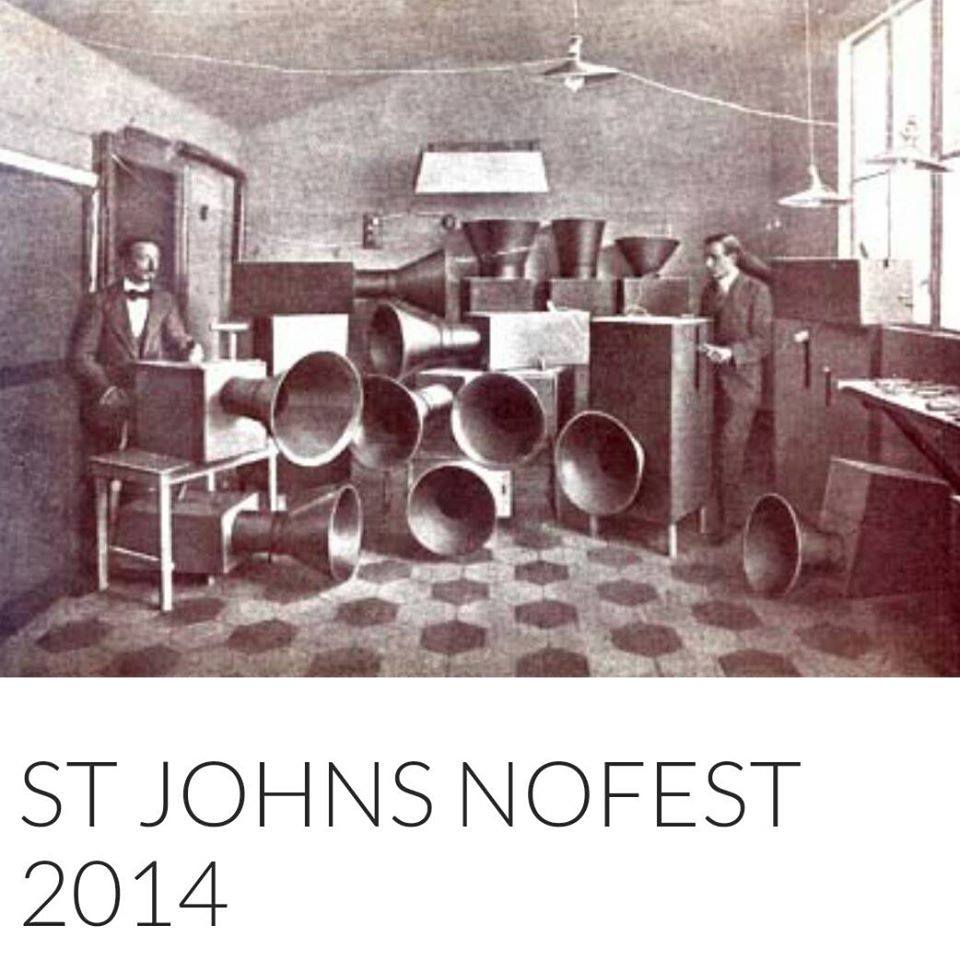
The solution was simple: I had to stop the shuffle, and put the album on from start to finish, the way it was meant to be heard. It wasn’t easy; chance is a bitch, and it just so happens that a lot of what I was trying to sort out then has come back to haunt me, now. “The Good Life” has never meant more; “No Other One” & “Tired Of Sex” not only sound just as good as I remember, but it’s weird to think that I still quote lines from these songs in everyday interactions. This record has become part of my DNA, and if I give blood, I imagine anyone who receives it will probably get Pinkerton as part of the package deal.
I just wish, for my own sake, that I didn’t need it so bad anymore.
I Can’t Leave Well Enough Alone

For some reason I keep reading the campus paper, even though I know logically that there’s no reason to. It’s immature, inaccurate, and extremely frustrating for anyone who pays attention to anything that happens off campus. And, yet again, I found an article the other day (“Don’t Tweet Me“) that was just too much, and wrote another letter to the editor. (I’m becoming just like Grandpa Simpson, spending all my time writing letters of complaint about things only I care about.) And, to round things out completely (again), they choose not to publish it. Which is, as they say, lame for them, but not for you:

[With regards to Twitter]: While the history of deriding new technologies merely because they are “new” goes back to the “written language vs. oral tradition” argument way back when, I feel that it’s somewhat irresponsible to claim this new one is so incredibly terrible, based on the evidence provided by one study of social networking services. There is so much new information about the human mind and how it relates to technology, that outmoded notions such as this paint the image of a Luddite more than anything else.

In the Februray, 2009 issue of “Discover” magazine, one of the biggest stories was about how Google & other new technologies are actually making humans smarter by presenting information in byte (no pun intended) sized chunks. (“How Google Is Making Us Smarter” Feb. 2009). David Crystal’s new book, “Txtng: The Gr8 Db8,” not only addresses the issues of technophobes who think that technology is ruining our lives, but points out that people who are avid texters tend to be more literate than other people of the same age. Even Steven Johnson’s “Everything Bad Is Good For You” is now almost five years old, and after his hundreds of radio, TV, & news appearances, you would think that the myth that “technology is destroying our children” would long ago have been put to rest.

This opinion piece also misses a huge point about what Twitter is: just because the posts are limited to 140 characters, this doesn’t mean people only read 140 characters of text before they quit. Twitter, like all blogging tools, allow users to subscribe to feeds that offer everything posted to that feed, not just the most recent entry. CNN uses Twitter for their news feeds, and almost every paper with an online presence (including yours) has started using some sort of blogging tool, often big name ones like Twitter. Ashton Kutcher, while vapid and obnoxious himself, makes a good point in asserting that this is encouraging, rather than discouraging, people to read. Most of the current journalism points to that notion as well.

It’s definitely food for thought, anyway. I’m not suggesting that we should all join Twitter, and that it isn’t a sign of shallowness or stupidity. But I do think that it’s a little hypocritical to mock a technology that your paper avidly uses.

A Broadcasting Proposal

Dancing, With Swords

While I was watching Hero last night, it occurred to me that there is something missing from my life that I think everyone in America could benefit from: more Martial Arts Ballet films. It seems to me that there is probably a direct relationship between overall happiness and the number of movies like this you have recently watched. Wire sword fighting, ancient Chinese history, elaborate (and beautiful) color pallets, and a Roshomon-influenced storyline, is pretty much all you need to put a smile on your face. I challenge anyone to find better elements in a film that can give the viewer an emotional 180°. For almost an hour and a half, I almost entirely forgot I was unemployed.

I suggest that we, as Americans, need to watch more Martial Arts Ballet. It will not only make us better people, but will give us something we can bond over, which will strengthen us as a nation. As far as I can tell, there’s nothing on TV worth watching on Saturday afternoons, so I suggest that all stations should show films like this starting at 1 PM, and running until the sun goes down. While this might seem like something that would appeal to a limited audience, here’s the question I’d like you to consider first: can you really think of someone who’s life wouldn’t be better because of this?

‘Nuff said.

Open Letter To The Editor

Yesterday, the Daily Vanguard – the campus MOR paper that isn’t actually a daily – gave a B- review to the movie Robocop (referring to it rather negatively), and also managed to refer to William S. Burroughs as just another “crazy” person. Kids these days. I felt it was my duty to write a letter to the editor, which, sadly, they choose not to print. Fortunately for you, dear reader, I saved a copy:

Dearest Daily Vanguard
RE: Arts & Culture Corrections

I take extreme offense with two things mentioned in the April 15th issue of the Vanguard. First, on page 4, the film Robocop is described as part of the “retro kitsch genre,” and, contrary to popular belief, the title does not, “say it all.” Robocop is a brilliant satire, directed by the Dutch master Paul Verhoeven, and is nothing short of a cinematic masterpiece that has proven itself over, again and again. This film sets the stage for his other incredible social commentaries, Basic Instinct, Starship Troopers, and Showgirls, (all stupendous statements in their own right) and for people with discerning taste and an eye for what was wrong in America circa late ’80’s / early ’90’s, Verhoeven’s films are note-perfect in virtually every way (and telegraphed much of the new comic book / action genre that is popular now). While I appreciate the Vanguard‘s attempt to briefly draw attention to one of the most important films ever made by human beings, the demeaning context and low rating is something you should be ashamed of.

Second: it is unwise for anyone – even in an opinion piece – to refer to a man who owned as many guns as William S. Burroughs did, as “Crazy Person Of The Week.” Even if he is dead now. Trust me, it’s just a bad idea. Not only does this open up a whole can of right-wing, NRA issues that can’t possibly be resolved in any single issue of the Vanguard, but personalities like Burroughs tend to attract lots of fans, who all own lots of guns. Do the math; I attribute my longevity so far to Ginger Ale twice daily, and saying only nice things about people who own lots of guns. Call me crazy, but that’s how I plan to survive into the 22nd Century.

Thank you for your time.

New Problem

Need More Clothes
Need More Clothes

You can pretty much count on me becoming extremely irritable and frustrated if you combine consumer culture with hip fashion, and those two things came to a head two weekends ago when I went Shopping (with a capital S) for the first time in almost 8 years.

In my adult life I’ve managed to cultivate an extremely economic sense of fashion: old sweaters, cast-off polo shirts, bow ties, pants (occasionally funky, most often utilitarian), and whatever pair of shoes is lying around and, more importantly, creates the illusion of fitting properly. For the longest time, in my mind, clothes merely covered my body to avoid public nudity and shame, and even after I gradually came to accept the fact that Clothes Make The Man (and, sadly, they do say a lot more about you than you actually do), I settled on a look that did not appear too pretentious, overly flashy, and more to the point, seemed to speak to who I am. When all is said and done, I am a bookish awkward kind of guy, and so the pocket protectors and clunky, ill-fitting shoes were all just an extension of that.

However, now I have some Clothes (with a capital C, with the help of The Judge who has a sense for these kinds of things), and in some cases, they are even sort of hip in a, “well, that was really cool a few years back,” kinda way. Now, supplementing my Freaks & Geeks ensembles, I have a fair amount of stuff that makes me look like I’m auditioning for a part on Life On Mars, minus the tough guy cop accents, and focusing more on the background characters who haven’t yet earned their SAG Cards. (Full Disclosure: I have never seen the show, but my sister – a big fan – keeps me abreast of all things TV, and this one actually sounds kinda funny in a really terrible kinda way. Thoughts?)

There was already a heavy 70’s influence on my wardrobe, but now it is completely unavoidable. What used to be just a hint of mid-’70’s teenage suburban youth creeping into my look has now transformed into hip-older-brother of mid-’70’s teenage suburban youth, who not only spends most of his time, on the weekends, in “The City,” but occasionally comes back with a Cheap Trick record and dilated pupils.

I don’t know what is weirder to me: the fact that I bought clothes that I actually think are kinda cool (despite the fact that I’m still out of synch with even the more recent retro trends), or the fact that I now have this incredible urge to go shopping for clothes again for the first time in my life.

What can I say? “I can’t keep up / I can’t keep up / I can’t keep up / Out of step with the world.”

Connections

It’s always good to have friends in nearly every sphere of human existence, but sometimes those connections atrophy, leaving you with no access to, say, free day-old donuts, or the inside scoop on the next cool things going down in town (like, another bike-in movie theater in PDX, location and dates open TBA).

It hasn’t been since I worked in the book mines back in the late ’90’s / early 2000’s that I had a decent (and reasonably-priced) book connection, and while school has given me more than enough to do with regards to textual interfacing, I missed the joy that comes with acquiring new, inexpensive leisure-time books. (I have yet to find any joy in the academic past time of acquiring old, extremely-expensive and difficult-to-get-through books.)

Fortunately, one of my old roommates has scored a job at a warehouse sorting books for an amazon.com bookseller. (One of the independent sellers that uses the amazon.com interface to hock their wares.) This has been a two-fold boon for my friends and I: he has a paying job to keep a roof over his head, and we all get to rummage through his “Free Books” box every time they have a party.

I managed to walk out of a party with Libra by Don DeLillo, a cool ’60’s edition of The Invisible Man by H.G. Wells, and the Autumn 1972 issue of a really crazy academic journal called Horizon, which includes essays on “How Man Invented Cities,” Michelangelo Antonioni’s “L’avventura,” and the life of Machiavelli.

Which worked out great for me; normally I leave a party feeling like I’ve lost something.

(P.S. If anyone’s parents were academics and had a subscription to Horizon– or just happened to collect them in the ’60’s and ’70’s – I would very much be interested in working out a trade for back issues. Please and thank you.)

Some Things You Can Never Outrun.

Repressed Gym Memories

The first thing that hit me was the smell: the pungent mixture of stale sweat, old equipment lockers, and floor mats mixing into a sickly aroma that immediately took me back to High School. I could feel the sting of those red rubber balls as some huge kid hurled them at me over and over again; the stitch in my side as the instructor yelled at me for two more laps. I could feel my flesh crawl as I passed the locker room, sensing the steam and masculinity pouring forth.

This is my own personal hell.

I haven’t been in a Gym since my last PE class in High School, and with good reason: that was the one place where the rules of the playground extended into the classroom. The bullying that I normally suffered from between classes was entirely foregrounded in PE, where it was even school-sanctioned in certain ways: the huge, tough, mean kids were often rewarded for being such in PE, while people like me (who normally do pretty well in school) are reminded that if you don’t look like and act like a man, you’ll never be one. PE is one of the sorting social mechanisms in school that galvanizes cliques and establishes how one feels about their own gender. It’s a pretty brutal experience, even for people who are athletically inclined.

For this first time since I started going to PSU, I’m taking a class that meets in the campus rec room, a building I’ve intentionally avoided all this time because of what it stands for in my mind. But I decided to sign up for a yoga class this term, and found myself (yet again) wandering around in a building, lost, while huge, muscular kids ran past to the equipment room, or the showers, or what-have-you.

It was almost enough to make me drop the class. Almost.

Best. Movie. Ever.

Over The Edge
Over The Edge

As a huge fan of Pump Up The Volume, I was completely stunned when I finally saw the movie it’s based on, the 1979 seminal classic, Over The Edge. I have to claim virtual ignorance regarding this film until The Chairman (from Drats!!!) rambled on and on about how his band was releasing a concept record based on the movie. The album was great, but for some reason I kept missing the movie for one reason or another. Even after my friend Marcus hooked me up with a copy, it sat in my collection, unwatched, until a few days ago.

Why, exactly, I waited that long, I’ll never know. Just about everyone told me that I’d freak out when I finally saw it, and for the record, let me say: I did. Not only is this one of the single greatest teen movies ever made (with the possible exception of Badlands), it is pretty much the blueprint for all punk movies, and was directly copied (almost note for note) in the aforementioned Pump Up The Volume. I don’t want to give too much away (in the event that there are others out there who haven’t seen it), but trust me, you need to see this film.

If for no other reason, you will suddenly understand and appreciate Nation Of Ulyssesthat much more. Trust me.

That Was Then, This Is Now

So Hot
So Hot

For most of my adult life, I have been in love with the girl in the right of this picture. (I would appreciate better screen captures of her from this movie if possible… this is the only thing I could find anywhere online.) Lala Sloatman is her name, but I only knew her as Nora’s sidekick in Pump Up The Volume. (To my knowledge, you don’t learn her name – Janie – until the end credits, and even then the words were so small it took until I looked at a DVD copy last night to really be able to read it.) As I’ve discovered via some Inter-Web-A-Tron research I did this morning, her cousin is Ahmet Zappa, who also appeared as an extra in Pump Up The Volume, along with Seth Green and some other strange Hollywood fringe types, which puts this girl in good company.  Sadly, her filmography is, to say the least, disappointing.  (The Adventures of Ford Fairlane and Joe Verses The Volcano.)

I’m sure the particular circumstances that make me obsess over Janie are as specific and singular as any other obsession any of us develops. I can only say that, 17 years later, this obsession still has a pretty strong hold on me. Yowza.

Nora: It’s after 8 o’clock, so I guess it’s okay to kill myself.
Janie: Oh no, it’s after 3, I guess I’m totally fucked!

Back In The Day

Watchmen
Watchmen

Going to see Watchmen last night (more on that later), I couldn’t help but remember one of my all-time favorite Onion headlines:

Other infamous episodes that have occurred during the couple’s 18-month relationship include Tillich’s August 1999 insistence that Jensen listen to all of side two of the Velvet Underground’s White Light/White Heat, his January 1999 failure to talk Jensen into visiting the grave of Philip K. Dick during a Colorado road trip, and his ongoing unsuccessful efforts to get her to read Alan Moore’s Watchmen, a 1986 postmodern-superhero graphic novel she described as “a comic book about a big blue space guy” and that he calls “nothing less than a total, devastating deconstruction of virtually every archetype in the genre’s history.”

I don’t know what appeals to me more: the fact that they managed to cover just about every base regarding this kind of relationship dynamic (omitting, obviously, the Area Boyfriend’s insistence on going as The Prisoner for Halloween, and the Area Girlfriend stating that she didn’t know who that was), or the fact that this is pretty much the way I interacted with my girlfriends for most of my life.

And now, I will do the dance of shame. Again.

Never Fails To Impress

Miller's Crossing
Miller’s Crossing

It might be open for some more debate, but I think Miller’s Crossing might be my favorite Coen Brothers movie. I could listen to the dialog in that film all day long, and there is something about the way it was filmed that just looks beautiful everything single time I see it.

Either this, or Barton Fink. It’s a toss up.

Agreeable Sounds

If you’re lookin’ for some new music to get you through the tail-end of winter, might I recommend the bands I saw last night during one of the rare times I actually left my house:

Hearts And Minutes: My friend Tristan told me he was morally apposed to bands who don’t all live in the same town, which only turned him off of this band more given that one member each lives one Portland, LA & Oakland. I have to say I was a little lukewarm on the beginning of the set, but as they kept playing they got better and better. That’s an interesting tactic when you play live: save all your good songs for the end, and give them the slow lame ones to start with. Still, they piqued my interest enough to pick up an ’09 Tour CD, and I’ll report back if my opinion improves.

Moment In Static: Comprised of several of my friends (and one roommate), it’s hard for me to think of another band that loves Don Caballero as much as these guys. Certainly the draw when you see ’em live is their drummer and their singer / percussionist / Korq player, who dance and move and kid and look like their having more fun than just about anyone you know. They seem to be obsessed with ’80’s cover songs (Devo, Gary Numan, Wire), but the covers are generally strange and deconstructed, and more to the point, their original material is much, much better. The name is probably the only thing (anymore) that I’m not sold on… yet.

The Jezebel Spirit: I used to work with one of the guitar players for this band, and their first CD, Turtles All The Way Down, was pretty awesome (and epic) instro-rock with the emo turned all the way up. They’re still just kids, but they totally get it, and seem pretty stoked on the music they play. I didn’t get a chance to stay for the whole set, but I did pick up their new CD (Remember… Always obey, you’ll live longer than way), which (like thier first CD) is one continuous performance, broken into “suites” (or tracks). They’re playing at the Know pretty soon, so check ’em out if you can.

The Fellowship of the Dice

Fellowship Of The Dice

Yesterday I finally watched The Fellowship of the Dice, a sort of mockumentary about a group of people who play RPGs, and their experiences with a new player who knows nothing about RPGs who is a 20-something girl who has nothing in common with the group. Intermixed they showed interviews with gamers at a Con, who all share their insights on the various aspects of gaming, from gaming food, to in-depth explorations of why people get kicked out or banished from a campaign.

First, a couple of disclaimers: growing up I played a lot of roleplaying games. Mostly superhero-based games, with a healthy amount of D&D too. There was a Vampire phase for a while, I went to a couple of LARPS (didn’t like them much), and did several SCA events. As I got older, I met some people that liked to roleplay AND listen to cool music, drink beer, and (here’s the kicker), knew some girls that liked to play, too. However, I eventually stopped making time for it several years ago, despite the fact that I had a good time playing and liked the people I played with. I guess it was a sort of midlife crisis or something, but I started to substitute RPGs with going to shows and trying to meet girls.

Second disclaimer: I met two of the cast members and another person involved with the movie a while back at KPSU, when they came through to do an interview on-air to promote a local gaming event that they were showing the movie at. They even took me and Ranger Mike out for Thai food, and they expensed the entire meal. (Thanks again!) They were all really nice, really friendly, and while Aimee Graham wasn’t exactly able to role with my RPG jokes (Jon Collins knew everything I was talking about), they were really friendly for soulless Hollywood types.

Now, here’s the bummer: while the interviews at the Con are note-perfect (and well worth seeing, as I think I might have met every one of them in my years throwing dice), the mockumentary portions of the movie are sort of painful. At first I wasn’t exactly sure how to articulate it, but I think I’ve been able to percolate on it long enough to attempt to put my finger squarely on the issue: the reality of the life of a gamer is 100% more interesting than anything you could make up.

Not that they didn’t come close. The dynamic of a gaming group is a really strange thing, and I am convinced that all of the actors (minus Aimee Graham) were probably pretty familiar with RPGs and the people that play them. However, they are all ultimately actors, and even the guy who is extremely dense and is supposed to have facial tics comes off as handsome & funny rather than nerdy and uncomfortable. The quiet, shy girl who chews on her pen for the entire movie (and who pulls a Silent Bob near the end of the film) was almost spot on, if it weren’t for the Hollywood Hot makeup job she was given. (She was one scene away from taking off her glasses, shaking her hair out of the librarian bun, and posing like Farrah for her glossy 8 1/2″ x 11″.)

There are at least two points in the film were Aimee Graham’s character stays to finish the gaming session beyond the point of reason, and if we ignore the fact that she just up and agrees to follow a nerdy disquieting stranger (who has been hitting on her) to meet his gaming group (without any protests or questions of any kind), the film borders on fantasy in more ways than one.

It begs the question: why not just film an actual group of gamers actually gaming? Obviously there is a certain Christopher Guest homage that you wouldn’t be able to obtain without having a few people in on the joke, and certainly some gamers might not be able to “stay in character” with a slew of cameras filming every dice-role and rules-argument. Still, I feel that a larger injustice has been made against gamers: we aren’t all like this. Some, most definitely, yes. Some, I’m sure, are even more extreme. But many are people who love gaming also love their friends, and love to get together and play.

I would be ignoring the ugly truth by saying that arguments don’t break out during a game, and some of the observations were not that far off. (Before it happened in the film, I kept wondering when they were gonna order pizza, or show a passive / agressive DM “suggestion”; the player shouting out, “Shouldn’t we roll inish?” during a conversation was a little too close to home for me, too.) But ultimately, I felt like most of what we saw on screen were the negative aspects of gaming. Much of the plot revolved around personality clashes, arguments, and misunderstandings, while the stuff that kept the group together – the friendship – is only hinted at near the end and mentioned in monologues.

Media doesn’t seem to know, exactly, how to portray RPGs, and when it does it is always shown comically, in a negative light. (Freaks And Geeks has a wonderful roleplaying episode, but still couches the entire game in terms of it appealing to only “geeks” and, on rare occasions, a freak.) In many ways, its easy to see why TV and movies show it the same way every time: gamers are weird, gamers are quirky, and everything about gaming seems comical on the surface, from the vocabulary and diet of gamers, to the very premise of gaming itself. (“Okay, you use paper, pencils and dice to recreate a fantasy world where the group, together, makes up the story through taking on personas and characters… wait, where are you going?”)

I would like to see some positive images of gamers in media. Obviously, there is room for ridicule in every subculture, and I can’t suggest that we ignore the funny, embarassing, or even uncomfortable realities entirely. But occasionally, I’d like to see a realistic portrayal of a gamer as a functioning member of our culture, who has a lot of the same dreams, goals, and desires as everyone else, who has a job and a girlfriend and a life outside of gaming, AND… on top of all of that… also happens to wield a pretty wicked battle axe when you get down to it.

Until then, I’ll keep dreaming.

Against The Law, I’m Sure

Secretly Hot Girl
Secretly Hot Girl

I seem to recall a bill that was passed some years back that stated that there would be more hot people on TV, for the general well being of humankind. While it was delayed for some time due to W’s stint in office, and then the writer’s strike, and then the economic downturn, I distinctly remember that things had finally been settled once the election had been settled, and that we would be slated to see the results, “No later than the end of the 2008 – 2009 broadcast season.”

So, where have all the hot people gone? I have been completely unable to find any hot people on TV, and not a single current celebrity has managed to do anything for me since the Secretly Hot Girl from Freaks & Geeks. (Busy Philipps, pictured above, though I was horrified to discover that she is decidedly not hot in just about every other role she’s played.)

Take, for example, Lost. A huge ensemble cast, and every one of them is Hollywood Hot instead of using that large cast to explore the vast expanse of humanity that comes in various shapes and sizes. They were getting a little closer with the introduction of Charlotte (intelligent female Indiana Jones type with an accent and red hair), but in many other ways she was just more of the same old, same old when you get right down to it. (It didn’t take long to bore me with the uncomfortable budding romance between her and Daniel, or her unnecessarily conspiratorial attitude.) While the smart thing goes a long way, I could see her dumping you the moment there’s another Dharma Polar Bear skeleton to dig up.

I would like to re-initiate the campaign to improve the hotness of the performers on TV. I know that my roommate is on board, and there can’t be that many people out there would would disagree. (In fact, I dare anyone to find a person who would admit, “I’d much prefer to have painfully ugly people on TV.”) Sure, TV’s free. And yes, one man’s hottie can sink another man’s boner. But there were, last I counted, about 200 channels, each with 24 hours of daily programming, and most of those shows have more than two actors each.

Do the math; there is room to improve the overall hotness ratio. Write to your congressman today! Do you want to go one more week hoping that the plot of some crappy show will passably keep you entertained for the next hour, when you know that’s not gonna happen? Wouldn’t it be easier if at least one of those people fumbling their way through their lines was at least pretty?

New Zealand?

I got this e-mail while I was doing my show yesterday. How cool is that?

* * * * * *

From: Dr Hitchcock
Date: Sat, Feb. 28th, 2009 at 1:43 PM
Subject: Lovin’ your show man!

Greetings from Christchurch, New Zealand!

I’m diggin’ your tunes!
Peace,

Dr H


Dr Hitchcock
Starlifter.TV

Internet: http://starlifter.tv

Five Ways To Improve PDX

I often like to think of myself as being on the cutting edge of social change, so here are five ways we can all pitch in to help improve our community. I urge everyone to take action… NOW!

1.) Purchase a large quantity of disposable razors, and put a stop (once and for all) to all the bearded indie-rock that’s ruining our fair city.

2.) Since the beginning of time, humankind has rarely accomplished anything worthwhile between 3 PM and 6 PM. (Look it up; would I make this up?) I suggest we institute a mandatory siesta. Those who do not take advantage of the mandatory siesta are not allowed to interact socially until they’ve taken three hours out of their day to rest, relax, and calm the fuck down, before they’re allowed to go out in public again.

3.) For every show, concert, party or otherwise artistic social event that starts at 10 PM and ends at 4 AM, an equally cool, equally fun, and equally accessible event needs to also occur between 10 AM and 4 PM.

4.) Reading Parties instead of Cocktail Parties. Home Cooked Dinner & A Rented Movie instead of Going Out. House & Basement Shows instead of Paying a Cover. Burning Parties instead of buying records. Interacting With Your Friends instead of Everything Else That People Do.

5.) Stop. Raining. Now!

Booze-A-Ma-Hol: A Personal History

This Used To Be Me
This Used To Be Me

I quit drinking over the summer, and while I had one or two bevvys between then and New Year’s Day, since the beginning of the year I’ve taken a hard-line about it, and haven’t had any alcohol in any form.

There were a confluence of reasons for deciding to quit: personal, medical, financial, social, etc. It’s hard to single out any one thing, or rather, I couldn’t shift the rational to something specific. There were just too many things all pointing to the same thing, and I’m a big believer in self-analysis. I guess I didn’t really need a reason to quit, per se, but in my mind it was that much easier knowing that it wasn’t just a passing desire to prove that I could, but rather a well-reasoned decision that came from within me that was informed by my entire life.

When I tell people I quit drinking, invariably there is a pause while a strange look creeps across their face. The look says, “Oh. What happened?” But the next comment is generally, “That explains why I haven’t seen you.”

It’s weird. In our culture, there is an assumption that either you never drank, you currently drink, or you have a problem and you shouldn’t ever drink. But in my case, I don’t think I had a problem: I never missed work, never missed school, paid my bills as near to on time as is possible in the US, and never blacked out or became violent. In fact, I would be hard press to remember a time that I did much of anything differently than I would when I was sober, except drive and remain conversationally coherent. Of course, none of that means I didn’t have a problem, either. But I was always of the opinion that I was a fairly pleasant drunk who really liked bourbon and the places that sold it.

I’ll be honest: I drank a lot. I pissed away so much of my income over the years that it’s hard to imagine what I could have done with that money in the meantime. (A car? A House? A nice stereo, for Earl’s sake!) I woke up with so many hangovers that it was starting to feel commonplace, and you could pretty much count on me buying something most days, if for no other reason than to restock the fridge or get another bottle of Maker’s Mark. I know perfectly functional people who drink WAY more, and plenty who drink way less, too. I guess, for me, it just wasn’t as much fun anymore. Or, rather, when I went to pour myself that final shot, I began to question if I actually wanted it, or if I was just used to the idea of wanting it.

I know, I know. Far too, “What Does It All Mean?” for someone outside of France, but it’s been interesting observing my fellow humans lately. I know one or two people who don’t (and never) drank. I know another married couple who both used to drink a lot, and now don’t for more or less the same reasons. And outside of that, it’s been really hard to find other people who don’t drink.

Nor am I only looking to hang out with people who don’t drink; I encourage it among my friends and have even bought beer and wine for the house so I could offer some to guests. But there is a certain amount of pervasiveness about drinking that is starting to worry me, and a casualness to the quantity of drinking going on around me. It would be one thing if the majority of the drinking I saw around me was your typical kind of Workin’ For The Weekend partying that I am 100% behind. Unfortunately, it seems, that is only a small percentage of it.

Yesterday while I was getting breakfast, I saw a table of PSU students at 9 AM on a Thursday each with a cocktail and their Engineering Books on the table. None of them could be any older than 22 or 23. They were actively scribbling notes, using calculators, going through texts, etc. As the waitress came by and asked if anyone wanted more drinks, there was an emphatic, “Yes,” from everyone. Then, one guy adds, “But that’s it. We’ve got class in an hour.”

Next time anyone asks me why I quit drinking, I’ll just tell them that story. I think it gets the point across much better than, “Well, I just quit.”

Dogs! In! Space!

Dogs In Space
Dogs In Space

After many years of being obsessed with this movie (mostly due to the near-daily viewings of it when I lived with Lyra Cyst), I finally managed to borrow of cassette copy of it, encode it digitally, and make myself a CD version I can now bump and grind whenever I want.

While I can never adequately explicate how stoked I am about this, liken it to when you finally managed to figure out the name of a song you taped off the radio years ago because a friend of yours just so happened to play it at a party.

Why is it that encapsulated in the two above-mentioned experiences, I think I’ve managed to summarize a good 70% of my previous emotional experiences? Sigh.

Percolating Ideas

The Male Body
The Male Body

I just finished plowing my way through a huge section of The Male Body (by Susan Bordo), which falls into the “Social Sciences” genre. (I’ve always wondered about the phrase “Social Sciences.” Is there hard-science to social behavior? Or observations and assertions?) In the chapter I read, she discusses a few different aspects of constructed male behavior (distilled into the folk-wisdom, “Boys will be Boys,” that so often gets repeated in our culture).

These constructions are, ironically, presented as a biological imperative, or an evolutionary hold-over from more primitive times. (One example she returns to again and again is the popular late ’90’s psychobabble that came in the form of, “Men Are From Mars, Women Are From Venus.” In it, the author asserted that men and women are just “hard-wired” differently in a way that was, unfortunately, unknowable, and therefore something we just have to learn to live with.)

Without trying to make the claim that there aren’t differences between men and women (which, I’m sure, would stir up trouble for all concerned and is actually pretty far from what I believe anyway), I have to agree with Bordo’s point: modern male behavior , what is and isn’t acceptable, and how people respond to images of the male body, are entirely constructed in a given culture.

And dammit, I wish I’d known that sooner. I have often suspected that the reason I don’t relate to sports, hunting, cars, fighting, and macho bullshit – essentially, most men that you meet – has less to do with me as a person, and more to do with what other people think they should be relating to. I have never been able to articulate this notion as well as I just did, but I always felt that it wasn’t my fault that I’m not interested in typically “male” things. Now I’m pretty stoked to realize that all that Hemmingway crap was exactly that.

Which is odd, because I distinctly remember thinking simultaneous and divergent thoughts when it comes to this kind of behavior. I would watch two of my friends start throwing jabs at each other and say, “Yeah, that’s just the way guys are,” and then look at my complete lack of interest in doing anything like that, and wonder, “Why not me, then?” While Bordo doesn’t manage to clear up all of my confusion about the constructed nature of masculinity (I would have liked to see more source-cited research to support her claims), I feel much better knowing that there is some amount of validity to how I’ve felt most of my life.

I don’t want to throw a football. I don’t want to be the strongest guy in the room. I don’t want to accumulate sexual conquests. I don’t even want to grow facial hair anymore. But I still want to be a man, and feel good being one. And I think that some of the ideas Bordo is getting at are, in a strange and very unexpected way, finally making me feel that way, too.

Any further recommendations on this subject?

For A Change Of Pace

So often this space is reserved for those moments in my life when the tension finally tips the scales into the realm of irritation, and I find myself time and again starting new paragraphs with the phrase, “And another thing…”

So, here it is, for the very first time: a different kind of list!

Things I Love

1.) Virtually incoherent experimental music.

2.) Modernists art films that border on an unbearable length.

3.) Meta-Text, in all it’s forms. (Including this one.)

4.) Comics, especially rambling sagas that go on for hundreds of pages, preferably with an adventure / sci-fi angle. The writer’s from the UK? Perfection!

5.) Lost. (I know, I know, I’m a sucker like everyone else.)

6.) Alphabetizing, filing, sorting, cataloging, indexing, and organizing in every imaginable permutation.

7.) The invention of baking, hygiene, and written language.

8.) Daylight Savings Time (fall back only)

9.) A sense of accomplishment.

10.) The people in my life who make all of this – everything, in fact – entirely worth it. Thanks.

The World Elephant

The World Elephant
The World Elephant

When I first came to Portland, I remember being absolutely in love with this mural. It seemed so strange to me, so random and wonderful and amazing, that I used to navigate using it as a reference for the first few months. (In a way, my vision of PDX still has this at the center of town.)

One of my favorite details of this mural was the ledge about 1/5 of the way up from the bottom. (In this image, its subtly noticeable, just above my head.) There were a few different bird’s nests that have been made there, and if you were willing to stop and watch for a few minutes, you would invariably see the birds walking along it, getting read to take off, or feeding it’s young. It was really wonderful to watch, and it always reminded me of the symbiotic birds that live on (and clean) elephants in the wild. Like a weird, symbolic nature scene for the city folk who never got to see the real thing.

I used to talk about taking a picture of this mural all the time, but over the years my technological backwardness (combined with poor planning on my part) never managed to resolve themselves in time. Recently, they began construction or this building, remolding and expanding it, and ultimately cutting a bunch of windows through this mural, making it difficult to look at.

For a while I was totally pissed that I’d missed my chance, that this particular element of the city was now forever locked away in my memory, where it would slowly fade to a nostalgic feeling every so often, one that tugs at the heartstrings but fails to register completely in the conscious mind. It was sort of a bummer, when you get right down to it.

And then I got an e-mail from my roommate, The Ramen City Kid. “Did I ever send this to you?” was all the accompanying message said, and suddenly it hit me: quite a while ago, as we were wandering around town one day, I was talking about wanting to take a picture of it. Again. And in one of the coolest and most meaningful moments of our friendship, he pulled out his camera and said, “Okay. Let’s do it.”

It was so casual and of-the-moment that I didn’t think anything of it when he took the picture. And, since he forgot about it, I forgot about it. And since construction began shortly afterward, the sight of the mural actually being destroyed a little every day began to eliminate it’s presence in my mind, too. I was convinced I would never see it again, even though in the back of my mind I imagined that I could probably track down a picture of it somewhere, someday, somehow.

I just had no idea I would only have to look inside my own house. Thanks man. You are the greatest roommate, ever.

That Guy

I became That Guy so gradually that it’s really hard to say when, exactly, the transformation began. My question always becomes: which warning signs predate the others? In Cathead, we used to play a song called “Old Man Blues.” But then there’s reading about Grandpa Punk in Ramen City U.S.A., and my High School-aged Grumpy Old Man impersonations… when I was 13 my favorite song was “Kids” from Bye Bye Birdie.

It just goes on and on like that.

Anyway, now that the change is complete, I can at least help you with some of the tell-tale signs that you have become That Guy:

1.) Carries possessions in a cloth grocery bag instead of something more useful.

2.) Apparel includes: frayed fingerless gloves, bow ties, used-car-salesman jacket & bowling shoes one size too big.

3.) Oftentimes, primary mission on errands seems to involve the Public Library or buying fruits & vegetables. (Double Points if I combine them into one, unnecesarily elaborate mission.)

4.) iPod playlist includes: Miles Davis, Old-Time Radio recordings from the 40’s, & NPR Podcasts.

5.) Can generally be found (during the daytime) waiting for a bus and complaining in a sort of Yosemite Sam kind of way about The Weather and The Traffic. Or both.

Currently Reading:


Shade, The Changing Man

Originally created in the 70’s by Steve Ditko, this revival began in 1990 and ran for six years, until the writer (Peter Milligan) finished all 70 issues. Along the way he utilized a lot of different artists to fit each particular chapter of Shade’s story; as “The Changing Man” Shade is constantly becomming someone new, and as each style shifts and changes, new artists take over. (Very similar to the way The Invisibles was written & drawn four years later.)

Half psycedellic free-for-all, half adventure, and entirely strange from start to finish, this series is the story of how Shade came to Earth from his home planet, Meta. (Yeah. It gets better.) Meta exists in a dimension near (or around?) Earth; between Earth & Meta lies The Madness Zone, the only place that allows passage between the dimensions.

Shade is sent by his superior, Wizor, who had told him to fight the manifestations of “Madness on Earth” in whatever way he can. Apparently, The Madness Zone has begun to leak into Earth’s dimension, and so Shade must combat the leak using a Madness-Vest (or M-Vest for short).

On Earth, when humans catch “The Madness,” their internal obsessions and frustrations are externalized. In the first major story, a JFK obsessed man creates a “Kennedy Spinx” in Dealy Plaza, that asks people, “Who Shot JFK?” If they are wrong, the Spinx eats them. In the second major storyline, Hollywood itself catches the Madness, and soon everyone finds themselves in a movie, within a movie, within a movie, ad infinitum. As Shade travels the Mental States Of American, he runs into huge American Myths that must be kept in check in order to prevent Americans from going crazy. Did I mention Peter Milligan is an English Writer, too?

I fell in love with this series when I was in High School, as it sparked the imagination like few other things I read back then. Now, over 15 years after I first discovered the comic, it reads so vividly and beautifully that it’s hard to imagine it as a “dated” piece of writing. In much the same way that Ditko’s Shade held up pretty well to me in 1990, here in the far-distant time of 2009, those innocent Comics from my High School years carry an impressive amount of punch.

I have all 70 issues of the 90’s run if anyone wants to borrow them, and the 8 original issues of the Ditko series. Neither were “popular” in the usual sense of the word, but for my money, there are few comics that are as well written (or as academically “funny”) as Shade. It’s well worth the read, even for non-Comics fans.

Alternate Titles (I Have Yet To Use For A Post)

1.) This Is Not An Online Blog

2.) SPDD: Same Posts, Different Day

3.) Loose Change: How To Try And Improve Your Life Gradually On An Extremely Limited Income.

4.) All My Friends Are Wed (& Babied)

Drumroll…

5.) Meta-Messages

Really?

When I was closing up the computer lab last night, I found a binder that a student had left behind. It happens all the time, actually, and with today being the last day for finals, I imagine some student was in a hurry to get to a party after his last test. I forget things all the time, and unless it’s valuable, you don’t have to worry about anything getting stolen.

So, no harm, no foul; I picked it up and went to put it in the Lost & Found box. As I set it down, I noticed that on the front was a huge, slightly torn Sublime sticker.

What? Sublime? Are they even still a thing? I mean, when was the last time you met an actual Sublime fan? At least, a big enough one to have a sticker on your binder for at least a year. In 2008. I mean, really?

Sometimes, I just don’t get people.

New Discoveries In Latrinalia

Found in three separate stalls in the men’s rooms on PSU campus
(You may have to open the images in a new tab, and zoom in, to read some of these):
Naked Graffiti
Naked Graffiti

Guh? Astronomy Professor?

Naked Graffiti II
Naked Graffiti II

While I’m quite fond of the tagger who admits that his occupation is a waste of time,
I think I like the Haiku the best:

101
111
101

Solid.

Naked Graffiti III
Naked Graffiti III

Apparently, the gentleman with a green pen must have read my book.
(So does my dick every morning… I should have used that one!)

Change Comes From Within… Wine Jugs.

The Changing Man
The Changing Man

In 1995 I found a gallon wine jug that wasn’t being used anymore, mostly because my friends and I had drained it. I cleaned it, peeled the labels off, and immediately began putting my change in it.

I was inspired to do so by a variety of people. My roommate, The Ramen City Kid, had a penny jar, and around this time my friend Justin was able to afford a trip to Europe funded by tips he’d saved in a jar. It seemed like the thing to do, and there was something very Country Mouse about saving money this way.

My problem, of course, was that I was almost always broke when I started this habit. For many years, the jar remained fairly empty. At the end of the month I would desperately need to buy food, so I’d spill the contents of the jar on my bed, pick out the silver, and survive for another few days. I would have idle fantasies that, someday, the jar would actually be full. What I would do with it when it was full, I couldn’t say. But it would be a glorious day, indeed.

Flash-forward to three years ago. Suddenly, I noticed that I hadn’t had to dig into the jar in quite some time. Not only was the level of coinage going up, but I was adding to it almost every day, and never needed to dip in anymore. Soon, the jar became almost too heavy to lift with one hand. I tried to forget that it was even money, and when I did think of it in those terms, I tried to pretend it was all pennies. For some reason, it didn’t seem as valuable that way. In the back of my mind, it was my other other savings. For what, though, I wasn’t sure.

Until I checked the balance of my account last week, and noticed that the economic crisis was finally hitting me, too. Normally this only happens at the end of the month, and I can sit a few days out of my usual routine and stick closer to the homestead. But this time, there just was no denying it. For the first time in years, I had to dip into the jar.

At first I was embarrassed. I had, finally, almost filled the jar, and was also concerned about having to carry large bags of coins with me to do my shopping. To my benefit, there is actually quite a bit in the jar now; I’ve been living off of it for the last week +, and the picture above was taken this morning. To my further surprise, everywhere I’ve gone has been really excited to see me pay in coins. “Oh, we need quarters! Thank you!” The fact that I’m still wearing residual pieces of my hobo costume from Halloween seems to add to the effect; hey, that jacket it warm!

As soon as I pull out the bag of coins, I get a huge laugh, and the same exchange takes place.

“Ha ha. You too, huh?”

“Yep.”

It’s amazing how many discounts you can get when everyone is in the same boat.

a.k.a. Used Books & Records

In the late ’80’s and ’90’s my mom ran a bookstore / record store called a.k.a. Used Books & Records. She and her partner took care of every aspect of the store: they traveled all over the West Coast buying books, records, & comics, built home-made tables, shelves, and racks for the merchandise, and painted / made every sign they hung in the store. It was a huge undertaking; almost every waking hour involved something with “The Shop,” and my first job was helping them out in the store. It was a formative experience; the three things I seem to value most in life are books, comics & records.

Eventually they went out of business. There was just too much work to do, not enough money coming in, and few places a pair of lesbian business owners could turn in the small, closed-minded town of Cottage Grove. Eventually they sold the business, except for the Records, which the new owner was not interested in. Ever since, my mom has had the back-stock from The Shop in storage.

Every so often she would kick down a few Records here or there, and then we eventually fell into a regular routine: she would deliver to me a box of Records that she didn’t want, and I would keep anything I was interested in and dispose of the rest for her. It was a fair deal, as I got free records for a little amount of work, and she was rid of a box that was cluttering up her house.

Yesterday I got the most recent delivery when my sister and brother were passing through town. These boxes of records are always very well picked over by the time I get them. Occasionally you’ll find a gem here and there, but on the whole, you are better off selecting for reasons other than the music contained within. I now have the complete Moody Blues collection; aside from looking at the album covers, however, they remain unplayed.

Here are a few selections that came in yesterday’s shipment:

Chilling, Thrilling Sounds of The Haunted House

I collect Halloween Records and music, but so does everyone else that has any good taste. Thus, there are certain ones that I’ve been looking for, but have never managed to get. My roommate laughed at me when I found this one, because I actually gasped audibly and quickly began pouring over the liner notes. This record is the Soundtrack to The Haunted House in Disneyland, and is one of the earliest Halloween “Scary Sounds” Records around.  Side A is a series of scary stories, while Side B is a collection of scary noises and sounds (Screams, Animals Howling, Doors Creaking, etc.) I can’t wait to put this next to Sounds To Make You Shiver and A Night In A Haunted House.

Robert Gordon & Link Wray

Robert Gordon was the primary mover and shaker behind Tuff Darts, a little-known band in the NY punk scene. Robert went solo and started playing with Link Wray (yes, THE Link Wray), and recorded a few albums of covers with Wray as the primary guitar player. Gordon led the East Coast rockabilly revival in the late ’70’s, but without any original tunes on this album, nor the promise of the full power of Link Wray coming to the forefront, this can’t possibly be as good as, say, actually listening to a real Link Wray album instead. Why my mom had this or knew about it is still beyond me. (My guess: this album is most notable for Gordon & Wray doing a cover of the Springsteen hit, “Fire.” )

ELP
ELP

As allmusic.comis quick to point out, this is ELP’s “contractual obligation” record with Atlantic, and thus, is all you need to know about this album. I would contend that you should also know that all three of these men have their shirts unbuttoned to some degree, are all wearing gold chains, and have hairy chests. I would also assert that you should know that Side B consists of one, 20-Minute long suite that is broken up into four parts, and was also released in 1978. Aside from that, I don’t think I ever need to know anything else about this album, or even listen to it, for that matter. It’s the little pleasures in life…

Al Hirt
Al Hirt

Al “He’s The King” Hirt released this “Dynagroove Recording” in 1967, and was (apparently) available in both Mono & Stereo. The back of the album shows Al playing trumpet, next to his name inside of a crown logo, above the phrase, “Al Hirt – A man for all girl watchers.”

Which is funny, because I have always been looking for the perfect man to compliment my girl watching activities, and now it turns out that he recorded a soundtrack for me to do this by, too. Will wonders never cease?

Life Really Does Imitate Art… In Comics

Reality... Or Fantasy?

As a person dependent on bus transportation, you quickly tire of many of the usual ways to pass the time when being ferried back and forth. To shake things up, I’ve been listening to NPR on my iPod, since it’s not only a surefire way to show my instant alignment with the political Left, but it also sends a clear signal to the masturbating homeless man sitting next to me that it’s not okay to engage me in conversation. (Might I add: mission accomplished.)

Recently I listened to this Radiolab episode, in which Robert Krulwich and Brian Greene get down to brass tacks about the nature of the universe. It’s pretty compelling stuff, and Robert’s incredulous questioning not only acts as a proxy for the usual kind of scepticism new ideas like this tend to become associated with, but Brian’s cool demeanor in what must be a pretty uncomfortable position creates a perfect science narrative for us to take home: even in the face of absolute hostility from skeptics, the bigger truths that science is uncovering are, without a doubt, compelling and fascinating, even for Christians.

Even more interesting than the encoded religious discourse is the fact that, according to Brian’s understanding of the universe, Comic Books had it right all along: we live in a universe where every imaginable variant universe – and, in fact, exact, to-the-molecule duplicates – exists somewhere, “out there.” Not only that, but there are exact duplicates of me in other duplicate universes posting this exact same blog entry… along with all the other versions of me that are posting entirely other things (or, similar things worded differently). I’m sure the duplicates of you, reading this, are having the same reactions to reading this sentence as you are, too.

Metatextual jokes aside, the hilarious part to me, listening to this, was how easily I believed Brian’s “crazy” ideas. The whole time I was thinking, “this is like the multiverse concept in DC Comics… a concept propagated by every other version of DC Comics in all the other universes, too.” It led to some pretty funny moments throughout the podcast, which I’m sure was amusing to the other people riding the bus, as they inched further away from the giggling kid with the iPod at 8:30 in the morning.

Shave And The World Shaves With You…

Put A Beard On It
Put A Beard On It

Some questions with regards to shaving:

1.) Does anyone actually enjoy shaving? (Outside of fetishes & 19th Century barbers?)

2.) Is there any way to know if people of the opposite sex like / don’t like facial hair until it’s too late? And if so, how come no one has marketed a device that can answer this question for us early in the dating process? Do we really need that many ring-tones, when we really just want to know if they’ll go out with us?

3.) Do any of those bearded indie rockers realize how lame they actually look? I mean, really? Does the beard make their music bad, or does the bad music stimulate beard growth? Do I really want to know the answer to that question?

4.) How much longer can us clean-shaven weirdos hold out for a date without an indie-rock beard? Five years? …Six?

5.) Will someone ever develop facial hair that doesn’t appear inherently gay? If so, what would we call it?

Wall-E or Add-M?

God Is In The Circuits

Pixar is well known for including Easter Eggs in all their movies; the best known example is The Pizza Planet Truck that turns up in all of their movies. Part of the beauty and wonder of their films is the level of nuance and detail within. Ostensibly dealing in animated children’s movies, this overt description does little to get at the depth Pixar’s films usually contain. The text of Wall-E may explicitly depict the animated goings-on of a cute robot, but beneath the surface lies a rich world of images and themes for the casual (or academic) viewer to unpack.

Wall-E has two very different themes on the surface: that of a robot love story, and that of the future of consumer culture on (or, as it turns out, off) Earth. Despite the comments of critics and defenders of this film, these elements seem to be undeniable, and yet are handled with humor and pathos in a way that audiences find endearing. Many critics felt the “cute” factor was pushed too far, and that it was too easy to ignore the ecological story. Still others say that, while present, there was little in the story to spark genuine awareness of – and, thus sympathy for – any “cause” that might spark such a story.

I would argue that, while both themes are big elements of the film, at the center of Wall-E is not a love story, or a commentary on consumer culture, but that of religious and romantic satire. Wall-E, the robot, not only perfectly embodies male gender roles that are prescribed to us in modern culture, but he is a bot searching for meaning in a seemingly-meaningless universe. As we look to Wall-E to teach us about humanity, he looks at the stars in search of God.

Wall-E fulfills the role of the single, working-class man as he goes through his sad and lonely existence as the last robot on Earth. Filthy, short and squat, and filled to the brim with tics and neuroses, he gets up every morning to go to work, waiting to go back home and enjoy the company of his pet and his ever-increasing collection. Ever the pack-rat, his interests skirt the mainstream and focus on the unusual. (He tosses aside the seemingly unimportant diamond ring in favor of the novelty “box” that it comes in.) His obsessive interest in Hello, Dolly! is particularly interesting; as a robot, he could easily remember the plot of the film verbatim, and yet gets immense joy out of the ritualistic, repeated viewing / singing of a single scene and song.

This repetitive, ritualistic behavior is almost pathological with Wall-E. As the only robot left on Earth, the task of cleaning up after the humans becomes extremely moot; in 700 years, he has come no closer to cleaning up the planet than we have today. Yet, he continues the task day in, day out. Why? If we maintain the above-mentioned “cute” aesthetic reading of the film, then it seems that the “work” is just a cover, an excuse to leave the house to add to his ever-mounting collection. But if this were the case, why compact garbage at all?

There is a moment in the film, as the dust-cloud that covers the planet parts for a brief moment, where Wall-E looks listlessly at the stars, and it is this moment that puts into perspective his continued efforts. Remaining on Earth is a lonely existence, and the self-evident truth that persists in Wall-E is that the humans are somewhere, in space, aboard a ship called the Axiom. As he listlessly looks to the sky, the compulsive habit of compacting garbage and building them into towers suddenly makes sense. Wall-E’s collection (and pet) do give him joy, but it’s the ziggurats he’s building toward Heaven that will ultimately pay off for him.

In ancient Babylon, so the story goes, Christian’s built one particular ziggurat – The Tower Of Babel – as the ultimate achievement of their united culture. But the hubris of man displeased God, and he destroyed the towers and muddled their language so they could no longer understand each other. This emphasis on language is interesting, as it is one of the primary problems that Wall-E faces in the film: Wall-E can barely talk. While extremely expressive, “God” has punished him for his ziggurat building. When he finally meets another of his kind, he can only spout off a few nouns, impairing their ability to communication for most of the film.

The Tower of Babel
The Tower of Babel

These religious symbols crop up throughout Wall-E. Alone on Earth, “God” sends EVE to meet Wall-E, and they are alone initially, with only a few leaves (dangling from a plant) between them. Eventually, “God” calls upon EVE to find out what she’s been up to, and while it is Wall-E that found the plant, they are both punished when they arrive on the Axiom. The Axiom itself works as a religious metaphor: a “self-evident truth” that sits in the sky, above Earth, that does not need to be proved. The Axiom imparts knowledge, and once this spark of knowledge is alive (for example, in The Captain), he (and the others) must be cast out of the idyllic human existence they were used to.

When “God” provides Wall-E with an EVE to partner with, however, the movie begins to slowly present prescribed gender roles in the form of opposites. Wall-E represents the modern male: compulsive and messy, he indulges in ridiculous collections and inane, neurotic behavior to pass the time. EVE, however, is reasonable, clean, and duty bound. Wall-E is not sure what to do when confronted with life, instead opting to plop it in an old shoe and add it to his collection. EVE, conversely, is instantaneously able to understand how to nurture and care for life, going so far as to protect it in a womb-like environment.

Wall-E maintains a job, but his interests are much more important to him. He is more desire and emotion-driven. Conversely, EVE is much more willing to tend to life, which is essentially her job, first and foremost; her interests and desires don’t even come into the film until near the end. And the scenes with Wall-E and EVE together are particularly intriguing: as if they’ve already settled into a long-term romance, EVE is constantly embarrassed by Wall-E’s behavior in public, nagging him and berating him until he’s almost embarrassed. This culminates in the “cleaning” scene: as Wall-E watches through a screen and becomes horrified by what he assumes is EVE being slowly dismembered, he comes to rescue her only to find she is extremely embarrassed to have him burst in on her at the “salon.”

In the final scenes of the movie, these elements are completely ramped up. Cast out of the Axiom, EVE & Wall-E return to Earth. EVE desperately tends to Wall-E, ultimately saving his life as she fulfills the role of the maternal nurse. Having been the only two inhabitants of Earth before, after being cast out of the Axiom they are now the parents of the human inhabitants, all completely naïve as children. As the credits roll, we see this primitive culture move through the historic artistic movements, each one coded with specific romantic and religious elements.

The final “sting” at the end of the credits seems to bring the consumer / ecological message full circle: throughout the movie, we slowly learn that the “Buy ‘n’ Large” company was responsible for the planet’s ultimate downfall, and their corporate logo brands the film in the final seconds. And there is no reason to ignore this aspect of the film: consider the garbage that was produced in creating – and then going to see – this movie in the theater. Did you throw out your ticket stub, or recycle it? The irony doesn’t always register, nor should we expect it.

What we can expect, though, is a richer movie experience when seen through the lens of religious metaphor and prescribed gender roles in our culture. Wall-Efunctions as a way of propagating this meme in our society; the film is family friendly, and aimed at kids. As we watch Wall-E nervously reach out to hold the hand of EVE, we should be asking ourselves if this is a careful observation of one aspect of dating, or if it’s an attempt to reinforce his Adam-like station in life as he tries to reach for the hand of God.

Vampire Punks!

Vampire Punks!
Vampire Punks!

The cover, and two interior pages, from Swamp Thing #3, July, 1982. (For higher-resolution scans, try my Flickr Page). In this issue, Swamp Thing fights for his life against Vampire Punks from the small town of Rosewood, Illinois. (I hear they had a wicked hardcore scene back in those days.) Our protagonist runs up against Stiv Slashers, a kid who is turned into a vampire by a hitchhiker. He in turn infects his girlfriend X-Head, who works at the local Blood Bank. Together, they reduce Rosewood to a town of Vampire Punks that terrorize any of the humans left behind. Swampy, being the agreeable moss-encrusted creature that he is, decides to give these punks What For.

(My favorite detail in this issue: the Punks live in the Front Street Arcade, and sleep inside of old Pinball Machines during the day.)

Swampy Enters The Arcade

Almost as good as the images / dialog from this issue is an exchange in the letters page which showed up in issue #8:

I just read SOTST #3 and was not all that pleased with it. When I first heard of the Punk-rock vampires that were to be in this issue, I thought it would be rather funny. I was, at least, a bit disappointed. I can’t say I agree with the way you portray punks. Contrary to what Phil Donahue, Penthouse, and the Today show say, not all punks are self-destructive junkies.

At the end of the story you have Swamp Thing say, “…You’re too decent… you’re the promise of what this town could be…!” Does this mean that it would be far better to have a world of decent, clean-cut American

boys than it is to have a bunch of unsightly Punk rockers? A lot of people apparently think so, and I’m glad to say I don’t agree. The next time you do a story with punks in it, keep in mind that you can’t believe everything you read or see on television.Mark “Sid” Pfaff
234 S. 6 West
Missoula, MT 59801

Editor’s Response: To Mark – or “Sid”: We thinks thou dost protest too much. The word “punk” never appeared in the story, fella; that’s your label, not ours. And what Alec [Swamp Thing’s alter ego] was so disturbed by was an apparent world-view, not a style of dress. You, as a self-proclaimed “punk,” seem focused on appearance, however – and something that superficial was not at all what concerned the characters in the story.

How It Went Down
How It Went Down

Not only is “Sid” sort of missing the point (this has nothing to do with the comic’s portrayal of punks, but of punks who have turned into vampires and have no soul), but the editor takes a pretty self-righteous attitude toward “Sid” in his response (reading between the lines: the editor understands that appearances do not a person make, but accuses “Sid” of making his assumptions based on the way the way the Vampire’s Dress). This little sequence (and the letter than it provoked) was one of the more entertaining things about Swamp Thing in these early days.

Interesting factoid: Stiv Bators, the Vampire Punk’s namesake, had just started The Lords of The New Church a year before this issue came out. At the time, Stiv was incorporating the stage show of the Dead Boys with a more New Wave / Pop sound, which lead to him becoming a bit of an icon in the music world, even in the mainstream. Considering that Iggy Pop was experiencing some downtime, career-wise, it makes sense that Stiv might be the most recognizable punk icon at the time this writer set to work on Swamp Thing.

And that’s one to grow on.

Naked Trees Point To The North Star

Naked Trees
Naked Trees

Naked Trees Point To The North Star

A New Book From A.C.R.O.N.Y.M., Inc.

Many of you have probably noticed that I haven’t been very social recently. Here’s one of the reasons why.

Part Novel, part ‘Zine, part essay & part Short Fiction, Naked Trees Point To The North Star is my newest creation, and is available now for the first time ever, in both print and electronic forms! That’s right: now you can enjoy the heady thrill of reading, be it through printed text on paper, or the PDF reader of your choice!

Over 90 pages of text spanning time, space, genre & believability are presented within.  Comedy, tragedy, wordplay & abject misery are presented in twelve interlocking stories, culled from the last several years of work, creating a dense and unwieldy collection of prose no mortal can resist!

Additional features include:

A.C.R.O.N.Y.M., Inc.’s Newly Patented “Thought-Experiment Soundtrack”A List of featured content, corresponding to accompanying page numbers, allows for ease of use when looking for a particular piece of text!A Single Page Of Meta-Text allows you to know everything you ever wanted to know, from that pesky copyright notice, to production information… free of charge!

Occasional images break up the English-Language content! Truly a wonder for the visual senses!

Available with or without staples!

Hundreds of obscure references are contained within, making Wikipedia a virtual necessity while reading! (Pun intended!)

It’s all here, with over 40,000 other carefully selected and arranged words, making this the largest project of this kind ever attempted by the author.

If the leisure-pursuit activity of your choice includes the decoding & ingesting of the written word for the sheer enjoyment of mental exercise, then this is a book you can use to that end!

Naked Trees Point To The North Star. It’s my new book. I’m really proud of it. Check it out!

(Product Information: 5 1/2″ x 8 1/2″ staplebound. 96 Pages, black & white, with images. Electronic or print versions. The later is free with purchase of the former, and vice versa.  Send orders to: austinrich@gmail.com or 2595 Brooks Ave. NE / Salem OR 97301.)

Read what other readers are writing about this book! (Very meta!)

“It was really good! I’m not much of a literary critic, all I know is I enjoyed reading the stories a lot.”

– Karly Rich, paid family member. (I swear, the check’s in the mail!)

“I liked it! A title is a very important component. No phrase was left unspun, and a great job of writing the ‘fairer sex.’ To Be Concerned is Good is my favorite; I thought the boss’ typo-laden letters were hilarious.”

– Lans Nelson, local female & paid staff member.

“It was a weird reading experience; there’s such an odd mix of humor and despair, intelligence and bafflement, acceptance and frustration, kindness and desperation. Very hard to characterize!”

– Heidi Stauber, Austin’s High School English Teacher, who has received no financial compensation for this statement… yet.

Today I Learned Everything There Is To Learn

Today I Learned Everything There Is To Learn

2647091780_e97900e84a_b

It has been a while, yes, I know, but I finally produced a new ‘zine to help quell the summer malaise: “Today I Learned Everything There Is To Learn.” In 2005, I acquired a camera, and while I’ve taken some amateur photos before, I found myself enjoying the sport quite a bit, and soon (read: over the next three years) I’d taken an assortment of pictures I felt were ready for the public.

Included in this mini-‘zine are 24 photos w/ captions that highlight my favorite images from that time span. If you would like a copy, all you have to do is ask: send me an e-mail with your physical address included, and your very own paper-bound replica will arrive on your doorstep, at no cost to you! It’s the perfect way to utilize that ancient mailbox on your porch, and enjoy a new A.C.R.O.N.Y.M. product at the same time! Alternatively, you can also hit me up when you see me around town, as I will most likely have a copy on-hand, and will gladly give you one anyway, even if you haven’t asked for one. (Cash donations / trade / etc. will also be accepted, but are not necessary.)

Order Today! Supplies are limited! “Today I Learned Everything There Is To Learn.” A new photo-‘zine by Austin Rich.

We Don’t Need No Stinkin’ Sequels!

There’s just no two ways about it: Repo Man is one of the best movies ever made by human beings. I’ve often thought so, and there was no end to my excitement when I discovered that a comic book sequel – written by Alex Cox – was on the way. Waldo’s Hawaiian Holiday was published in March of this year, and while I’ve had a copy for a while, I only just finished reading it the other day after I’d finally plowed through all my required reading for school.

As many people know, Alex Cox originally penned Repo Man with accompanying story boards, and when he was trying to get the film made, the Comic / Script hybrid is what people saw when he was trying to generate interest. Repo Man itself is a perfect synthesis of everything that Comics are about: Sci-Fi stories with everyman characters getting caught up in the action, working against the Government & Local authorities to get the job done. But beyond the junk-culture trappings that it embraces, what Repo Man managed to do effectively was to synthesize Alien Conspiracies, Cold War Paranoia, the Devolution of Americans, TV Addiction, the Commodification of Everything, Punk Rock, LA Street Life, Drug Culture, Revolutionary Military Groups, Tabloid Footprints In Your Hair, the Disposable Nature of Modern Human Life, Televangelists, Celebrity Gossip, & The Interconnectedness of All Things into a stream-of-consciousness filmic essay about Life In These Here United States. After a few viewings, Cox’s dialog takes on Chaucerian qualities, and every bit of garbage and each throw-away “product placement” seems full of nuanced meaning in the same way every piece of set-dressing in a Wes Anderson movie does. Many people have argued to me that Repo Man is a sloppy and schlocky ’80’s movie that implies a lot and says very little. I couldn’t disagree more.

Having said that, Waldo’s Hawaiian Holiday is very much about the same things that Repo Man is about. Set 10 years after the film ends, Otto (now calling himself Waldo) returns to LA in an effort to eek out a living for himself. Where the career of Repo Man was previously the job that represented American Culture perfectly (everyone can own anything, but the elite thug ruling class will always have the power to take it away if there’s a buck in it to be made), now the career of choice is Telemarketer. Waldo quickly immerses himself into the world of everyone trying to sell everyone else every imaginable thing they don’t need, not realizing that everyone else is trying to do the exact same thing. The shiny prize, the thing that keeps all Americans living this pathetic lifestyle, is the idea that if you work hard enough, you’ll win that Hawaiian Vacation.

Waldo buys into this idea just like everyone else, and as the book unfolds we watch him weave in and out of a story that, itself, is a further scathing criticism of the direction this country is going in, here and now. The same fears are still at play, and as people stab each other in the back they’re still surprised to see a knife in their own when they turn around. Odd Sci-Fi elements come into play, and the Government – as clueless as anyone else – is still trying to screw over their people while still being thwarted by clueless people like Waldo, even if he’s not making an effort to. So much of what is great about the original film is in this book that it’s hard not to like.

Still, this is not a great sequel by any stretch of the definition. While continuing the same themes and ideas that are great, Waldo suffers from being somewhat incoherent and condensed in a way that borders on the surreal. To me, Repo Man was about the ability to leave behind the world around us by giving up the bullshit that causes misery in our lives. Otto, from the outset of the film, rejects nearly everything in his life (in order: his job, his friends, his family, religion, and in the end, his girlfriend & driving itself) for a chance to understand the wisdom that Miller gained from having not driven until that moment. Their reward is that they are allowed to ascend to the next level, to leave behind LA & it’s flawed existence and discover the secrets beyond.

Cast against that reading, Waldo leaves something to be desired in terms of resolution. In fact, there can barely be said to be a plot, and what little there is seems irrelevant in the end, anyway. LA has progressed to a point that bears little similarity to the world Otto left, and as Waldo, he seems to have learned nothing, and is willing to jump right back in and play the game, despite the implication that we’re all running in circles anyway. Waldo fails to learn anything useful during these adventures, and while one could argue that only in the end did Otto actually “learn” anything in the movie, in the comic, Waldo fails to change in any way; at the end, he’s still under the impression that his Hawaiian Holiday is just around the corner, despite serious evidence to the contrary.

There are so many things that I could address that make Waldo unimpressive: it is not a movie, it has no awesome soundtrack, it has a slick computer look-and-feel to the production that adds a lame “sheen” to new comics, and the format of the book is cramped and feels a bit short in the end. (I read it in a couple hours, and it seemed to go by too fast for something that is as ostensibly dense as it is.) Of course, these complaints are all personal taste more than anything else. So, here’s a recommendation: Plettschner (the knitting “coffee break” security guard that worked for the Helping Hand Acceptance Corporation) makes a great cameo, and catches us up on what’s happened to him in the interim. (Very, VERY funny.) And really, Waldo is a great book in terms of cultural satire, and Cox’s ability to take disparate parts of the American Dream and weave them together to create a Comedic Nightmare is equally painful and funny. But there is no ooomph to the book, no emotional trajectory that makes it worth following (or, really, rooting for any of the characters), and the resolution is as empty and painful as Mainstream Marvel Comics Pap.

Perhaps I should try reading it listening to Iggy Pop & The Plugz? Or, perhaps, the book is just not that great in the first place, and I should let sleeping dogs lie? Only time will tell.

The Unknown Comic

The Man Himself
The Man Himself

During my usual lunch-break Wikipedia perusals, I was inspired to look up and find the following entry, mostly because it occurred to me that I knew nothing about him:

The Unknown Comic

And then, to my astonishment, I came across my new favorite picture of a celebrity, ever.

Ahhh, the Inter-web. What a time to be alive!

Indiana Jones… The List!

Rather than write a long and boring analysis of the new Indiana Jones movie – which would be both boring and tedious for all people concerned – I’ve decided, instead, to resort to the tried and true List Format, sorting my thoughts about the film into two distinct and wonderful headings. Enjoy!
Things That Made This Movie Awesome

* Fuckin’ Indiana Jones! I mean, Fuck!
* He survives a Nuclear Blast! I mean, C’mon!
* Indy sparking a Greaser / Soc Brawl at the Malt Shop: pure genius.
* Indy riding on the back of a motorcycle into a library, who then dispenses wisdom to the students about “Real Archeology.”
* The Indy Wise-Crack is in full-effect throughout the film.
* The Return Of Marion!
* Getting into the Kingdom of The Crystal Skull: just a hair-breadths shy of being as-cool-as finding the last resting place of the Ark of the Covenant.

Things That Made This Movie Terrible

* “Story by George Lucas”
* Okay, so he survives the blast by hiding in a refrigerator, which is then flung half-way across New Mexico. Both Indy and the Fridge are fine, too.
* CGI Prairie Dogs?
* It’s difficult to adjust to hating Commies in this film after three movies of hating Nazis.
* Harrison Ford’s interpretation of Danny Glover’s, “I’m getting to old for this shit,” is already old before he even says his first line.
* The constant homages to previously successful Lucas vehicles (American Graffiti, Star Wars) only reinforces the fact that this franchise has pretty much run it’s course.
* Getting into the Kingdom of The Crystal Skull: while cool, was just way too similar to getting into the Valley of The Golden Suns in the Duck Tales: The Treasure of the Golden Suns movie from 1987.)

Lost – Season 1: The Music

Previously...
Previously…

Having come of age in the 1980’s, it’s nearly impossible for me to imagine a time when “Silent Cinema” would even be a possibility. The notion that audio and video were, in the beginning, separate makes sense now, but as a kid I would never have thought to think of them that way. Sound in film was so pervasive, so complete, and so ingrained in the experience of watching a movie that I never even paid attention to the way sound functions until I began taking film classes.

Fans are already aware of this, but sound is a HUGE element of Lost, and not just the musical score (though that plays a big part in the show, too). For a show that is as convoluted, sprawling, and interconnected as it has become, the act of watching a single episode often becomes an epic unto itself, sifting through clues and plot-points to try and connect what has happened with what is happening. To help make this easier, sound (and the way it’s used) helps guide viewers through the garbled layers of the show, and encodes the experience of watching it with audio-cues that adjust our viewing experience as we bob and weave our way through any given episode.

Like with many things that I enjoy, the humble beginnings are never perfect, and Season One of Lost is no exception. As the show stumbles to gain solid footing during it’s first cautious outings, it is hard not to feel that something is “off” as the Season progresses. My first impression was that the Season merely started slow. It wasn’t until 11 episodes in that I really felt like the show hit it’s stride, and even then the style, form, and flow didn’t really begin to become codified until near the end of the Season (which is carried over into Season Two, and becomes the dominant form the show takes). With a single viewing, it’s easy to see many of these growth spurts as indicators of the art and artifice trying to maintain the right balance. However, with an ear for the sound and how it’s used with regards to Hurly, Season One manages to communicate to us so much more than what is on the surface.

In the opening scenes of the Pilot episode, Jack is the character we meet first, and for many he is the point of entry when it comes to the world of the show. He is central to most of the storylines, appears in a larger number of flashbacks than most, and quickly becomes the leader of the main characters. But, more realistically, Hurly serves the function of our in-story proxy much better than Jack. Lost fans are, if anything, pop-culture junkies, searching for clues in the referenced media within minutes of the show’s initial broadcast. We connect to his interests because they are our interests. And, unlike Jack, we have more in common with the skillset Hurly has at his disposal. Chances are, we are not Doctors or Leaders of that kind, and when faced with survival on an Island, wouldn’t have many practical skills to contribute to the cause. Instead, we ARE good at looking for ways to relieve stress, pusuing interests for fun, and nit-picking about Star Wars… just like Hurly.

While the mysteries of the Island are not unfathomable, even for someone “in the know” they are extremely difficult to make sense of, an element of the show the writers are highly attuned to. The structure makes sure this does not overwhelm us with regards to this aspect of the show: each little mystery is revealed one at a time, adding to what we already know while never completely illuminating everything. This makes it easier to take, for both the characters and the audience. If first-time viewers were suddenly dropped into the middle of a story involving an Island-Monster, mysterious residents, and a “Hatch” that rapidly becomes the obsessive focus of the weirdest person you know, it would be far too easy for those viewers to change the channel. To keep us tuned in, these plot-elements are revealed one at a time, and slowly. And to help ease viewers into these mysteries, we are guided by the clever use of sound.

Lost
utilizes sound in a variety of ways to help direct our experiences as viewers. Primarily this is achieved through the use of diegetic sound, elements that have a source that all the characters can hear and interact with. (Dialog, crashes, explosions, a radio playing, etc.) The show also employs sountrack music to wonderful effect. The score is both creepy and beautiful, compelling and nerve-bending, horrific and mundane, and always at the service of the story. This music is always non-diegetic: the characters cannot hear it because it only exists as a sound-texture to contrast against / work with the images we see on the screen. The effects of this sound, then, can only really be understood in relation to us, and the way we interact with what we see / hear on screen. Nearly every piece of film produced now has at least some diegetic sound elements, and more often than not, non-diegetic ones, too.

In Lost, sound is used in two additional ways to a tremendous effect, first with non-/diegetic sound sources evolving from one to the other, and second with the “cues” used to indicate the beginning and end of a flashback. The flashback cues are a unique feature of Lost; they are entirely non-diegetic, but rather than working with the images on screen to create an emotional response, their entire function is to telegraph the beginnings and ends of Flashbacks. This sound is never heard by characters on-screen, and while they are heard in conjunction with on-screen images, rarely does this cue work to give us emotional insight into what we’ve seen. This becomes extremely helpful as the show progresses. While the flashbacks in and of themselves are rarely difficult to make sense of, the cue clarifies to us (within an already confusing narrative) what is “real-time” vs. “flashback.” (Or, in the case of the end of Season 3 “flash-forward.”)

In the first 17 episodes of Season One, Lost uses the American Audio-Montage technique to “wrap-up” more than a few of their stories. For a first-time viewer, this schmaltzy ending comes off as extremely corny, like an element of the WB’s / CW’s Prime-Time Soap form of storytelling, where a pop song is used to convey how everyone feels much more effectively than “dialog” or “story.” In three specific cases, these audio-montages in Lost begin as diegetic sound that evolves into a non-diegetic source, and in all three cases, the sound begins as a song that Hurly listens to on his CD Player.

The effect of the use of this convention on-screen works as a means of reinforcing Hurly’s role as our in-show proxy. Through the simple act of listening to a song, Hurly triggers an audio-montage that we are led-through, and summarizes the emotional trajectories of the characters through his careful selection of songs. After all, Lost is not something you can just jump into, and by easing us into the kind of show that it becomes near the end of the Season, we are able to better acclimate to this with Hurly as our guide. Very quickly, when there is a pop-song playing, it works as a “cue” to indicate that what we are seeing is now from his POV.

With this in mind, the ending of the third episode takes on a much more Lost sense of structure than the schmaltzy audio montage would indicate. In the closing scene of the episode, Jack suggests to Kate that everyone on the Island gets to “start over,” and when Hurly listens to his CD Player, everyone appears to be doing just that: the tensions between Jin & Sun, Shannon & Boone, Sayid & Sawyer, Michael & Walt (& Locke), etc., all seem to have melted away in favor of a family-drama kind of closure. The first time through this scene, one is struck with a sense of how much like the rest of one-hour television it actually looks.

However, a closer look reveals that this pop-pap moment conveys something else entirely: we know that Jack is wrong, as the emphasis on flashbacks illustrates that who they were is as important as who they are, now (or, at least, the former informs the later). And while everyone seems to be ending this particular episode “happily ever after,” anyone who watches past this episode (or even past the audio-montage to hear the end-credits theme music) knows that the problems and tensions that everyone faces are nowhere near close to being resolved. It only appears to end that way because, for Hurly, that’s how he wants to see it. His upbeat character and happy-go-lucky attitude manages to affect even the POV of the audience.

When he listens to his CD Player in the sixth episode, we already know that the POV has switched to that of Hurly’s, but the tone is drastically different this time. The song itself says it all, “Are You Sure (This Is Where You Want To Be?)” by Willie Nelson. At the end of a story about making choices about where to live (the caves or the beach), Hurly’s Audio-Montage leads us through a series of close-ups that illustrate the outcome of everyone’s decision. No one is happy, not even Hurly, who is normally able to go with the flow. While the song works perfectly in the context of the episode, it also works to further drive home the point that everyone wants off the island. Our relationship to the show is also aptly summarized, too: the real story is about to unfold, and we are left asking ourselves if this is the kind of show we want to be watching.

Like the set-up of a well-told joke, the third and last time Hurly attempts an Audio-Montage is in episode 17. Much has happened, story-wise, since this gimmick has been used before, and as viewers we have become invested in the mysteries despite the actual amount of screen-time they may have been given. Initially the montage appears very much like the ones we’ve seen before: Michael and Jin set aside their differences to work together on rebuilding the boat. Shannon & Sayid appear to be working on their budding relationship, etc. But we’ve just seen Boone warn Sayid about just that, and we know this is by far the happiest resolution for everyone. Then we see Sun, alone, nervously flaunting a freedom she never had before, as we know that the next chapter of her story will be difficult for everyone. By the time Charlie brings Claire some water, we’ve already connected to the idea that their story will end anything but happy. When Hurly’s CD Player finally starts skipping, breaking the fantasy entirely, we are not surprised when his batteries have run out. Hurly’s last source of escapism is gone, and the mysteries of the island can no longer be ignored.

It is no wonder that the following episode is Hurly-centric, and even takes a jab at these audio-montages when we see Hurly hiking to what sounds like a Hip-Hop track. It’s jarring, and we know his CD Player shouldn’t be working, until we realize that the sound is actually part of the impending flashback, coming out of the stereo that Hurly is listening to in the past. We are also not surprised that from here on out, the pace of the season picks up tremendously, as if the mysteries can no longer be contained and held back through Audio Montages. In fact, in light of Hurly’s connection to the numbers, our identification with Hurly not only seems to be a better way of reading Season One as a whole, but begs the question: why we weren’t more conscious of this the first time through?

Dental Media

This woman made a model of the tooth that eventually hangs in McTeague's "Parlors." Now, if only she were the model for Dental Assistants...
This woman made a model of the tooth that eventually hangs in McTeague’s “Parlors.” Now, if only she were the model for Dental Assistants…

Both times I’ve been in my dentist’s office, I cannot help but see an image of McTeague, the title character in Frank Norris’ 1899 novel. In my mind he is there, this strange and huge red-haired man, with ancient tools on a grubby table next to him, debating if he shouldn’t just pull my teeth out with his own fingers, or have another sip of his rapidly flattening Steam Beer. However, none of the people in my dentist’s office are men, and none of them embody the, “foul stream of hereditary evil,” that McTeague supposedly suffers from. (The primary theme in the book is that of circumstance & environment having more effect on us than our own dreams and desires… which is a complicated way that Norris used to say, “capitalism is bad.”) I still haven’t figured out why I think about this while I’m getting my teeth cleaned. Perhaps because the second and third thoughts in my mind are: 1.) “How much is this gonna cost?” and 2.) “When can I have my next beer?”

It seems to me that Dentist’s occupy a strange place in our culture. The fact that Neolithic Man practiced Dentistry makes this position harder to make sense of: Dentistry is perhaps the second-oldest profession on the planet. Any number of people, with their own quirks and oddities, have been dentists. (My mind just called forth the image of an unkempt man wearing animal skins and carrying a club telling me, “You say ‘aaaahhh.'”)

Of course, my personal exposure to Dentists is quite small. I have been a total of three times now: once when I was 17, and twice in the last month. (I’ll be going again in two weeks to get some more fillings, at which point I can enter society again as a “normal” person who will have “regular” check-ups, as my dentists have demanded I do. How come nobody told me real life was so expensive?) So the majority of my thoughts regarding dentists have been shaped by media.

My favorite Dentist is, of course, Orin Scrivello from Little Shop Of Horrors (best played by Steve Martin in my opinion, whose version of “Dentist!” is one of my favorite Karaoke songs). I think most people think of something similar when they imagine going to the Dentist: a slightly sadistic maniac with access to drugs who people fear because of horrible childhood experiences. (I always think of the line in the song, “Patient: Ow that hurts! / Wait I’m Not Numb! Orin: Oh Shut Up, Open Wide, Here I Come!”) This fear of Dentists seems to be the staple of bad sitcom fodder too, and probably has something to do with how nervous I get when I sit in the chair myself.

There also seems to be a certain amount of odd mystery to the profession, as captured in the music of The Dentists, an English Band with an ear for ’60’s Garage Rock, who were active in the late ’80’s and early ’90’s. While I haven’t heard a lot of their stuff, what my roommate has played for me evokes a much less menacing, and much more “odd” feeling. These Dentists are studious, thoughtful, clever, and fun. While the name itself has a specific connection to the career in question, the music seems to dance around this in a way that does not point to the creepiness that is so often present. For some reason this always reminds me of the Dental Hygienist that Larry Underwood dated in The Stand, because I now imagine her being into that kind of music, and not the Pop Pap that he became famous for.

Then, of course, there’s the oddest piece of literary work I’ve ever encountered: Dentologia: A Poem on the Diseases of the Teeth and Their Proper Remedies with Notes, Practical, Historical, Illustrative and Explanatory by Solymon Brown, DDS. Originally published in 1833, this five-canto epic has to be read to be believed. Solymon was a dentist too, and this poem was actually published in dental journals. Solymon was even asked to write more dental poems. (Oh, to live in a time when people liked to read dental poems!) Excerpts from this poem (you really wouldn’t want to read much more) appear in Very Bad Poetry, a book whose title so perfectly delivers exactly what it promises that it counts as the least-disappointing publication every put to paper. I used to do dramatic readings of poems from this book for friends, and it always managed to get a good laugh. (I just found out today that Solymon was also instrumental in getting the American Society of Dental Surgeons started in 1840, and also wrote a shorter, follow-up poem entitled, “Dental Hygeia — A Poem,” and later another epic entitled, “Cholera King.”)

I was also just reminded of Judd Apatow’s old stand-up routines, where he would do “impressions” with Cheek Retractors in place. (He paid homage to this in Freaks & Geeks, when Dr. Schweiber has an entire conversation with Samm while wearing Cheek Retractors, in the episode The Garage Door.

All of this got me thinking: what’s your favorite piece of Dental Media? Send me your favorites…

I’d Buy That For A Dollar! #19 (Summer, 2005)

I'd Buy That For A Dollar! #19 I’d Buy That For A Dollar! #19 (Summer, 2005)

A zine edited by Austin Rich.

“Remastered” from high-quality scans of the source material and OCR technology.

Complete and unedited.

Available for the first time since 2005.

Enjoy.

Gremlins

Gremlins
Gremlins

Joe Dante practically invented the Christmas Horror movie, but with Gremlins the fact that it’s Christmas — or for that matter, a horror movie — takes second place to his particular satiric vision. Gremlins is crammed with social satire and commentary from first scene. Over the opening credits, the first thing an attentive viewer may notice is that most of the sets are modeled after, “It’s A Wonderful Life,” a point that’s driven home even more by the fact that the town is “run” by a miserly old woman who loves to screw people over around the holidays. (Of course, it’s only more appropriate that the mother in this film is watching “It’s A Wonderful Life,” on TV, as if to further de-construct the 4th Wall in film viewing, and to serve as a “Life As Art, Art As Life” counterpoint to that particular angle.) If that weren’t enough, Gremlins‘ own version of George Bailey is introduced immediately, seeing as how the town’s greedy miser has got it in for not only him and his family, but his little dog, too.

But beyond the thematic and film allusions, it’s not until the Mogwai comes home that the social commentary begins. As a typical complacent family of the ‘8Ø’s, it’s much easier to get wrapped up in their own lives than meet the needs of the family pet, a not-so-subtle jab at the problems with child-rearing in America. Christmas itself serves a particularly important focal point when it comes to pointing out our shortcomings: It’s as if this small-town family is so distracted by material needs and the superficial aspects of Christmas, that the forces of nature throw a plague of Gremlins on the town in an almost biblical fashion. And then the real fun begins.

To complicate the layers upon layers of poignancy, the Gremlins themselves seem to be attracted to junk culture, violence, and the flotsam and jetsam of the ‘8Ø’s. The more they are exposed to these inclinations, the more the second and third generation beasties become more disgusting and easier to distract. Weather it’s a steady stream of beer coming to keep them docile or having them watch a movie to make them happy, it seems as if the Gremlins themselves amplify the very character traits that caused them to exist in the first place. More jabs at child-rearing, since the “parent” Gremlin seems less affected by these problems, though not entirely.

But when all is said and done, Gremlins is more a form of demented slapstick a la The Three Stooges. When push comes to shove, they think they have all the rights in the world to be as lazy and disgusting as they want, and will gladly defend those rights in the most silly and hilarious ways they can muster. But like most junk-culture addicts, the Gremlins feel their rights involve over-indulgence at all costs, and in the end it becomes their very undoing. When the soft and cuddly marketing tool of the film finally dispatches the final villain, it’s only fitting that an Asian Gentleman judges the family that stars in this movie. He leaves little to recommend this — or any — American family, and claims that they are not ready for responsibility of this kind. Is it more film allusions, or a comment on the opinions of foreign powers regarding typical Americans? In Joe Dante’s world, it’s all the same, so long and the pace is frenetic and the jokes crud and funny.

And personally, I wouldn’t want it any other way.

(listening to “Dinosaur Jr. – Bug”)

As we all know, moving is one of the worst things you can go through. It’s akin to getting extensive heart surgery, except that they need to go in through your ass for some unforeseen reason that you suspect is more because they can than that they need to. I have been through some of the most interesting, memorable, and legendary moves the world has ever known. I’ve broken records for speed, length, money owed, friends I pissed off, most storage locations, U-Haul Rentals, and sanity held onto (length of time). My recurring moving fantasy is that I burn down the house — and all my belongings — in a maniacal binge of laughing and drinking, and then disappear into the night to enter into a new life where I’m on the run from the law while maintaining odd jobs in new towns from week to week.

The biggest difficulty with moving, however, is not a question of where to go, what to do when you get there, refunded deposit, or even how to pack your cat. Simply put, the biggest problem with moving is head space.

When the decision to move is made, very quickly your Head Space switches from your current domicile to this vague and non-existent location which is forth-with known as your new “home”. The place that you are now storing your things and belongings is not permanent anymore, and within the span of minutes you have gone from comfortable to transitory. This does nothing for your state of mind or well being. An impending move is much like watching a trident being thrown at you: more likely than not, you will be able to avoid at least two of the three prongs, but which ones is still undetermined.

Once a new location is found, things become slightly easier. Instead of feeling as if you are directionless-yet-in-transit, you now have a destination and a focus for your future. This still doesn’t make things any better when you go to your old place at the end of the day. What point is there to keep up on the dishes, laundry, or cleaning when you’re going to throw it all in precariously packed boxes, lug it across down, and then unload it all again? As a result, your current home is now messy AND soon to be an ex-home for you, something that only pushes your mindset further and further toward a place you are not yet at.

When the packing begins, creeping horrors begin to play tricks on you. There is only so much you can pack in advance before your soon-to-be-ex-home becomes a place you can’t even stay the night in. Living out of boxes is almost as bad as living out of your car. The only bonus your car offers is a cheap and easy way to create the illusion that you are escaping your problems. However, when your problems are where you live, and you live in your car, this often resembles the behavior of a dog who is suddenly scared of his own tail, and thinks the best way to get over this is to run away from it as quickly as possible.

While you will attempt to pack with the intention of using sturdy, carefully labeled boxes, filling them with items that are neatly organized and sensically sorted, you will soon find your system completely undermined when you realize that you packed something you need for work the next day. Not able to find the correct box, very quickly you’ll find every box open, contents strewn about, and differently labeled boxes sharing their tasks with each other. In addition to not being able to find what you were looking for, your packing job is now mostly ineffectual, and your transitory home is even more uncomfortable to live in. Lucky for you, your new place still isn’t ready, but when it is you’ll panic and close up all of these boxes haphazardly, making it even more difficult to find things when you finally get to your new home.

But once you get there, you’re still not done yet. While you may very well be moved into your new home by now, your old one is still dirty, and after you put in a full day at work, you need to go to your old home and put in a few hours of cleaning before you can reward yourself by going home to unpack at your new house. Depending on how much time off you can get from work, and how much of your weekend you are willing to give up for such things, you could very well find yourself at your old place at midnight on the last night doing last minute cleaning and hoping to god that your landlord doesn’t notice the stains you can’t seem to clean.

Fortunately, at this stage in the game you need only worry about not getting your mail for the next few weeks. While this won’t really prevent bill collectors from finding you, it will definitely cause problems with your credit card company and bank, who will not be able to find your new home even after you call them both to tell them where you now live. Not that it matters much anyway, because when you do manage to try and put your deposit check into said account, you’ll find that you were charged by your old landlord for a trip to a tropical resort location that somehow had something to do with why the windows weren’t clean. Suffice it to say, the $16.27 they do refund won’t even be enough to cover the costs of moving, the time off work you had to take, or the U-Haul bribes you had to give the staff to insure that you could, in fact, take the truck that you’d called and reserved 5 days earlier. It doesn’t matter much anyway, because while you weren’t getting your mail, the bills for your old place that you missed will have gone into collections, and your new concerns aren’t with either of your old or new homes, but rather with court dates and accountants.

But, given 6 months or so to unpack and cut through the red tape, you’ll find that your head space is no longer being invaded and that you are comfortably able to begin thinking about where you’ll want to move to next. Might I suggest somewhere with padded walls and no windows?

Hangover Hints

As promised, here is an additional hangover hint from my buddy kungfuramone:

* * * * * *

“the bottom line is that the suffering is going to happen no matter what. i would like to add one thing to your list of curative measures: coffee! i don’t know if everyone is like i am, but i honestly find that the ONLY thing that consistently saves my ass when i’m hell-of-a hungover is coffee. it really, really makes me feel better. that day where you and tyler came over to keep me company while i was just fucking ruined kind of focused my attention on coffee’s potion-of-healing attributes. it went like this:

1. i couldn’t move. 2. i drank a cup of coffee. 3. i could move again.

since then it’s been re-proven on several occasions. again, i have no idea if it works like that for anyone else, i just wanted to toss in my two cents.”

* * * * * *

Thanks for the hint!

(It should be noted that coffee acts as a diuretic, i.e. you’ll be pissing up a storm. Often this leaves people dehydrated and can, in certain cases, lead to making your hangover EVEN WORSE. HOWEVER, the curative properties of coffee cannot be denied by any regular drinker, and often the pick-me-up it offers has lead to a clearer mind when it comes to curing a hangover’s symptoms. As always, use coffee with caution… a 1 sugar, no cream.)

I would like to increase the hangover hints database if anyone out there has any suggestions. While my methods are fool-proof when it comes to my own hangover (only occasionally do I wake up and fail to improve my state of being by the end of the day), Chris makes an excellent point: different hand-jobs for different nut-jobs. Coffee is the death of me when I’m hung over, but it apparently brings Chris back from the dead. I’m sure that, as with many things, there are many different ways to go about reducing the effects of the over-hang. To that end, I’d like to get more hints from the general public. Eventually, after carefully reviewing the hints, the Learn-ed Council of Wise Men will test these hints out and give a full report as to which ones indeed work, and which ones are flukes.

The Start Of Something New

According to the historical record, I officially began blogging on the 18 May 2003.

From a post marked 19 May 2003:

“Yesterday I started keeping a BLOG on this site.  My intent is to use it as a forum to write short ideas out or to keep brief writing ideas in circulation somewhere, as a resource for me to come back to for future, longer pieces to use elsewhere.  This is, essentially, how I keep a journal, and while I can’t promise that it’ll be interesting from week to week, I can promise that it’ll give you some insight into how ideas for my ‘zine come to pass.  This will probably be a little more personal than the stuff currently on this site, while at the same time be a lot rougher around the edges. That’s because it’s all in a raw format.  If any BLOG entries end up being recycled in another piece of writing, I’ll remove them and put a link to the new piece (or, a reference of some kind to where it buggered off to).”

And that’s how it all began.

ATTENTION ATTENTION ATTENTION!

NEW PUBLICATION FROM A.C.R.O.N.Y.M. Publishing IS NOW AVAILABLE!For the past 10 Years, A.C.R.O.N.Y.M. Publishing has been my brainchild and sole outlet for me to distribute my own (and other people’s) writing to the world around me. In that time I’ve produced almost 40 publications and litterally 1000’s of pages of the written word. While it never occured to me that I’d be doing something like this when I started, about a year ago I resolved to collect samples of my writing from these publications in an attemnpt to paint a textual picture of my particular artistic vision.

And now it’s done!

A.C.R.O.N.Y.M. I.t.’s. N.o.t. J.u.s.t. A. W.o.r.d. A.n.y.m.o.r. 10-Year Anniversary Retrospective! (March, 1993 — March, 2003) is now available! Covering my writing from the last 10 years and spanning all of my own ‘zines, what quickly began as a “sampler” of my writing is now a nearly 200 page book containing biographical information, photos, cover galleries, and writing from other sources as well. (Some of which has never seen print in any publication… ever!) The first print run is complete and is limited to 100 copies (each copy is numbered), so now is the perfect time to place an order.

I am currently in the process of setting up a page all about the publication on the web-page (and hopefully I’ll be able to set up a pay-pal account by then), but in the meantime checks, money-orders and cash are (and always have been) accepted. This book is retailing for $10 (add $4 for shipping since this book is pretty heavy… it weighs over 16 ounces… if you’re outside the US the shipping will be more, in which case you should contact me via e-mail and I can get shipping estimates based on where you’re from, etc.). While this is quite a lot more than the single dollar each previous ‘zine has gone for, keep in mind you’re paying for nearly 10 years of material clocking in a just under 200 pages of text (on 8 1/2″ x 11″ pages, no less!). What we ask for in cost we more than make up for in content. Please allow at least 1 week to get orders out to people, considering that I’m printing, collating, folding, stapling & (if necessary) shipping every order myself. These things take time.

Feel free to contact me with any questions you have, and spread the word! I appreciate everything everyone has done for me in the last 10 years, and one of the biggest has been the word of mouth and kind words people have had for me in the past. It’s that kind of attitude that makes me want to loose money on a project like this more often.

Keep your eyes peeled for more A.C.R.O.N.Y.M. news this summer… big things are afoot!

End Transmission.

–Austin Rich

A.C.R.O.N.Y.M. I.t.’s. N.o.t. J.u.s.t. A. W.o.r.d. A.n.y.m.o.r. 10-Year Anniversary Retrospective! (March 1993 – March 2003)

A Long Time Ago...
A Long Time Ago…

A.C.R.O.N.Y.M. I.t.’s. N.o.t. J.u.s.t. A. W.o.r.d. A.n.y.m.o.r. 10-Year Anniversary Retrospective! (March 1993 – March 2003)

For the first time since the original release in April of 2003 – which was only available as a limited run at the time, and then disappeared completely shortly thereafter – our 10-Year Anniversary Retrospective is now available again!  This 8 1/2″ x 11″, magazine-sized publication is over 180 pages of A.C.R.O.N.Y.M. related text and images from the early days of this humble publication.

Containing excerpts from High School publications, all my one-shots, and material from the two regularly-produced publications (A.C.R.O.N.Y.M. & I’d Buy That For A Dollar), this monster of a publication is available in its second edition physically (print on demand), and for the first time ever, digitally!

Half biography, and half “best-of,” this collections was one of the last things I assembled before I turned toward school and radio in a very big way.  While much of the material makes me flinch now, this collection took nearly a year to write and assemble, and then experienced a very short shelf-life before it went out of print later that same year.  Technology and time-constraints have prevented me from getting this back into print, so we are extremely excited to offer this again, and for digital readers, for the first time!

If you are the kind of person that likes to watch someone stumble and stagger during their earliest days of wrestling with the written word – and more importantly, if you enjoy people who put their feet in their mouths on a regular basis – then this is the publication for you!

Enjoy!

I’d Buy That For A Dollar! #17 (September, 2002)

I'd Buy That For A Dollar! #17
I’d Buy That For A Dollar! #17

I’d Buy That For A Dollar! #17 (September, 2002)

A zine edited by Austin Rich.

“Remastered” from high-quality scans of the source material and OCR technology.

Complete and unedited.

Available for the first time since 2002.

Enjoy.

I’d Buy That For A Dollar! #15 (May, 2000)

I'd Buy That For A Dollar! #15
I’d Buy That For A Dollar! #15

I’d Buy That For A Dollar! #15 (May, 2000)

A zine edited by Austin Rich.

“Remastered” from high-quality scans of the source material and OCR technology.

Complete and unedited.

Available for the first time since 2000.

This issue was distributed with the “ACRONYM 2000 Spring Catalog” stapled at the center, which was a callog-olog.

Enjoy.

ACRONYM 2000 Spring Catalog (March, 2000)

CoverACRONYM 2000 Spring Catalog (March, 2000)

A collage-alog by Austin Rich.

“Remastered” from high-quality scans of the source material.

Complete and unedited.

Available for the first time since 2000.

Enjoy.

Dollar Ramen Whore (February 25, 2000)

UntitledDollar Ramen Whore (February 25, 2000)

A collaborative zine ‘zine produced by Jesse X (of Ramen City USA), Lyra Cyst (of Plasma Whore), who all lived together in The Blitzhaus in Eugene, OR.  This was a party favor for the final party, featuring a live performance by Mondale.

“Remastered” from high-quality scans of the source material.

Complete and unedited.

Available for the first time since 2000.

Enjoy.